Abelia × grandiflora ‘Kaleidoscope’ – Complete Growing Guide
Walk outside on a crisp late-September morning with your first cup of coffee, and the garden can look downright depressing. Most of the landscape is visibly throwing in the towel. The perennials are turning into mushy brown skeletons, the annuals are spent, and the overall vibe is a slow slide into winter dormancy.
But if you have a ‘Kaleidoscope’ abelia tucked into your beds, it completely changes the morning view.
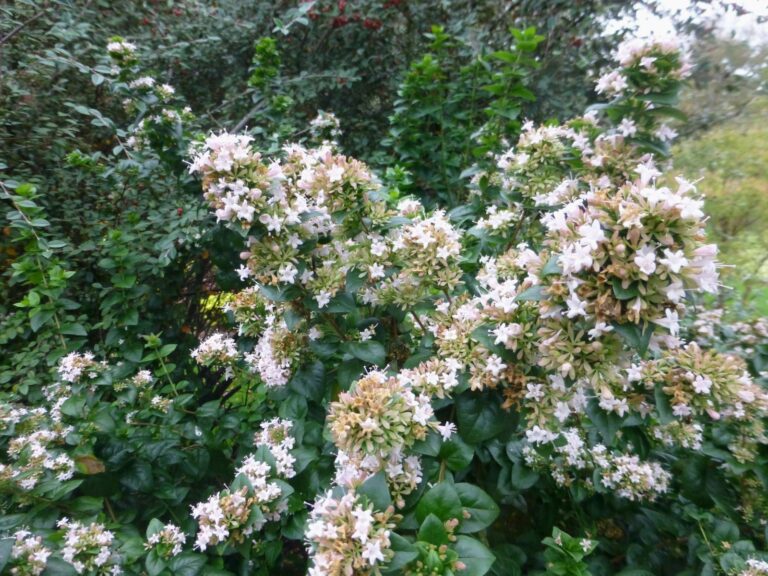
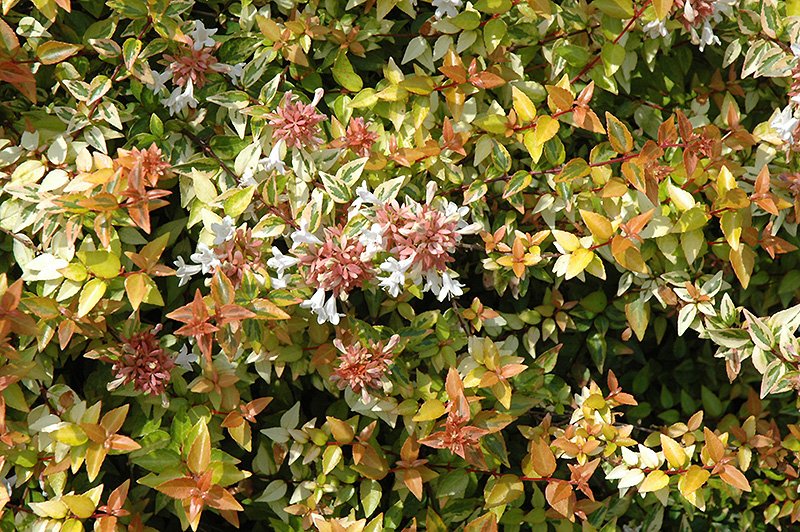
While everything else is fading away, this little shrub is doing the exact opposite. It’s blazing in shades of gold and orange, packed with tiny white blossoms, and covered in whatever frantic pollinators are left in the county. If you only have room for a single shrub in a tight yard, this is the one you want. To get the absolute most out of this brilliant plant, you need to understand where it came from, how it grows, and how it fits into the wider Abelia genus.
But let’s get something straight before you run out to the local garden center: it is not a “plant it and forget it” shrub. The tag might say it’s a carefree dwarf evergreen, but that’s just corporate marketing. If you don’t understand its specific quirks, you’re going to end up with a dead, brittle stick by next spring. To get the absolute most out of this brilliant plant, you need to understand where it came from, how it grows, and what it expects from you through the seasons.
The North Carolina Freak Show
Most of the plants we buy are bred in sterile laboratory settings, but ‘Kaleidoscope’ has a much better backstory. It started as a total accident. Back in 1997, a nurseryman named Kent Bell was walking through a field of standard green ‘Little Richard’ abelias in Marshville, North Carolina. He noticed a single branch on one plant had mutated, throwing out leaves with a brilliant, stable golden variegation.
In the plant world, we call that a “branch sport.” Bell snipped it, grew it out to make sure the color would actually hold over generations, and eventually patented it in August of 2006 under U.S. Plant Patent PP16,988. Because it is a patented cultivar, there is a bit of legal fine print to keep in mind: commercial nurseries pay a royalty to propagate it, and large-scale unauthorized cloning for sale is strictly against the rules. However, nobody is going to come to your house if you snip a few branches to root on your kitchen windowsill for your own borders.
The broader family tree, Abelia × grandiflora, is an interspecific hybrid created by crossing two Chinese species—Abelia chinensis and Abelia uniflora. This cross was first successfully raised in Italy back in 1886, prized for its glossy leaves and incredibly long blooming window. (Some botanists have recently tried to reclassify it under the name Linnaea × grandiflora, but good luck finding a local nursery tag that actually uses it).
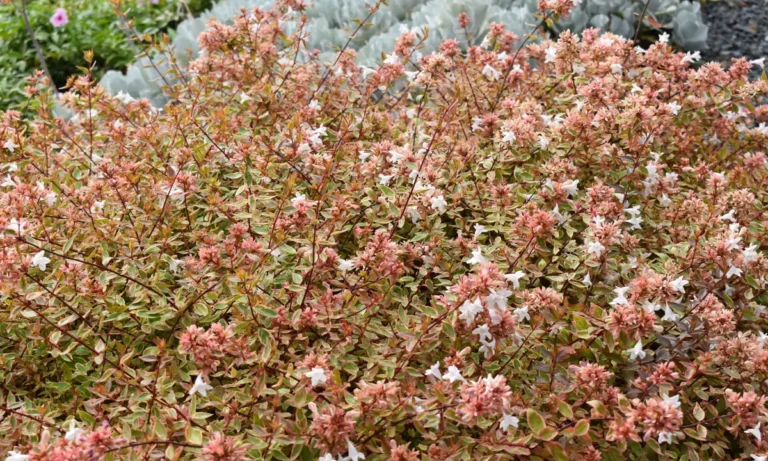
The name ‘Kaleidoscope’ isn’t an exaggeration. In the spring, the new growth pushes out on wine-red stems in a mix of lime green and bright yellow. By mid-summer, it settles into a deep, rich gold, right when the pink flower buds start opening into fragrant white tubes. But the real magic happens when the first cold autumn nights hit. The foliage reacts to the chill by shifting into a mix of fiery orange and ruby red. It looks like a bonfire in the middle of a green lawn, and those red stems keep providing great visual interest all through the bleak winter months.
To get that show, however, you have to give it brutal, unfiltered sun. Put it in the shade, and the whole thing falls apart. The gold fades to a muddy, depressing green, the branches grow long and floppy as they stretch for light, and your flowers will completely disappear. Give it at least six hours of baking sunlight every single day, or don’t bother buying it.
The Hardiness Great Divide
If you read the nursery label, it tells you ‘Kaleidoscope’ grows in USDA Hardiness Zones 6 through 9 (and occasionally Zone 5 if you coddle it with heavy winter protection). That is technically true, but how it behaves depends entirely on which side of the country you call home.
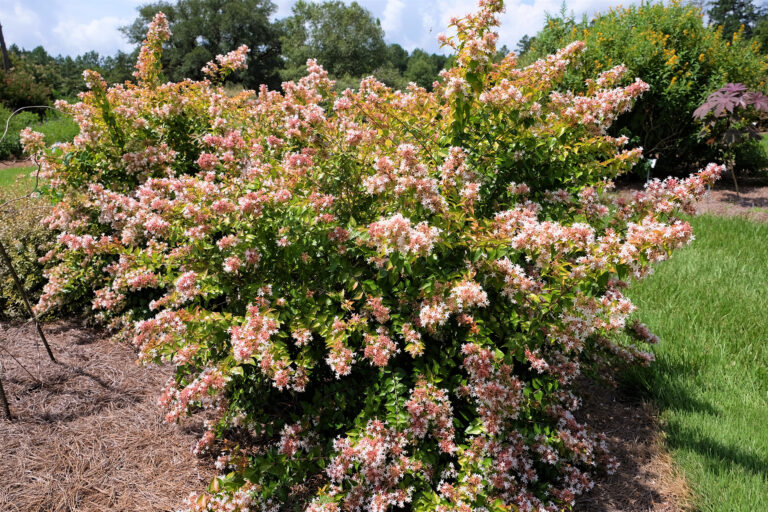
Down South in Zones 8 and 9, this thing is a bulletproof evergreen. It keeps its leaves all winter, handles the suffocating humidity like a champ, and can easily push past its advertised dimensions. While it’s typically listed as a dwarf that stays around 2 to 3 feet tall and 3 to 4 feet wide, a happy southern abelia will easily sprawl out to 5 or 6 feet wide with long, gorgeous, arching branches. It reaches near its ultimate size in about two to five years.
Up North in Zone 6, it’s a completely different story. When the thermometer drops toward zero, ‘Kaleidoscope’ panics. It switches to a semi-evergreen or completely deciduous habit. It will drop its leaves, look absolutely miserable, and suffer some serious winter dieback on the stems. If you garden in the North, you have to play defense. Plant it in a sheltered microclimate—like against a south- or west-facing brick wall—to give it some radiating heat and keep it out of the path of those freezing, drying winter winds.
And a word of advice for northern spring: when April rolls around and your abelia looks like a bundle of dead gray twigs, step away from the shovel. Give it until May. These things are surprisingly resilient, and they will often surprise you by pushing up a brand-new explosion of colorful growth straight from the ground once the soil truly warms up.
The Sinking-Ship Test and the Water Trap
Drought tolerance is a privilege earned by mature roots, not a feature that comes standard out of the nursery pot. During that first growing season, you need to water it deeply once or twice a week. Don’t just turn on the automated sprinklers for five minutes—that just creates lazy, shallow roots near the surface. You want to aim for about an inch of water per week during active growth. Soak the dirt. If your soil is sandy, split that into two smaller soakings a week; if you have heavier soil, one deep watering is better.
But while it needs moisture, it absolutely hates swimming. ‘Kaleidoscope’ requires fertile, organically rich, well-draining soil with a slightly acidic to neutral pH (roughly 5.0 to 7.5). If you have heavy, compacted clay that holds water like a bucket, an abelia will rot and die within a month.
Before you plant, do a quick percolation test. Dig a hole a foot deep, fill it to the brim with water, and let it drain completely. Fill it a second time and track how fast the water level drops. If it drains at a rate of an inch or two per hour, your soil is perfect. If it sits there like a stagnant puddle for hours, you have a drainage crisis.
Don’t just dump sand into the hole to fix it—that just creates homemade concrete. You need to mix in a wheelbarrow full of compost, leaf mold, or aged bark to open up the soil structure. If your drainage is truly terrible, plant the abelia on a mound or a raised bed so the roots sit safely above the water table. Finish with a two-to-three-inch layer of organic mulch to keep things moist, but make sure you pull it back a few inches from the woody stems so you don’t invite fungal rot.
Put the Hedge Trimmers Away
The quickest way to ruin a ‘Kaleidoscope’ abelia is to treat it like a boxwood. I constantly see people taking electric trimmers to these shrubs, shearing them into stiff, ridiculous little bowling balls.
When you do that, you ruin the natural, cascading shape of the branches, and you cut off all your flowers. Abelias bloom on new wood—the fresh growth they push out during the current spring. If you shear them constantly, you’re cutting off the flower buds before they ever have a chance to open.
Instead, grab a pair of hand bypass pruners in the late winter or very early spring while the plant is still asleep. Look for the oldest, thickest, ugliest gray stems at the center of the plant and cut them right down to the ground. Remove about a third of them. This opens up the inside of the shrub, lets the sunlight in, and forces the plant to send up a flush of vibrant new variegated shoots from the base. If a few branches are growing wacky and ruining the symmetry, just snip them back to a leaf joint. That’s it.
Whatever you do, don’t cut it back hard in the autumn just “to tidy up” before winter. You’ll just expose fresh cuts to freezing temperatures and invite massive winter damage.
DIY Windowsill Clones
Because this is a hybrid, you can’t just collect seeds and expect them to grow into a carbon copy of the parent plant. You have to propagate it vegetatively. Luckily, it’s pretty easy to do at home.
Find a healthy branch that doesn’t have any flower buds on it and snip off a 4-to-6-inch piece, making the cut cleanly right below a leaf node. Strip off all the leaves from the bottom half, leaving just two or three pairs at the very top. If those top leaves are massive, snip them in half with your scissors to keep the cutting from losing too much moisture while it’s rootless. Dip the bottom node into some rooting hormone powder, and stick it into a small pot filled with a very loose, free-draining mix—equal parts multi-purpose compost and perlite or sharp sand works perfectly.
Cover the whole pot with a clear plastic bag or pop it into a simple propagator dome to lock in the humidity, and set it in a warm room with plenty of bright, indirect light. Keep it out of direct sun, or you’ll cook it. Keep the mix barely damp, and within three to six weeks, it will develop a fragile new root network. Once the stem resists a gentle tug, you can pot it on into standard soil.
Troubleshooting: Pests and Reverting Leaves
For the most part, ‘Kaleidoscope’ is a clean plant that skates through the year without any serious pest or disease crises. It isn’t plagued by the frequent blights or mildews that destroy other popular landscape shrubs. But it isn’t completely bulletproof.
Aphids and Scale
Occasionally, a colony of aphids or scale insects might set up camp on the tender new spring growth. Before you reach for a harsh chemical pesticide that will wipe out your local bee population, try knocking them loose with a sharp blast of water from the garden hose, or treat the foliage with an organic insecticidal soap or neem oil spray.
The Green Reversion
The weirder problem you might run into is “green reversion”. Every once in a while, you might notice a single branch on your beautiful golden shrub turning completely solid, dark green. Because this plant mutated from a green variety, it occasionally tries to revert back to its original genetic state. Solid green branches grow much faster and more aggressively than variegated ones because they have more chlorophyll. If you leave them alone, the green shoots will eventually outgrow and smother the rest of the colorful shrub. The fix is simple: grab your pruners, trace that green branch all the way back to its origin point on the main stem, and cut it out entirely.
Wildlife Value and Landscape Design
One of the greatest joys of growing ‘Kaleidoscope’ is the sheer amount of life it brings to the yard. The lightly sweet, honey-scented flowers are a vital late-season food source for bumblebees, butterflies, and clearwing hummingbird moths when other nectar sources have dried up. Even better, it is highly resistant to both deer and rabbits, who generally bypass the glossy foliage for tastier options.
Container Growing
It is also an excellent candidate for large patio containers on terraces or balconies, giving you the flexibility to move it into a sheltered garage if a historic winter freeze threatens your area. Just make sure you empty the drainage saucers in the winter so the roots aren’t sitting in stagnant runoff water, and reduce your watering significantly while the plant is resting.