Abelia × grandiflora ‘Radiance’ – Complete Growing Guide
Let’s be honest: for a long time, old-school abelias were the beige wallpaper of the suburban landscape. Landscapers used to dump them into commercial parking lots or the back of foundation plantings because they were tough, but nobody ever really looked at them. They got tall, they got leggy, and they spent most of the year looking like an unruly tangle of twigs.
But things changed a few years back when a lucky genetic mutation showed up on a branch of a ‘Kaleidoscope’ abelia. Horticulturists isolated that sport, propagated it, and gave us ‘Radiance’—making it a standout addition to the diverse Abelia genus. If you’ve written off this genus as boring, this is the specific plant that will make you rethink things.
What makes ‘Radiance’ worth your garden space isn’t just one spectacular week of blooms. It’s the fact that it puts on a quietly brilliant foliage show for about ten months out of the year, requires almost zero actual work, and stays in a polite, compact mound that won’t try to swallow your front porch.
The Foliage Shift
Most people buy shrubs when they see them flowering at the nursery in spring, but experienced gardeners know you have to live with the leaves all year. ‘Radiance’ handles the seasons better than most.
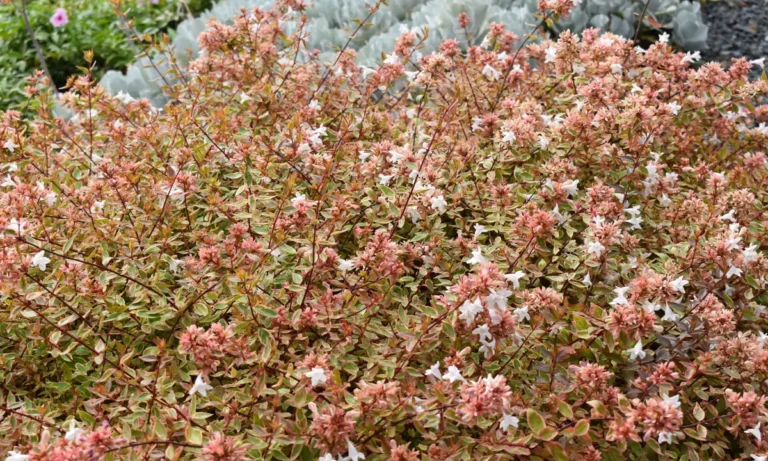
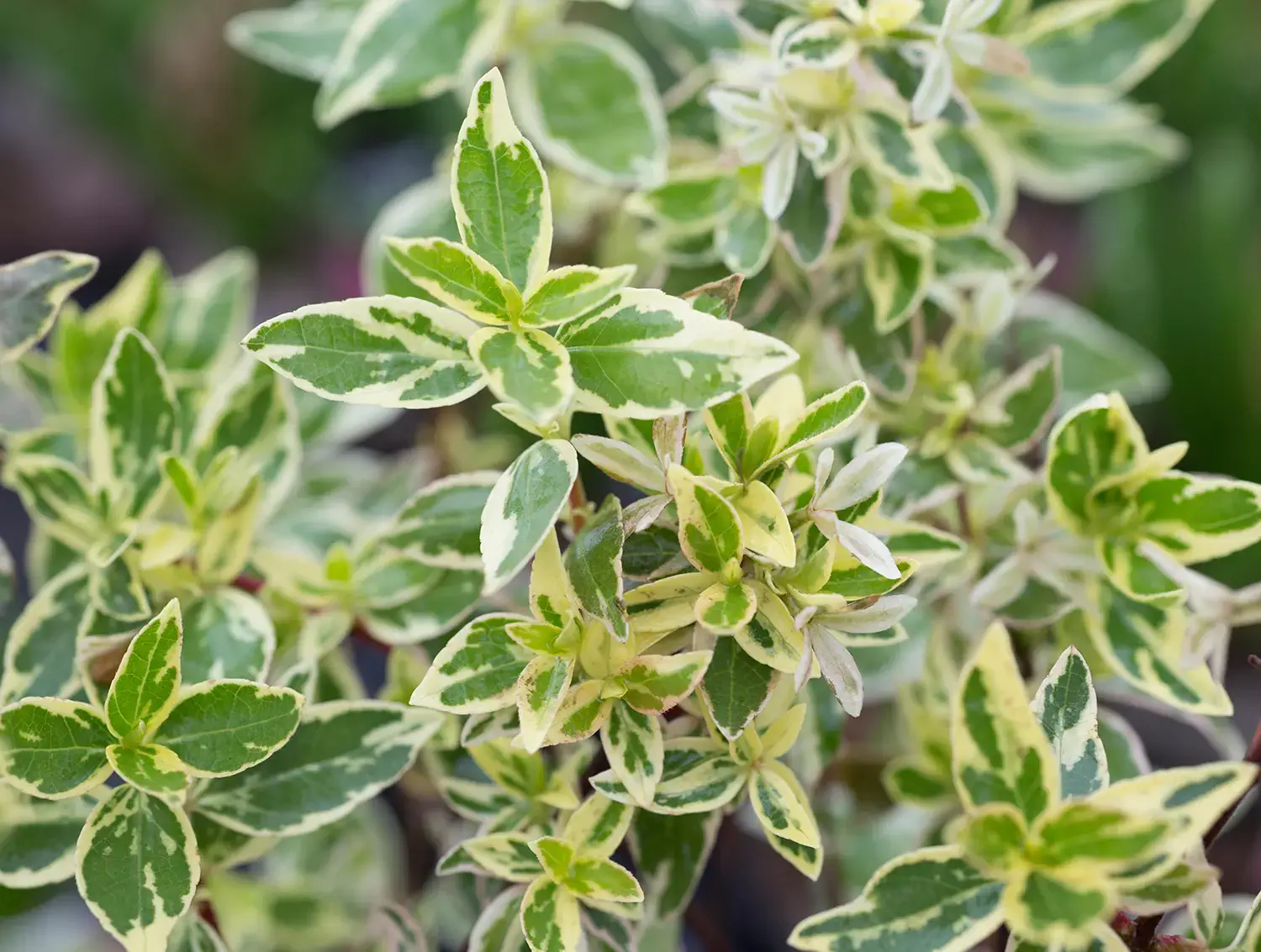
In the early spring, the new growth pushes out looking incredibly bright—medium green centers with thick, gold-yellow borders. As summer settles in, that coloration matures into something much cooler and cleaner. The centers shift to a silvery, gray-green and the edges turn a crisp, creamy white.
The real design trick, though, is in the stems. The fresh wood grows in a vivid, crimson red before maturing to a warm red-brown. When you look at those bright red stems cutting through the frosty, light-edged leaves, the contrast is fantastic. It gives the whole shrub a multi-dimensional, architectural look. It’s one of the few things in the winter border that actually looks deliberate and lively when everything else has gone brown and dormant.
Unlike its parent ‘Kaleidoscope’, which throws a wild, sometimes messy mix of fiery oranges and autumn reds, ‘Radiance’ stays remarkably consistent. It keeps that clean, two-tone look all through the season, which gives the garden a much more polished, deliberate feel.
Late-Season Nectar
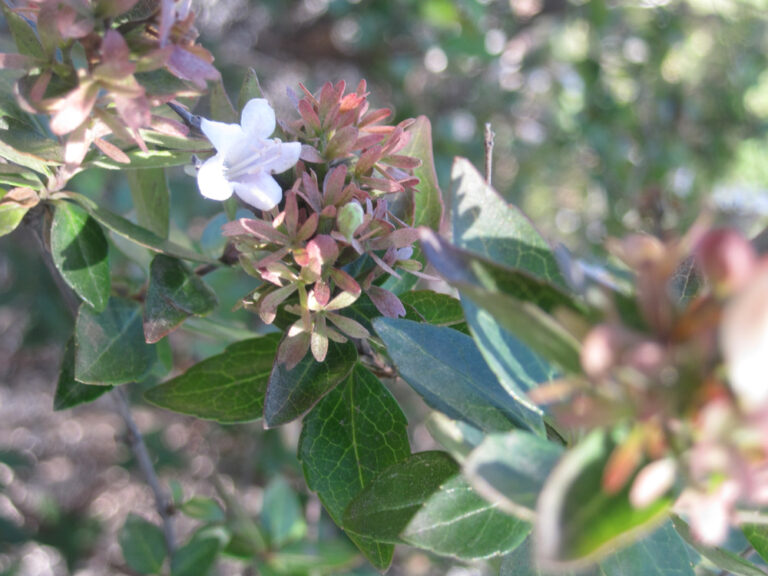
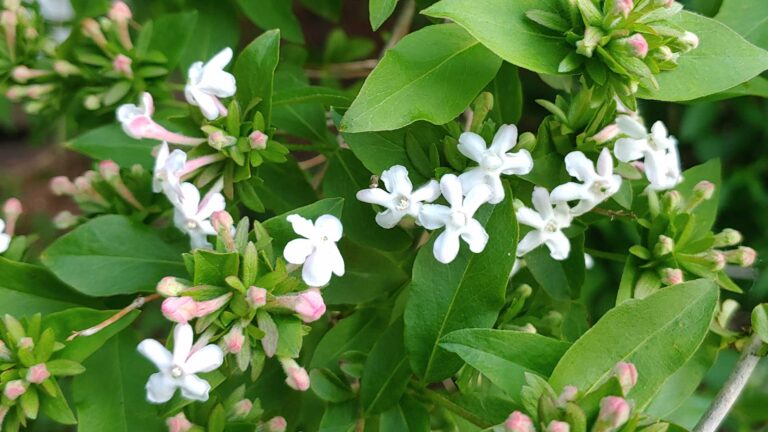
Right around midsummer, when most of your spring perennials are looking tired and heat-exhausted, ‘Radiance’ starts blooming. It covers the tips of its shoots in clusters of small, white, funnel-shaped flowers.
They aren’t massive, showstopping blossoms like a hydrangea. Instead, they are small—about two centimeters long—but the plant produces them in such massive quantities that the whole shrub takes on a soft, frothy texture from a distance. They also have a very clean, light fragrance if you get up close.
Because abelias bloom on “new wood” (the fresh growth created during the current spring), every new flush of stems brings a fresh wave of flowers that lasts right into autumn. And when the white petals finally drop, they leave behind their calyces—the little rosy-green leaf-like structures at the base of the flower. These stay on the plant for weeks, extending the color long after the actual blooming is done.
If you are trying to support local wildlife, this late-season timing is a big deal. ‘Radiance’ becomes a busy diner for bees, butterflies, and migrating hummingbirds in September and October, right when other nectar sources are drying up.
Staying Alive: The Real Sizing and Hardiness Numbers
If you read the original U.S. plant patent for ‘Radiance’, it says the plant tops out at about 70 cm tall (just over two feet) and 120 cm wide (four feet) after a few years. In the real world, nursery tags usually estimate it closer to three feet tall and four to five feet wide. Assume it’s going to stretch a bit depending on your soil, but remember its natural habit is to grow wider than it does tall.
When it comes to climate, you need to ignore some of the more optimistic commercial labels. The original patent conservatively rated it down to USDA Zone 7. A lot of modern growers push that to Zone 6, but if you garden in a cold, exposed northern site, you need to be careful.
In mild areas (Zone 7 down through Zone 10), ‘Radiance’ is a tough, reliable semi-evergreen. It holds onto its leaves through the winter and keeps its structure. But if you are in a windy Zone 6, severe freezes can cause it to drop its leaves or suffer some brittle tip dieback.
If you’re gardening on that cold edge, give it a break. Plant it in a sheltered microclimate—like against a south-facing wall or protected by a fence line away from freezing winter winds—and throw a thick layer of wood chip mulch over the roots in late autumn. Even if a brutal winter burns the top growth down to the ground, don’t panic. The root system is resilient and will almost always push up fresh, vigorous growth in the spring. You might just get a slightly later start on your summer flowers while it rebuilds.
Soil, Sun, and the One Thing It Hates
Abelias are incredibly easygoing, but they have one absolute dealbreaker: soggy feet. They will tolerate clay, loam, sandy soil, and a wide range of pH levels, but if you plant them in a low spot with standing winter water, the roots will suffocate and rot.
If your yard is heavy, compacted clay, don’t just dig a bowl in the dirt and drop the root ball in. Dig a wide, shallow area and mix in plenty of good organic compost to open up the drainage, or lift the plant up entirely into a slight mound.
Put it in full sun. It will survive in partial shade, but you’ll pay for it with loose, leggy growth, dull foliage colors, and barely any flowers. The only exception to this rule is if you’re gardening in the scorching heat of the deep South or the Southwest. In those zones, giving the plant bright morning sun and some filtered afternoon shade keeps the pale edges of the leaves from scorching.
When you first plant it, give it a deep, thorough soaking once a week to help the root system stretch out into the surrounding soil. After that first season, it’s remarkably drought-tolerant. A deep watering during extended summer dry spells will keep the foliage looking crisp, but otherwise, you can mostly leave it alone. Just keep a two-inch layer of bark mulch around the base to hold soil moisture—making sure to keep the mulch pulled back a few inches from the wooden stems so you don’t invite rot.
Real Pruning (Less is More)
Because ‘Radiance’ naturally grows into a neat, dense mound, you rarely need to touch it with pruners. In fact, the worst thing you can do to this plant is grab a pair of electric hedge shears and buzz it into a tight, formal ball. The natural, soft, arching habit is the whole point of growing it.
If you do need to clean it up or manage the size, do it in late winter or very early spring while the plant is still dormant. Because it blooms on new wood, pruning at this time triggers fresh spring shoots that will carry your summer flowers. If you wait until late spring to prune, you’ll accidentally cut off your first wave of blooms.
If an old plant ever gets messy or overgrown, it handles heavy rejuvenation pruning beautifully. You can cut it back hard, just know that it will spend that summer rebuilding its branches instead of flowering. If you’re growing it as a casual property divider or low informal hedge, a very light trim right after the main midsummer bloom flush will keep it tidy without sacrificing the late-autumn flowers.
Dealing with Pests
You won’t have to worry about deer with this plant, and it doesn’t suffer from any major recurring disease epidemics. There are really only three minor issues to look out for, and they are usually caused by the environment rather than bugs:
Aphids
In the spring, you might see these tiny bugs clustering on the tender new tips. Usually, local ladybugs and hoverfly larvae will show up and handle it for you. If they get out of hand, just blast them off with a sharp stream of water from your garden hose.
Botrytis (Grey Mold)
This fungal issue can show up if you live in an area with intense summer humidity and stagnant air. It’s almost always a spacing issue. Don’t crowd your abelias tightly against walls or pack them too close to other dense shrubs. Water at the base of the plant rather than using overhead sprinklers that keep the leaves wet all night.
Winter Burn
If your property has permanently waterlogged soil, high salt levels, or deep, heavy shade, save your money and choose something else. ‘Radiance’ won’t be happy there.
Designing with ‘Radiance’
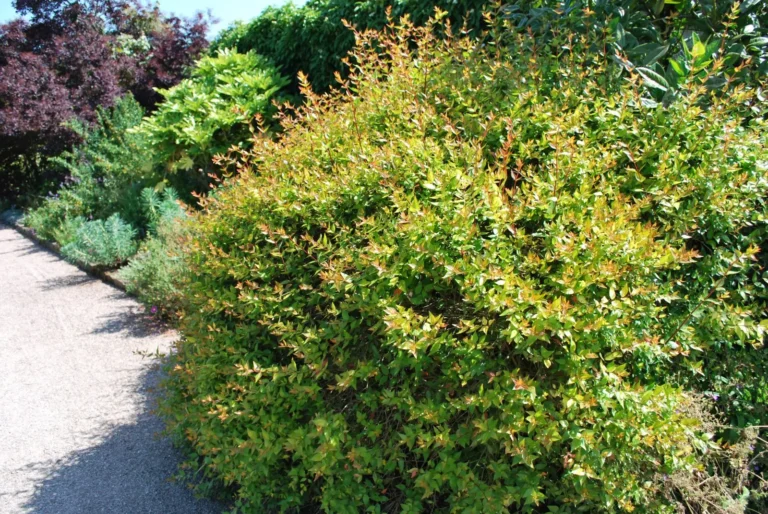
Because this shrub spreads wider than it grows tall and stays relatively low, it’s a great tool for modern yards where space is limited.
Don’t hide it in the back row. Put it near walkways, patio edges, or front walkways where people can actually see the red stems and detailed leaf margins up close. It’s perfect for foundation plantings under low windows because it softens the straight lines of the house without ever growing tall enough to block your view or your indoor light.
In a mixed border, use it for contrast. The bright, creamy foliage looks incredible when you place it in front of dark-leaved neighbors like a purple Ninebark (Physocarpus), a dark elderberry, or a deep blue-green conifer. The light leaves make those dark colors pop, and vice versa.