
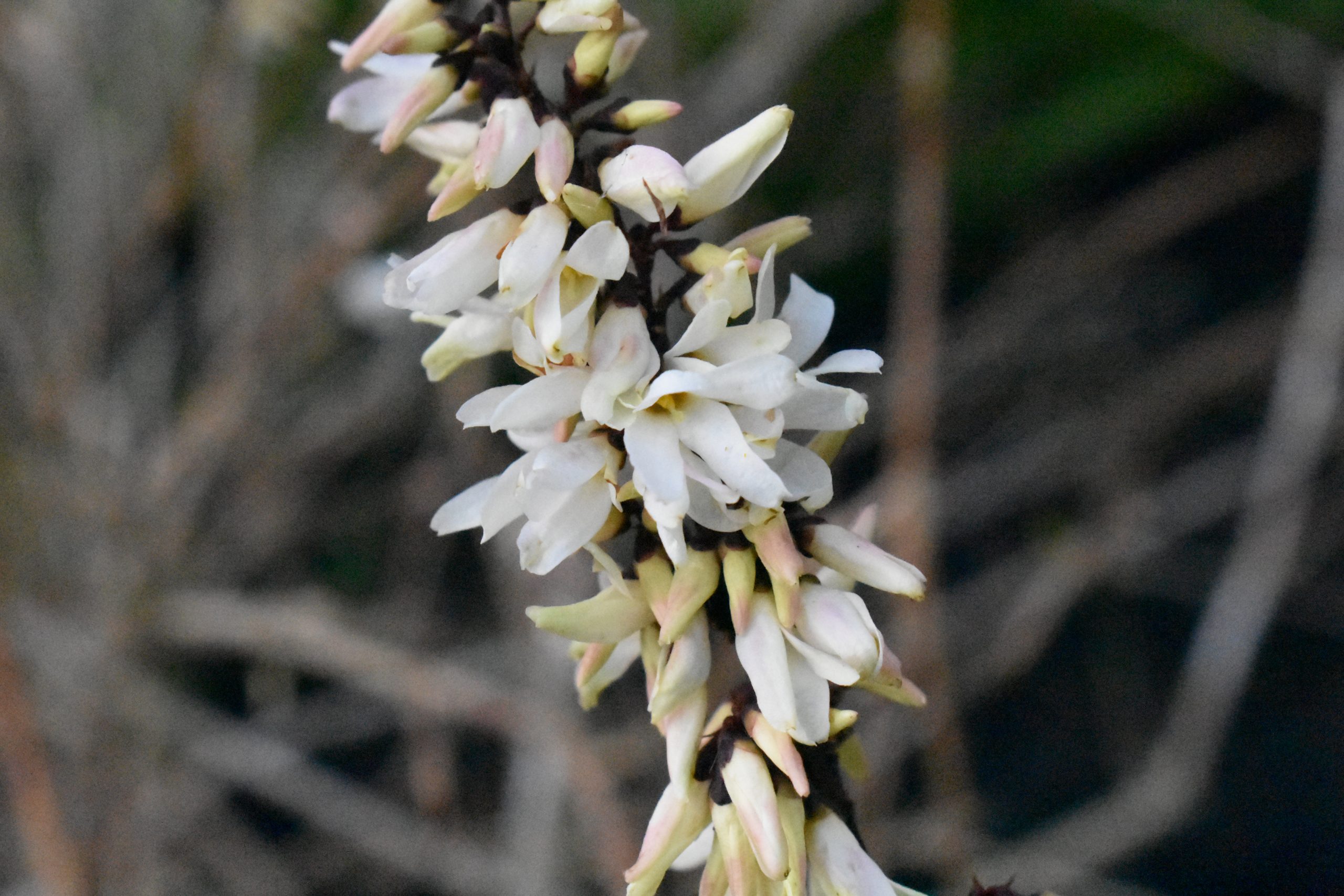
Abeliophyllum (white forsythia) – Complete Growing Guide
Abeliophyllum distichum, affectionately known to many gardeners as white forsythia or Korean abelia-leaf, is one of the true unsung heroes of the late-winter garden. Long before the rest of the landscape wakes up, this rare deciduous shrub bursts into life, clothing its bare branches in highly fragrant, delicate white to pale pink blossoms. Whether you are looking for a unique specimen plant, a fragrant addition to a walkway, or an early-season lifeline for local pollinators, this comprehensive guide covers everything needed to successfully cultivate this beautiful plant.
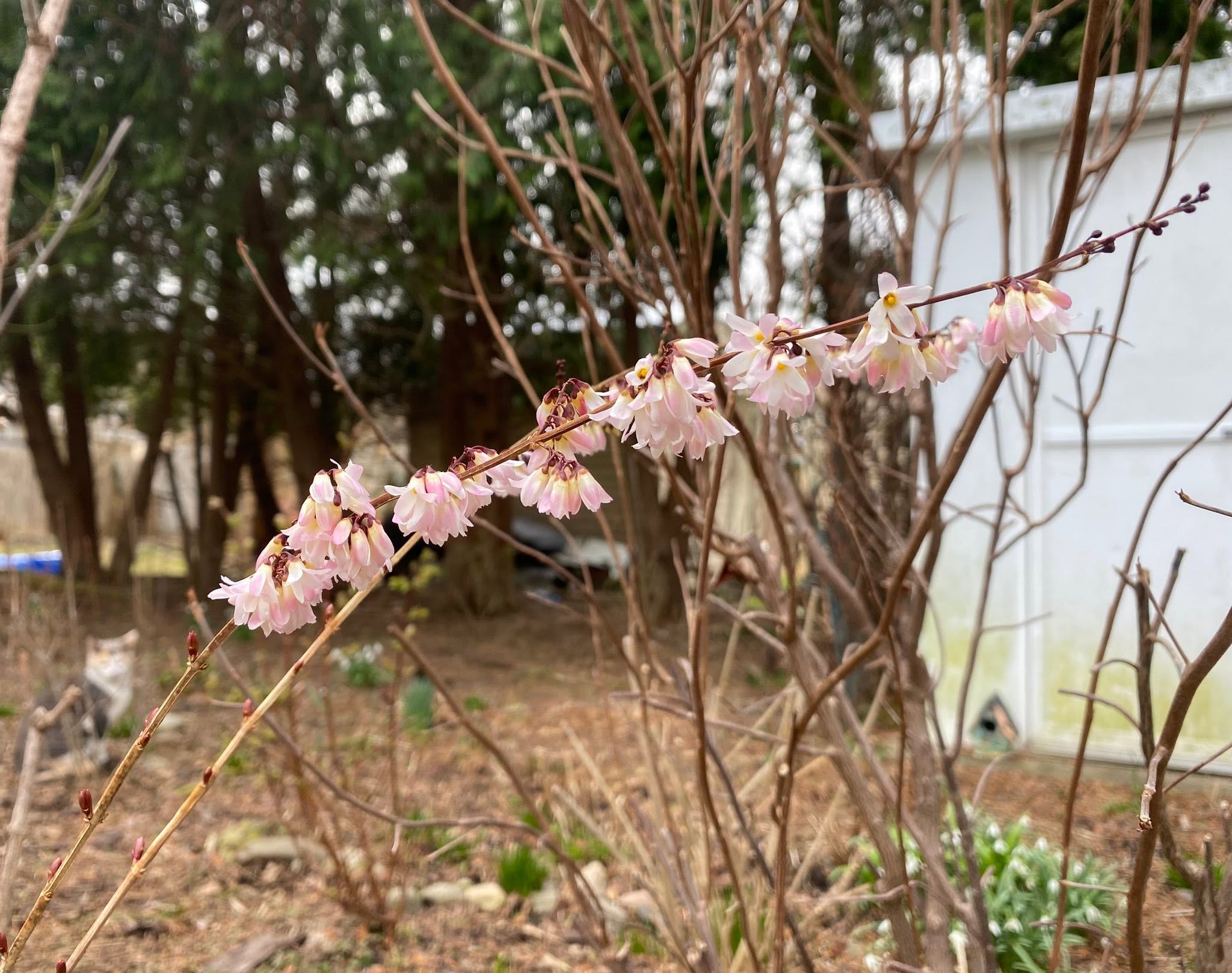
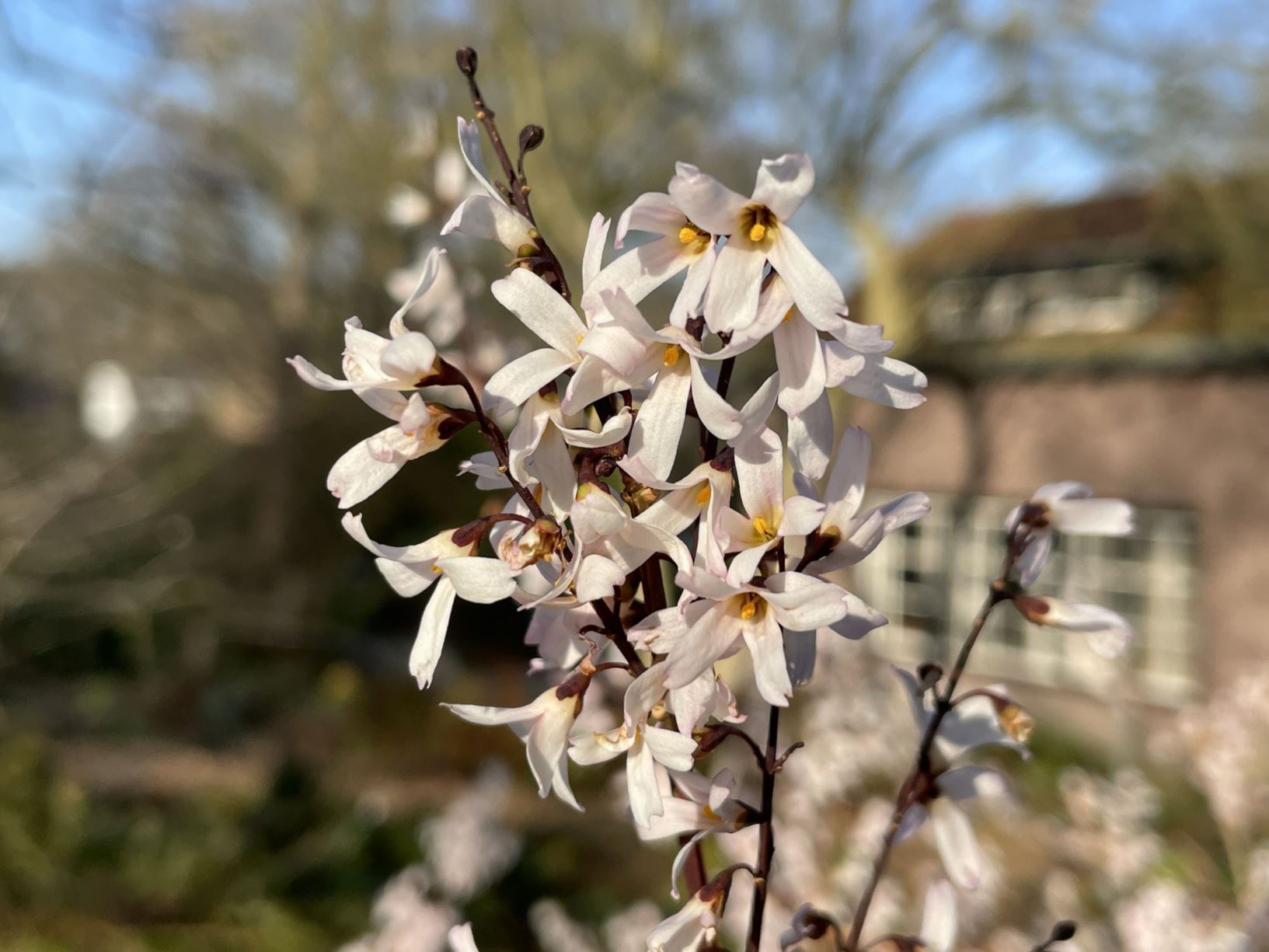
Few things bring more joy to a winter-weary gardener than seeing flowers open while snow is still a possibility. Abeliophyllum delivers exactly that, offering a spectacular show of highly aromatic blooms that drape across graceful, arching stems in late winter or the earliest days of spring. The common name “white forsythia” is incredibly accurate; the plant belongs to the very same plant family as standard yellow forsythias and shares their familiar four-petalled flower shape, though it sets itself apart with a sweet, almond-like fragrance and a much softer color palette.
While the genus contains just a single species, Abeliophyllum distichum, nature and plant breeders have given us several distinct forms and cultivars to choose from. These selections offer subtle variations in flower color—ranging from snowy white and warm ivory to soft pinks and even unique greenish tints—as well as slight differences in seed pod shape. Thanks to its relaxed growth habit, this shrub is wonderfully versatile: it shines in a mixed border, works beautifully as a standalone focal point, or can easily be trained against a warm stone wall or fence line.
This guide explores the standard species along with its most notable variations, providing a solid foundation for introducing this early-blooming gem to your landscape:
- The classic white-flowered wild species
- The highly popular, pink-tinted ‘Roseum’ selections
- The pristine, pure-white botanical forms
- Warm, ivory-flowered variations
- Rare, lilac-pink color selections
- Unique, green-tinted collector pieces
- The distinct round-capsule botanical variety
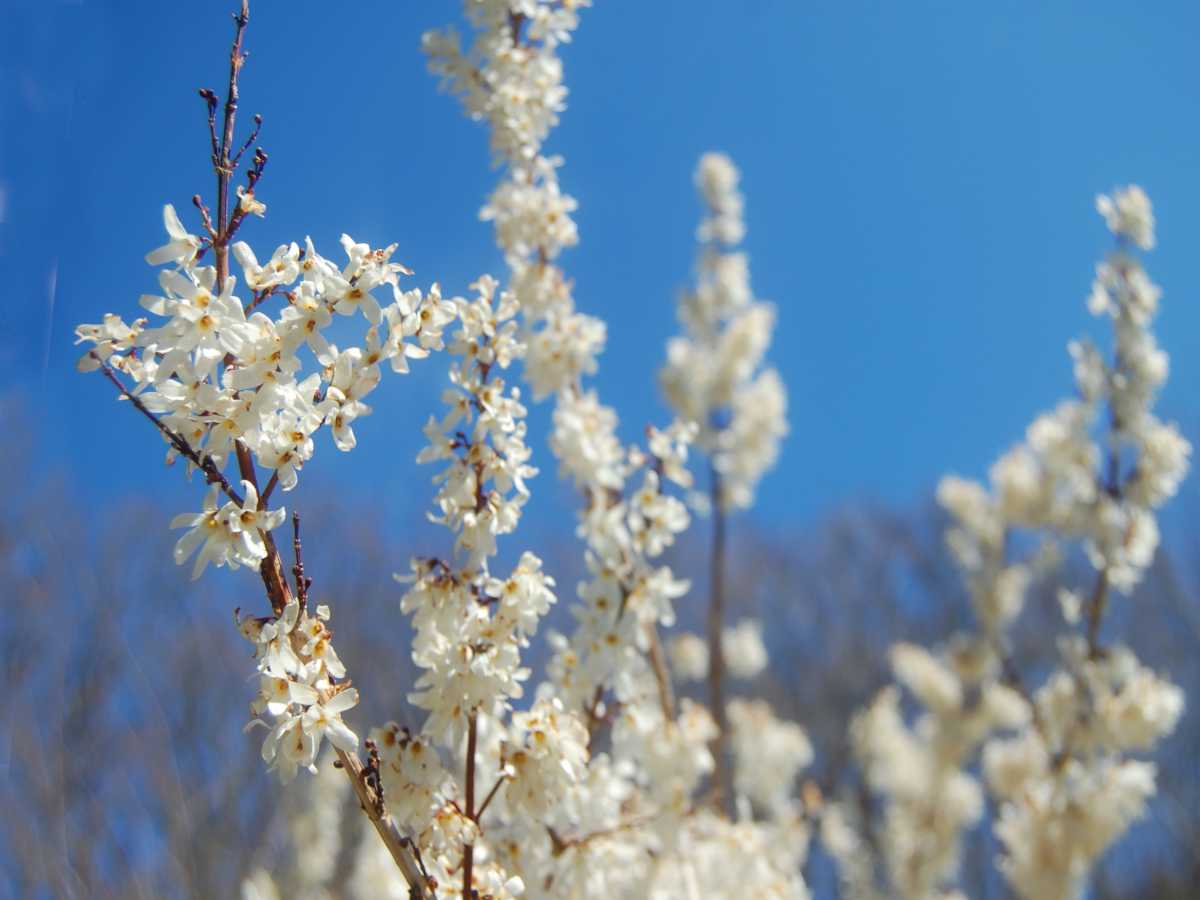
Botanical Background
Genus and Species
- Genus: Abeliophyllum Nakai, positioned firmly within the olive family (Oleaceae) under the Forsythieae tribe.
- Species: Abeliophyllum distichum Nakai—notable for being a monotypic genus, meaning it contains only this single species.
- Common Names: White forsythia, Korean abelia-leaf, and miseonnamu in its native range.
The botanical history of this plant dates back to 1919, when Japanese botanist Takenoshin Nakai first described the genus using specimens found in the central region of the Korean Peninsula. By the 1930s, live material made its way to the Royal Botanic Gardens, Kew, sparking immense interest across Europe and North America, eventually earning the plant a prestigious Award of Merit from the Royal Horticultural Society.
Origin and Natural Habitat
In the wild, Abeliophyllum distichum is entirely endemic to central Korea, where it survives in small, isolated populations across provinces like Chungcheongbuk-do, Jeollabuk-do, Gyeongsangbuk-do, and Gyeonggi-do. It naturally thrives as an understory shrub in open, airy deciduous or mixed montane woods, frequently growing beneath native pines (Pinus densiflora) and various oak species (Quercus spp.). It favors rocky slopes, gravel-heavy riverbanks, and sunny forest margins at elevations ranging from 300 to 1,000 feet.
Because of intensive habitat loss, agricultural encroachment, and its incredibly limited geographic footprint, the species is currently classified as Endangered (EN) on the global stage, making its preservation in cultivation all the more vital.
Botanical Forms and Varieties
Horticulturists recognize a handful of naturally occurring forms and varieties within A. distichum, which are primarily cataloged based on blossom color and seed capsule shape:
- f. albiflorum: Noted for its exceptionally clean, white flowers.
- f. eburneum: Displays blossoms with a warm, distinct ivory tone.
- f. lilacinum: Features flowers with soft pink to light lilac hues.
- f. viridicalycinum: A striking variation where the blossoms carry a light greenish or subtle blue-green tint.
- var. obtusicarpum (also listed as var. rotundicarpum): Identified by its distinctly rounded seed pods rather than the standard winged capsules.
In modern nurseries, the most readily available color variant is ‘Roseum’ (often sold interchangeably as ‘Rosea’ or under the Roseum Group), which encompasses these beautiful pink-flowering selections.
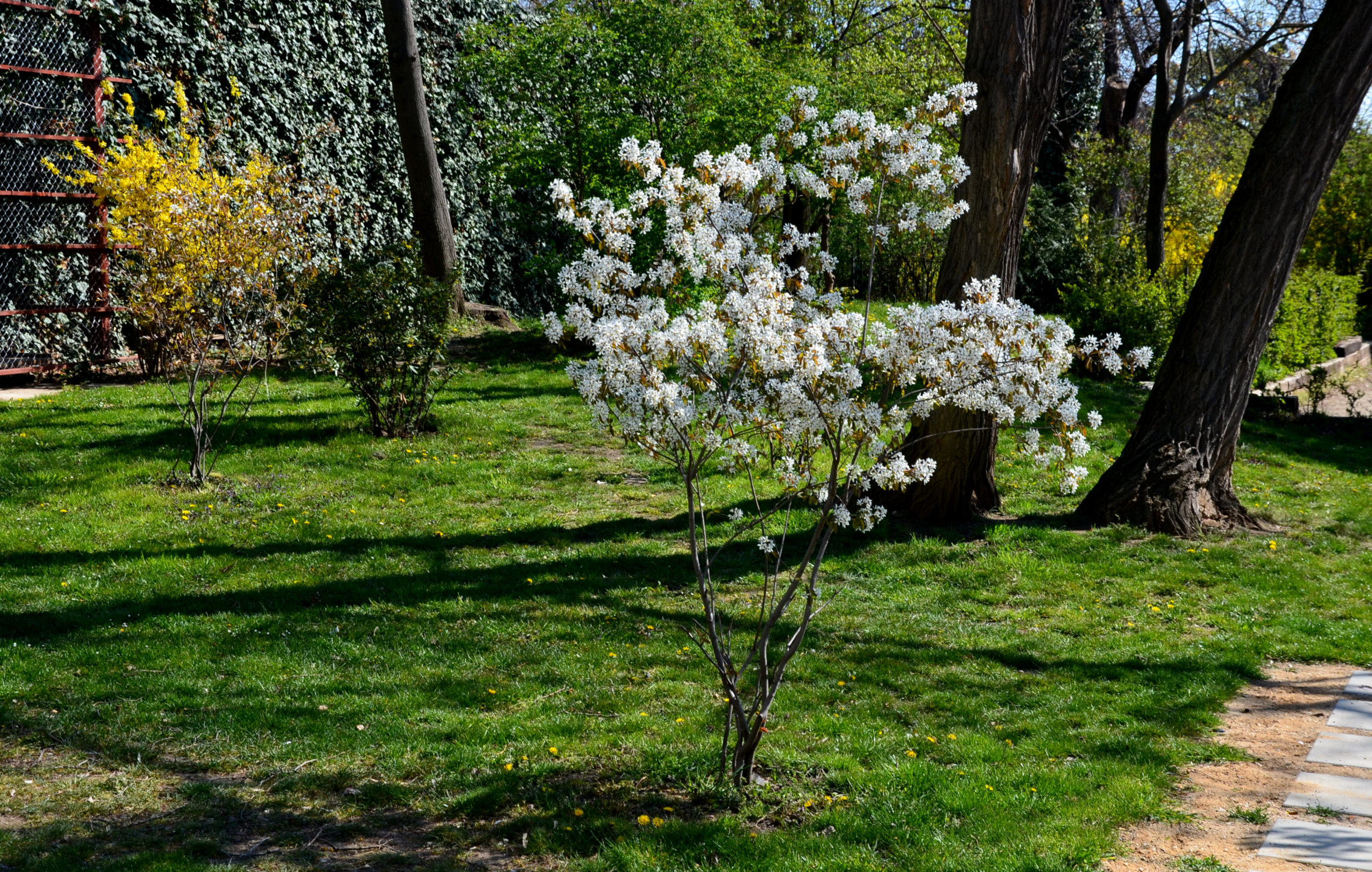
Best Abeliophyllum Varieties for Gardens
The various forms of white forsythia share nearly identical growing requirements, yet they offer distinct visual personalities through their flower colors and growth habits.
White-Flowered Species and Forms
Abeliophyllum distichum (Standard Species)
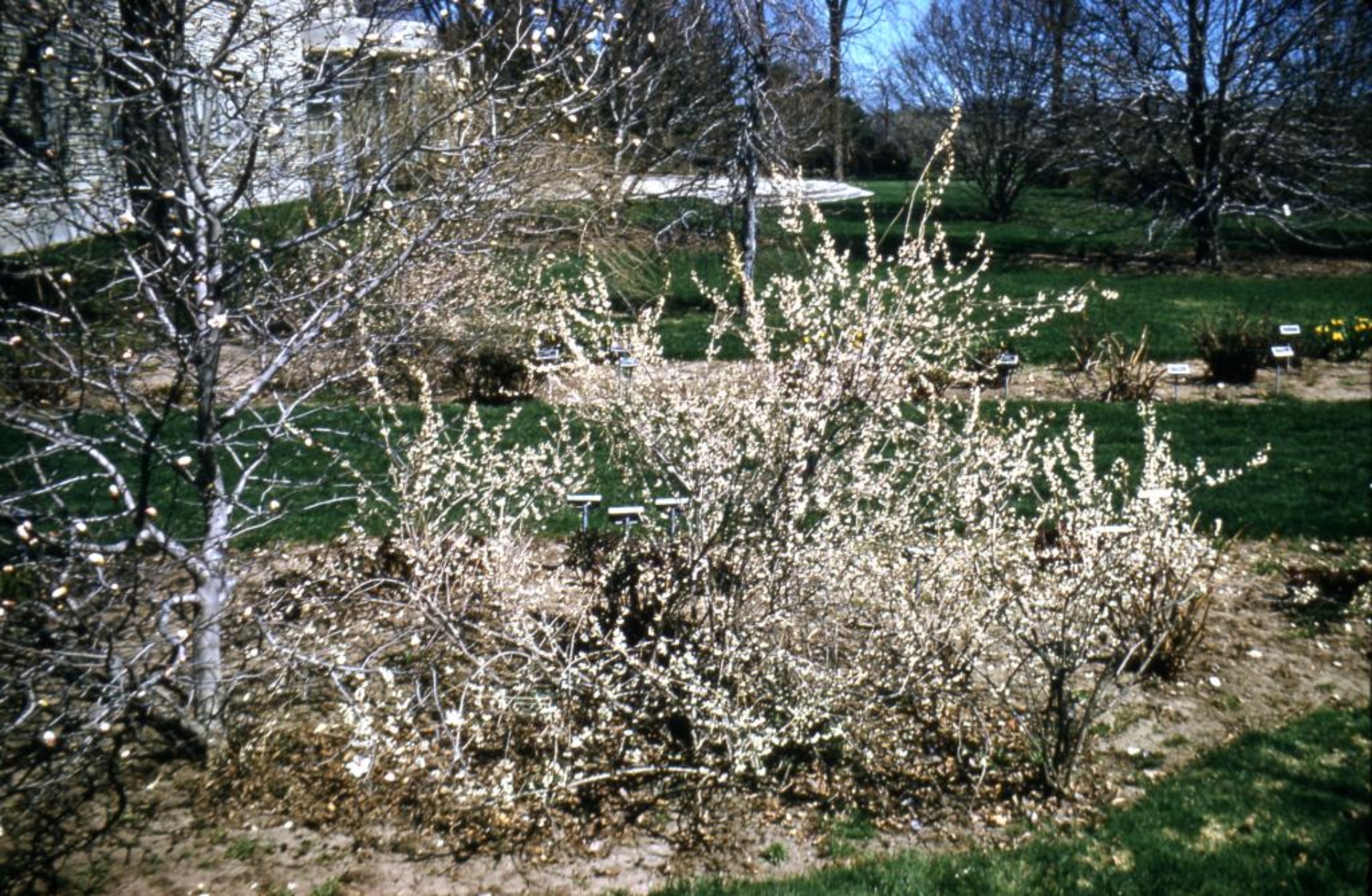
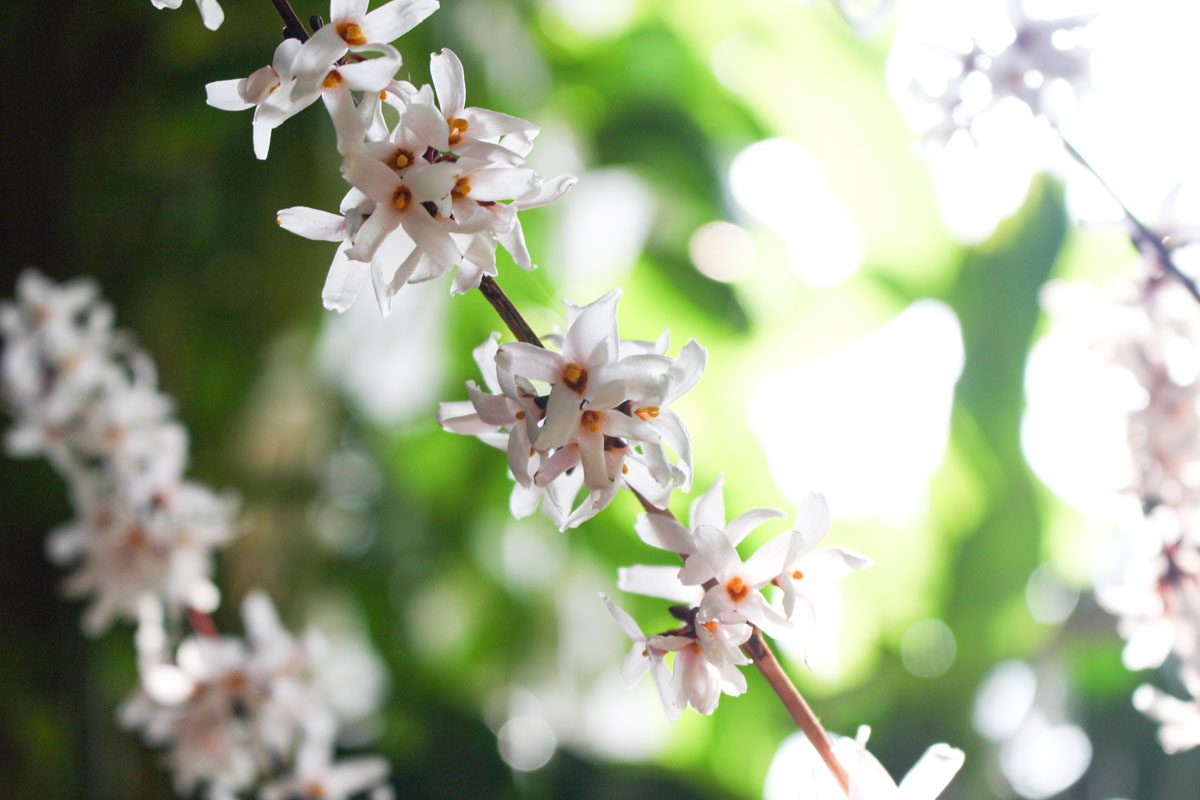
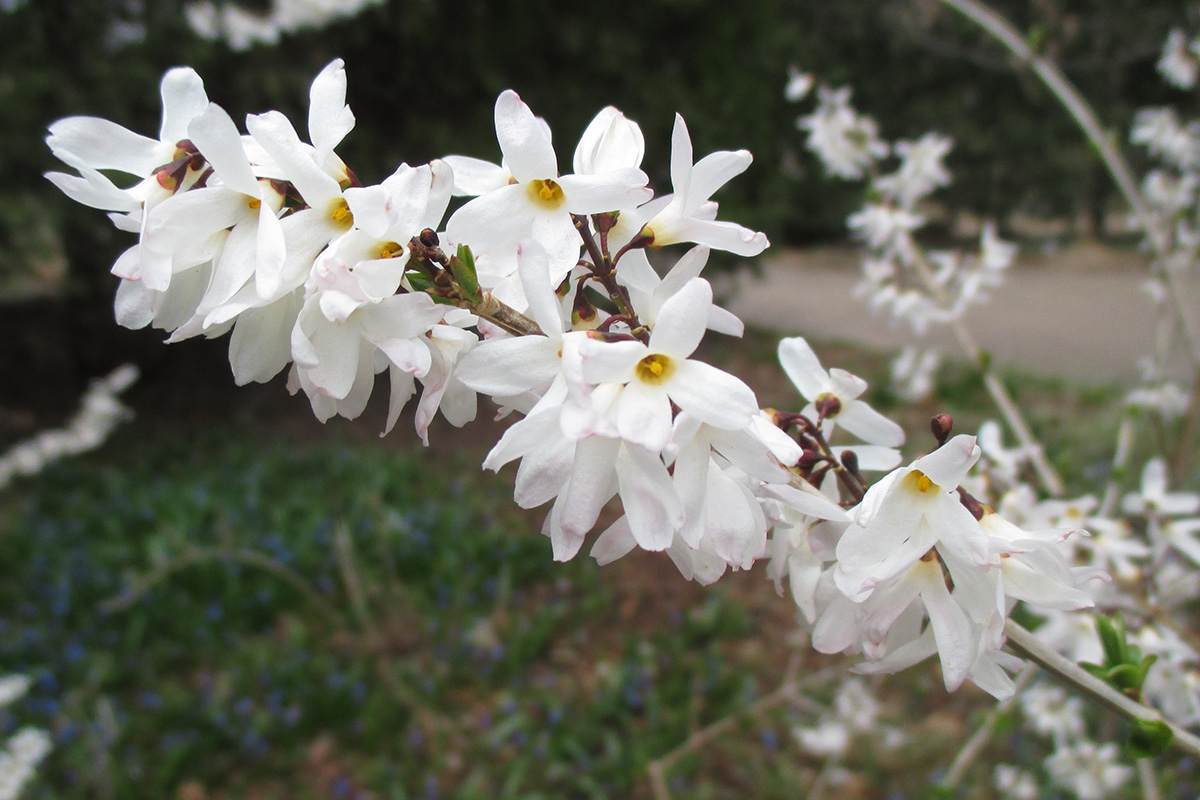
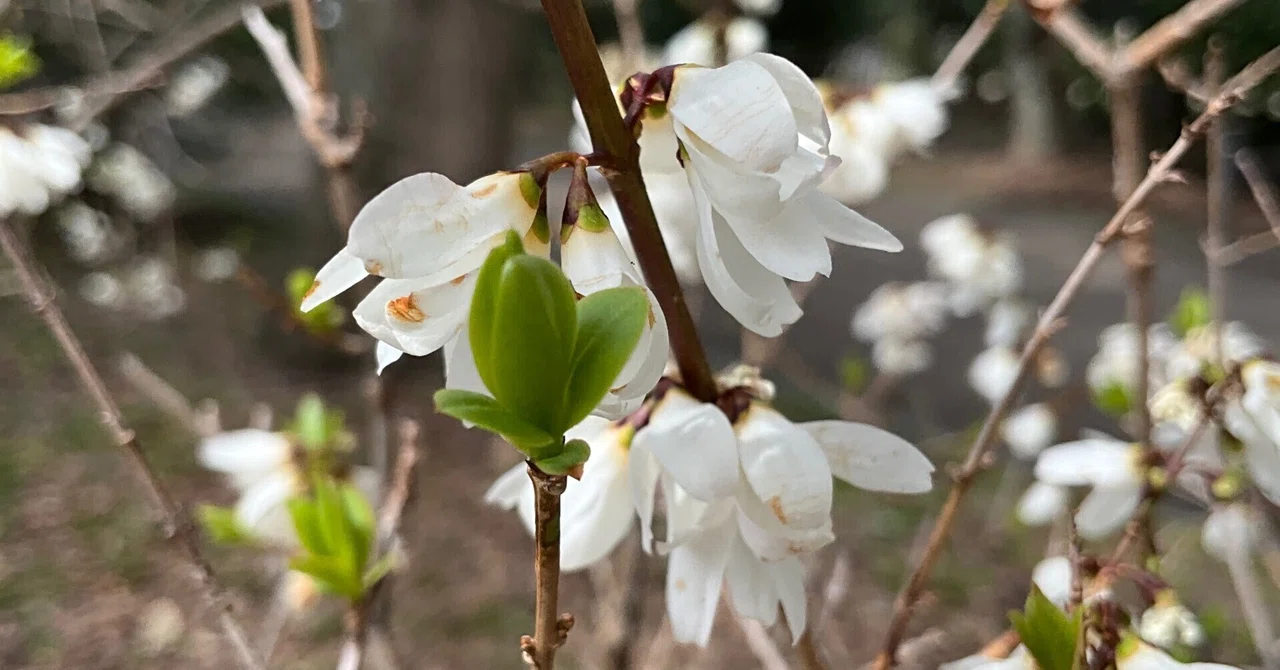
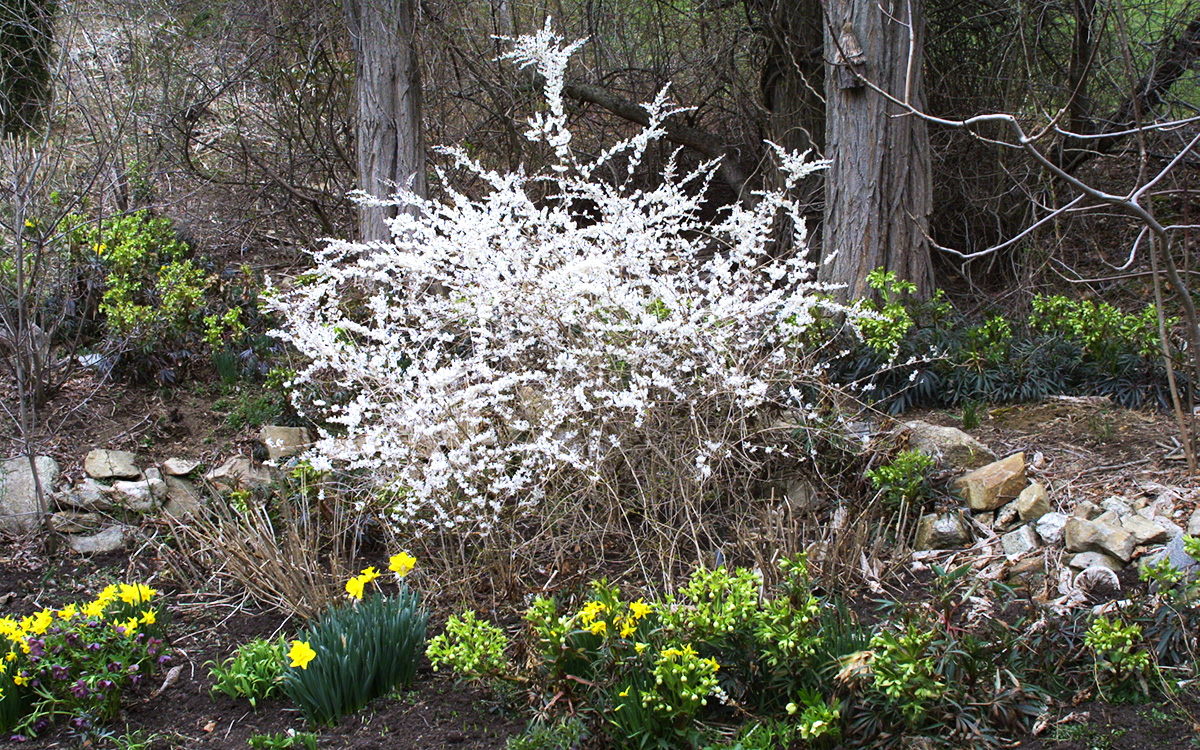
The wild type offers a heavy flush of highly fragrant, four-petalled white flowers clustered in short racemes along dark, leafless winter wood. It develops into a loosely branched, arching deciduous shrub that tops out at 3 to 6 feet tall with an equal spread, following its spring display with handsome pairs of matte-green oval leaves.
- Garden Use: Ideal for traditional borders, woodland edge plantings, and attracting early-season beneficial insects.
Abeliophyllum distichum f. albiflorum
This particular botanical form is recognized for its pure, snowy white petals. While its garden performance, sizing, and graceful arching habit are virtually identical to the standard species, it remains a favorite for precise color schemes.
- Garden Use: Perfect for native plant enthusiasts, botanical collectors, and dedicated white-garden designs.
Abeliophyllum distichum f. eburneum
Rather than a stark white, this selection treats the garden to rich ivory-colored blossoms that add a softer, creamy warmth to the late-winter landscape. It maintains the same dependable hardiness and moderate 3-to-6-foot dimensions as its cousins.
- Garden Use: Excellent for gardeners looking to experiment with subtle, nuanced winter color combinations.
Pink-Flowered Forms and Cultivars
Abeliophyllum distichum ‘Roseum’ (‘Rosea’ / Roseum Group)
By far the most popular colored cultivar in the trade, this plant produces an abundance of soft, pale pink flowers packed with the species’ signature sweet perfume before the leaves emerge. It features an open, fountain-like habit reaching 4 to 6 feet tall, and its summer foliage often transitions to attractive shades of soft yellow or deep purple when autumn arrives.
- Garden Use: Provides a beautiful pastel counterpoint to bright yellow spring bulbs, makes a stunning specimen near entryways, and works beautifully along frequently used walkways.
Abeliophyllum distichum f. lilacinum
A distinct botanical form bearing pink to deep lilac-tinted flowers that closely mirror the wild pink miseon shrubs documented in Korean botanical journals. In commerce, its characteristics heavily overlap with the standard ‘Roseum’ cultivars.
- Garden Use: A high-value addition for specialized color collections and historic Asian plant displays.
Greenish / “Blue”-Tinged Flowers
Abeliophyllum distichum f. viridicalycinum
Undoubtedly the rarest variation in cultivation, this botanical form showcases pale greenish blossoms that can sometimes appear to hold a faint, cool blue undertone. It is a slow-growing, architectural plant that is highly sought after by specialty growers.
- Garden Use: An extraordinary conversation piece best suited for container collections, rock gardens, and specialized plant collectors.
Round-Fruited Form
Abeliophyllum distichum var. obtusicarpum (var. rotundicarpum)
While its early-spring white flower display matches the standard species, this variety sets itself apart later in the year by producing perfectly rounded, disc-like seed capsules rather than the typical flattened or heavily winged pods.
- Garden Use: Adds excellent late-season botanical interest and serves as an important selection for conservation-minded gardeners.
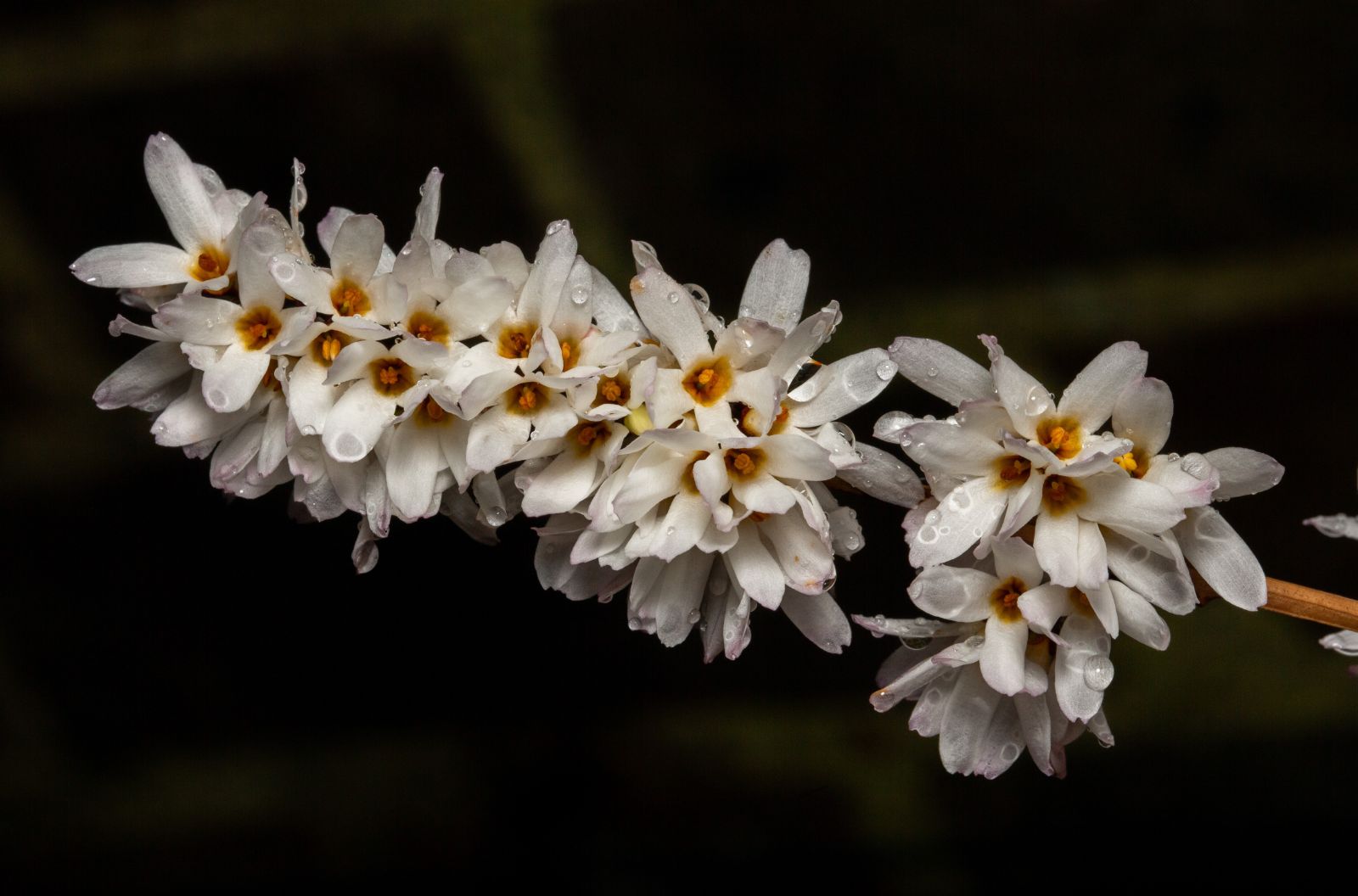
Growing Conditions
Climate and Hardiness
- USDA Hardiness Zones: Adaptable from Zones 4 through 8 (though a few regional guides recommend Zone 5, it can easily handle Zone 4 if given a location shielded from harsh winter exposure).
- RHS Hardiness Rating: Rated H5 to H6, meaning it possesses excellent cold tolerance throughout the UK and Northern Europe.
- Temperature Tolerance: Fully established specimens comfortably tolerate winter drops down to -29°C (-20°F), though young, newly planted shrubs appreciate a bit of winter protection during their first couple of seasons in northern areas.
While exceptionally cold-hardy, providing a site protected from bitter, drying winter winds will prevent the flower buds from drying out before they can open.
Sun and Shade
- Light Exposure: Thrives best in full sun to very light, dappled afternoon shade.
- Aiming for at least 6 hours of direct sunlight daily ensures a dense, compact growth habit and maximum flower bud production.
- In hot southern climates, siting the plant where it receives morning sun and filtered afternoon shade helps prevent summer leaf scorch.
Deep, heavy shade should be avoided, as it causes the shrub to become weak and leggy while drastically reducing the spring bloom.
Soil Requirements
- Soil Type: Highly versatile; it adapts well to loamy, sandy, or clay-heavy soils, provided the site drainage is excellent.
- Soil pH: Prefers a level hovering between 6.0 and 7.5 (slightly acidic to neutral).
- Drainage: Outstanding drainage is non-negotiable; constant sitting water or soggy conditions will quickly trigger root rot.
While it handles lean or nutrient-poor soils surprisingly well, it reaches its full potential in an average, consistently moist, yet free-draining garden loam.
Environmental Tolerances
Once it establishes a deep root system, white forsythia proves to be:
- Moderately drought-resistant during normal summer dry spells.
- Tolerant of typical urban environments, provided it isn’t blasted by freezing winter winds.
- Sensitive to high salt spray, meaning it requires a protected location in coastal landscapes.
Planting Abeliophyllum
When to Plant
- Ideal Window: Early autumn or early spring are the premier planting windows, as the soil is workable, moist, and free of frost.
- For gardeners in northern, short-season climates, spring planting is highly recommended to give the young root system a full growing season to establish before winter hits.
Site Selection and Spacing
- Pick a sunny, wind-sheltered location, ideally positioned against a dark backdrop like an evergreen hedge, dark fence, or brick wall to make the pale blossoms visually pop.
- Space multiple shrubs 3 to 5 feet apart, depending on whether you want a massed effect or wish to showcase their individual arching forms.
- If you plan to train the shrub flat against a wall, set the root ball 12 to 18 inches away from the foundation and install a sturdy wire or trellis support framework.
Soil Preparation
- Dig the planting hole twice as wide as the shrub’s existing root ball, maintaining the exact same depth as the nursery container.
- For sandy or nutrient-poor soils, incorporate a few shovels of high-quality compost or aged leaf mold to improve moisture retention.
- In heavy, slow-draining clay, incorporate coarse organic matter or grit, or plant the shrub on a slightly raised mound to keep the crown out of standing water.
Planting in Containers vs. the Ground
- In-Ground Planting: This is always the best option for long-term health, ease of care, and maximum flower production.
- Container Growing: This shrub can be successfully grown in large pots (minimum 12 to 16 inches in diameter) equipped with ample drainage holes. Use a premium loam-based potting soil, provide consistent water throughout the summer, and move the container to a protected, unheated garage or porch during severe winter freezes.
Care Through the Seasons
Watering
- Establishment Period (Years 1–2): Supply a deep watering once a week during dry spells, keeping the root zone evenly moist without letting it become waterlogged.
- Established Shubs: Highly self-sufficient, but they benefit from supplemental watering during extended summer droughts and right before the winter freeze to support the developing flower buds.
To check if water is needed, insert a finger 2 inches into the soil; if it feels completely dry, give the plant a thorough soak.
Feeding and Mulching
- Spread a 2-to-3-inch layer of organic mulch (such as shredded bark, compost, or leaf mold) around the base every spring to retain soil moisture and regulate root temperatures.
- An application of a balanced, slow-release garden fertilizer in early spring supports healthy growth in poor soils, but avoid high-nitrogen lawn fertilizers, which stimulate excessive foliage at the expense of next year’s flowers.
Pruning
Because white forsythia sets its flower buds on the wood produced during the previous summer, correct timing is absolutely critical to avoid cutting off the bloom.
- The Golden Rule: Prune immediately after the spring flowers fade, typically around late March or April.
- Routine Maintenance:
- Cut away any dead, broken, or obviously diseased wood back to healthy growth.
- Thin out tightly congested or crossing branches to maximize sunlight penetration and air movement.
- Practice renewal pruning by cutting about one-third of the oldest, thickest stems down to ground level every year to stimulate vigorous new flowering wood from the base.
- Shaping: Tidy up long, unruly branches by trimming them back by up to a quarter, always cutting back to a strong, outward-facing bud.
- Rejuvenation: Old, neglected, or completely overgrown shrubs can be cut hard down to 6 to 12 inches from the ground right after flowering; they will recover beautifully but will skip blooming the following spring.
- What to Avoid: Never prune in late summer, autumn, or winter, as you will directly remove the upcoming season’s flower display.
For wall-trained specimens, use the post-bloom window to secure new, flexible shoots to your trellis framework and trim away outward-growing stems.
Winter Care
- Mature, well-established shrubs are incredibly resilient and require no special winter protection across the vast majority of temperate zones.
- In exceptionally cold, wind-swept Zone 4 environments, or for newly planted specimens:
- Apply a thick insulating mulch of leaves or clean straw around the root zone.
- Erect a temporary burlap windbreak or fleece cover during periods of extreme, dry sub-zero freezes.
Propagation
White forsythia can be easily multiplied using softwood or semi-ripe stem cuttings, as well as by simple layering; growing from seed is possible but rarely utilized by home gardeners.
Softwood and Semi-Ripe Cuttings
- Softwood Cuttings: Collect these in late spring or early summer from new, green, highly flexible growth.
- Snip 2-to-4-inch stem tips, making the cut cleanly just below a leaf node.
- Strip off the lower leaves, pinch out the soft growing tip, and dip the base into a rooting hormone powder.
- Insert the cuttings into a highly porous mix (such as equal parts peat-free potting soil and perlite).
- Cover the container with a clear plastic dome or bag to maintain high humidity, and place it in bright, indirect light.
- Roots generally develop within a few weeks, after which they can be potted up individually.
- Semi-Ripe Cuttings: Harvest these in mid-to-late summer when the base of the current season’s growth is beginning to firm up and turn brown.
- Use the exact same method as softwood cuttings, noting that they take slightly longer to root and should be overwintered in a protected cold frame.
Simple Layering
This low-effort method is highly effective for generating a few new plants with zero specialized equipment:
- In either spring or autumn, pick a low-growing, highly flexible branch that easily reaches the ground.
- Strip the leaves from a 6-to-8-inch section of the stem, and use a sharp knife to scrape away a shallow piece of bark to wound the wood at a node.
- Bury the wounded section 3 inches deep in a small trench, peg it securely into the soil with a landscape staple or heavy stone, and keep the area moist.
- Roots will form over the course of the year; simply sever the new plant from the parent shrub the following spring and transplant it.
Seed Propagation
While biologically possible, starting from seed is rarely done because it requires a cold stratification period, and specific named cultivars (like ‘Roseum’) will not reproduce true to type from seed.
Pests and Diseases
In the vast majority of home gardens, white forsythia stands out as an exceptionally clean, trouble-free shrub that rarely suffers severe pest or disease pressure.
Occasional Pests
- Aphids: These tiny insects can occasionally cluster on tender new spring shoots or flower buds, causing minor leaf curling and secreting sticky honeydew. They are easily managed with a sharp blast of water from the garden hose or an application of organic insecticidal soap.
- Spider Mites: Can become an issue during hot, dry summer weather, resulting in fine webbing and speckled, dull-looking foliage. Keep the plant well-watered, periodically rinse the leaves, or treat with a miticidal soap if an infestation becomes severe.
- Scale Insects: These small, static, shell-like bumps can sometimes appear along the woody stems. They can be controlled by applying an organic horticultural dormant oil spray during the late-winter season.
Diseases
- Root Rot: This is almost entirely caused by planting the shrub in poorly drained, waterlogged soil. Symptoms show as yellowing leaves, sudden wilting, and stem dieback. The best prevention is proper site selection; severely affected plants should be moved immediately to a well-drained location.
- Leaf Spot and Powdery Mildew: May occasionally show up during unusually humid, rainy summers. Prevent this by spacing plants correctly to allow good air circulation, watering at the base rather than overhead, and clearing away fallen leaves in autumn.
Design and Uses in the Garden
Landscape Roles
White forsythia offers fantastic versatility across a variety of garden design styles:
- Specimen Plant: Perfect for planting near high-traffic zones like patios, porches, or entryways where its delightful early-spring fragrance can be easily enjoyed.
- Mixed Shrub Border: Combines beautifully with other early-season stars like classic yellow forsythia, red-osier dogwoods, witch hazel, and winter-blooming viburnums.
- Informal Hedging: The arching growth of the ‘Roseum’ variants can create a beautiful, loose privacy screen or border divider, though it requires regular renewal pruning to stay full.
- Wall Training (Espalier): Can be trained flat against a sunny south- or west-facing wall or fence line, which protects the early blossoms from late frosts and creates a stunning visual display.
Wildlife Value
- The late-winter flowers serve as an invaluable early nectar and pollen source for native bees, honeybees, and other early pollinators waking up on warm winter days.
- Its dense, arching framework provides excellent protective nesting and sheltering cover for small garden birds and beneficial insects.
Seasonal Interest
- Late Winter to Early Spring: A heavy, fragrant cloud of white or pastel-pink blossoms draped along structural, naked branches.
- Spring through Summer: A clean, dependable backdrop of neat, deep green oval foliage.
- Autumn: The leaves shift into attractive, subtle shades of soft yellow, clear gold, or warm purplish-bronze.
- Winter: A graceful, fountain-like architectural branching habit, often adorned with lingering decorative seed capsules.
Companion Planting Ideas
Create a stunning multi-layered spring display by pairing Abeliophyllum with:
- Early Spring Bulbs: Underplant the shrub with carpets of snowdrops (Galanthus), winter aconites (Eranthis), early crocuses, and dwarf daffodils.
- Early Flowering Shrubs: Position it alongside winter-blooming daphnes, bright yellow forsythias, or colorful twig dogwoods.
- Groundcovers and Perennials: Surround the base with shade-tolerant, early-blooming perennials like hellebores (Lenten roses), lungwort (Pulmonaria), and barrenwort (Epimedium).
Always try to place this shrub where its incredible winter perfume won’t be missed—right alongside your daily walking paths or directly beneath a window.
Common Problems and Troubleshooting
Poor or Complete Lack of Flowering
- The Cause: This is almost always due to pruning too late in the year (which cuts off the developing flower buds), planting the shrub in deep shade, or over-fertilizing with high-nitrogen products.
- The Fix: Make sure the plant receives at least 6 hours of sun, put the shears away until immediately after blooming, and stick to a light layer of organic compost rather than chemical fertilizers.
Weak, Leggy, or Overly Open Growth
- The Cause: While the plant naturally possesses a loose, arching form, extreme legginess indicates a lack of maintenance pruning or insufficient sunlight.
- The Fix: Move the shrub to a sunnier location if possible, and consistently remove one-third of the oldest stems every spring to encourage dense, vigorous new growth from the ground up.
Branch Dieback or Yellowing Leaves
- The Cause: This is a classic indicator of severe root stress, caused either by waterlogged, swampy soil or an extreme summer drought.
- The Fix: Check the soil drainage immediately; if the spot holds standing water, move the shrub to a higher or grittier location. During summer dry spells, provide a deep, thorough soaking and maintain a good layer of protective mulch.
Sparse or Damaged Spring Blossoms
- The Cause: Severe late-season winter frosts can occasionally nip exposed flower buds, or the plant may have been pruned too aggressively the previous year.
- The Fix: Position the shrub in a sheltered microclimate away from biting north or east winds, and stick to light, selective thinning rather than shearing the plant down completely.
Frequently Asked Questions
- Is Abeliophyllum exactly the same thing as traditional forsythia?
No. While they belong to the very same botanical family (Oleaceae) and look remarkably similar in flower shape, they belong to entirely different genera. Abeliophyllum features white or pink scented flowers and is native strictly to Korea, whereas common forsythias bear yellow, unscented flowers and hail across a broader East Asian range.
- What is the mature size of an Abeliophyllum shrub?
Most selections naturally mature into a beautiful arching shape that reaches 3 to 6 feet in both height and spread, though plants trained flat against a warm wall can sometimes climb a bit higher.
- What exact month does white forsythia bloom?
Depending on your local climate zone and the severity of the winter, it typically blossoms anywhere between late February and April, always opening its flowers well before the green leaves begin to emerge.
- Can this shrub grow successfully in partial shade?
While it safely tolerates light, dappled afternoon shade, it produces the maximum number of flowers and maintains a much tidier, more compact shape when grown in full sun.
- What is the absolute best time of year to prune it?
You must prune it immediately after the flowers fade in the spring. If you trim it in summer, autumn, or winter, you will accidentally cut off all of the next spring’s flower buds.
- Does the white forsythia carry a noticeable fragrance?
Yes, absolutely. The blossoms produce a wonderfully strong, sweet, almond-like perfume that carries beautifully on the air, especially when planted in a warm, sheltered spot.
- Can I successfully grow Abeliophyllum in a patio container?
Yes. It does wonderfully in a large, well-draining pot filled with a quality loam-based potting soil. Just be sure to water it consistently throughout the summer heat and give the pot some winter protection during extreme sub-zero freezes.
- Is this plant beneficial for local backyard wildlife?
It is fantastic for wildlife. Because it blooms so early in the year, it offers a crucial food source of nectar and pollen for early-emerging native bees and pollinators when very little else is in bloom.