The gardening world loves a shiny new object. Every winter, the glossy catalogs arrive filled with “revolutionary” new hybrids promising bigger blooms, weird colors, and impossible resilience. But out in the real world—where July feels like the inside of a dishwasher and the soil behaves like concrete—most of those flashy new introductions fizzle out after a season or two.
When you get tired of replacing finicky, over-hyped shrubs, you find yourself drifting back to the old reliables. That means ‘Edward Goucher’ Abelia.
A Century of Botanical Grit
It’s funny to think that this plant has been quietly saving American landscapes for over a century. A guy named Edward Goucher bred it back in 1911 down at the USDA station in Glenn Dale, Maryland. He took
Abelia schumannii and crossed it with
Abelia × grandiflora, basically trying to steal the best traits of both.
He wanted a shrub that didn’t get as wild and leggy as the old glossy abelia, but could still handle a nasty winter freeze better than the tender Chinese species. He knocked it out of the park, though it took decades for the rest of the world to catch on. The Royal Horticultural Society finally gave it their Award of Garden Merit long after the hybrid had proven its grit in thousands of ordinary backyards.
Midsummer Magic and Autumn Color
What makes ‘Edward Goucher’ stand out is its sheer staying power during the absolute worst part of the year. By the time mid-July rolls around, hydrangeas often look fried, perennials start to flop, and the garden just looks exhausted. That’s exactly when this abelia kicks into gear.
The Secret Weapon: Calyces
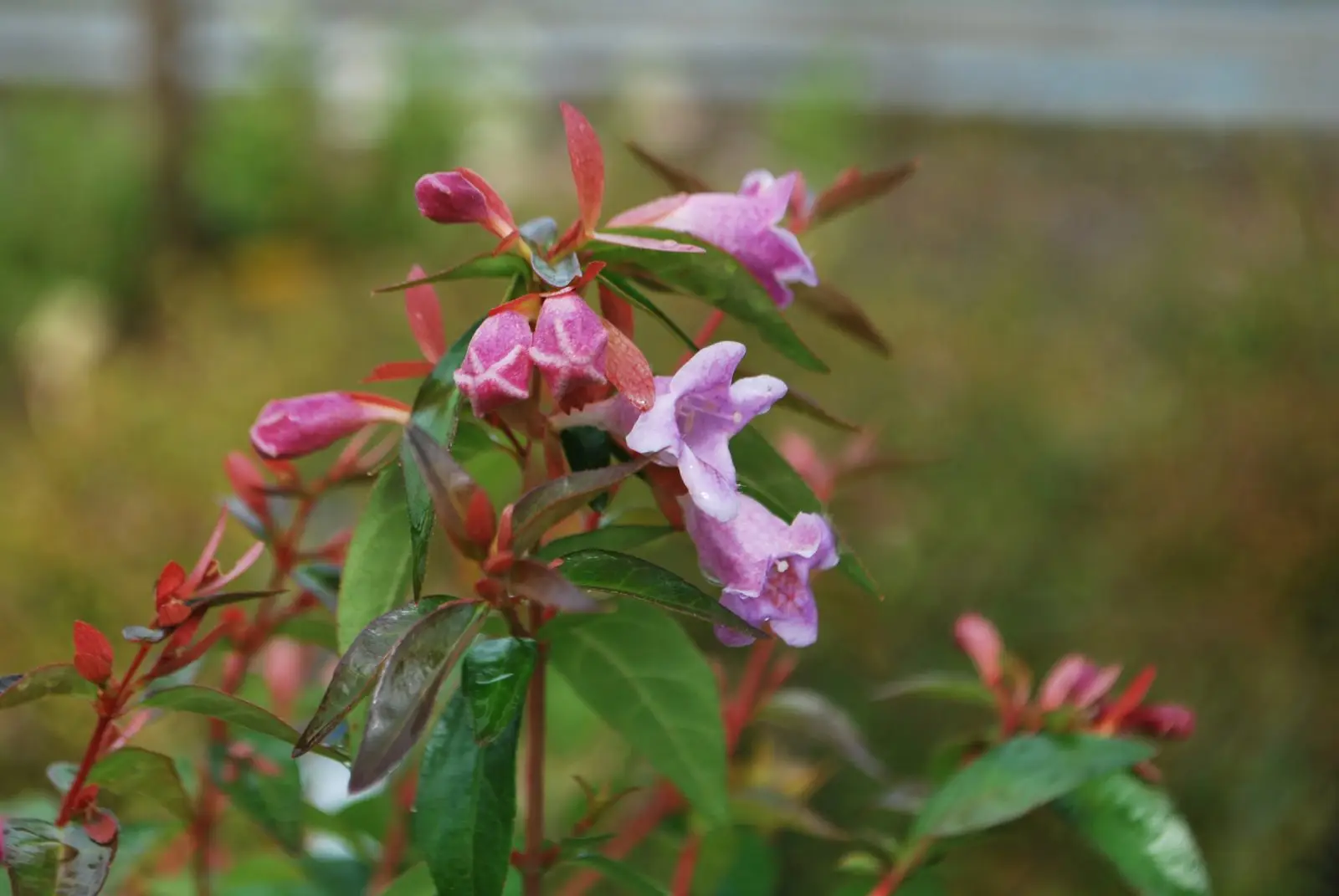
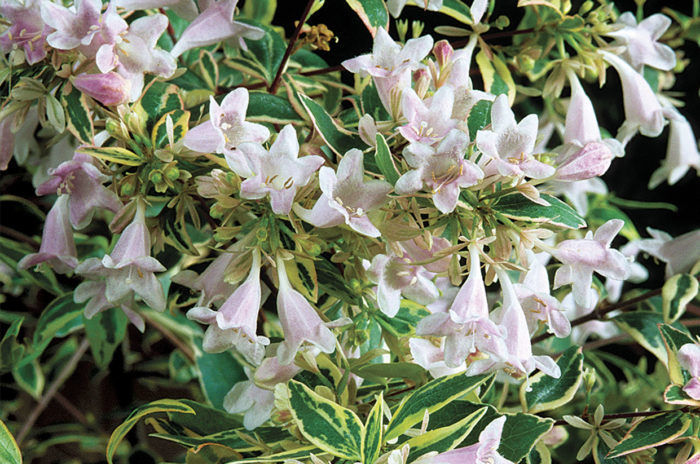
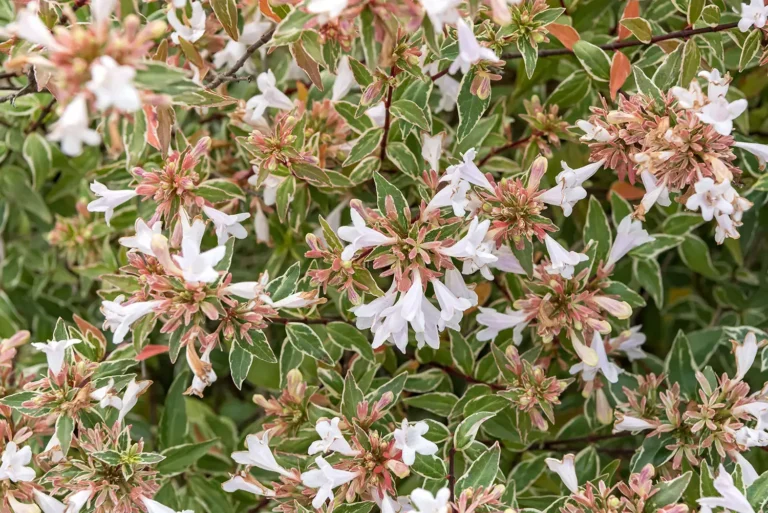
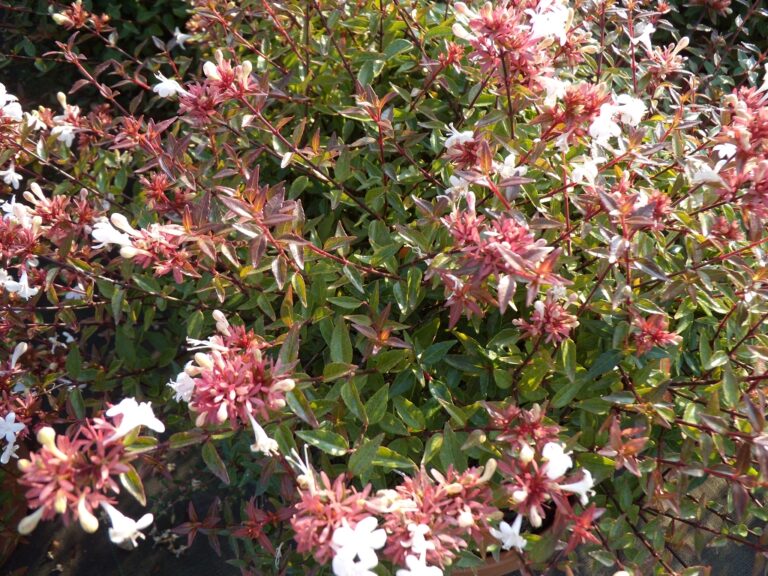
It starts pushing out these clusters of little, trumpet-shaped pink flowers with tiny orange throats. They have a faint, honey-sweet scent that you only really catch if you’re weeding nearby on a warm evening. But the real secret weapon of this plant isn’t actually the flower petal; it’s the calyx.
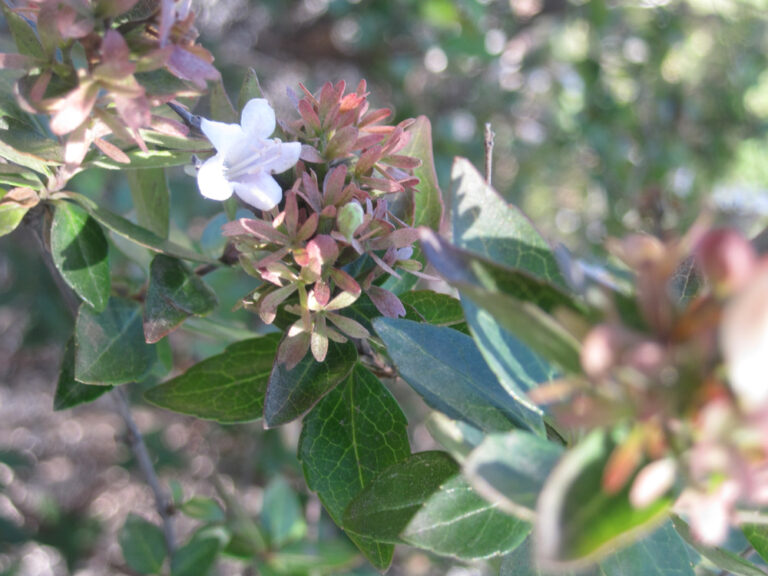
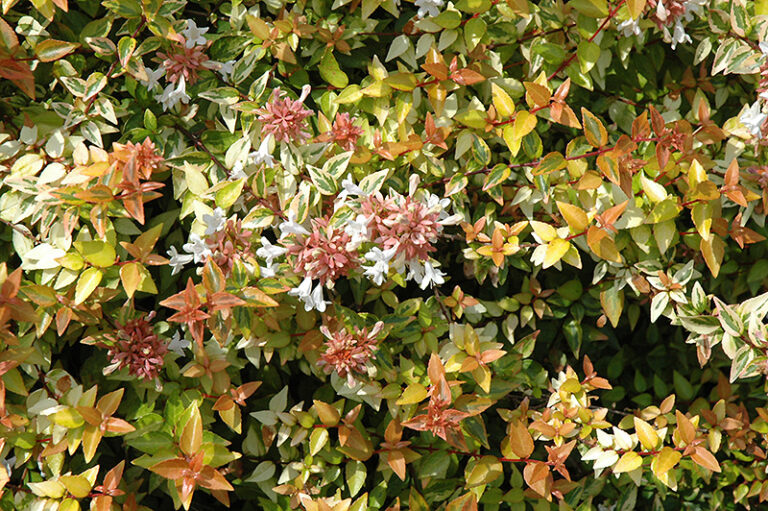
When the pink petals drop off, they leave behind these little reddish-bronze, star-shaped bases. From twenty feet away, the shrub still looks like it’s covered in blooms all through September and October, long after the actual flowering has wrapped up.
Winter Shifts
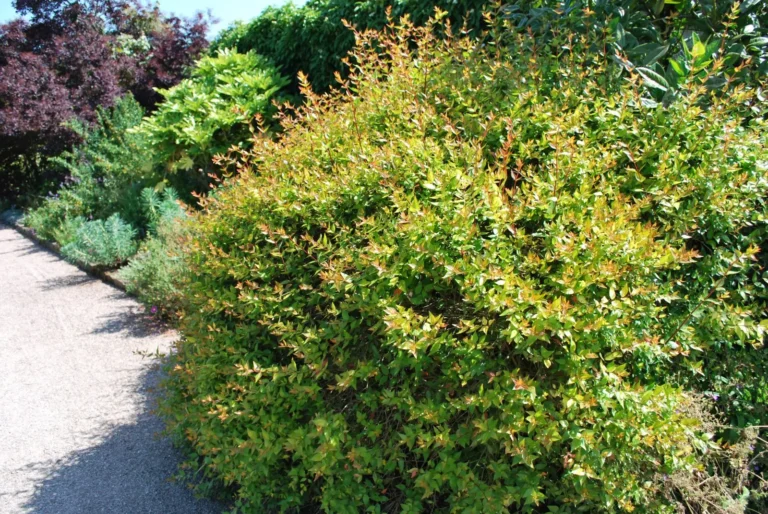
Size-wise, the books will tell you it gets five to eight feet tall and wide, but in most gardens, it behaves a bit better than that. It naturally wants to form a loose, arching mound—kind of like a soft green fountain. If you live somewhere down South with mild winters, the glossy, dark green leaves stick around all year. In regions where the frost actually bites, it drops its leaves, but not before the whole canopy turns a gorgeous, moody coppery-purple in November.
Soil, Water, and the Golden Rule of Drainage
Getting it established is dead simple, mostly because it isn’t picky. These shrubs will grow in awful, heavy clay that hasn’t seen organic matter in a decade, and they are equally happy in sandy loam.
The only absolute dealbreaker is drainage. If you plant an abelia in a low spot where water sits for twenty-four hours after a rainstorm, you’re going to end up with a dead, rotted root system.
Give it a spot that drains well, soak it thoroughly every week during its first summer so the roots can get a foothold, and then pretty much leave it alone. Once it’s established, it can handle weeks without rain without dropping a single leaf.
The Stress-Free Guide to Pruning
And whatever you do, please don’t ruin its natural shape with gas-powered hedge trimmers. Shearing abelias into tight, sad little green meatballs completely ruins the cascading habit and cuts off half the flowers.
Timing is Everything
Because it blooms on new growth—meaning the flowers only pop up on branches that grew this year—you want to prune it in late winter or very early spring while it’s still asleep. Use a pair of bypass pruners to cut out any dead wood from the winter, and maybe take a few of the oldest, thickest, ugliest canes right down to the ground to let the young, vigorous stems take over.
Rejuvenation Pruning
If you inherit an old, neglected specimen that looks totally wild and leggy, you can actually hack the entire thing down to within six inches of the ground in March. It feels brutal, but it will push up clean, dense new growth by June.
No Pests, No Drama, No Wildlife Worries
Another reason this thing is a staple for low-maintenance yards is that the local wildlife leaves it entirely alone. Deer will strip the leaves off viburnums and rabbits will chew young dogwoods down to the nubs, but they walk right past the abelia. The foliage has a slightly resinous, aromatic quality when crushed that they just don’t care for.
The bugs don’t bother it much either. You might get a flush of aphids on the tender new tips in May, but a hard spray with the garden hose or a couple of hungry ladybugs usually takes care of it before it becomes an eyesore. If you get a wet, humid summer, you might spot some powdery mildew or leaf spot, but it’s rarely enough to do real damage.
Designing the Border: Pollinators and Companions
In terms of layout, it belongs near walkways or back patios where you can actually watch the traffic. Bumblebees and butterflies absolutely lose their minds over this plant for three months straight.
It looks fantastic planted behind a row of purple coneflowers or native salvias, and if you want a really striking contrast, drop it in front of a dark-foliaged shrub like a ‘Royal Purple’ smokebush or a ninebark. The way the fine, glossy abelia leaves play off coarser foliage or the airy texture of something like ‘Morning Light’ miscanthus grass is just beautiful.
Backyard Propagation: Skip the Seeds
If you want more of them, don’t bother looking for seeds—because it’s a hybrid, whatever sprouts won’t look anything like the parent plant. Instead, wait until late summer when the new stems have started to stiffen up a bit.
-
- Snip off a six-inch cutting.
- Strip the leaves off the bottom half.
- Dip it in some rooting powder.
- Stick it in a pot of damp peat and perlite.
Put a clear plastic bag over the top to keep the humidity in, leave it in a shady spot on the porch, and within two months, you’ll have roots.
A Timeless Investment
It’s not a rare plant, and it’s certainly not trendy. But on a blistering August afternoon when everything else in the yard is begging for mercy, you’ll be incredibly glad you planted it.