Abelia chinensis (Chinese Abelia) – Complete Growing Guide
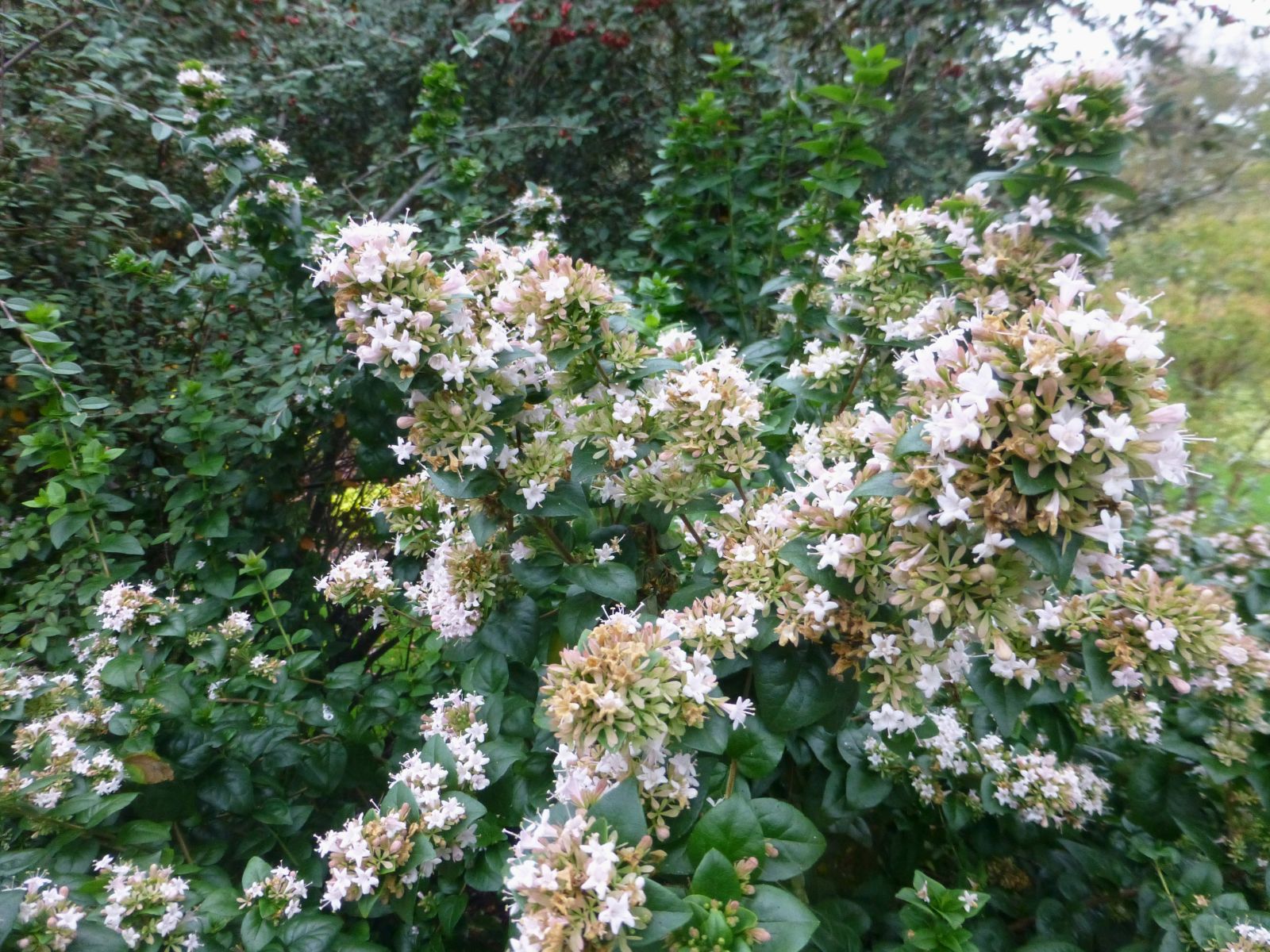
If you walk through a neighborhood garden in late August, you will likely notice a quiet lull. The midsummer riot of daylilies and hydrangeas is beginning to fade, and the autumn aster display hasn’t quite kicked in. But if you are lucky, you might catch a drift of something sweet, clean, and distinctly jasmine-like on the breeze. Follow that scent, and you will almost certainly find yourself standing in front of a Chinese Abelia (Abelia chinensis).
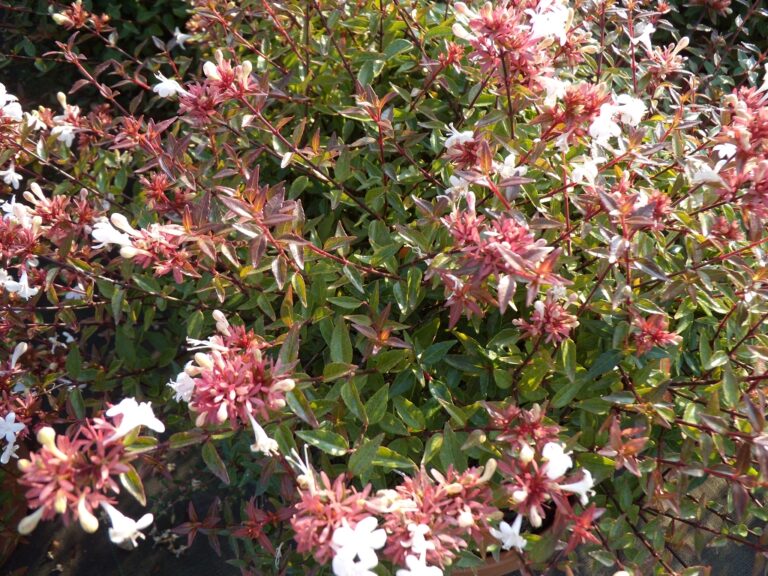
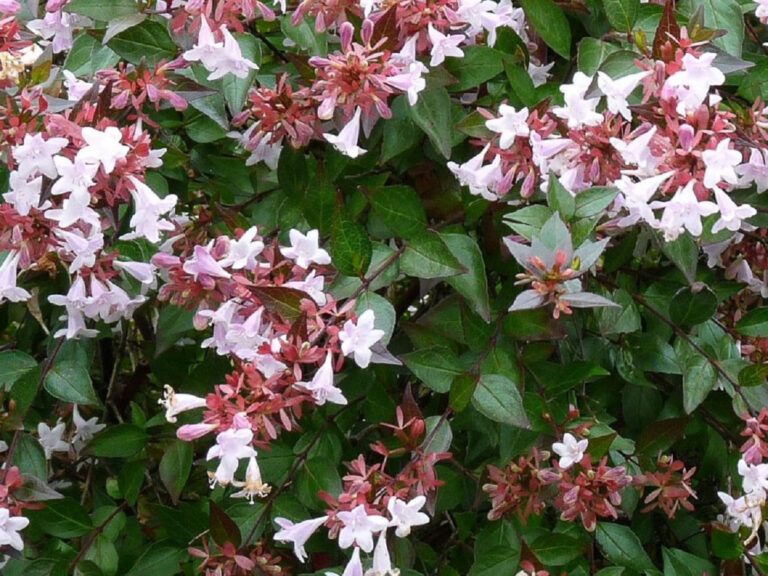
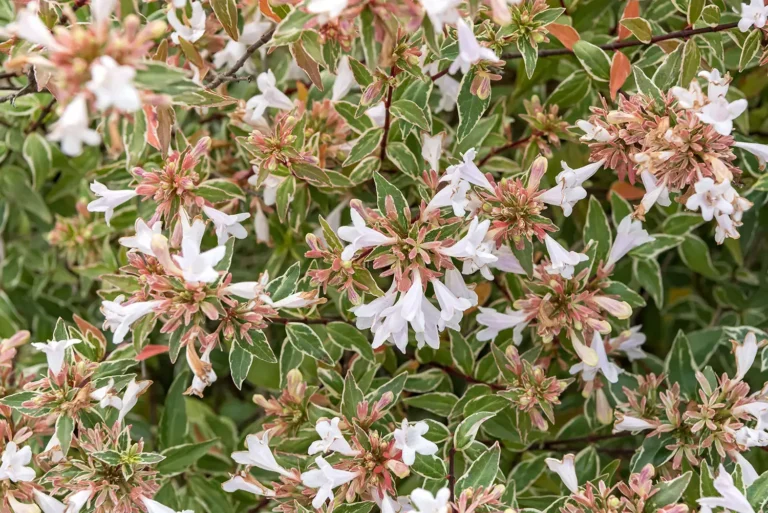
For reasons that remain a mystery to many nurserymen, this spectacular deciduous-to-evergreen shrub doesn’t get nearly the spotlight it deserves in American landscapes. It is often overshadowed by its famous hybrid offspring, Glossy Abelia (Abelia × grandiflora). Yet, the straight species holds a rugged, elegant charm all its own. Boasting arching mahogany-red stems, glossy foliage that pulls off a spectacular autumn color shift, and a massive bloom window that stretches from midsummer straight until the first hard frost, it is a powerhouse plant for anyone looking to add multi-season texture to their yard.
Here is exactly what you need to know to welcome this resilient beauty into your home landscape.
A Look at the Roots: Botany and Heritage
To understand how to grow this plant well, it helps to understand where it comes from. Abelia chinensis belongs to the Caprifoliaceae family, making it a cousin to the beloved honeysuckle. In its wild habitats—which span the mountain forests, rocky thickets, and woodland margins of central and eastern China, Taiwan, and Vietnam—it learns to be tough. It routinely handles thin soils, fluctuating moisture levels, and sloping terrain at elevations up to 5,000 feet.
The plant’s journey to Western gardens is a classic tale of 19th-century botanical exploration. While the genus itself was named for Dr. Clarke Abel, a physician who spotted it during an 1816 British embassy trip to China, it was the legendary Scottish plant hunter Robert Fortune who actually brought it to life for Western gardeners. In 1844, acting on behalf of the Royal Horticultural Society, Fortune managed to ship living specimens from China back to Kew Gardens in London. From there, its reputation as an ironclad ornamental shrub slowly spread across the Atlantic.
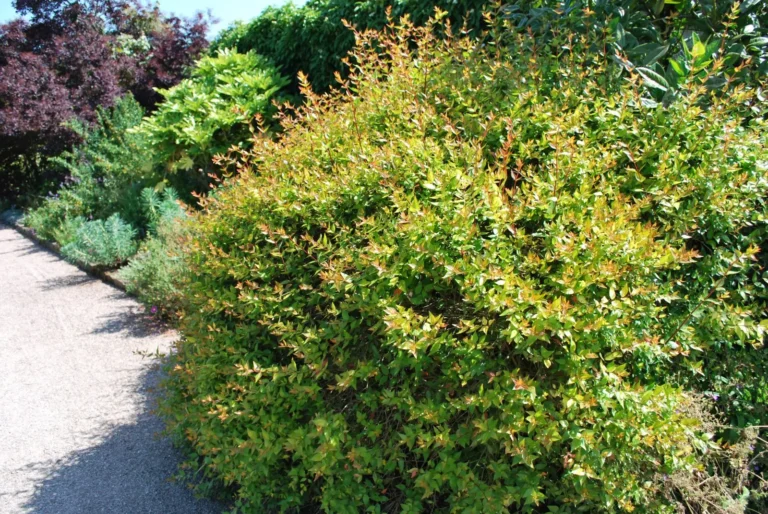
In the garden, Chinese Abelia naturally forms a dense, mounding shrub with a gracefully weeping, arching silhouette. Left to its own devices in ideal conditions, it typically matures into a well-proportioned 3 to 5 feet in both height and spread, though a truly happy specimen in a warm climate can occasionally stretch a bit taller.
Decoding the Seasons of Interest
The Summer Bloom Spectacular
The Autumn Shift and the “Two-Bloom” Illusion
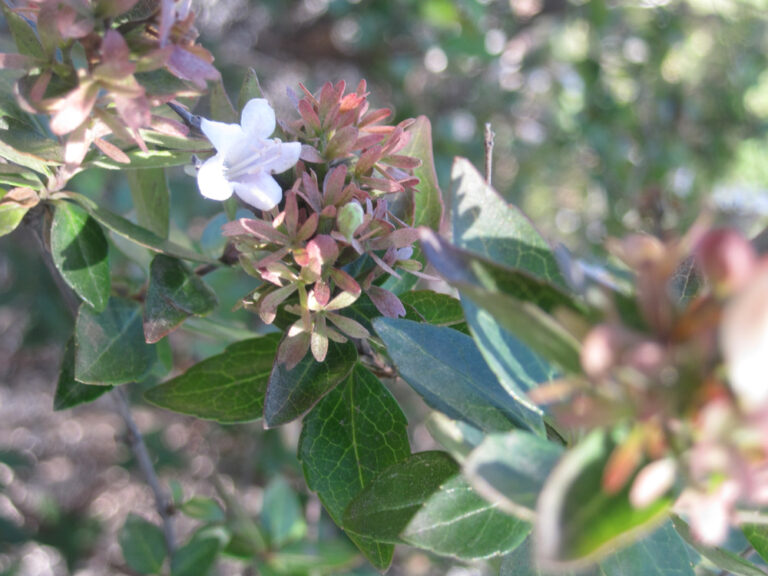
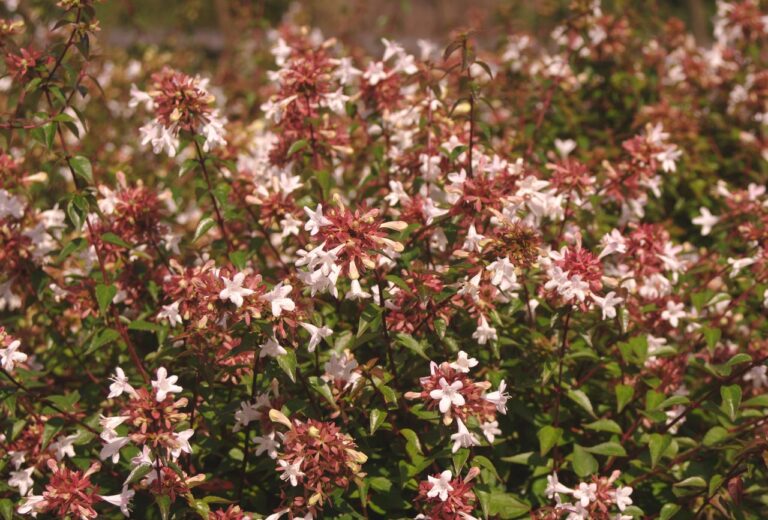
As September rolls into October, the petals will eventually drop, but the show is far from over. In fact, this is where the plant gets highly interesting. Each tiny flower is held by a cluster of rosy-pink sepals (the calyces). When the white petals fall away, these colorful sepals stay firmly attached to the stems, deepening in color as the weather cools. From a distance, it looks like the plant has suddenly burst into a second wave of dusty-pink blossoms.
Winter Performance and Regional Personality
How this shrub handles the winter depends entirely on where you live.
-
- In the Upper South and Pacific Northwest (USDA Zones 8 and 9): The plant behaves as a reliable semi-evergreen to true evergreen. It holds onto the bulk of its glossy leaves all winter long, providing excellent structural backbone and color when the rest of the garden is bare.
- In the Mid-Atlantic and Midwest (USDA Zone 7): It acts as a deciduous shrub, dropping its leaves after a hard freeze. In unusually severe winters where temperatures plummet toward zero, the top growth may even die back to the ground. Don’t panic if this happens—the root system is incredibly resilient. Provided you have heavily mulched the base, it will aggressively push up fresh, vigorous new shoots from the crown come spring and will still bloom beautifully that same summer.
Finding the Perfect Home: Light, Soil, and Site Selection
The Light Equation
Soil Preferences: The One Golden Rule
However, it demands one non-negotiable condition: impeccable drainage.
The quickest way to kill a Chinese Abelia is to plant it in heavy, compacted, waterlogged clay where water sits for hours after a rainstorm. Its root system is highly susceptible to rot under saturated conditions. If you have heavy garden clay, you must amend the planting area heavily with organic compost or leaf mold to break up the compaction, or consider planting the shrub in a raised bed where gravity can do the drainage work for you.
Settling In: Planting and Early Care
The best windows for planting are early spring—just as the soil wakes up but before summer heat hits—or early autumn, which gives the root system a few months to establish in warm soil without the stress of supporting intense top growth.
To plant a container-grown specimen, dig your hole twice as wide as the nursery pot, but keep the depth exactly the same. When you slide the shrub out of its plastic container, look closely at the roots. If they are circling tightly (bound), gently tease them apart with your fingers or score the sides of the root ball with a clean knife to encourage them to explore the surrounding soil.
Set the shrub in the hole, making absolutely sure that the top of the root ball sits perfectly level with—or even a hair above—the surrounding soil line. Burying the crown too deep invites rot. Backfill the hole with your native soil, tamping it down gently with your hands to collapse any major air pockets, and then water the area thoroughly to settle the earth.
Finish by applying a 2 to 3-inch layer of organic mulch, such as shredded hardwood or pine bark, across the root zone. This keeps moisture even and insulates the roots. Just be sure to pull the mulch back a few inches away from the actual wooden stems; piling mulch directly against the bark traps moisture and invites fungal disease and chewing pests.
The Maintenance Routine: Keeping Your Abelia Happy
Watering Wisely
During its first full growing season in your garden, water the shrub deeply once or twice a week whenever rainfall is scarce. You want to train those roots to grow deep into the soil profile rather than staying shallow.
Managing Fertility
Gardeners often make the mistake of over-fertilizing their shrubs, which actually does more harm than good with Abelia. Dosing this plant with high-nitrogen chemical fertilizers results in a massive explosion of soft, watery green leaves at the absolute expense of flower buds. Worse, that tender, late-season growth is incredibly vulnerable to getting zapped and killed by the first winter freeze.
Instead, simply scratch a light layer of organic compost or a modest handful of a balanced, slow-release organic shrub fertilizer into the soil around the base of the plant in early spring. That is all the fuel it needs for the entire year.
The Art of Pruning
Routine Spring Tidying
-
- Start by tracking down and removing any dead, broken, or obviously diseased wood right down to the ground or a main branch joint.
- Look for any weak, spindly, or overcrowded stems clogging up the center of the shrub. Cutting these away opens up the interior to sunlight and fresh air circulation, which keeps fungal issues at bay.
- If you want to manage the overall size or encourage a bushier, denser habit, you can lightly head back the tips of the remaining branches or trim away any erratic, wayward shoots that are ruining the shrub’s symmetry.
Rejuvenation for Tired Shrubs
In early spring, select one-third of the oldest, thickest, most weathered wooden stems and cut them completely down to within six inches of the ground. This triggers the crown to send up a flush of bright, youthful, highly floriferous new canes. If you repeat this process over three consecutive years, you will completely renew the entire structure of the plant without shocking its system or leaving a gaping hole in your border.
Simple Techniques for Propagation
The Summer Semi-Hardwood Method
The most reliable route is taking semi-hardwood cuttings in mid-to-late summer. This is the window where the current year’s new green growth is starting to mature, firm up, and turn woody near the base.
-
- On a cool morning, clip a few healthy, non-flowering shoots roughly 4 to 6 inches in length, making your cut clean and directly below a leaf node.
- Strip away the leaves from the bottom half of the cutting, leaving just two or three pairs of leaves intact at the top. If the remaining leaves are quite large, snip them in half horizontally; this stops the cutting from wasting its limited hydration through leaf evaporation.
- Dip the bare wounded end into a quality rooting hormone powder, then press the stem firmly into a moistened, ultra-sharp potting medium—a 50/50 mix of perlite and peat moss works perfectly.
- To keep the cutting from drying out before it can grow roots, clear a plastic bag over the pot to create a makeshift mini-greenhouse, or place it under a humid propagator tray. Set the pot in a warm, bright room that receives plenty of indirect sunlight, but keep it out of harsh, direct sun, which will bake the cuttings.
- Keep the medium consistently damp but never soggy. In about four to six weeks, give the stems a very gentle upward tug. If you feel a firm resistance, congratulations—the cutting has successfully thrown out roots and is ready to be potted into standard soil to grow on for the winter.
Trouble in the Garden: Pests and Common Pitfalls
One of the greatest joys of growing Abelia chinensis is its incredible natural resistance to the typical plagues of the garden landscape. It has no devastating host-specific pests, and it is largely ignored by deer and rabbits, who find the woody, textured stems unappealing compared to hostas or roses.
That said, no plant is entirely invincible. If your Abelia is struggling, it is usually a sign of environmental stress.
-
- The Fungal Trio (Powdery Mildew, Leaf Spot, and Rust): If you experience an intensely hot, sticky, humid summer, or if you consistently water your garden using overhead sprinklers that leave the foliage soaked overnight, you might notice a dusty white coating or dark spots forming on the leaves. This is rarely fatal. Simply trim away the worst affected branches to improve internal air flow, and switch to a soaker hose or drip irrigation system that delivers water directly to the soil, keeping the leaves completely dry.
- Yellowing Leaves and Decline: If the leaves turn a pale, sickly yellow and the entire plant looks wilted even though the soil is visibly wet, you are likely looking at root rot caused by poor drainage. If caught early, you can sometimes save the plant by digging it up, amending the surrounding soil heavily with grit and compost to drastically improve drainage, and replanting it. If the roots have turned black and mushy, the plant is unfortunately a loss and should be discarded.
- Honey Fungus (Armillaria): This is a serious, aggressive soil-borne disease that attacks the root systems of many woody landscape plants. If an otherwise healthy Abelia suddenly collapses and dies in mid-season, check under the bark at the very base of the soil line. If you see sheets of white, fan-like fungal growth or black, shoestring-like strands in the dirt, honey fungus is the culprit. There is no cure. You must dig up the entire root ball, clear out the immediate surrounding soil, and dispose of it to prevent the fungus from traveling to neighboring trees and shrubs.
Design Inspiration: Where to Plant It
Because of its balanced, soft texture and extended season of beauty, this shrub plays beautifully with a wide variety of design styles.
-
- The Mixed Border Anchor: Plant it in the middle tier of a perennial border. Its neat green foliage forms a calm, structural backdrop for flashy spring-blooming perennials like irises, peonies, and salvias. Then, when those perennials take a back seat in late summer, the Abelia steps forward to carry the border through the autumn.
- The Living Screen: Space plants roughly 3 to 4 feet apart to create a stunning, informal low hedge along a property line, walkway, or patio edge. Unlike formal boxwood or privet hedges that require meticulous, razor-sharp shearing, an Abelia hedge looks best when left to showcase its soft, billowing, natural arching form.
- The Ultimate Cottage Companion: It fits effortlessly into the romantic chaos of a traditional cottage garden. Try pairing it with late-blooming coneflowers (Echinacea), Russian sage (Perovskia), or tall ornamental grasses like Maiden Grass (Miscanthus). The airy texture of the grasses moving in the autumn wind alongside the coppery-red leaves and rosy sepals of the Abelia creates a breathtaking late-season vignette.