The Ultimate Guide to Pruning Abelia (Combining the new vs. old wood rules and the hard rejuvenation haircut)
If you are looking for a landscape shrub that is incredibly forgiving of a pair of pruners, you found it in the Abelia. These tough, heavy-blooming shrubs are a favorite across American backyards, mostly because they carry a major biological advantage: they bloom exclusively on new wood.
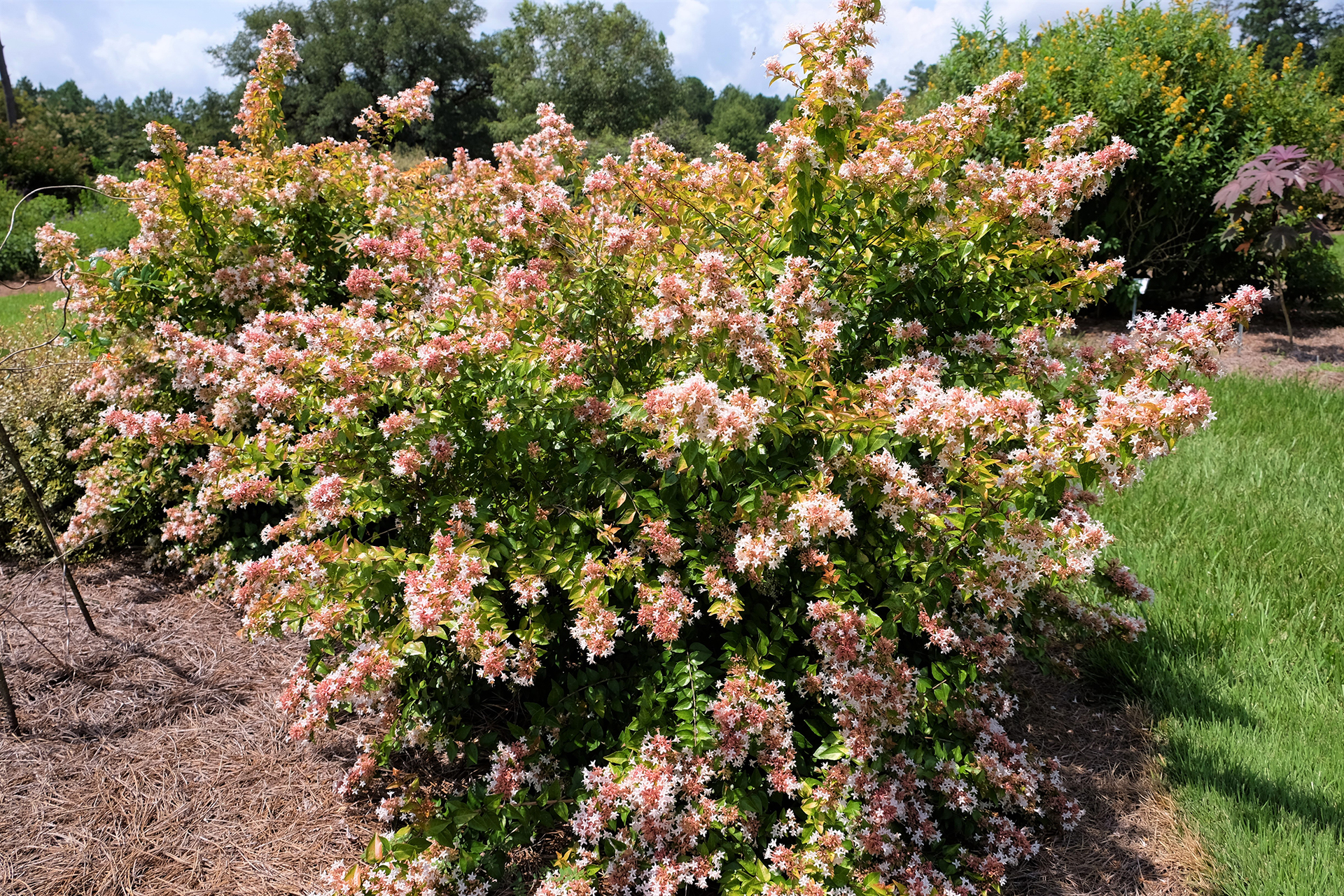
In the gardening world, this trait gives you a massive safety net. Because flower buds form on the fresh stems that push out during the current growing season, you can prune deep into late winter or early spring without accidentally cutting off the upcoming summer show. The plant responds to your cuts by vigorously pushing out fresh growth that fills with blossoms from midsummer right into autumn.
Whether you are trying to keep a tidy dwarf specimen in bounds, taming a wild hedge that has overtaken a walkway, or hacking down a neglected monster for a total restart, managing your Abelia comes down to understanding how the plant grows. Balancing new wood, older structural canes, and proper timing is the secret to a lush, healthy shrub.
The Golden Rule: New Wood vs. Old Wood
The Freedom of New-Wood Bloomers
Unlike old-wood bloomers—such as traditional mophead hydrangeas or spring lilacs, which lock in their flower buds during the previous autumn—Abelia starts from scratch every spring. When the plant wakes up from dormancy, it directs its energy into growing new green shoots. The flower buds develop entirely on this fresh growth.
This growth habit changes your entire maintenance strategy for three reasons:
-
- Your schedule is flexible: You do not have to rush out with shears immediately after the summer bloom fades. If you miss your window in late autumn, you can safely wait until the tail end of winter.
- Pruning actually forces more flowers: Every time you head back a stem, you stimulate the nodes below the cut to push out multiple new shoots. More new shoots directly equal more flowering sites.
- No urgent post-bloom panic: You can let the plant do its thing all summer and winter without worrying that a late-season cleanup will ruin next year’s potential.
The Role of Old Wood
“Old wood” refers to the mature canes that are more than a year old. You can easily spot them because they are thicker, woodier, and usually feature darker, peeling bark.
While this older wood is not responsible for pushing out the main crop of flowers, it serves as the essential scaffold for the shrub. However, if you let an Abelia grow for years without managing these older canes, you run into problems. The interior of the plant becomes a dark, tangled web of unproductive wood. Airflow drops, sunlight cannot penetrate the center, and the plant gets “leggy”—meaning you end up with a giant skeleton of bare branches with a thin fringe of flowers only at the very tips.
Strategic removal of this old wood forces the shrub to crown-sprout fresh, vigorous canes right from the base, keeping the overall habit dense and full of color.
The Best Time to Grab the Pruners
The Primary Window: Late Winter to Early Spring
For the vast majority of US gardeners, the absolute sweet spot for pruning is late winter or early spring. You want to catch the plant right as it is waking up, but before it starts pushing out visible new green leaves.
-
- In USDA Zones 6 and 7 (the Northeast, Midwest, and parts of the Upper South), this usually means late February through March.
- In Zones 8 through 10 (the Deep South, Southwest, and West Coast), Abelia often holds onto its leaves and acts as a semi-evergreen. Here, you can push your pruning into April or early May, ensuring you wait until the local threat of a late-season hard freeze has completely passed.
Secondary Maintenance: Light Touch-Ups
Because Abelia is so resilient, you do not have to put the pruners away for the rest of the year. If a stray branch shoots out past the rest of the hedge line, or if a branch dies back, you can clip it away anytime during the growing season.
Dealing with Real Winter Dieback
If you are gardening on the colder edge of Abelia’s hardiness range (Zones 6a or 6b), winter can be brutal on the top growth. Stems can freeze completely to the ground, looking brittle and dead by March.
If you suspect winter damage, do not rush. Wait until mid-spring to see where the plant naturally breaks dormancy. You can use the thumbnail test: gently scratch the bark of a questionable stem. If you see a bright green layer underneath, that wood is alive. If it is dry, brown, and snaps easily, it is dead wood that needs to be cut back to the ground.
Four Ways to Prune: Choosing Your Method
Method 1: The Annual Tune-Up (Light to Moderate)
Method 2: The One-Third Rotation (Moderate Renewal)
If you have a mature Abelia that is starting to look sparse at the bottom and congested in the middle, you need a renewal strategy. Instead of cutting the whole thing down, you use a three-year rotation to swap out old wood for new wood.
Method 3: Hard Rejuvenation (The Total Reset)
This is the emergency brake for an Abelia that has been neglected for a decade, grown completely out of bounds, or turned into an ugly, hollow-centered thicket.
Take a deep breath and cut every single stem back to a mere 6 to 12 inches above the soil line. It will look incredibly drastic, and your neighbors might think you killed it, but a well-established Abelia will handle this beautifully.
-
- Only attempt this on a shrub that has been established in the ground for at least two to three years so it has a massive root system to support the recovery.
- Do this strictly in late winter while the plant is fully asleep.
- Keep your expectations realistic: because the plant has to spend an enormous amount of energy rebuilding its entire structure from scratch, you will get very few, if any, flowers during that first summer. By the second year, it will return as a tight, beautifully shaped, heavy-blooming powerhouse. Do not repeat this hard reset more than once every four years.
Cultivar Guide: Working with Specific Types
Not all Abelias grow at the same pace or reach the same size, so adjust your approach based on the specific variety in your yard.
-
- Dwarf and Compact Types (‘Little Richard’, ‘Sherwoodii’, ‘Rose Creek’): These varieties are bred to stay small, usually topping out between 2 and 3 feet with a natural, tight mounding habit. They rarely need heavy pruning. Keep your work limited to removing dead tips in the spring and doing very light shaping. If you get too aggressive with the shears, you can ruin their neat, natural form.
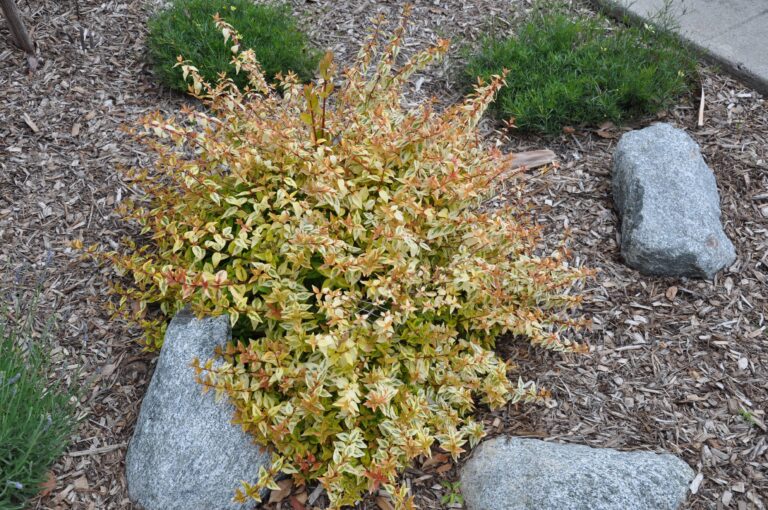
- Variegated and Foliage Varieties (‘Kaleidoscope’, ‘Radiance’): These are grown just as much for their bright, changing leaf colors as they are for their flowers. Because the most vibrant, intense leaf coloration occurs on brand-new growth, regular light tip-pruning in the spring is highly beneficial. It keeps forcing out fresh, colorful leaves all season long.
- Cold-Sensitive Cultivars: Varieties like Abelia prostrata are more prone to taking a hit from harsh winter winds. Always hold off on pruning these until the spring growth shows you exactly where the live wood starts. To see a complete breakdown of how these specific varieties behave and adapt across different regional climates, cross-reference your collection with our unfiltered Abelia cultivar performance ratings.
Tool Maintenance and Cutting Mechanics
Choosing the Right Tool
Making the Cut
Aftercare
Once you finish a major pruning session, give the plant a little support. Give it a deep watering if the spring has been dry, and spread a fresh 2-to-3-inch layer of organic mulch around the base to keep root temperatures stable and hold moisture in the soil. Keep the mulch a couple of inches away from the actual wooden stems to prevent rot. Hold off on heavy synthetic fertilizers right after a hard pruning; let the plant establish its new shoots naturally first.
Quick-Reference Pruning Calendar
| Season | Your Task | The Goal |
|---|---|---|
| Late Winter | Clean out deadwood, thin out old structural canes, or perform a hard reset if needed. | Kickstart strong spring growth and maximize summer flowering. |
| Early Spring | Finish any remaining shaping before buds break. Check for winter dieback in cold regions. | Clean up winter damage and set the final shape for the year. |
| Summer | Snip away stray branches that break the shape; light deadheading if desired. | Keep the shrub tidy without risking the ongoing bloom cycle. |
| Fall | Put the pruners away and avoid heavy cutting. | Prevent tender new growth from flushing right before freezing weather hits. |