Abelia × grandiflora ‘Sunshine Daydream’ (‘Abelops’) – Complete Growing Guide
If you’ve been searching for that rare, unicorn plant that looks gorgeous from April through November, doesn’t care about a little drought, and completely ignores the local deer population, let me introduce you to Abelia × grandiflora ‘Sunshine Daydream’.
Sold in nurseries under the cultivar name ‘Abelops,’ this little beauty is a natural mutation of an old garden favorite, ‘Little Richard.’ It was discovered across the pond in a Netherlands nursery back in 2007, and it has been scooping up industry medals ever since. For American gardeners, it’s a protected variety under US plant patent PP20,961, and it is easily one of the most reliable, hard-working variegated shrubs you can put in the ground today.
Here is exactly what you need to know to grow it successfully in your backyard.
Why It’s a Four-Season Showstopper
Most folks plant glossy abelias for their flowers, but ‘Sunshine Daydream’ steals the show with its foliage long before the first buds even appear.
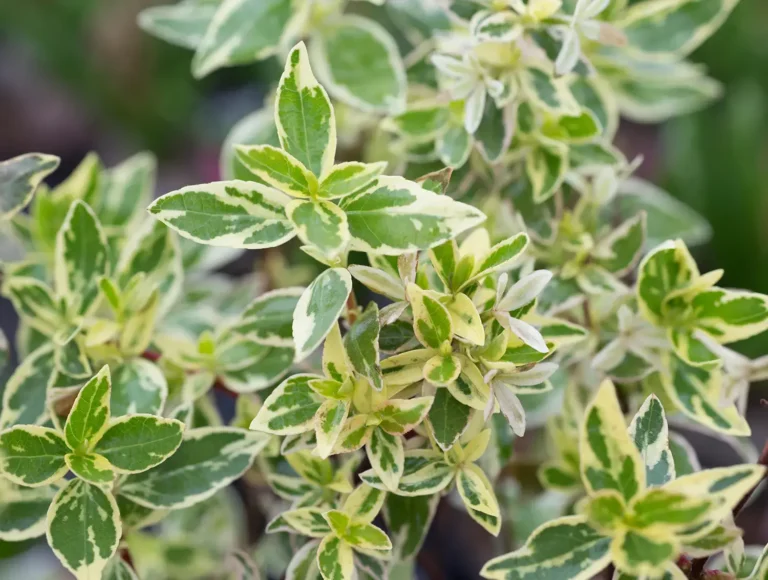
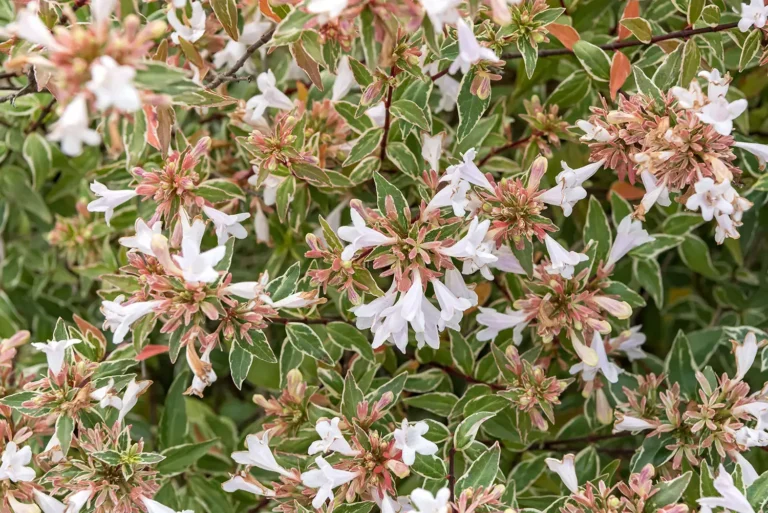
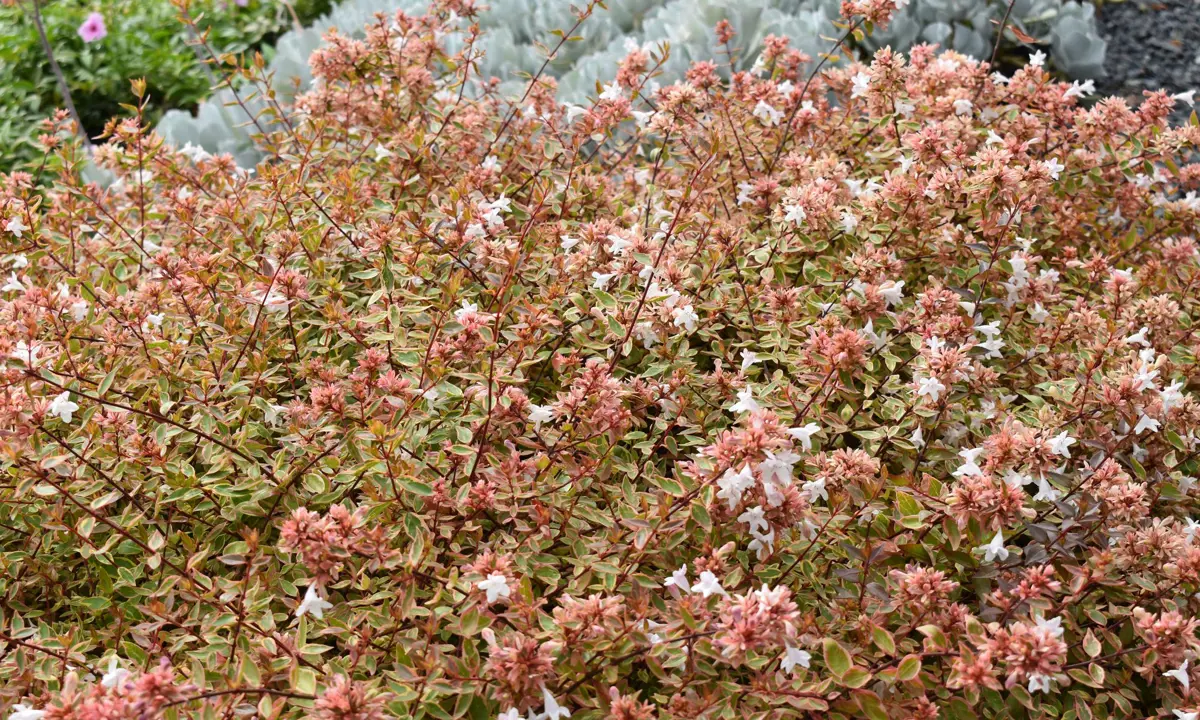
In the spring, the new leaves emerge with a gorgeous, bright rosy-pink to crimson flush that looks like a watercolor painting against its reddish-purple stems. As the season warms up, that pink softens into a striking variegated pattern: bright, glossy green centers broadly rimmed in creamy yellow.
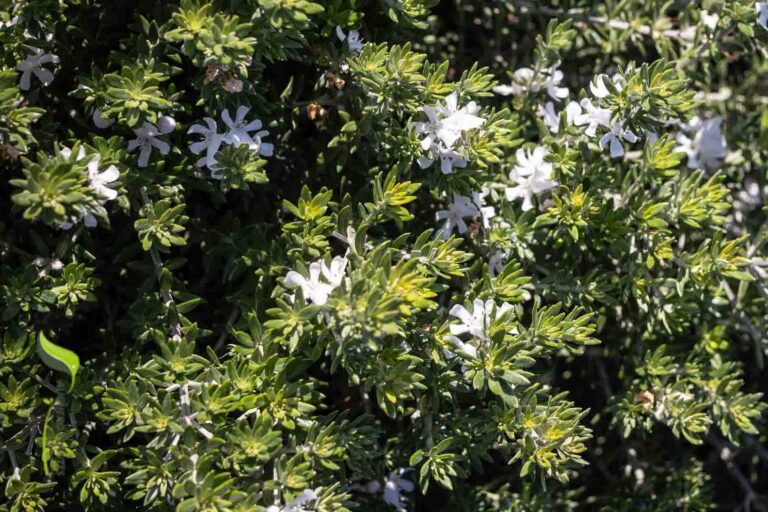
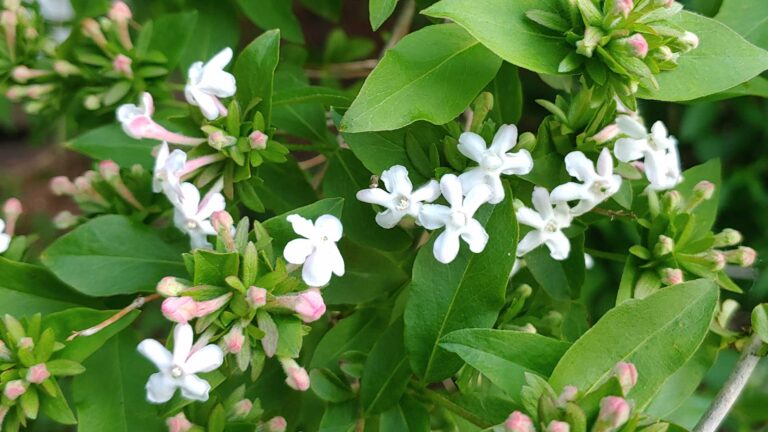
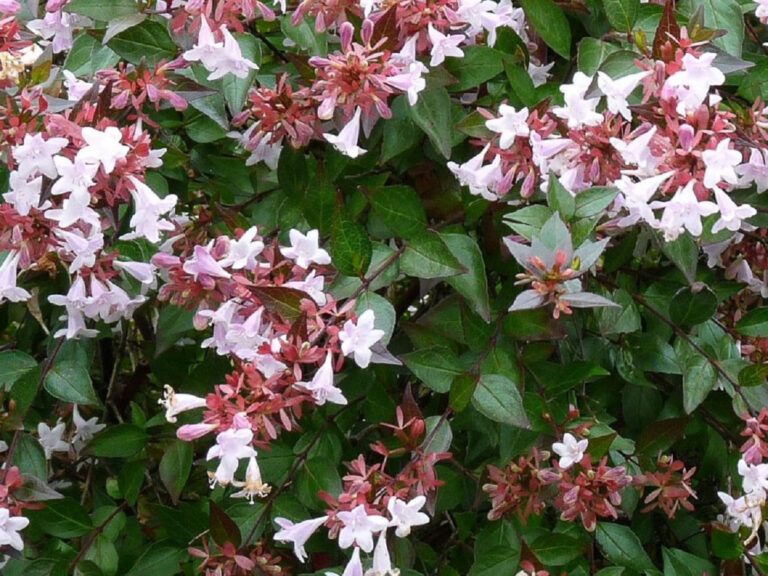
Just when other shrubs start looking tired in the heat of July, this abelia hits its stride. It explodes with clusters of tiny, trumpet-shaped white flowers tinged with a soft pink blush. They carry a sweet, delicate fragrance that will keep your local bees, butterflies, and hummingbirds very happy all the way into October.
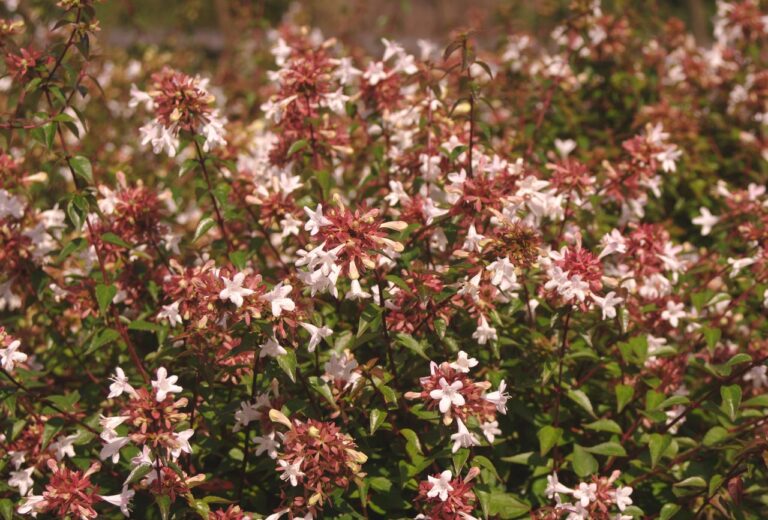
Even better? When the petals finally fall, they leave behind dark pink, star-like structures called calyces. These little guys stick around into winter, giving the plant a soft, colorful haze even in the dead of January. By late fall, the leaves shift again, taking on rich tones of bronze, purple, and deep red.
Unlike older abelia varieties that get leggy and wild, ‘Sunshine Daydream’ stays remarkably tidy. It naturally forms a dense, mounded dome about three to four feet tall and wide. It grows at a nice, moderate clip when it’s young and then settles into its mature size, meaning you won’t be out there every weekend with the loppers trying to keep it in bounds.
Climate Comfort Zones
On paper, ‘Sunshine Daydream’ is rated for USDA Hardiness Zones 6 through 9, though zone 7b is really its sweet spot for winter safety.
If you are gardening in the South or the West (Zones 8 and 9), this plant is a champion. It stays reliably evergreen all winter long and laughs at the summer humidity.
If you’re up north in Zone 6 or 7a, it behaves more like a semi-evergreen or even a die-back perennial. In a really brutal winter, the top growth might freeze right down to the ground. Don’t panic—as long as the roots are happy, it will push up brand-new, vigorous growth from the base come spring. Just give it a spot that’s sheltered from harsh, biting winter winds if you’re on the colder edge of its range.
Real-World Soil and Light Rules
Abelias are famously unfussy, but if you want that spectacular variegated color and a heavy flush of blooms, give it full sun. It needs at least six hours of direct sunlight a day. It will absolutely grow in partial shade, but the yellow edges won’t be quite as bright, and you’ll get fewer flowers. (That said, if you’re gardening in the scorching heat of the deep South or the desert Southwest, a little afternoon shade is actually a kind favor.)
When it comes to dirt, this plant is a dream. It adapts to almost anything—loam, sand, heavy clay, or chalky soil—and isn’t picky about pH, handling everything from acidic to slightly alkaline dirt.
The only hill it will die on is drainage. It absolutely hates having soggy feet. Plant it in a spot where the water drains away naturally. Interestingly, abelias have a fantastic natural resistance to Phytophthora root rot, which is a major bonus if your soil tends to hold a little moisture, but you still want to avoid true waterlogging.
Planting and Spacing Tips
The best time to get ‘Sunshine Daydream’ in the ground is early spring after the threat of hard frost has passed, or early autumn. If you live in a milder climate, fall planting is actually ideal because it gives the root system all winter to settle in before the summer heat hits.
When you’re ready to plant, clear away any weeds and dig a hole that’s twice as wide as the nursery pot but exactly the same depth. You want the top of the root ball to sit flush with the surrounding soil. If your dirt is incredibly poor or sandy, toss a few handfuls of good compost into the backfill. Pop the plant in, firm the soil gently with your hands, and give it a long, deep drink of water.
Always finish with a two-to-three-inch layer of wood mulch to keep the roots cool and hold in moisture, but make sure you pull the mulch back an inch or two from the main stems to prevent rot.
-
- For a low hedge or a privacy screen: Space your plants about 3 feet apart from center to center. They’ll knit together beautifully into a solid, colorful row.
- As a standalone specimen: Give it at least 4 to 5 feet of breathing room from other large shrubs so its natural mounded shape can really shine.
Low-Stress Care and Pruning
During its first year in your garden, give your abelia a regular, deep watering whenever the weather dries out to help those roots dig deep. Once it’s established, ‘Sunshine Daydream’ is incredibly drought-tolerant. You’ll only need to water it during prolonged, scorching dry spells—especially when it’s trying to bloom.
You can put away the heavy fertilizers, too. This shrub thrives in low-fertility soils. A light topping of compost or a gentle, balanced slow-release fertilizer in early spring is all it ever needs. Avoid hitting it with high-nitrogen lawn fertilizers late in the summer; that forces soft, juicy new growth right before winter, which will just get zapped by the first frost.
Because it blooms on “new wood” (the fresh growth it puts on in the current year), the absolute best time to prune is late winter or very early spring, right around February or March before it wakes up.
Honestly, it naturally keeps such a great shape that you’ll mostly just want to give it a light trim to tidy up any stray, wandering branches. There are only two specific things to keep an eye out for:
-
- Reverted Shoots: Every once in a while, a variegated plant will throw out a random, hyper-vigorous branch that is completely solid green. Cut these out cleanly right at the base of the stem whenever you see them, otherwise, the fast-growing green leaves will eventually crowd out the pretty variegated ones.
- Rejuvenation: If your shrub gets old, woody, and a little thin after a few years, it tolerates hard pruning beautifully. You can chop the whole thing back by two-thirds in the early spring, and it will bounce right back with a flush of fresh, colorful foliage.
Bugs, Diseases, and Backyard Wildlife
If you are tired of playing referee between your plants and the local wildlife, you are going to love this shrub. It is highly deer-resistant—they usually walk right past it.
Insect problems are incredibly rare. You might get a few aphids on the tender new spring growth, but a quick blast from the garden hose or the local ladybugs will usually clear them right up. If you get a hot, dry summer, keep an eye out for spider mites (look for tiny speckles on the leaves), which you can easily manage by rinsing the foliage down occasionally to boost humidity.
As long as you didn’t plant it in a swampy mudhole, you won’t have to worry about root rot. If you live in a super humid area with poor air circulation, you might notice a touch of powdery mildew on the leaves by late summer, but it’s rarely enough to do any real damage.
How to Style It in Your Landscape
Because of its compact size and non-stop color, ‘Sunshine Daydream’ is a designer’s Swiss Army Knife. It makes a phenomenal foundation plant along the front of the house, a gorgeous low border along a walkway, or a vibrant accent in a mixed perennial bed. It’s also small enough to thrive in large patio containers—just make sure the pot has a good drainage hole at the bottom.
When it comes to picking garden neighbors, its cream-and-yellow variegation looks absolutely stunning when paired with cool tones. Try planting it alongside:
-
- Deep purple perennials like English lavender or Catmint (‘Walker’s Low’ is a classic pairing)
- Blue-green foliage, like blue hostas in partly shaded spots or blue-tinted ornamental grasses like Blue Fescue or Switchgrass
- Darker evergreen shrubs to give the bright foliage a dramatic backdrop