The Steel-Blue Spire: Why Abies procera ‘Glauca’ Rules the Winter Landscape
The world of conifers is vast, yet few specimens command attention quite like Abies procera ‘Glauca’. Commonly known as the Blue Noble Fir, this distinguished cultivar is celebrated for its intensely saturated steel-blue to silvery-blue foliage and an elegant, narrowly pyramidal silhouette. While the standard wild noble fir hints at a green-blue tint, ‘Glauca’ delivers a brilliant, high-contrast shock of silver-blue that coats both sides of its needles. It is a major visual breakthrough for large-scale landscaping, especially when the winter sun catches its branches.
Visual Characteristics & Foliage
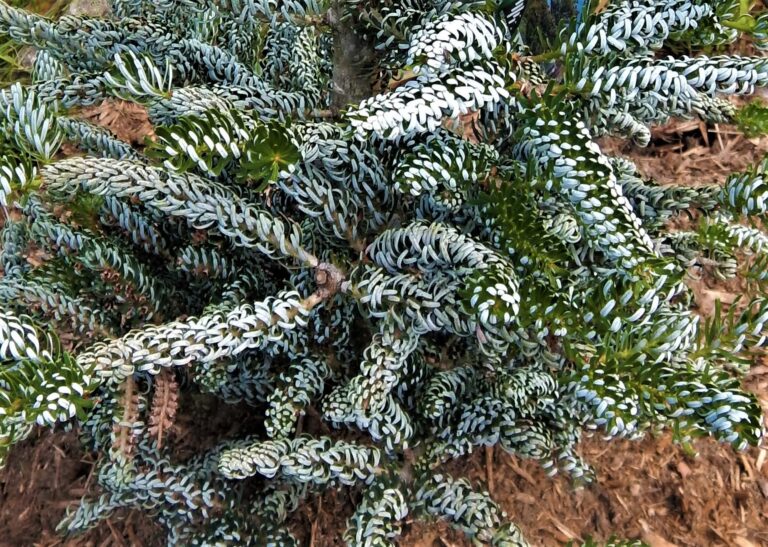
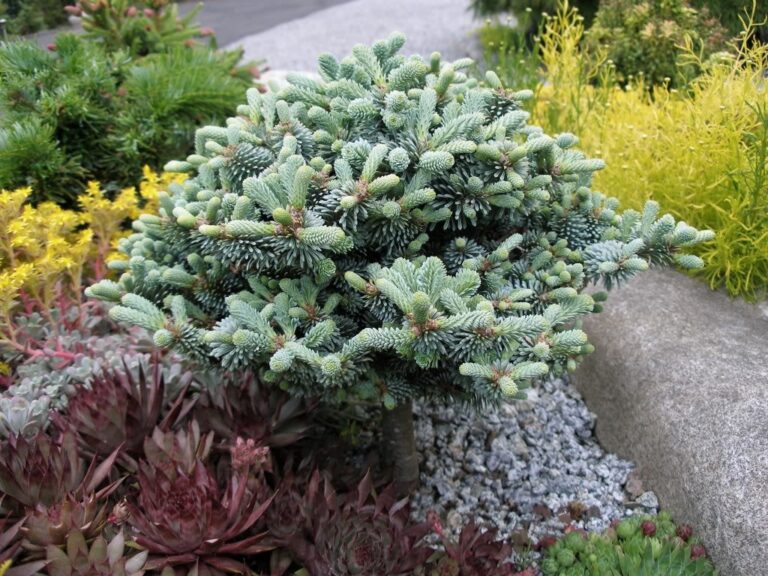
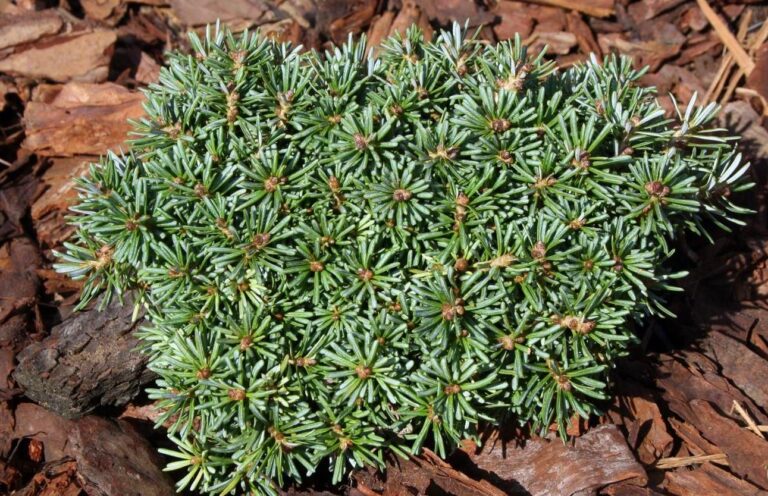
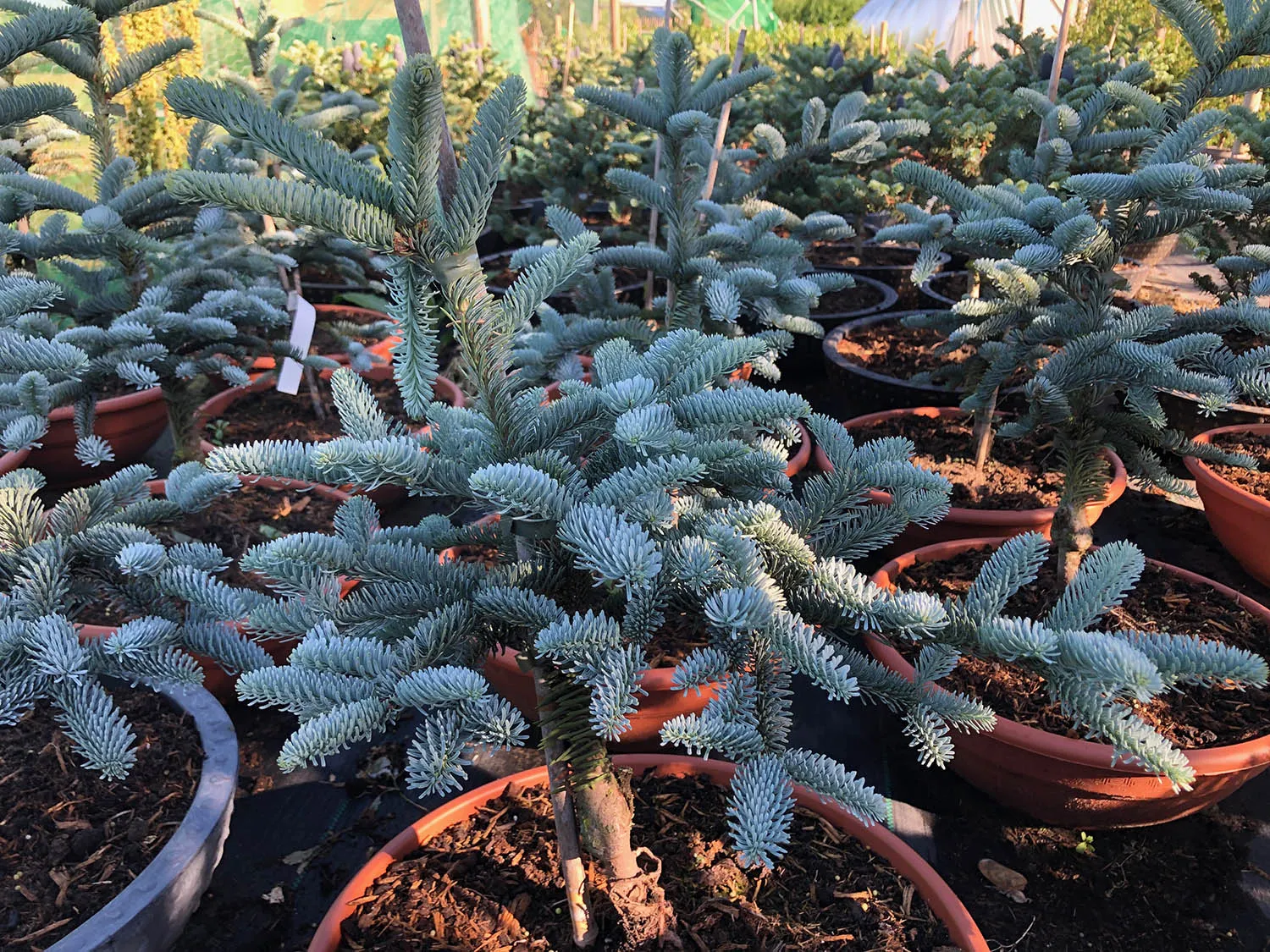
To truly appreciate ‘Glauca’, you have to look closely at its magnificent needles. Measuring 2.5–3.5 cm (1–1.4 in) long, these needles are exceptionally stiff and strongly up-curved, a trait botanists call assurgent. This upward curve gives the branches a remarkably structural, sculpted quality. More importantly, it turns the needles upward to expose their glaucous, waxy, silvery-white undersides. The result is a luminous, multidimensional blue effect that catches the eye from every conceivable angle.
While the tree maintains its icy presence year-round, its color reaches a breathtaking peak in spring and early summer as tender new growth flushes out. By winter, the foliage shifts to a deep, resonant blue-grey, standing as a bold structural anchor when the rest of the garden has gone dormant.
Mature Dimensions & Growth Habit
Make no mistake: ‘Glauca’ is built for grandeur. This is not a compact rock-garden specimen, but a majestic, towering tree that demands room to breathe. While local soil and regional climates will influence its final footprint, you can typically expect these mature dimensions in a garden setting:
- Height: 12–20 m (40–65 ft) in most managed landscapes, though it can climb past 20+ m (65+ ft) given flawless growing conditions.
- Spread: A disciplined 4–8 m (13–26 ft), giving it a notably narrow, columnar to pyramidal crown.
- Growth Rate: Slow and deliberate for its first 7–8 years, shifting into a moderate pace once its root system establishes.
- Time to Maturity: Plan for the long haul, as it takes 20–50 years to approach its ultimate height.
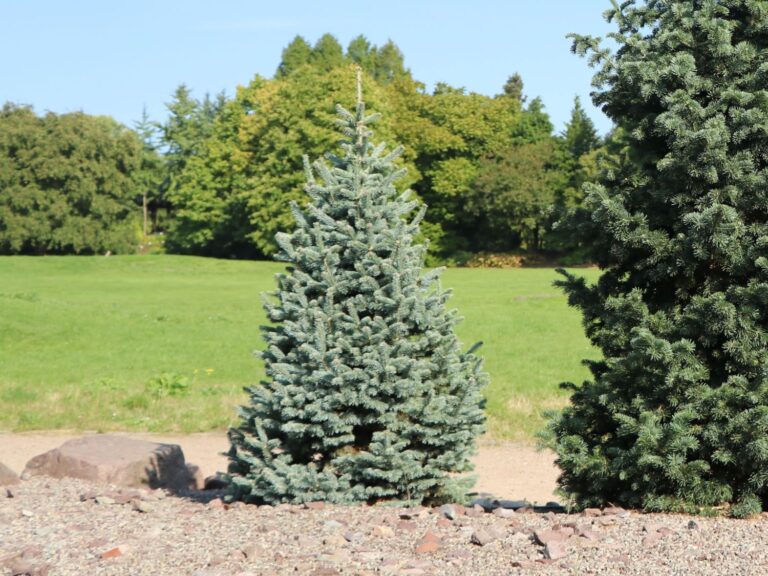
In its youth, the tree displays a crisp, narrowly pyramidal habit. As decades pass, it evolves into an imposing, spire-like column featuring neatly tiered, horizontal branches. This strict, upward architecture makes it a premier choice for gardeners seeking dramatic vertical height without sacrificing massive amounts of horizontal ground space.
Cones & Bark
Once the tree hits about 15 years of age, it introduces a whole new layer of seasonal drama by producing massive, highly ornamental seed cones. These cones sit perfectly upright on the branches like candles. They are extraordinarily long for a fir—reaching up to 20 cm (8 in)—starting out a rich shade of blue or blue-purple before maturing to a warm, woody brown. Look closely and you will see prominent, papery bracts protruding from the cone scales, curving sharply downward. This distinct botanical signature adds spectacular textural detail to the upper canopy.
The trunk offers its own quiet beauty. Young trees sport smooth, silvery-grey bark that catches the low winter light. As the tree reaches old age, this smooth skin matures into deep, reddish-brown furrows and a rugged texture, adding a rustic element to the landscape.
Landscape Positioning & Design Use
Given its electric coloring and commanding vertical posture, Abies procera ‘Glauca’ shines brightest when treated as a grand specimen tree. It is perfectly scaled for expansive lawns, public parks, and large country estates where its mature silhouette can be fully appreciated. Consider deploying it in these primary design roles:
Focal Point or Specimen
Set completely alone on a sweeping lawn or positioned at a critical visual intersection, its icy blue spire naturally draws the eye and grounds an entire garden landscape.
Vertical Accent in Mixed Borders
Planted at the back of a deep bed, it rises elegantly above low-growing shrubs and perennials, offering a cool, steady backdrop to warm-toned summer blooms.
Blue-Conifer Theme Plantings
For a serene, cool-toned evergreen vignette, group it alongside other silver and blue foliage champions, such as Cedrus atlantica ‘Glauca’ or select Picea pungens cultivars.
Architectural Structure
The tight, columnar habit makes it a natural fit for formal or contemporary architectural gardens that rely on strong geometric lines and minimal outward spread.
For the most striking color display, site ‘Glauca’ in full sun. Direct sunlight makes that waxy, glaucous needle coating glisten with maximum intensity. Be sure to give it plenty of clearance; crowding it with fast-growing, aggressive trees will shade out its lower branches and ruin the stark contrast that makes this blue fir so captivating.
Hardiness & Climate Suitability
- Hardiness Rating: Rated at RHS H7, meaning it shrugs off temperatures well below –20°C (–4°F). It thrives comfortably across USDA zones 5–7, and can sometimes push into zone 9 if protected by cool, mild summers.
- Climate Preferences: This tree favors cool, moisture-rich summers and well-drained ground. It actively dislikes stifling, swampy humidity and will show a sharp decline if planted above zone 7 in regions plagued by relentless, baking summer heat.
- Native Background: The wild species hails from the high-elevation slopes of the Cascade and Coast ranges in the Pacific Northwest, thriving between 900–1,800 m across Washington, Oregon, and Northern California. ‘Glauca’ was selected directly from these wild populations for its exceptional, amplified blue coloring.
Cultivar History & Selection
Gardeners have been enamored with these icy variants for generations. The name ‘Glauca’ has been attached to exceptionally blue forms of Abies procera since at least 1863, tracing back to British nurserymen who noticed brilliant blue seedlings popping up from wild-collected seed lots. Over time, the name became the official moniker for clones showcasing this reliably intense blue color and sharply curved needle habit. While you will occasionally see it categorized under a broader “Glauca Group,” the specific cultivar ‘Glauca’ remains the definitive, time-tested standard for blue noble firs.
Design Combinations & Visual Pairings
To get the most out of its unique palette, set ‘Glauca’ against companion plants that create intentional contrast or harmony:
- Complementary Warm Tones: Set it against rich gold or deep bronze foliage. The dark purple-maroon of Physocarpus opulifolius ‘Diabolo’ or the amber glow of golden ornamental grasses will make the fir’s blue needles pop with incredible intensity.
- Cool-Toned Companions: Combine it with soft silver or grey partners like Lavandula, Artemisia, or dwarf blue spruce (Picea). This weaves a quiet, elegant, and deeply calming monochromatic color scheme.
- Flowering Contrasts: Position it near trees or perennials that burst with purple or magenta blooms, such as Cercis canadensis ‘Forest Pansy’. The electric pink-purple flowers look sensational against the steady blue background.
Do not overlook its winter value. When the summer perennials vanish, the prominent upright cones and silver-grey bark take center stage, offering beautiful, quiet structure throughout the coldest months of the year.
Cultivation Guidance
For foundational planting instructions—including detailed breakdowns of soil amendment, proper planting depth, initial watering routines, mulching tips, and seasonal pest or disease management—please consult the Master Growing Guide for Conifers.
As a quick rule of thumb, ensure your ‘Glauca’ is placed in deep, slightly acidic to neutral soil that remains consistently moist yet drains freely. Situate it in a bright, sun-drenched spot within a cool climate, and you can comfortably leave your pruning shears behind—this tree naturally grows into its flawless, stately form without any routine shearing.