The Silver Sensation: How to Grow Kohout’s Ice Breaker Korean Fir
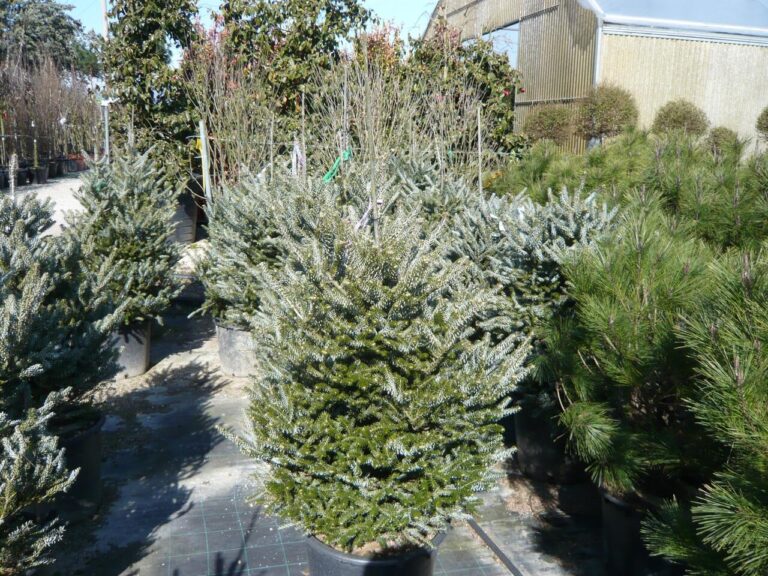
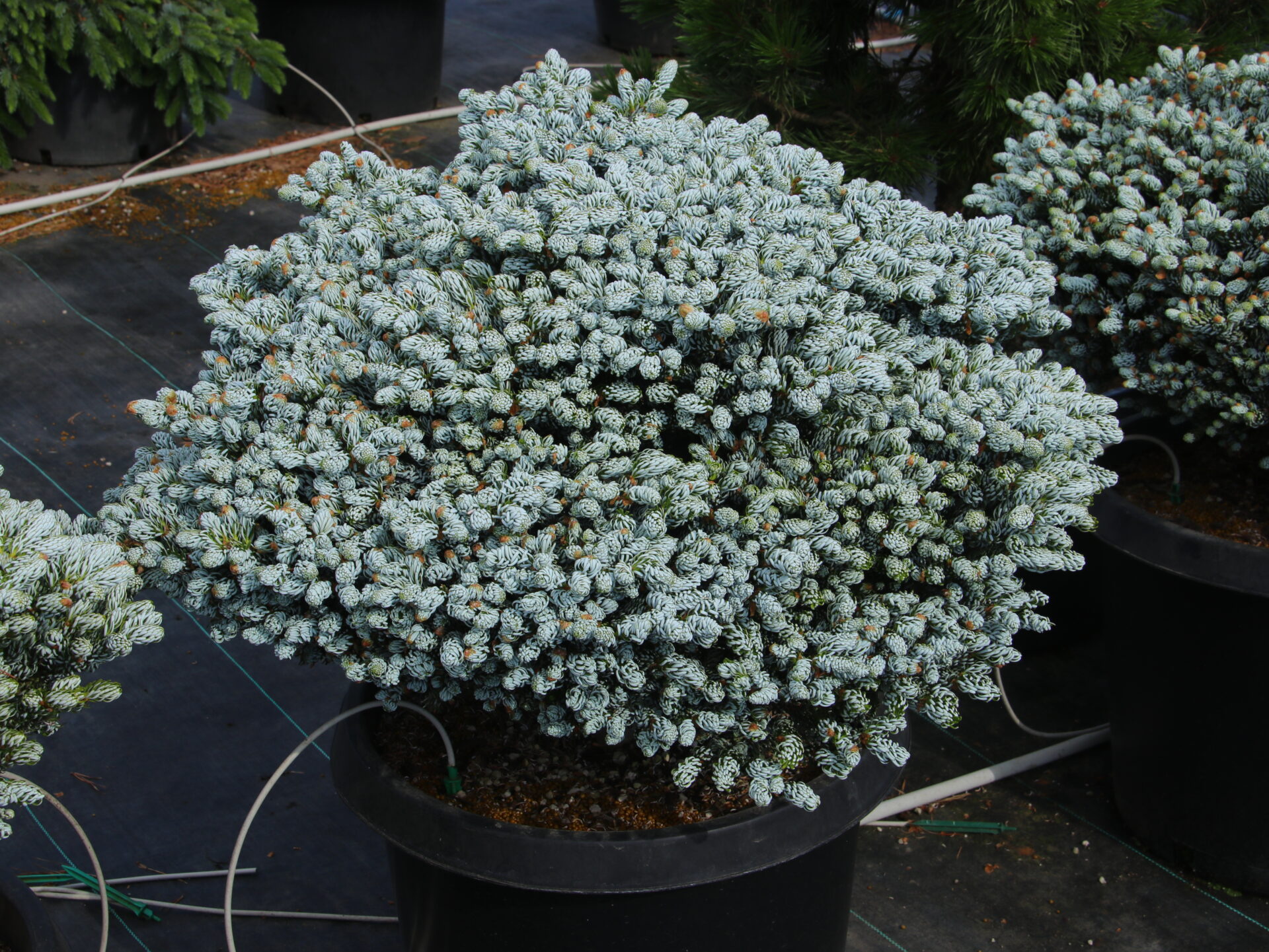
The botanical world occasionally serves up a true masterpiece, and Abies koreana ‘Kohout’s Ice Breaker’ is exactly that. This exceptionally compact, slow-growing dwarf Korean fir is a dream for plant collectors and small-space gardeners alike. It is famous for its densely curled, silvery-white foliage and a tiny, architectural footprint that fits into almost any landscape layout. What starts as a neat, flattened globe in its youth eventually matures into a squat, broadly conical specimen. After a decade of slow growth, it rarely exceeds 60 cm (2 ft) in both height and spread. The real magic lies in the needles: they twist through nearly 180°, exposing their brilliant white undersides to create a shimmering, frost-dusted effect that sets it apart from any other dwarf conifer on the market.
The Story Behind the Mutation
This remarkable conifer didn’t hit the market by accident. It emerged from a spontaneous genetic mutation—specifically a witch’s broom—discovered on a specimen of the popular ‘Horstmann’s Silberlocke’ Korean fir at the nursery of Jörg Kohout in Elstra, Germany. Witch’s brooms are dense, stunted growths triggered by natural mutations, often caused by insect activity or environmental stress. Conifer breeders prize them as goldmines for discovering new dwarf cultivars. Kohout carefully selected and propagated this specific mutation, locking in its extreme compactness and intense needle curl before introducing it to the global nursery trade. The plant’s elite status was cemented in 2014 when the American Conifer Society selected ‘Kohout’s Ice Breaker’ as one of two cultivars featured in its prestigious Collectors’ Conifer of the Year Programme.
Curled Needles and Luminous Glow
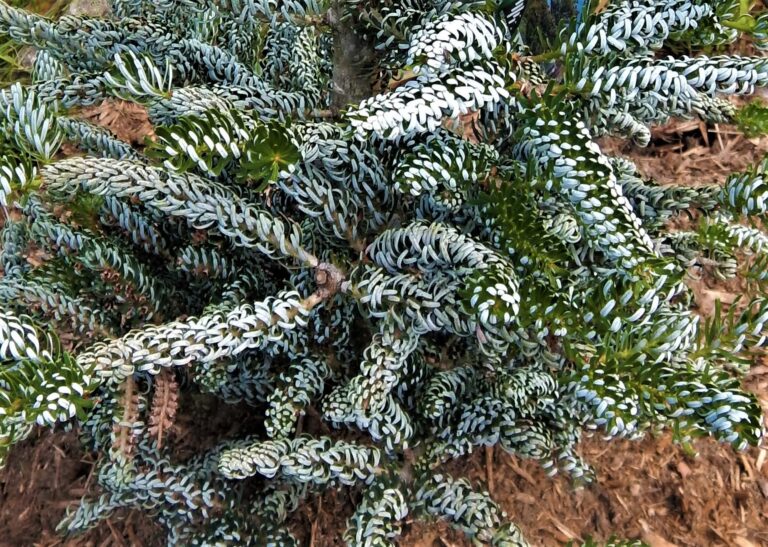
You only need to look at the needles to understand why this plant turns heads. The defining feature of ‘Kohout’s Ice Breaker’ is its strongly recurved foliage, which twists backward through roughly 180°. This physical twist forces the silvery-white undersides of the needles to face upward and outward. From a distance—especially when caught in bright sunlight—the entire plant takes on a luminous, ice-covered quality that glows in the garden border. The short, stubby needles pack themselves tightly along radial branches, giving the shrub an incredible textural density and reflective surface. While other dwarf conifers keep a baseline of green, ‘Ice Breaker’ stays resolutely white-silver all year long. Only the fresh spring shoots display a brief, fleeting touch of green variegation before they mature into full silver armor.
Ten-Year Dimensions and Growth Blueprint
Patience is a virtue when growing ‘Ice Breaker’, as it is a true dwarf conifer that ticks along at an exceptionally slow pace of 2.5 to 7.5 cm (1–3 inches) per year. Expect a ten-year-old specimen to measure roughly 60 cm (2 ft) in height and width, though optimal growing conditions can sometimes push its width to 90 cm (3 ft). Its ultimate mature dimensions generally top out between 0.5 and 1 m (1.5–3 ft) tall and wide. This slow journey creates a low, squat, broadly conical or flattened doughnut-shaped profile. Young plants showcase a uniform, ball-shaped habit with short branches that curve inward to create a dense mound. Over time, the plant may push up a central leader, gracefully transitioning from a tidy globe into a miniature tree.
Architectural Styling and Garden Placement
Because of its tiny scale and bright, reflective foliage, this cultivar belongs in spots where you can appreciate it up close. It makes a flawless addition to rock gardens, alpine troughs, gravel beds, and courtyard containers. From a design standpoint, its intense silver-white tone offers a striking contrast when positioned against dark-green evergreens like pines, hemlocks, arborvitaes, and hollies. If you are designing a rock garden, try pairing ‘Ice Breaker’ with low-growing junipers, dwarf Alberta spruce, or Mugo pines. Groundcovers like sedums, creeping euonymus, or creeping phlox also work beautifully, framing the conifer’s structural shape without crowding it out. For a sophisticated patio accent, plant it in a prominent container or source a specimen grafted onto a short standard stem to lift the shimmering canopy closer to eye level.
Hardiness, Drainage, and Care Rules
This tough little fir is hardy down to USDA Zone 4 (RHS H7, withstanding temperatures below -20 °C). It thrives best in cool northern climates, but it can handle summer heat and humidity in Zones 7 and 8 if you keep the soil moist and offer a bit of dappled afternoon shade. Give it a home in full sun to partial shade, anchored in moist, well-drained soil. It handles clay, loam, or sand equally well, provided the ground is amended with plenty of organic matter.
Flawless drainage is non-negotiable here; heavy clay soils require a heavy hand with sand or grit to ward off root rot. You can put the shears away because this plant needs absolutely no pruning. As a bonus, it is naturally resistant to deer, rabbits, and verticillium wilt, though you should keep an occasional eye out for aphids or adelgids.
Cultivation baseline: For detailed guidance on soil preparation, planting depth, watering schedules, and seasonal maintenance, refer to the Master Growing Guide for Abies.
Strategic Planting Combinations
To extract the maximum visual drama from ‘Kohout’s Ice Breaker’, think carefully about its garden companions. Consider these designer-approved combinations:
- Monochromatic Silver Theme: Lean into the cool palette by grouping it with silver-foliaged perennials like Artemisia ‘Powis Castle’, Stachys byzantina (lamb’s ears), or Helichrysum italicum (curry plant).
- Textural Contrast: Highlight the dense needle structure by pairing the fir with the fine, whispering blades of blue fescue grass (Festuca glauca) or the structural leaves of broad-leaved evergreens like Hebe species or Corokia cotoneaster.
- Seasonal Accent: Ring the base of the plant with spring-flowering bulbs like Crocus or Muscari, or let low perennials like Thymus serpyllum or Aubrieta weave around the skirt without masking its shape.
- Container Focal Point: Drop the plant into a wide, shallow pot with a dark charcoal or classic terracotta finish to make the silver needles pop. Soften the container edges by tucking in trailing ivy or golden creeping Jenny.
Sourcing and Availability for Collectors
Given its slow production timeline, striking looks, and recent introduction, ‘Kohout’s Ice Breaker’ remains a prized collector’s plant that often commands premium pricing at specialty nurseries. Growers propagate it almost exclusively through grafting—frequently using Abies firma rootstock to give the plant superior heat tolerance in warmer regions—though seed propagation is occasionally done. Keep in mind that this cultivar holds Plant Breeders’ Rights (PBR) in specific regions, protecting the intellectual property of the breeder. For gardeners who love rare, structural conifers with year-round presence, this frost-dusted gem is worth every penny.