The Irresistible Charm of Abies procera ‘Blaue Hexe’: A Blue Cushion Noble Fir for Connoisseurs
Plant Profile
| Feature | Description |
| Botanical name | Abies procera ‘Blaue Hexe’ |
| Common name | Blue dwarf noble fir [1] |
| Plant type | Evergreen conifer; true dwarf cultivar |
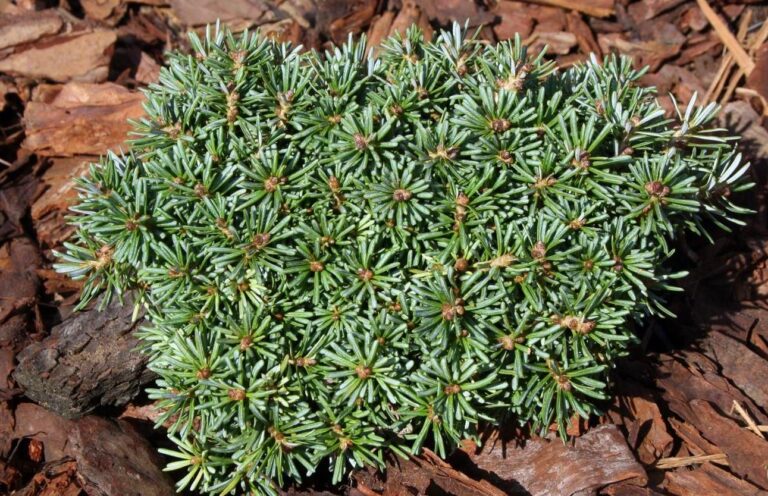
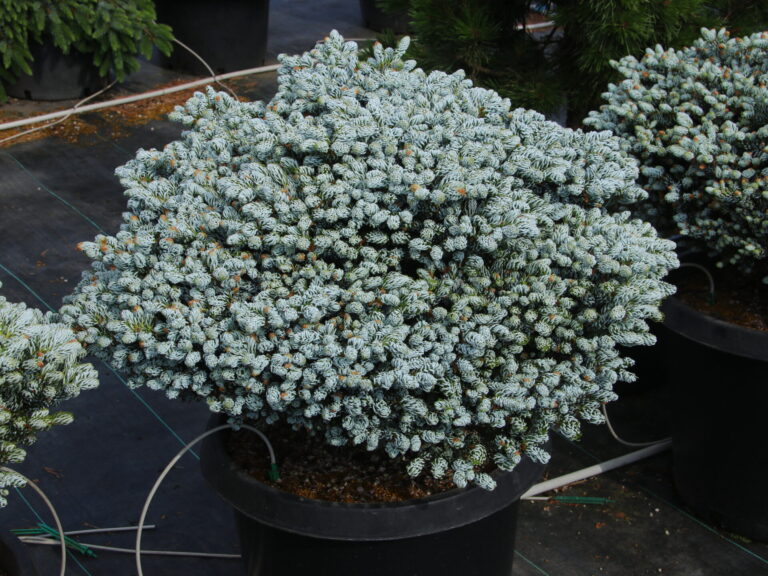
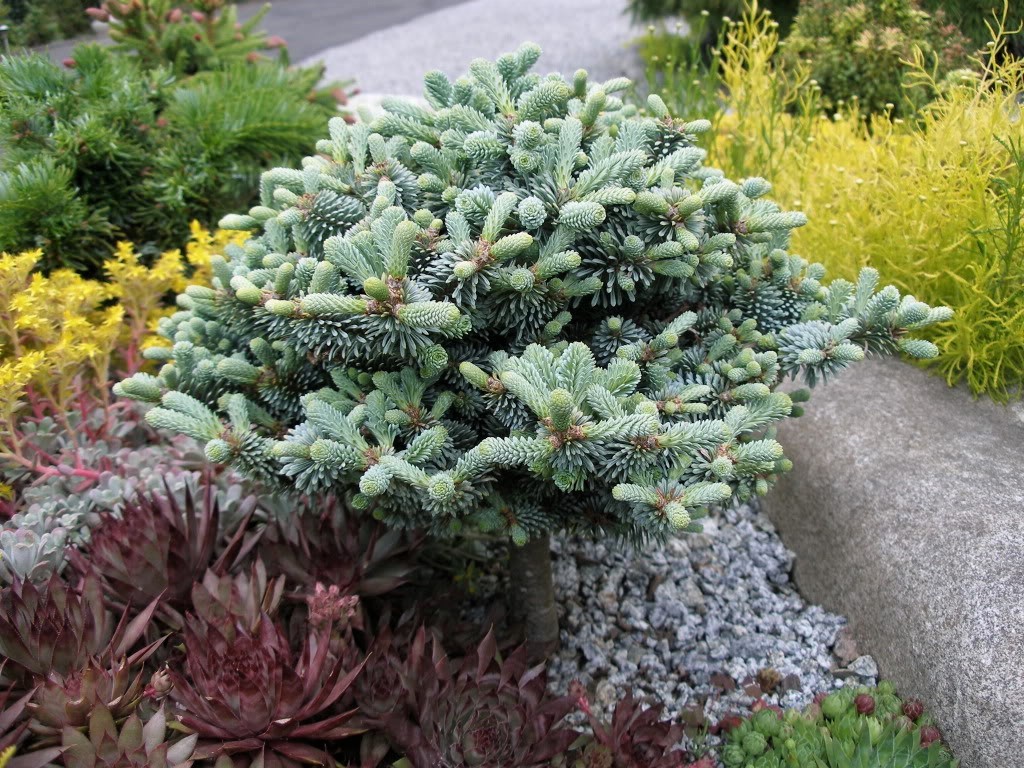
| Habit | Flattened globe, cushion-shaped, spreading and mound-forming |
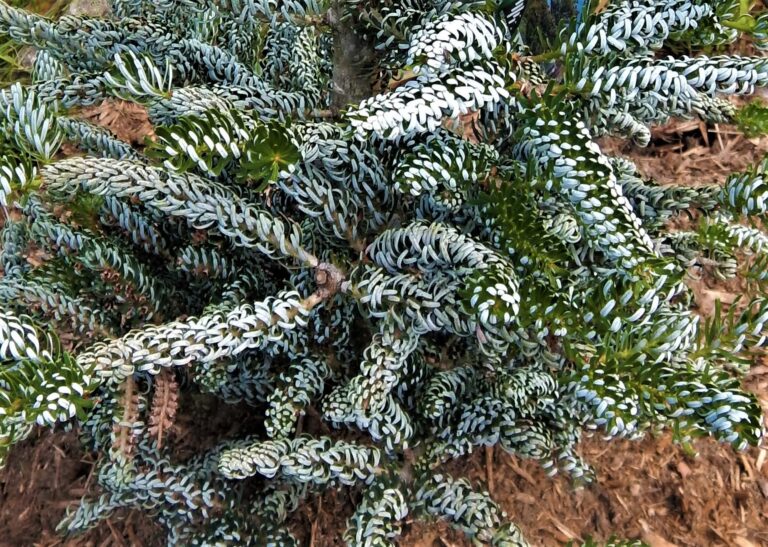
| Foliage | Powdery blue to silver-blue, densely arranged, up-curved needles |
| Growth rate | Approximately 1.5–5 cm per year |
| Ten-year size | About 15–20 cm tall and 45 cm wide |
| Longer-term size | Eventually approximately 0.5–1 m tall, with a potentially much broader spread |
| Best visual role | Blue focal cushion, specimen conifer, trough or rock-garden accent |
Do not let published nursery metrics mislead you; these often account for much older specimens or aggressive lateral shoots. For its first few decades, this conifer remains exceptionally tight, with a ten-year-old specimen barely reaching 15–20 cm in height while spreading to a modest 45 cm across.
Shaking Up the Family Tree
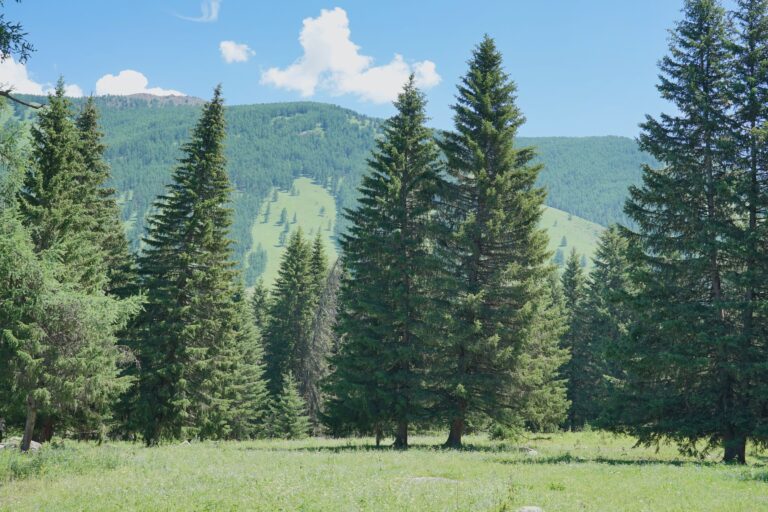
The wild Abies procera, native to the Pacific Northwest, is a towering giant. It commands the landscape with a monumental, symmetrical silhouette, stunning cones, and breathtaking blue-green needles. Gorgeous as it is, a full-sized noble fir is entirely incompatible with residential yards.
Enter ‘Blaue Hexe’. This cultivar captures the ice-blue brilliance of the species but radically recalibrates its proportions. This is no temporary phase; you are not buying a baby tree that will eventually outgrow its welcome. Thanks to stable genetics, it maintains a low, dense, and naturally spreading cushion habit indefinitely.
While a standard side-branch sport might eventually throw up a rogue, vertical leader, ‘Blaue Hexe’ stays true to its miniature form. It behaves as a strictly horizontal, compact ground-hugger.
Radiant Foliage Through the Seasons
The real magic lies in the needles. Short, stout, and tightly packed along minuscule shoots, they form a solid, tactile surface rather than an open, twiggy framework. Because each needle curves upward, they catch ambient light perfectly, giving the entire mound a frosted, powder-coated sheen.
Rather than a simple turquoise, the palette ranges from a cool silver-blue to a powdery blue-grey. Spring pushes out exceptionally bright, silvery new growth, which matures into a sophisticated, glaucous tone.
This shifting, frosty color makes ‘Blaue Hexe’ a dynamic garden asset all year long:
- Spring brings a vivid, silvery flush that re-energizes the entire mound.
- Summer heat finds the cool blue foliage acting as a calm, steady counterpoint to bright perennials.
- Autumn sees the plant step into the spotlight as surrounding flowers fade away.
- Winter allows the crisp, evergreen silhouette to shine vividly against dark soil, mulch, or snow.
Texture is another playground for this cultivar. Nestled against wispy grasses or delicate alpines, the fir feels solid and sculptural. Placed next to broad-leaved evergreens, its fine needles look remarkably bright and luminous.
Silhouette and Visual Architecture
The mature shape of ‘Blaue Hexe’ is its crowning glory. It naturally grows into a low, flattened globe without ever requiring shears or pruning. Its gently domed top feels organic rather than rigidly conical, and the dense foliage completely masks the interior branching.
Visually, it looks more like a living blue boulder than a typical miniature conifer. Designers love using it to add much-needed horizontal lines to a garden layout:
- Position it at the front of a conifer bed to sweep the eye smoothly across the display.
- Tuck it between angular rocks to soften hard mineral lines with its dense texture.
- Plant it on a stone retaining wall or raised bank where it can spread wide without blocking views.
- Incorporate it into a Japanese-style garden alongside weathered stone and soft moss.
- Drop it into a formal stone trough where its slow growth keeps it in bounds for years.
- Use it as a prized collector’s plant in areas where you can appreciate its intricate texture from above.
This fir commands attention through width, density, and color rather than height. Even at less than a foot tall, its expansive spread makes a real statement.
Rock Gardens and Alpine Plantings
For alpine displays and rock gardens, ‘Blaue Hexe’ is an absolute dream. It delivers structure and weight without crowding out fragile neighbors. Its frosty needles play beautifully with the cool undertones of granite, slate, and pale limestone.
Rather than hiding it in the background, treat it as a primary focal element. Consider these excellent companions:
- Silver-leaved Artemisia or Centaurea to build a sophisticated, low-water look.
- Gold-leaved sedums to create an energetic blue-and-gold contrast.
- Deep green mosses or dwarf heathers to make the fir’s blue needles pop.
- White-flowered saxifrages for a classic, crisp alpine look.
- Burgundy-leaved accents to generate high-contrast drama.
- Slender green grasses to highlight the fir’s dense, blocky texture.
Resist the urge to plant it next to other blue conifers. Its unique color reads best when surrounded by green, charcoal, silver, or select gold. A standalone specimen always delivers the best punch.
Troughs and Containers
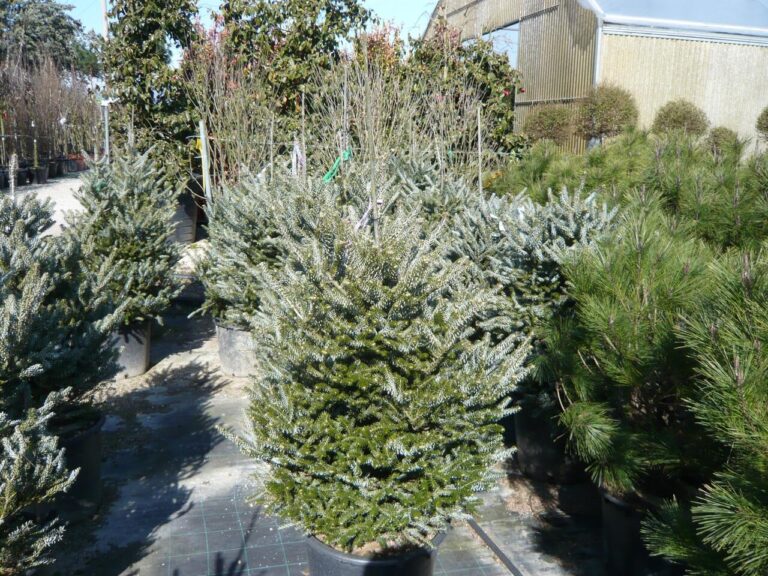
Because it grows so slowly, ‘Blaue Hexe’ is a premier candidate for long-term container cultivation. It won’t quickly outgrow its pot, and it ensures the container looks stunning even in the dead of winter.
It looks particularly striking in:
- Rustic hypertufa troughs.
- Heavy, frost-proof concrete or stone planters.
- Shallow, wide alpine bowls.
- Modern architectural pots flanking an entryway.
- Small courtyard spaces where a full-sized fir is out of the question.
- Multi-variety conifer bowls showcasing contrasting textures.
Choose a pot that complements rather than competes with the plant. Weathered grey stone, matte charcoal, deep forest green, and unglazed terracotta work beautifully. Avoid loud, brightly glazed finishes that pull focus away from the delicate needles.
When assembling a mixed container, place ‘Blaue Hexe’ slightly off-center. Add one low trailing plant and one small seasonal flower, making sure neither is aggressive enough to overgrow the fir’s slow-growing cushion.
Inspired Companion Plantings
Blue and Gold
Juxtapose the silver-blue cushion against a gold conifer or bright chartreuse sedum. Bright sunlight intensifies this relationship, making the blue look ice-cold and the yellow remarkably warm. Keep the surrounding plants minimal to let this pairing shine.
Blue and Burgundy
Set ‘Blaue Hexe’ next to a dark purple heuchera, a compact burgundy barberry, or a dark-leaved perennial. The deep purple tones give the fir an almost metallic, iridescent quality. Use this high-contrast look sparingly for maximum impact.
Blue and Silver
Combine the fir with silver alpine foliage, light-coloured stone, and clean white blossoms. This creates a calm, monochromatic palette where subtle textures take center stage.
Blue and Deep Green
For the most timeless, woodland-inspired look, pair it with dark evergreens. Dwarf spruces, low pines, thick moss, and shiny groundcovers create a rich, dark backdrop that makes the blue needles appear incredibly luminous.
The Story Behind the Cultivar
The moniker ‘Blaue Hexe’ translates from German as “Blue Witch”. This name pays homage to its origin as a witches’ broom—a dense, congested mutation that occasionally forms on a mature tree’s branch.
Horticulturists value these rare mutations for creating unique dwarf conifers, but success depends entirely on stable genetics and careful clonal propagation, typically achieved via grafting.
‘Blaue Hexe’ stands as a testament to the power of selection. It doesn’t just mimic a large noble fir on a smaller scale; it entirely reimagines the tree’s identity, compressing those iconic blue needles into a stunning, ground-hugging cushion.
Planning for the Long Haul
Designing with ‘Blaue Hexe’ requires understanding its immediate scale versus its long-term potential.
While it stays around 15–20 cm tall and 45 cm wide for its first decade, it will continue to slowly expand outward over time. Its final footprint depends on your local climate, soil quality, sun exposure, and the age of the specimen.
Keep these practical guidelines in mind:
- Give it a home where a wide, low-profile accent is desired.
- Keep it clear of walkways so it has room to expand comfortably over the decades.
- Allow its width to develop naturally instead of cramming it into a tight pocket.
- Be prepared to eventual repot or root-prune the plant if grown in a small container.
- In rockeries, site it so it can gracefully skirt around boulders without smothering delicate alpines.
Because it changes on a scale of years rather than weeks, your carefully planned garden compositions will stay intact for a very long time.
Cultivation Essentials
For baseline cultivation information—site preparation, planting, watering, soil management, hardiness and routine care—see the Master Growing Guide for Abies and dwarf conifers.
To get the brightest blue coloration and the tightest cushion habit, plant ‘Blaue Hexe’ in a bright, open position where you can easily look down on its beautiful form. Long-term success relies on providing the cool-climate conditions that noble firs and related conifers need to thrive.
The Final Verdict
Ultimately, Abies procera ‘Blaue Hexe’ should be appreciated as a slow-growing, living foliage sculpture. Its intense powder-blue needles, architectural cushion habit, and exceptionally slow pace make it a must-have for rock gardens, trough collections, and serious conifer enthusiasts.
Its true value lies in its absolute permanence and steady color. By offering it plenty of visual breathing room and pairing it with contrasting textures, you can enjoy the majestic essence of a Pacific Northwest noble fir in the smallest of gardens.