Meet ‘Blauer Eskimo’: The Ultimate Miniature Korean Fir for Small Spaces
Abies koreana ‘Blauer Eskimo’—frequently traded under the simpler moniker ‘Blue Eskimo’—is a true gem of the conifer world. This miniature, globe-shaped Korean fir is justly celebrated for its astonishingly dense, blue-grey foliage and sharp architectural silhouette. Do not mistake it for a merely stunted version of the standard species; this cultivar boasts a fiercely individual personality. With its congested branching, abbreviated needles, pale shoots, and ultra-compact habit, it is tailor-made for rock gardens, alpine troughs, patio containers, and tightly choreographed conifer collections.
Distinctive Identity
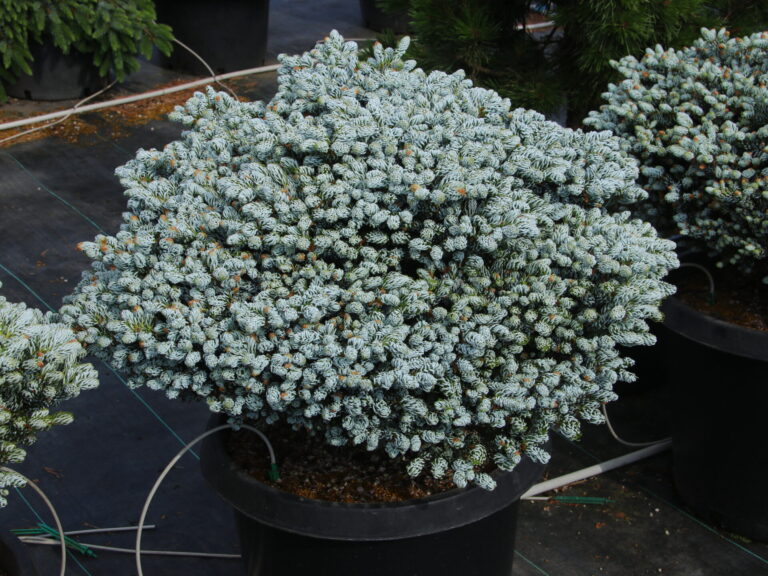
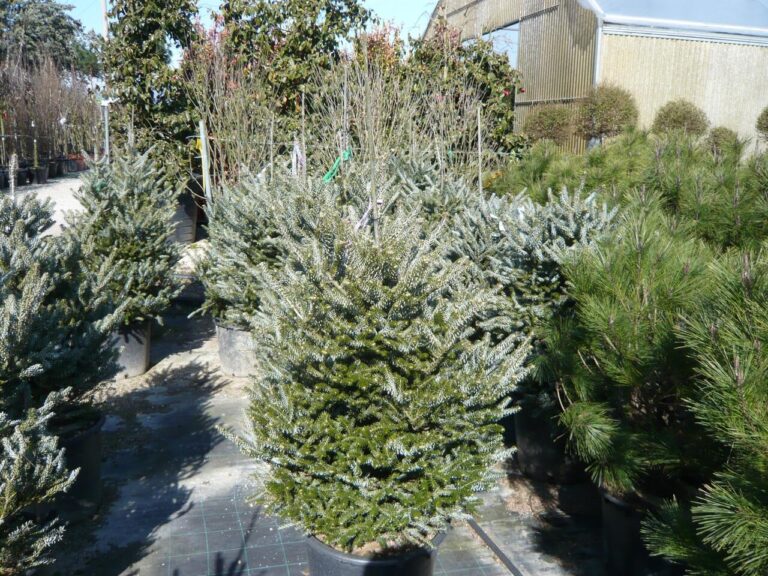
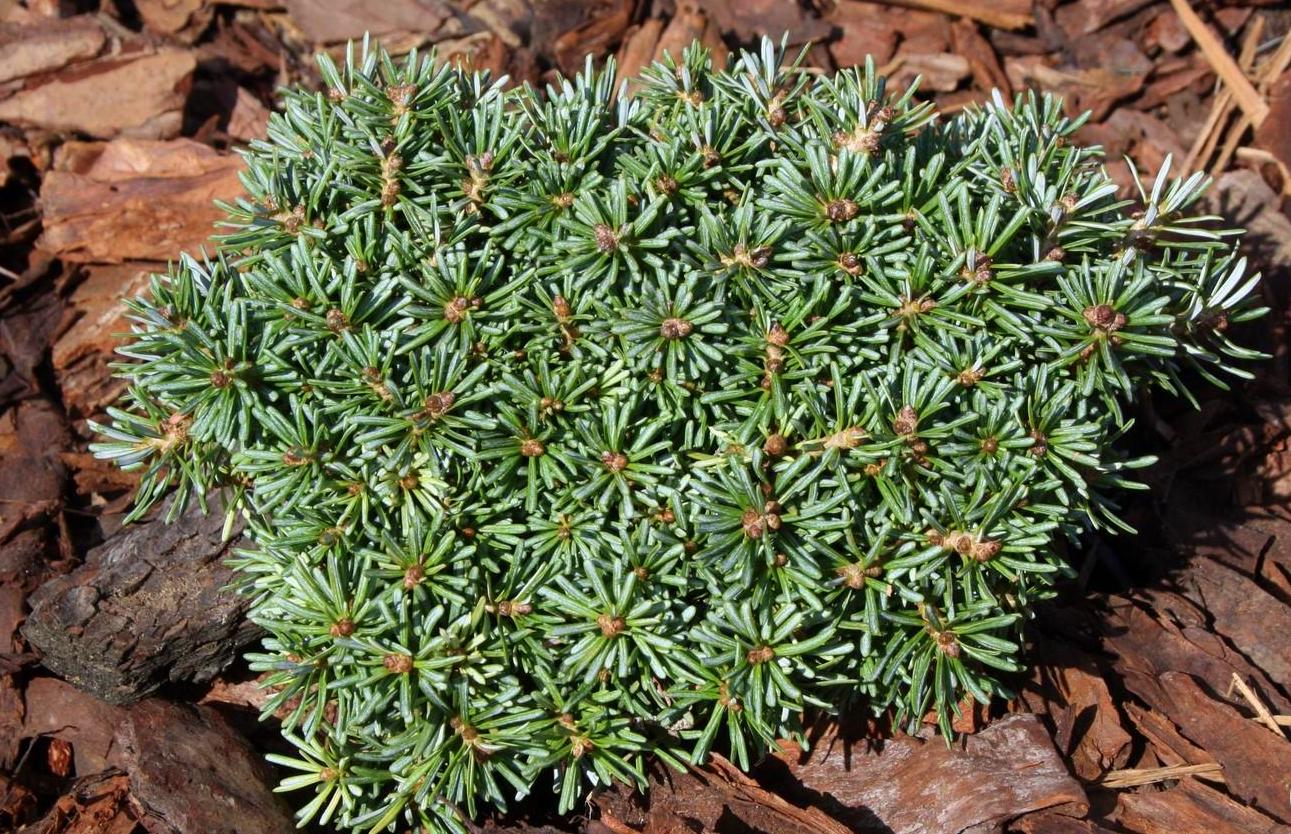
As a recognized cultivar of the Korean fir (Abies koreana), ‘Blauer Eskimo’ is a bona fide dwarf. It forms a tight, globose bun of short, blue-green needles that spiral thickly around stubby, light-coloured twigs. While you will occasionally see it sold as “Blue Eskimo,” purists and international registers maintain its accepted cultivar name: ‘Blauer Eskimo’.
The backstory of this plant explains its fascinatingly dense structure. It originally launched into the trade as a witches’ broom—a localized genetic mutation—discovered on the cultivar ‘Blauer Pfiff’. This genetic quirk is precisely why the plant sidesteps the open, layered branching of a typical Korean fir, choosing instead to channel its energy into a tightly packed framework of foreshortened shoots.
In the wild, the parent species is famously mutable, yielding an array of weeping, golden, prostrate, and white-backed garden forms. ‘Blauer Eskimo’ sits at the extreme, slow-growing end of this horticultural spectrum. For this reason, it is best appreciated as a specialist ornamental conifer rather than a juvenile tree that will eventually outgrow its welcome.
Foliage and Seasonal Colour
The real showstopper here is the foliage. Rather than a loud, electric steel-blue, the needles display a sophisticated palette best described as silvery blue-green, blue-grey, or glaucous blue. This colour shifts subtly depending on available sunlight, plant age, soil nutrition, the specific grafting stock used, and local climate conditions, yet the overall impression is invariably cooler and far more silvery than the deep green of the straight species.
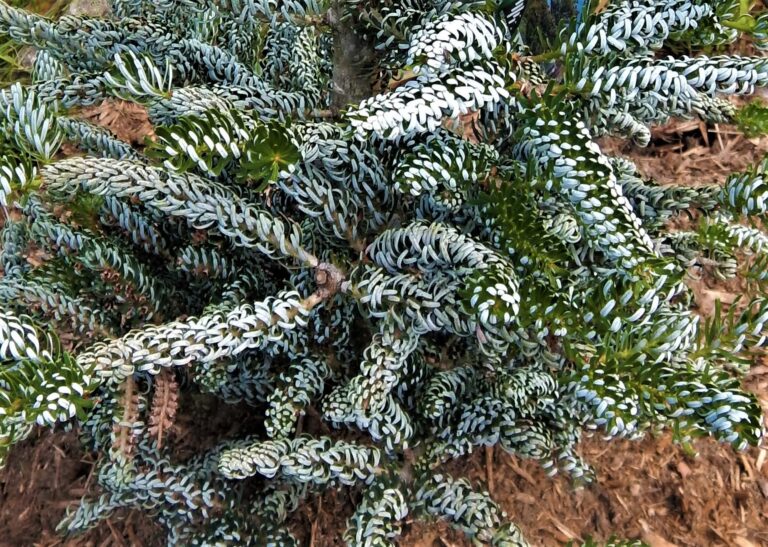
Because the short needles wrap around the twigs in a tight spiral, they create a plush, brush-like surface that completely obscures the inner woodwork. The pale branchlets peek through just enough to offer a crisp contrast against the deeper tones at the base of the needles.
Gardeners familiar with cultivars like ‘Horstmann’s Silberlocke’ know they rely on intensely recurved needles to flash their chalk-white undersides. ‘Blauer Eskimo’ plays a different game. Its uniform, immaculate coat of colour stems purely from the naturally blue-grey surface of the needles and their sheer, crowded density.
The plant maintains an remarkably steady profile throughout the year:
Spring
The fresh candle growth emerges with its characteristic blue-grey coat intact, eschewing the bright green or buttery yellow flushes typical of other conifers.
Summer
Bathed in open light, the dense crown achieves its peak brilliance, radiating a clean silvery-blue hue.
Autumn
The evergreen foliage holds its ground, refusing to fade or tarnish as the deciduous canopy drops.
Winter
Small, resinous, tan-brown buds take center stage, dotting the tips of the compact branches.
These winter buds are critical to the plant’s off-season charm. Because the growth is so compressed, these amber gems look beautifully embedded across the surface of the rounded crown, serving as warm focal points against an otherwise icy palette.
Form and Dimensions
Right from the start, ‘Blauer Eskimo’ shapes itself into a low, neat globe. It tends to grow slightly wider than it does tall—particularly during its youth—though the final silhouette is influenced by individual grafting techniques, weather exposure, and the precise genetics of the original propagation line.
For landscape planning, expect the following dimensions:
| Feature | Approximate expectation |
| Ten-year height | About 30–60 cm [1] |
| Ten-year spread | About 30–45 cm, sometimes more [1] |
| Growth rate | Roughly 2.5 cm per year [1] |
| Habit | Dense, rounded, globose to low-mounded [1] |
| Foliage | Evergreen, blue-grey to silvery blue-green [1] |
| Landscape scale | Miniature or extreme dwarf conifer [1] |
This glacial pace is precisely what makes the plant so valuable. It will happily occupy the same pocket of soil for a decade without disrupting the scale of its neighbors, making it a dream for tight spots where a standard fir is out of the question.
Design Value
The brilliance of ‘Blauer Eskimo’ lies in its marriage of clean geometry and cool colour. In the garden landscape, it functions less like a tiny tree and more like a permanent, living sculpture. This makes it an exceptional tool for anchoring a design or creating a tranquil focal point.
Rock Gardens and Alpine Settings
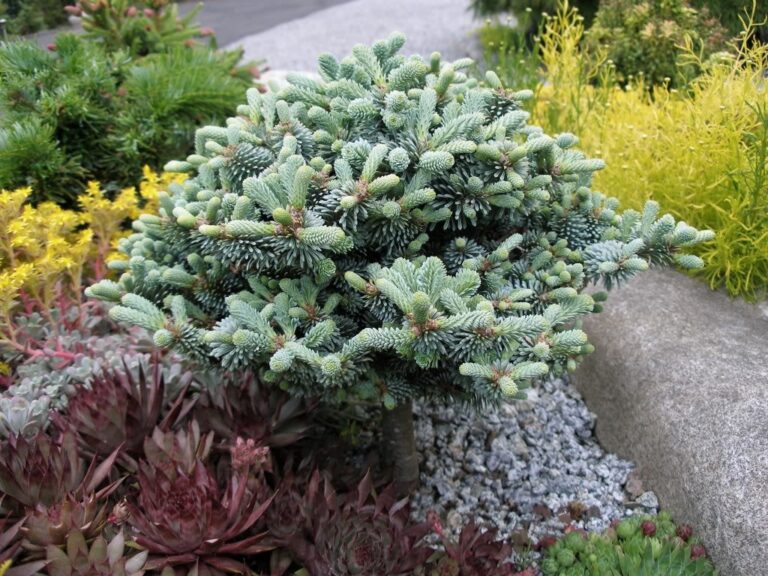
Tucked into a rockery, this cultivar shines brightest when contrasted against the hard, angular lines of natural stone. Different rock types draw out different facets of its character:
- Pale limestone and grey granite intensify the icy blue tones of the needles.
- Dark volcanic rock acts as a dramatic backdrop, making the silver highlights pop.
- Warm sandstone beautifully complements the tan tones of the winter buds and pale stems.
- Creeping mosses and low-profile alpines provide a soft, green counterpoint that frames the fir without competing for attention.
To maximize its impact, avoid grouping it with a clutter of other round dwarf conifers. Its neat geometry reads best when paired with contrasting textures—think a prostrate, weeping juniper, a tuft of fine-textured grass, or a mat-forming alpine perennial.
Containers and Troughs
Thanks to its restrained dimensions, ‘Blauer Eskimo’ is a first-rate candidate for stone troughs, hypertufa pots, raised beds, and patio displays. Its persistent silver-blue hue provides a year-round anchor, allowing you to rotate seasonal bulbs or delicate perennials around its base.
Consider a classic container combination:
- Use ‘Blauer Eskimo’ as your architectural center stone.
- Add a trailing plant to soften and spill over the rim.
- Introduce a slender, upright alpine grass for vertical contrast.
- Finish with one or two small seasonal accents in a disciplined, complementary color range.
Because the fir commands the stage with its year-round structure, companion plants should play a supporting role rather than fighting it for dominance.
Courtyard and Small-Space Gardens
This fir possesses more than enough presence to stand alone as a specimen in a small urban courtyard, where it won’t crowd out pathways, doors, or windows. Its low, impeccably neat profile is highly effective near entrances or along terrace borders where taller plants would block the view.
If you are aiming for a rhythmic, contemporary look, try planting them in a calculated sequence, ensuring you leave enough breathing room for each globe to stand out as a distinct unit. A straight row brings a sense of formal, modern geometry; a single specimen nestled into gravel and stone evokes the tranquil mood of a alpine scree garden.
Modern and Architectural Planting
There is an inherently sophisticated, modern edge to blue-grey foliage. It pairs beautifully with high-end hardscaping materials and minimalist palettes:
- Charcoal, slate, or black flagstones.
- Industrial zinc and galvanized metal planters.
- Clean, pale architectural concrete.
- Silver-tinted perennials.
- Columnar junipers, upright spruces, or structural grasses.
- Deep, dark green yew or tightly clipped holly.
For a striking color story, position this cultivar as a cool, smoky mid-tone bridging the gap between rich, dark evergreens and pale stonework. The look succeeds best when you keep the palette tightly edited to shades of blue-grey, deep green, crisp white, silver, and earthy brown.
How it Differs from the Species
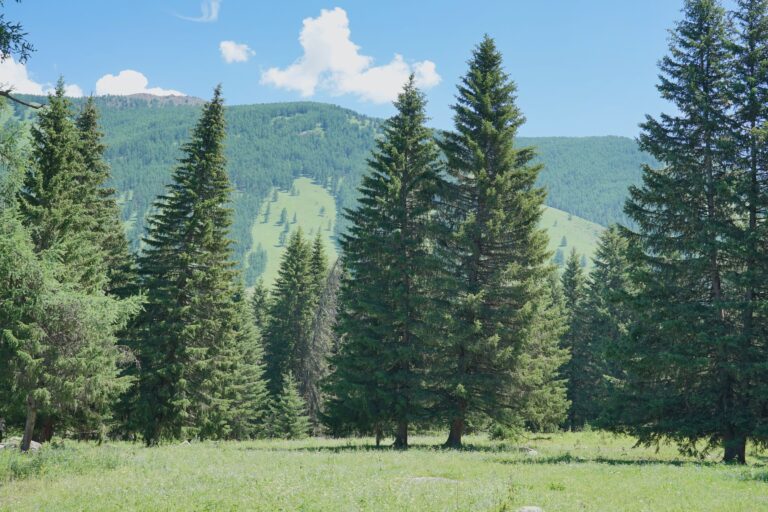
Left to its own devices in the wild, a typical Korean fir matures into a towering, pyramidal tree often reaching 15 to 20 meters tall. It features wide, whorled branches, large upright cones, and a grand forest presence. Its needles are longer, and its entire frame is built on a grander scale.
In stark contrast, ‘Blauer Eskimo’ is defined by:
- An incredibly slow, manageable growth rate.
- A naturally globose, symmetrical bun shape.
- Diminutive, densely crowded needles.
- A distinctly cool blue-grey coloration rather than forest green.
- Short, ivory-pale twigs.
- A miniature footprint perfect for small pots and rock steps.
- A unique lineage tracing back to a mutant witches’ broom on ‘Blauer Pfiff’.
It is also worth separating this plant from other blue Korean fir selections like ‘Blue Emperor’ or ‘True Blue’. Those varieties are selected to shoot upward into classic, conical trees. ‘Blauer Eskimo’ stays low, offering a rounded, sculptural presence that remains permanently small.
Baseline cultivation: For standard guidance on siting, soil, planting, watering, feeding, winter care, propagation, pruning, and general pest or disease management, refer to the Master Growing Guide for Korean firs and Abies cultivars.
History and Propagation
The variety was discovered in Germany, appearing as a freak mutation—a witches’ broom—on a specimen of Abies koreana ‘Blauer Pfiff’. These dense, congested tufts of growth are highly prized by conifer enthusiasts because they can be carefully harvested, propagated, and named as stable new cultivars.
Because it is a specific cultivar, ‘Blauer Eskimo’ cannot be grown from seed; it must be meticulously grafted onto rootstock. This ensures that every plant maintains the exact growth rate, silver-blue tone, and dense habit of the original mutation. Seedlings from a Korean fir will revert to wild traits and fail to replicate this unique form.
Its real worth to the gardening world lies in this rare combination of stellar attributes: a genuinely miniature scale, a naturally perfect globe shape, packed branching, and a refreshing blue-grey tone that refuses to fade with the seasons. It is far more than just a convenient dwarf plant; it is a high-performance design element for discerning gardeners.
Best Applications
- Stone troughs, alpine sinks, and hypertufa containers.
- Gravel gardens, scree beds, and rockeries.
- Intimate courtyards and flanking front entrances.
- Specialist dwarf conifer collections.
- Zen-style landscapes utilizing clean gravel and bold stones.
- Minimalist gardens relying on a tight palette of grey, silver, green, and charcoal.
- A standalone focal point where a touch of living geometry is required.
- Formal, repeated geometric plantings where each plant is allowed to display its perfect globe outline.
To truly appreciate ‘Blauer Eskimo’, you need to get up close. Its appeal isn’t about rapid height or flashy flowers, but the exquisite precision of its form: a slow-burning, flawlessly compact silver globe detailed with short, crowded needles, pale shoots, and amber winter buds. Installed in a thoughtfully designed space, it delivers a permanent sculptural punch while asking for almost nothing in return.