The Golden Noble Fir: How to Use Abies procera ‘Aurea’ for Year-Round Garden Drama
The golden noble fir, Abies procera ‘Aurea’, is a masterclass in slow-burning horticultural drama. In its youth, this exquisite evergreen behaves with notable restraint, maintaining a compact, tightly knit frame. Give it time, however, and it accelerates into a magnificent, pyramidal sentinel that commands attention in any large landscape. What truly sets this cultivar apart is its dynamic, light-reactive canopy: while the deeply shaded interior foliage holds a quiet, steady green, the sun-drenched outer shoots ignite in a brilliant, metallic gold sheen.
Identity and Naming
To track down this exceptional conifer in commerce, it helps to understand its botanical shorthand. In the nursery trade, you will find it catalogued under the Pinaceae family as Abies procera ‘Aurea’.
You may also encounter it sold under the synonym ‘Sherwoodii’. While some older texts debate the distinction, leading conifer authorities now treat ‘Sherwoodii’ and ‘Aurea’ as the exact same golden clone. Because it is a true cultivar, it cannot be grown from seed; instead, growers meticulously maintain its distinct genetic traits through grafting.
When stacked against a wild-type noble fir, ‘Aurea’ is easily distinguished by its luminous golden-green needles, a vastly more manageable growth rate during its formative years, and an outer canopy that intensifies in color the more the sun strikes it.
Foliage and Ornamental Character
The pure visual impact of ‘Aurea’ relies on a brilliant interplay of texture and shifting color tones.
Needle Anatomy and Form
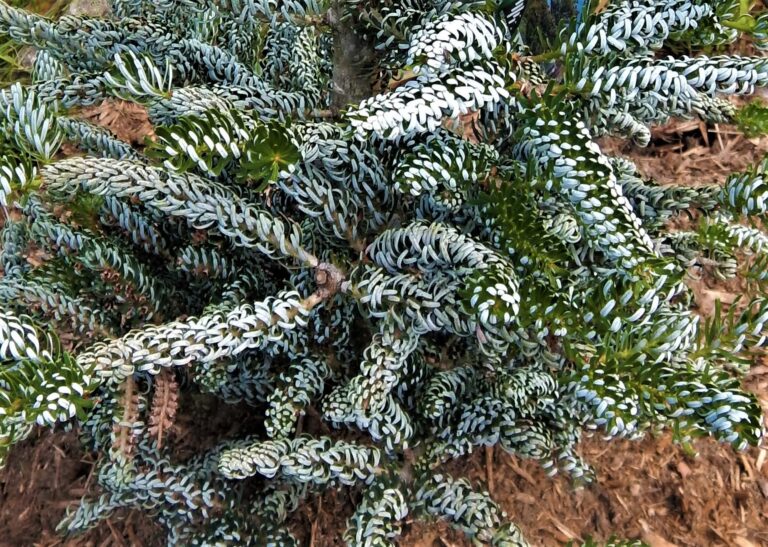
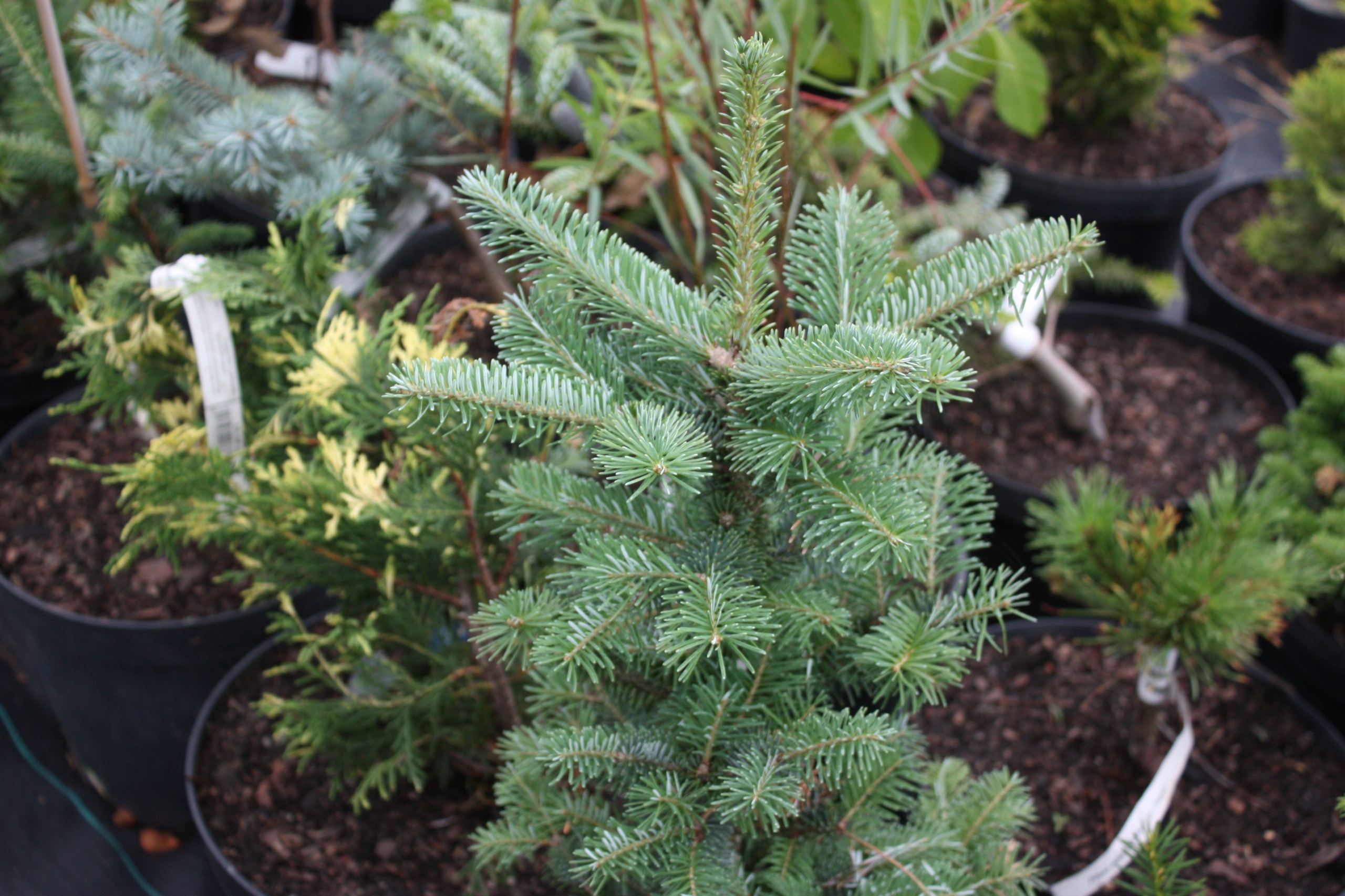
Individual needles reach up to 3.5 cm (1.4 in) in length. They curve upward with a clean, sweeping motion, packed so densely along the stems that the branches look wonderfully plush and texturally rich.
The Sun-Kissed Gradient
The foliage is best described as an shifting golden-green. The relationship with raw sunlight is absolute—the brightest yellow hues concentrate on the branch tips most exposed to the sky, fading gracefully to a cooler green toward the interior of the tree’s crown.
All-Season Endurance
Because this is an evergreen, its warm palette never wavers. It offers a steady, glowing presence through the fresh green of spring, the heat of summer, the fading light of autumn, and the bleakest stretches of winter. Viewed from afar, the neat, symmetrical silhouette combined with that sun-lit outer shell creates a striking architectural statement, particularly when the tree is backlit by a low sun or framed against dark, moody backdrops.
Size, Growth Rate, and Mature Dimensions
Patience is a prerequisite when planting ‘Aurea’, as it builds its foundations with deliberate care before scaling up to its ultimate stature.
- The First Decade: Expect a juvenile tree to reach roughly 1 m (about 3 ft) in height after 10 years in the ground.
- Annual Pace: Once established, it settles into a steady yearly increment, adding about 10–15 cm (4–6 in) of vertical growth each season.
- The Mature Silhouette: In typical residential or estate garden conditions, ‘Aurea’ eventually peaks at an impressive 8–12 m (about 26–40 ft) tall, with a lower branch spread of 4–8 m (13–26 ft).
- The Long Horizon: Reaching these mature proportions is a journey that spans 20–50 years, making it a tree planted for generational enjoyment.
While a wild Abies procera can easily soar past 30 m (100 ft) in cultivation—and even higher in its native Pacific Northwest forests—the ‘Aurea’ cultivar scales things down beautifully. It delivers the grand presence of a noble fir without completely overwhelming a large residential property.
Habit and Form
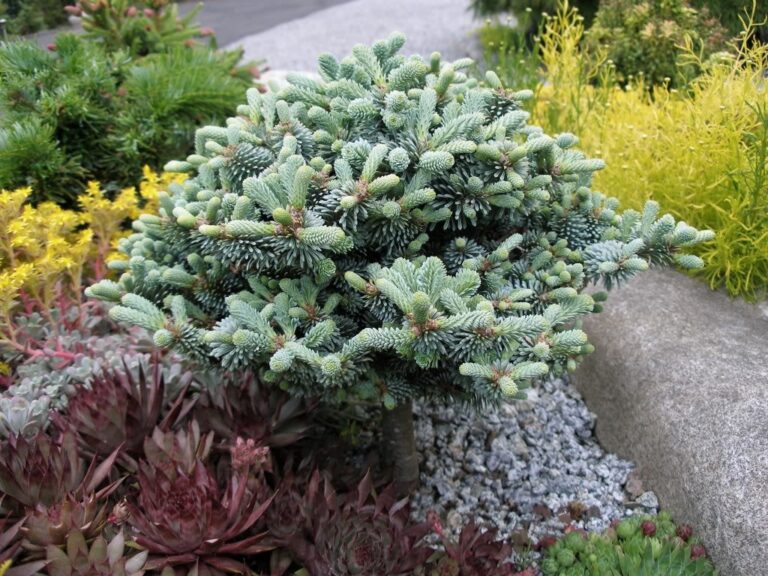
The architecture of ‘Aurea’ is exceptionally clean. It develops a crisp, columnar to broadly pyramidal silhouette that satisfies the eye’s desire for symmetry, evoking the classic, idealized “Christmas tree” profile.
Its branches lift slightly at the tips, carrying their heavy blankets of needles in a way that emphasizes the tree’s solid, conical lines. This dense structure gives the tree an incredible visual weight; it acts as a luminous, solid mass that anchors open spaces, catching the low slant of winter light beautifully.
Sunlight and Placement Strategy
To get the absolute most out of this cultivar, you must treat light as a design material. The gold-to-green gradient is entirely dependent on solar exposure.
Bathing the tree in full sun coaxes out the most intense, vibrant yellow-gold tones across the outer canopy. Conversely, if tucked into a shaded pocket, the interior green takes over, resulting in a muted, far less dramatic specimen.
Position ‘Aurea’ in an open, unshaded spot where it can bask in direct light. It is particularly breathtaking when sited where early morning or late afternoon sun can back-light or side-light the branch tips, making the entire perimeter of the tree appear to glow.
Cultivation Note: For foundational planting details—including soil mechanics, drainage requirements, pH preferences, cold hardiness zones, and irrigation schedules—please cross-reference the Master Growing Guide for Abies. The focus here remains strictly on the tree’s unique design traits and visual application.
Landscape Positioning and Design Roles
Because of its eventual scale and commanding color, ‘Aurea’ requires thoughtful placement where it can spread its wings over the coming decades.
Living Sculpture
The clean geometry and radiant color make this tree a premier candidate for a standalone specimen. Position it prominently on a sweeping lawn, at the turn of a formal axis, or along the sunny transition zone of a woodland garden.
Vertical Anchors
In expansive mixed borders, it functions as a tall, colorful punctuation mark. It introduces critical winter structure and soaring height well above the reach of standard shrubs and perennials.
The Winter Pivot
When the rest of the garden retreats into winter dormancy, ‘Aurea’ steps into the spotlight. Its warm, golden needles offer a vital antidote to grey winter skies, maintaining a structural focal point when the surrounding landscape feels empty.
Smart Siting Guidelines
- Solar Access: Prioritize the sunniest spot on your property to keep the golden canopy vivid.
- Future Proofing: Give the lower canopy room to expand to its full width; jamming it into a tight corner will cause lower branches to thin out and decline due to shade.
- Contrast Framing: Plant it against a dark, solid background—like a deep green hedge or a shaded stand of timber—to make the golden silhouette pop with dramatic clarity.
- Sightlines: Map out your views from the house, primary walkways, and patios, ensuring the sunlit face of the tree is directly in your line of sight.
Visual Design Combinations
Designing with ‘Aurea’ is an exercise in contrasting color, texture, and form. As a solid, golden-green vertical presence, it pairs beautifully with an array of garden companions.
Playing with Color Contrasts
- Deep Green Foundations: Frame the tree with dark evergreens like yew (Taxus), glossy hollies (Ilex), or the deep green needles of traditional spruces (Picea). The absolute darkness of these backdrops pushes the gold tones forward.
- Cool Blue Counterpoints: Introduce powder-blue conifers, such as blue-toned junipers or Abies procera ‘Glauca’. The icy blue provides a spectacular, sophisticated contrast to ‘Aurea’s’ warm gold.
- Rich Purples and Burgundies: Plant dark-foliaged shrubs like purple smokebush (Cotinus), burgundy barberries (Berberis), or dark ninebarks (Physocarpus) nearby. The complementary color pairing intensifies the perceived brightness of the gold needles.
Textural and Structural Partners
- Acid-Loving Companions: Bold-leafed rhododendrons and azaleas share the same acidic soil preferences as the noble fir. They offer chunky, broad leaves and explosive spring blooms that contrast beautifully against the fine needles of the conifer.
- Softeners and Grasses: Plant fine-textured ornamental grasses and woodland ferns around the base. Their delicate, fluid movement breaks up the rigid, stoic geometry of the fir’s trunk and lower limbs.
- Spring Underplanting: Scatter drifts of early bulbs like golden daffodils and crocuses around the root zone. They echo the tree’s yellow tones early in the year before the expanding canopy casts deep summer shade.
Compositional Inspiration
Try grouping ‘Aurea’ as a central golden spire within a horseshoe of dark-leafed evergreens, letting lower shrubs step down gradually to meet a lawn or path. Alternatively, plant a matched pair to flank a long driveway or frame a distant view, creating a formal, sun-kissed gateway effect. On large acreage, siting it at the sunny margin of a woodland allows it to catch the late-afternoon light, bridging the gap between open sun and deep shade.
The Story Behind the Tree
The noble fir itself (Abies procera) has a storied history, hailing from the high-rainfall forests of the Pacific Northwest. It crossed the Atlantic into European estates during the plant expeditions of the 19th century, quickly earning a reputation as a premier parkland tree.
The cultivar ‘Aurea’ emerged out of cultivation, selected by sharp-eyed plantsmen who noticed a branch mutation sporting an unusual golden hue. While the straight species is a workhorse of the timber industry and the premium Christmas tree market, ‘Aurea’ belongs entirely to the world of fine landscape design—a long-lived, architectural treasure tailored for spacious gardens in cooler, temperate climates.
Summary: The ‘Aurea’ Blueprint
Choosing Abies procera ‘Aurea’ comes down to a few brilliant design advantages:
- Dynamic Color: A light-responsive canopy that shifts from rich gold to deep green depending on solar exposure.
- Manageable Pace: Slow growth throughout its youth ensures it won’t outgrow its welcome in the first few decades.
- Strong Architecture: A crisp, classic pyramidal outline that provides an instant sense of structure.
- Four-Season Value: An unwavering winter presence that keeps the garden looking deliberate and colorful all year.