The Blue Spanish Fir: Sculptural Majesty for the Patient Gardener
The story of the Blue Spanish Fir, botanically classified as Abies pinsapo ‘Glauca’, winds its way from the rugged, sun-baked peaks of southern Spain’s Serranía de Ronda and northern Morocco. In these isolated wild populations, certain individual trees naturally developed an intense, chalky blue-grey coat on their needles—a survival mechanism powered by broader stomatal bands. Horticulturalists took notice, and this magnificent glaucous variation was officially selected in France before 1867, born out of seedlings raised at the Desfossé & Thuillier nursery in Orléans.
Because multiple blue-tinged seedlings were distributed under the same name over the decades, ‘Glauca’ functions more as a collective group of elite selections rather than a single, uniform clone. Yet every specimen in this family shares the same hallmark: a luminous, intensified blue-grey foliage that eclipses the dark green of the wild species. The gardening world officially cemented its status in 1993, when the Royal Horticultural Society bestowed its prestigious Award of Garden Merit, validating both its exceptional beauty and reliable garden performance.
The Anatomy of the Hedgehog Texture
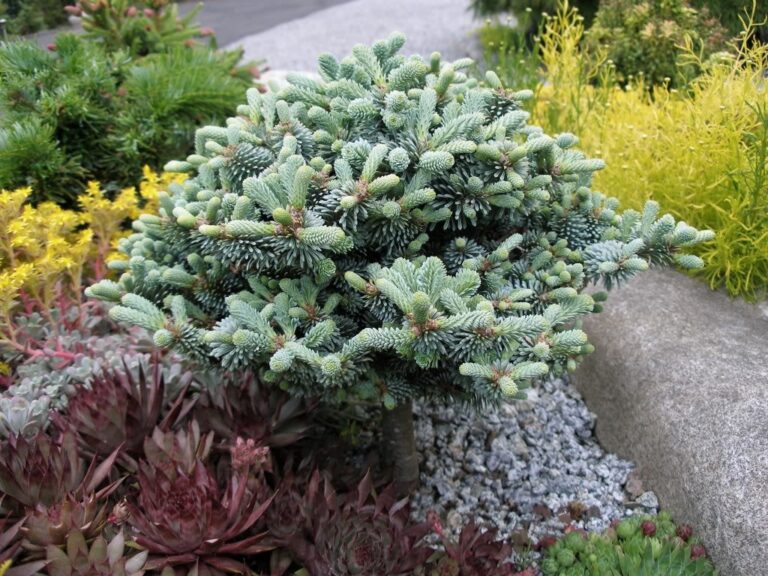
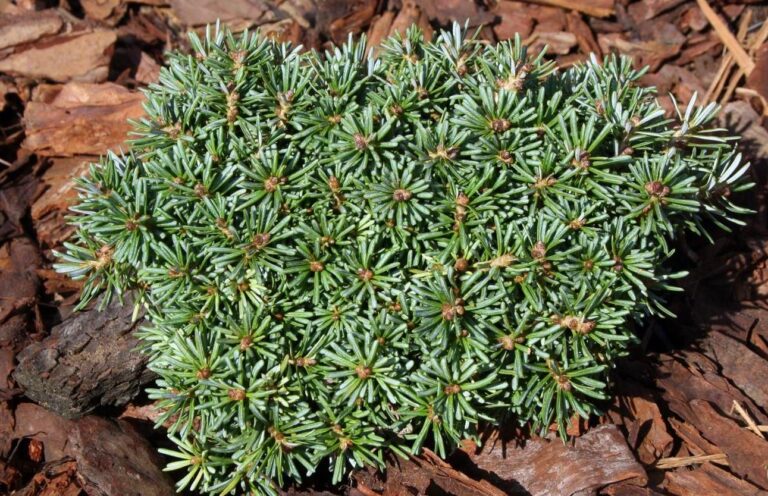
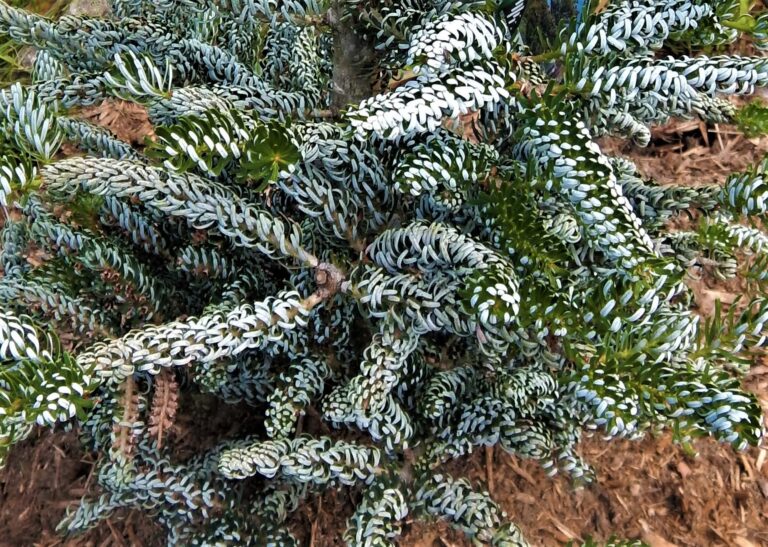
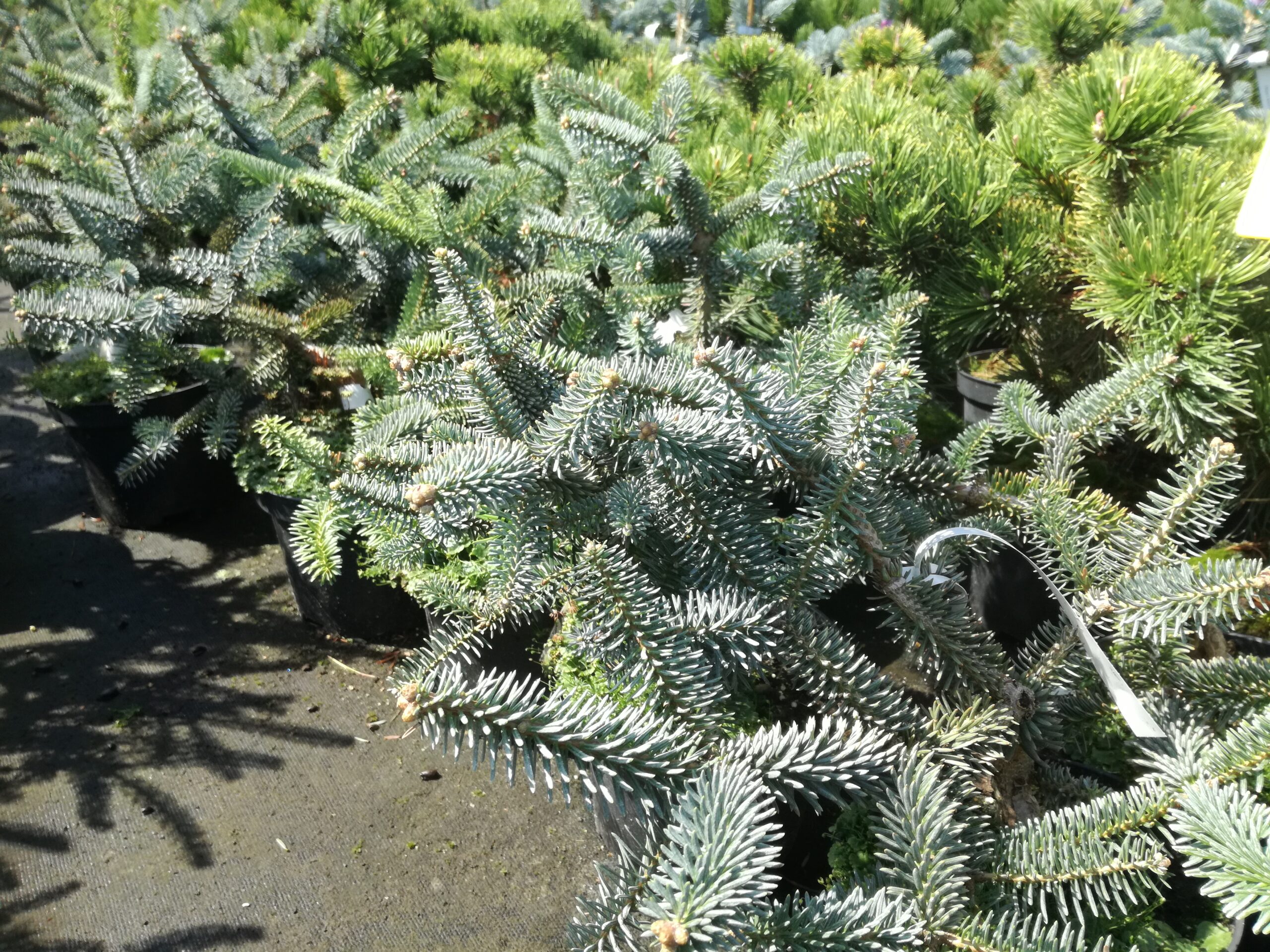
To understand the visual allure of ‘Glauca’, you have to look closely at its geometric foliage. Unlike traditional firs whose needles flatten out neatly to either side of the twig, this cultivar features short, stiff needles (measuring just 1.2–2 cm long) that explode radially around the shoot. This brush-like, 360-degree arrangement gives the branches a remarkably tactile, sculptural quality—often described as a hedgehog texture.
The color palette is dynamic, shifting from a subtle grey-green to a striking steel-blue or silver-blue depending on the quality of light and the season. Basking in full sun unlocks the most saturated blue tones, whereas partial shade coaxes the needles toward a muted green. Because it is a true evergreen, this cool-toned, metallic structure remains steadfast through winter snows and summer heat alike.
As the tree matures, seasonal cones introduce another layer of drama. The upright, cylindrical cones—reaching roughly 10–15 cm in length—perch like candles among the upper boughs. They emerge in shades of pale green or deep purple when young, eventually ripening to a rich brown before disintegrating right on the branch to cast off their winged seeds.
A Stately Journey to Maturity
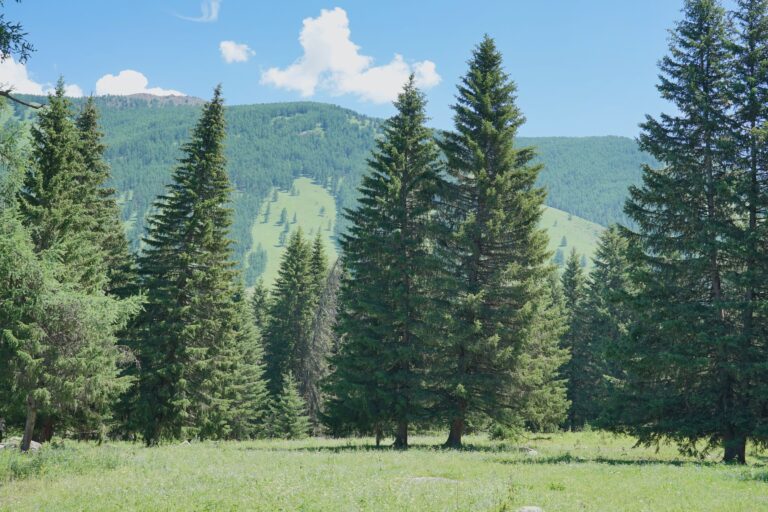
Patience is a virtue when growing the Blue Spanish Fir, a slow-growing, medium-sized tree that plays the long game in the landscape. In its youth, growth is deliberate and modest. Once fully established in ideal conditions, the central leader asserts itself, putting on annual extensions of about 30 cm (12 in). Over time, it sculpts a dense, regular silhouette, transforming into a broadly conical to pyramidal crown anchored by strong horizontal branching.
Mature dimensions depend on your local climate, but the tree generally climbs to an ultimate height of 12 m+ (40 ft+), with most garden specimens settling into a comfortable 9–15 m (30–50 ft) range. Expect a horizontal spread of 4–8 m (13–26 ft), typically hovering around 4.5–7.5 m (15–25 ft) in home orchards and managed gardens. Achieving this majestic scale is a generational joy, taking roughly 20–50 years to approach full maturity.
Design Strategies for the Modern Landscape
Given its commanding silhouette and icy color, this conifer demands to be treated as a focal specimen or a structural anchor. Tucking it into a crowded, messy hedge or rushing it into service as a quick privacy screen wastes its architectural potential. It needs breathing room where its formal geometry can be admired from all sides.
Primary Roles in the Garden Layout
- The Standalone Specimen: Position it prominently on an open lawn, amid a minimalist gravel bed, or as the crowning jewel of a Mediterranean-style landscape.
- The Vertical Anchor: Plant it in large mixed shrub borders to introduce permanent, year-round height and a cool contrast against fine-textured companion plants.
- The Architectural Alignment: Deploy its crisp pyramidal shape in contemporary layouts to mirror the clean lines of modern hardscaping and patios.
- The Long-Term Screen: Utilize it for spacious windbreaks where immediate privacy isn’t required, allowing its dense form to block wind beautifully over the decades.
Placement Insights
To get the most out of your tree, site it in full sun to ensure the most vibrant blue coloration. Select a sheltered position protected from harsh, sweeping winds and heavy urban pollution, as the pristine foliage performs poorly in highly polluted environments. Finally, give it wide berths; overcrowding will ruin its perfect radial branch symmetry and choke out its lower limbs.
Masterful Color Companions
The metallic, frosty tone of ‘Glauca’ acts as a brilliant canvas for building dramatic color contrasts in the garden.
Proven Companion Pairings
- Deep, Warm Evergreens: Surround it with the obsidian green tones of English yew, boxwood, or holm oak to pull the blue hues forward.
- Silver-Grey Harmonies: Interplant with Artemisia, Stachys byzantina (Lamb’s Ear), Santolina, or glaucous ornamental grasses to create a sophisticated, monochromatic cool palette.
- Rich Burgundy and Purple: Contrast the blue needles against the moody, dark foliage of a smoke bush (Cotinus), ninebark, or purple-leafed barberries.
- Illuminating Golds: Introduce bright sparks of gold privet, yellow-variegated shrubs, or blonde forest grasses to make the blue tones pop without clashing.
- Soft Flowering Perennials: Soften the base with underplantings of lavender, purple salvias, agapanthus, and blush-pink penstemons that echo the subtle, jewel-toned colors of the young cones.
In xeriscapes or water-wise designs, the tree naturally harmonizes with rosemary and lavender, reinforcing a sun-baked, silver-tinged aesthetic while providing essential vertical structure.
Cultivation Essentials
When preparing to break ground, it is vital to get the fundamentals right. For comprehensive, step-by-step planting directions—including optimal hole depth, soil amendments, initial watering schedules, nutrient management, and long-term pest prevention—make sure to refer to the Master Growing Guide for Abies.
As a brief overview, this cultivar thrives in moist but exceptionally well-drained, slightly acidic to neutral soils, comfortably accommodating clay, loam, or sandy textures. It shows a much higher tolerance for alkaline conditions than most other fir species and exhibits excellent drought tolerance once its root system is established. Hardy down to RHS H6 (roughly -20 to -15 °C) and fully suited for USDA zones 7–9, it struggles in regions marked by bitter winter extremes or intense, muggy summer humidity. Best of all for low-maintenance landscapes, it requires absolutely no routine pruning; its flawless pyramidal shape develops entirely on its own.
The Summary Profile
- Type: Slow-growing, medium evergreen conifer (specimen tree).
- Foliage: Short, stiff, steel-blue to grey-green needles arranged radially; evergreen.
- Mature size: Approximately 12 m+ tall × 4–8 m spread (30–50 ft × 13–26 ft) achieved over 20–50 years.
- Form: Broadly conical/pyramidal featuring horizontal branching and a dominant central leader.
- Best position: Basking in full sun within a sheltered location; prefers moist, well-drained soil ranging from acidic to neutral (with minor alkalinity tolerance).
- Design value: High-impact architectural specimen providing a cool, silvery focal point that pairs brilliantly with golden, burgundy, or purple foliage.
- Recognition: Honoured with the RHS Award of Garden Merit (1993).