The Golden Spreader Nordmann Fir: A Brilliant, Low-Growing Winter Accent
While the wild Nordmann fir towers over native landscapes, Abies nordmanniana ‘Golden Spreader’ takes a radically different path. This exceptional dwarf evergreen conifer began as a stroke of horticultural luck. Discovered in the early 1960s as a chance sport in the Netherlands, it originated around 1961 as a seedling in the nursery of S.N. Shoots at Culemborg, located near Boskoop.
Recognizing its unique charm, the Konijn Nursery of Boskoop soon introduced the plant to the commercial trade. Today, this RHS-registered cultivar is widely celebrated in conifer databases as the definitive dwarf, golden form of the Caucasian fir.
Foliage Colour and Seasonal Display
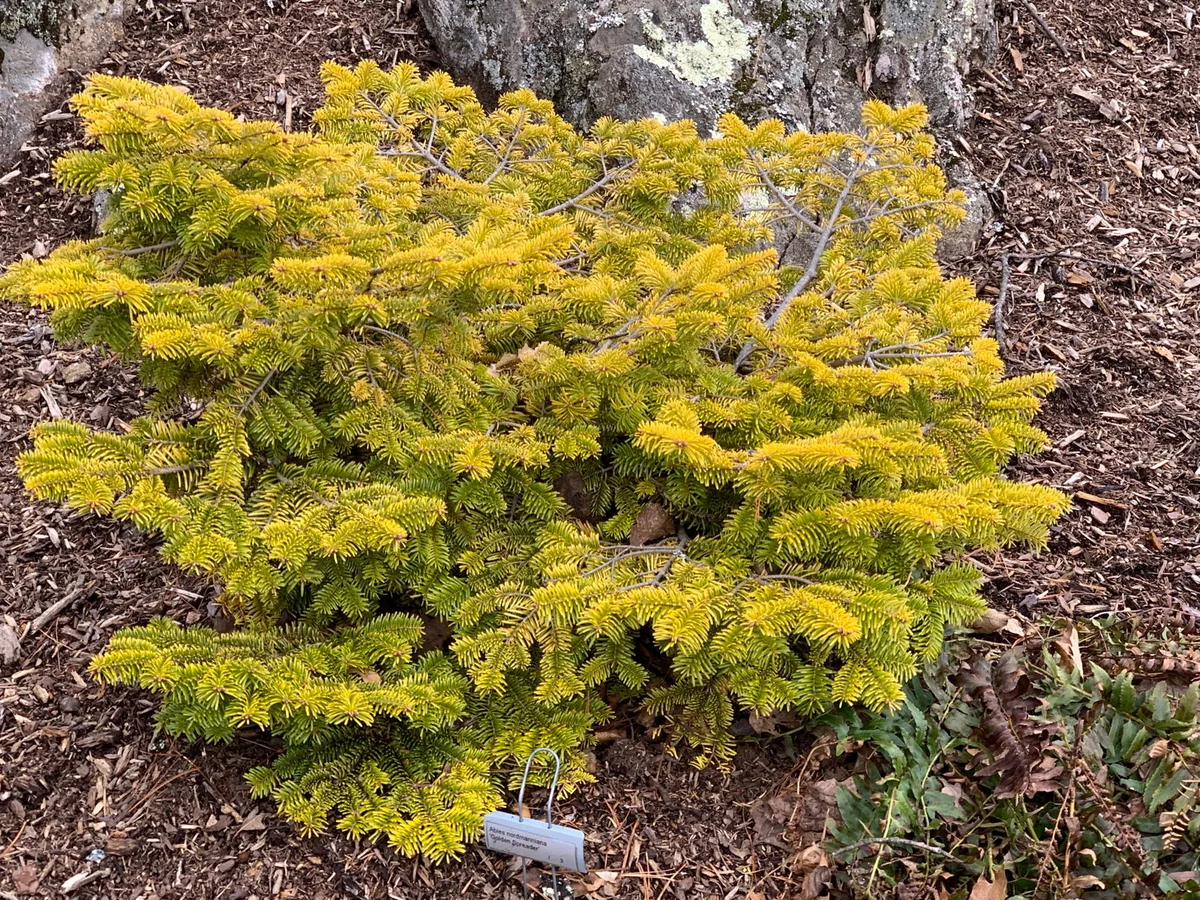
The true genius of ‘Golden Spreader’ lies in its foliage, which acts as a living color wheel that shifts and intensifies with the seasons.
- Spring and Summer: Fresh growth emerges as a bright, glowing golden-yellow to yellow-green, injecting a vibrant shot of luminosity into the summer border.
- Autumn and Winter: When autumn arrives and temperatures plummet, the needles shift into high gear. They deepen into a rich, metallic golden-yellow that seems to catch and hold the weak winter sun long after the rest of the garden has gone dormant.
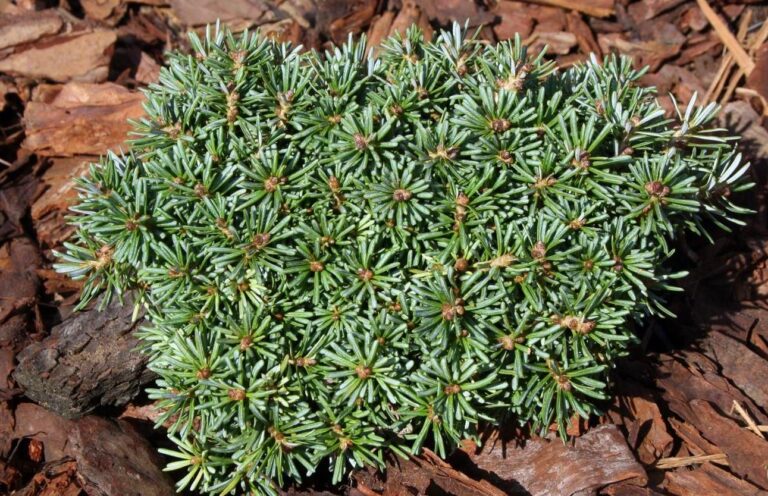
Up close, the needles reveal the classic, high-quality traits of the Nordmann family. They are flattened, glossy, soft to the touch, and tipped with blunt or slightly notched ends. Arranged with dense precision along horizontal branches, they offer a magnificent texture. This cultivar takes it a step further with a brilliant two-tone effect: the needles shine bright gold on top while showing a paler, yellowish-white underside.
Keep in mind that these golden needles lack the sunburn-defying chlorophyll of the dark-green species. To keep the foliage pristine and prevent scorch, give this conifer a spot protected from the blistering afternoon sun, especially during its first few years in the ground. For detailed information on universal care metrics, soil preferences, and proper drainage testing parameters required by all members of this genus, gardeners should consult the master guide to true fir husbandry to ensure long-term cultivation success.
Size, Form, and Growth Rate
‘Golden Spreader’ breaks the mold of traditional fir trees by trading massive vertical scale for a compact, architectural footprint.
- Habit: As a youngster, the plant behaves like a dense, low, spreading shrub, often featuring a charming depression right in the center. As the decades roll by, it typically develops a slow-growing central leader, gradually transforming into a dense, squat, beehive-shaped or broadly conical specimen.
- Mature Dimensions: A 10-year-old specimen generally reaches about 1 to 1.5 meters (3 to 5 feet) in both height and width, depending heavily on your specific site conditions. If you allow the central leader to grow over several decades, old specimens can eventually reach 2 to 3 meters (6 to 10 feet) tall, though they always retain their signature squat, wide proportions.
- Growth Rate: This is a true slow-burner, putting on a mere 5 to 15 centimeters (2 to 6 inches) of new growth per year. This leisurely pace places it squarely within the dwarf category.
The Royal Horticultural Society notes a typical garden scale of 0.5 to 1 meter in height and a spread of 1 to 1.5 meters, which accurately captures what to expect over a standard 20- to 50-year garden timeline.
Hardiness and Site Preferences
Don’t let the delicate color fool you; ‘Golden Spreader’ inherits the rugged constitution of its mountain ancestors. It earns a robust RHS H7 rating and thrives across USDA zones 4 through 7, with some growers successfully pushing it into zones 5 through 8. While it shrugs off brutal winter freezes, it performs best when sheltered from drying winter winds and the intense glare of high summer sun.
Landscape Roles and Design Value
Because it swaps out the towering, pyramidal form of a standard Christmas tree for a low, mounded habit, ‘Golden Spreader’ opens up a completely different playbook for garden design.
Architectural Accent in Small Spaces
Its tight structure and disciplined growth rate make it a dream for tight spots where a standard fir would turn into an invasive giant. It serves as a spectacular focal point in cozy courtyard gardens, small urban plots, or near patios where you want high-impact winter color at eye level. It also makes a fantastic long-term container plant, provided you choose a generous pot with excellent drainage, which gives you the flexibility to shift it into a shaded spot when summer heat peaks.
Winter-Light Provider in Shaded Areas
While many golden conifers demand full, blazing sun to stay bright, ‘Golden Spreader’ actually prefers partial shade, making it a secret weapon for illuminating dark garden corners. Try planting it against a rich backdrop of dark evergreens like yew, boxwood, dark-leaved rhododendrons, or even the standard green Nordmann fir. The golden foliage will pop against the dark canvas, creating a glowing beacon in the winter landscape. It looks equally at home along woodland edges, north- or east-facing borders, or nestled under a high canopy of dappled shade.
Structural Element in Conifer and Rock Gardens
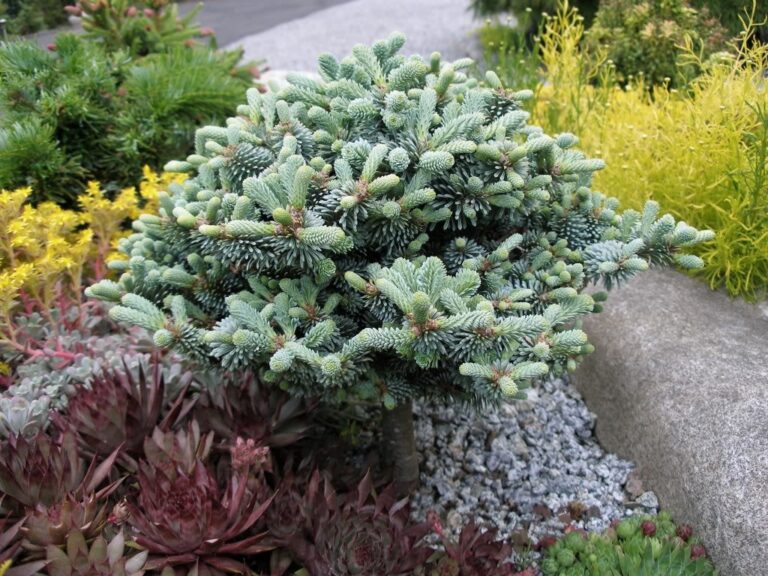
For collectors building dedicated conifer beds or alpine rock gardens, this plant delivers both structural weight and color contrast. The ground-hugging form and dense branching look spectacular draped over rock garden ledges, nestled into raised beds, or positioned at the very front of a conifer border where visitors can appreciate the texturing. Try pairing it with dwarf pines, spruces, or firs that sport cool blue, silver, or deep emerald needles to create a tapestry of contrasting tones.
Companion Planting and Colour Combinations
To get the absolute most out of this golden conifer, surround it with companions that make its warm tones sing.
- Evergreen Backdrops: Deep green or blue-toned conifers like Taxus, Picea, Pinus, or Thuja offer an instant, high-contrast frame.
- Broadleaf Evergreens: Glossy holly, English laurel, and dark-foliaged rhododendrons provide a heavy, luxurious texture that grounds the fine needles of the fir.
- Seasonal Underplanting: Low-growing, shade-loving perennials and early bulbs like hellebores, epimediums, and winter aconite carpet the ground beautifully without competing for light, keeping the fir’s unique silhouette center stage.
Because this cultivar naturally branches tightly all the way down to the soil line, you won’t need to hide its base with “facer” shrubs; it stands perfectly well on its own as a clean, self-contained mound.
How It Differs From the Species and Other Nordmann Forms
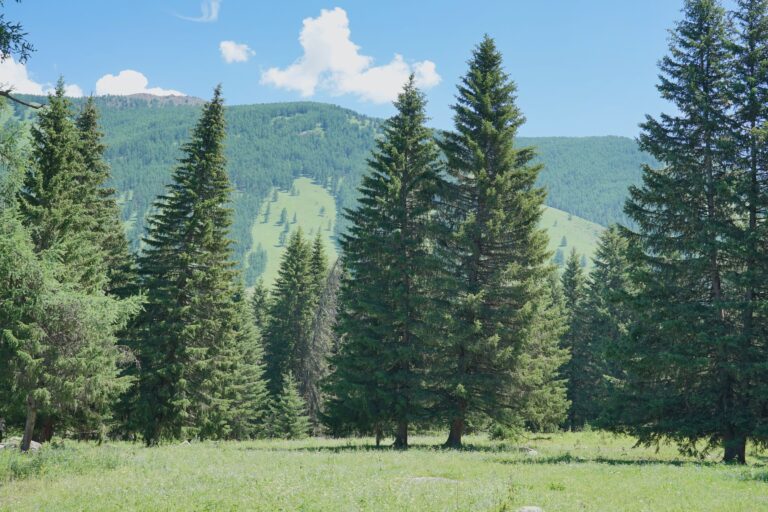
To truly appreciate ‘Golden Spreader’, it helps to look at the wild Abies nordmanniana. The wild species is a towering, fast-moving forest giant that easily reaches 12 to 25 meters (40 to 80 feet) in cultivation, cutting a sharp, dark green, pyramidal silhouette.
‘Golden Spreader’ turns that blueprint completely upside down. It trades massive scale for a compact form that rarely tops 3 meters even in old age. It swaps the strict upright pyramid for a low, beehive mound. And instead of deep, somber green, it flashes a brilliant, year-round golden-yellow jacket. Where the species functions as a grand windbreak or a holiday tree, ‘Golden Spreader’ operates as an intimate, artistic accent designed for close-up viewing in the finest small gardens.
Visual Design Summary
Think of Abies nordmanniana ‘Golden Spreader’ as your garden’s personal winter light fixture. It brings architectural structure to small footprints, warms up cold-toned plant groupings, and delivers a shot of pure gold when the rest of the garden is buried in winter gray. Thanks to its slow, predictable growth, you can plant it with absolute confidence, knowing it will hold its beautiful shape and proportions for decades to come.