Abelia × grandiflora ‘Hopleys’ (Twist of Lime) – Complete Growing Guide
For decades, standard glossy abelias (Abelia × grandiflora) occupied a very specific, slightly boring niche in American landscapes. They were the tough, sprawling, semi-evergreen backdrops you planted along a driveway or the back of a border when you needed something that wouldn’t die. They did their job well enough, but they had a bad habit of sending out long, wild, leggy canes that made them look unkempt unless you were constantly out there with the pruners.
Then came the variegated cultivars, and the conversation shifted, highlighting the true potential of the wider Abelia genus for modern gardens. If you’ve spent any time looking for a compact shrub that carries its weight through the dog days of summer, you’ve probably run across Abelia × grandiflora ‘Hopleys’. In the nursery trade, you’ll see it sold under a few different marketing names—Twist of Lime™, Miss Lemon, or Lemon Zest—depending on which wholesale grower supplied the garden centre.
Despite the flashy marketing names, this is a remarkably stable, well-behaved plant that solves the old spacing issues of the species. It even picked up an Award of Garden Merit from the Royal Horticultural Society over in the UK, which is usually a good indicator that a plant has decent staying power and doesn’t throw a tantrum the moment the weather turns.
The Long-Term Color Economics
The main argument for planting ‘Twist of Lime’ is that it handles the midsummer slump better than almost any other dwarf shrub. Most variegated plants give you a nice burst of color in May, but by August, the foliage either scorches or bleaches out into a muddy mess.
-
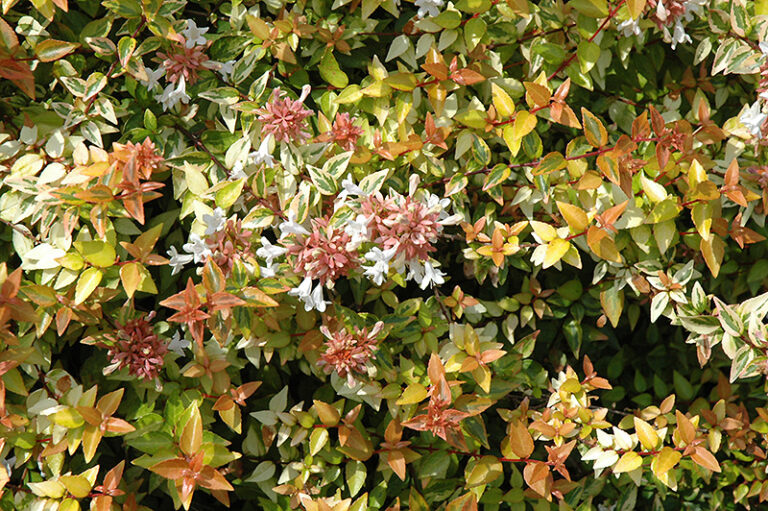
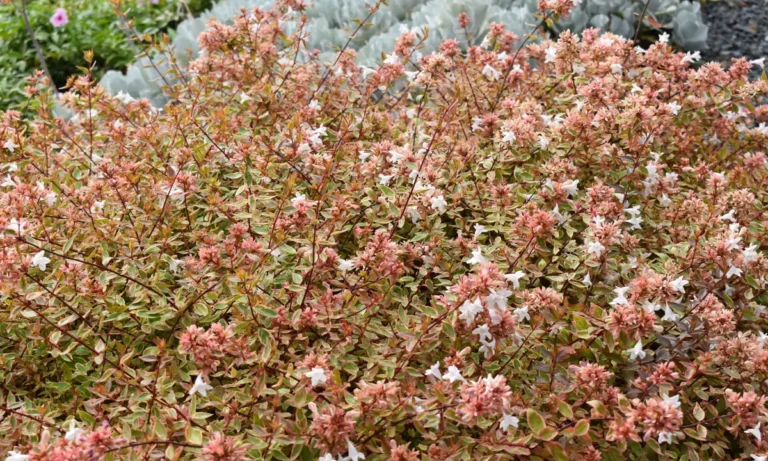
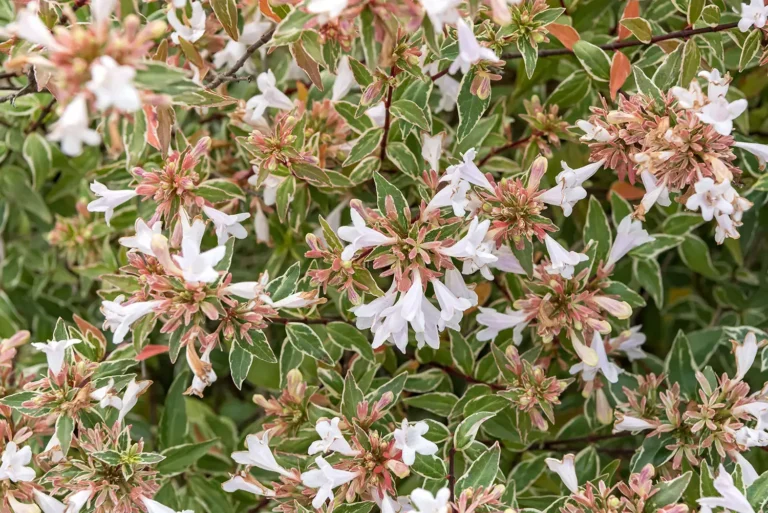
- The Spring Flush: New growth comes in with a sharp, bright yellow margin wrapped around a green center.
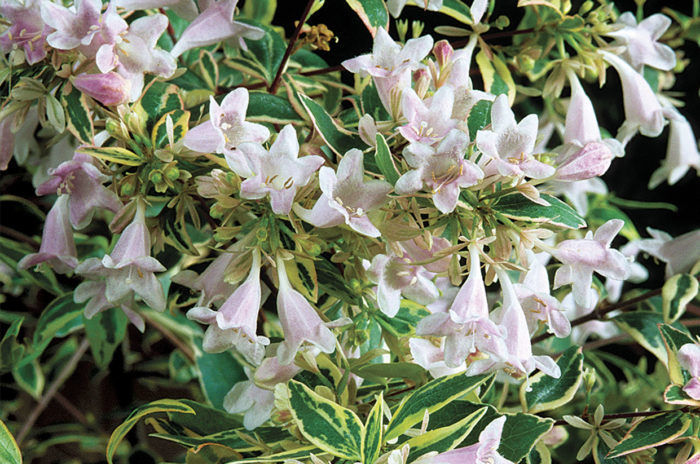
- The Summer Fade: As the leaves mature and the sun gets intense, that yellow softens into a clean cream or ivory. Crucially, the variegation is stable. Older abelia cultivars had a frustrating habit of “reverting”—suddenly shooting out plain green branches that you had to prune out before they took over the plant. ‘Twist of Lime’ rarely reverts.
- The Autumn Shift: Once the temperature drops, the cream margins take on a purplish-bronze or cold-weather burgundy tint.
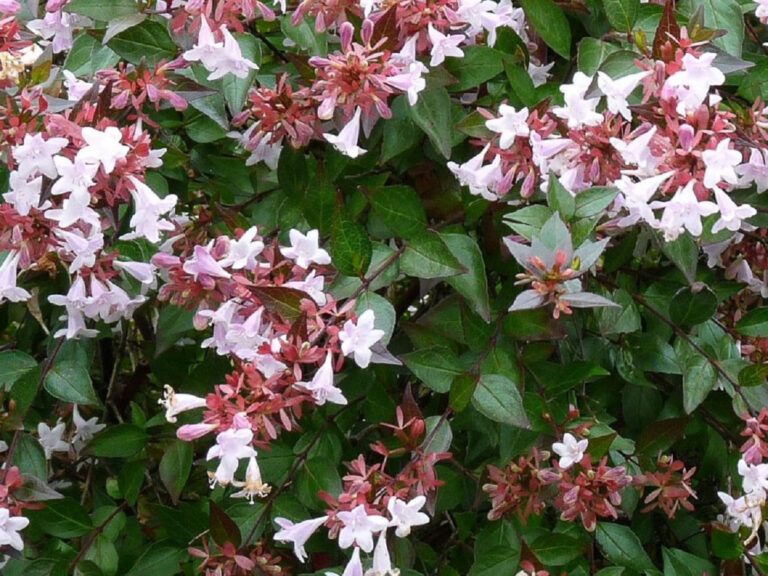
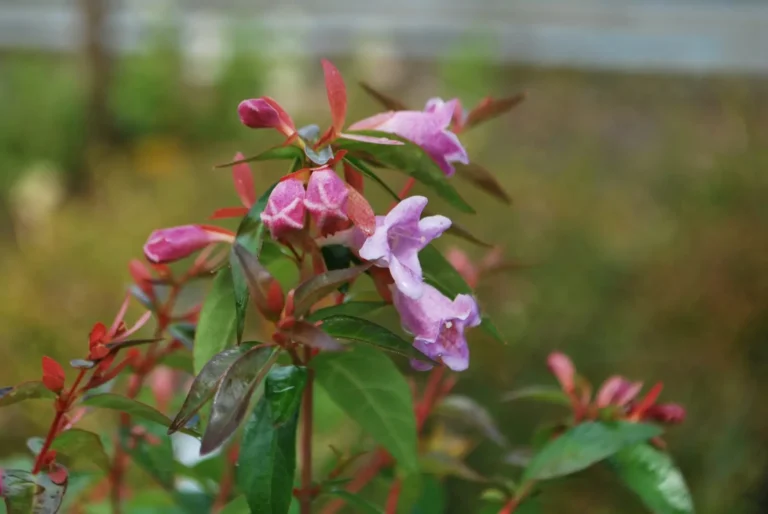
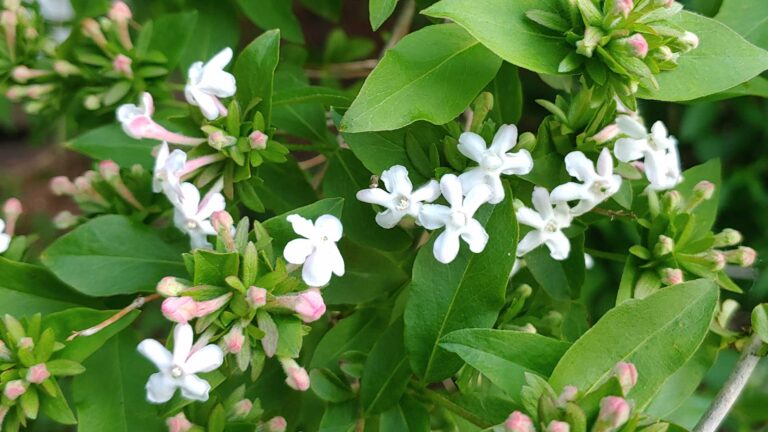
While the foliage does the heavy lifting, the flowers are what make it useful for pollinators. Starting in late spring and going straight until the first hard frost, it produces clusters of small, pinkish-white, bell-shaped flowers. They aren’t large, but because the plant blooms on “new wood” (the current season’s growth), it keeps pushing out new buds continuously. If you want to support local bumblebees and butterflies through August when everything else in the garden looks fried, this is one of the easiest ways to do it.
The Realities of Size and Climate
If you look at a textbook, it will tell you Abelia × grandiflora is an artificial hybrid first noticed in an Italian nursery back in 1886, bred to combine the floral display of Abelia chinensis with a bit more cold tolerance. But how that plays out in your yard depends entirely on your zip code.
In the South (USDA Zones 8 and 9), ‘Twist of Lime’ is essentially an evergreen. It will grow at a moderate pace into a rounded, mounding shrub about 3 to 4 feet tall and slightly wider. If you leave it alone for a decade in a warm climate, it might eventually touch 6 feet, but it’s easily kept in check.
In the upper Midwest or Northeast (Zone 6), it’s a completely different plant. At 0°F or below, you are going to get significant winter dieback. The top growth will often freeze right down to the ground. The good news is that because it blooms on new wood, the root system will push up fresh growth in the spring, and you’ll still get flowers by July. However, you need to accept that in Zone 6, your abelia is going to behave more like a woody perennial, maxing out at around 1.5 to 2 feet tall each year. If you garden in the north, sit it somewhere protected from freezing winter winds, like a south-facing foundation bed.
Getting It into the Ground
Abelias are not delicate. They will tolerate sandy soils, heavy loam, and varying pH levels, but they have one absolute breaking point: drainage. If you plant this shrub in a low spot where water sits after a heavy rain, the roots will rot, and the plant will be dead by summer.
-
- The Hole: Dig the hole twice as wide as the root ball, but keep it shallow. The top of the root ball should sit exactly level with the surrounding soil—or even slightly above it if you are dealing with heavy clay that tends to settle.
- The Soil: If your soil is completely devoid of life, mix a little compost into the native backfill, but don’t overdo it. You want the roots to get used to your yard’s actual dirt rather than staying pampered in a pocket of potting soil.
- The Mulch: Put down a two-inch layer of wood chips or leaf mold to keep the roots cool, but pull it back so it isn’t resting directly against the base of the stems. Moist mulch piled against wood invites rot and insects.
- Spacing: If you are planting a low hedge or a grouping, space them about 3 to 4 feet apart from the center of one plant to the center of the next.
Once it’s in, give it a deep soaking once or twice a week during its first season. After the root system finds its footing, it becomes surprisingly drought-tolerant. You’ll get more flowers if you give it regular moisture, but it won’t die if you forget the hose for a couple of weeks in July.
Pruning Without Ruining the Plant
The biggest mistake people make with compact abelias is treating them like boxwoods. If you take a pair of electric hedge shears and cut ‘Twist of Lime’ into a tight, formal square or a perfect round bowling ball, you ruin the entire point of the plant. Abelias are meant to have a loose, fountain-like habit with arching branches. Shearing them also cuts off the very tips where the flower buds form, destroying your summer bloom show.
Instead, do your pruning in late winter or very early spring before the new leaves emerge.
The Renewal Method
Take a pair of bypass hand pruners and cut the dead or winter-damaged wood back to healthy tissue. Then, look for the oldest, thickest, most woody stems and cut them right down to the ground. Take out about a third of these old stems every few years. This opens up the interior of the shrub to sunlight, keeps the air moving, and forces the plant to send up fresh, vigorously colored new growth from the base.
The Hard Rejuvenation
If a brutal winter completely kills the top growth, or if a plant has become completely overgrown and leggy, you can cut the whole thing back to about 6 inches from the ground in March. It will look like a stump for a few months, but it will regenerate quickly from the roots.
Pests, Defenses, and Yard Design
From a maintenance perspective, there isn’t much to report, which is exactly what you want in a landscape shrub. It doesn’t suffer from the powdery mildew or leaf spots that plague spireas or hydrangeas in humid weather.
In terms of layout, ‘Twist of Lime’ works best when you use its bright foliage to break up blocks of solid green. It looks great tucked in front of dark evergreens like traditional boxwoods, hollies, or conifers, where the cream-and-yellow margins have something dark to contrast against.
In a mixed perennial border, it anchors sun-loving plants that bloom at different times, like purple coneflowers (Echinacea), salvias, catmint, or late-season ornamental grasses. It also makes a perfectly fine container plant for a sunny deck or terrace, provided you choose a large pot with excellent drainage holes and accept that you’ll need to water it more frequently than if it were in the ground.