The Blue-Violet Carpet: Mastering the Prostrate White Fir
Cultivar at a Glance
| Feature | Description |
| Botanical name | Abies concolor (Violacea Group) ‘Violacea Prostrate’ |
| Common name | Prostrate white fir; white fir ‘Violacea Prostrate’ |
| Synonyms | Abies concolor ‘Violacea Prostrata’; Abies concolor Violacea Group prostrate |
| Family | Pinaceae |
| Foliage | Evergreen, grey-blue to blue-violet in effect |
| Habit | Low-growing, spreading and branched |
| Height | Approximately 30 cm after 10 years |
| Spread | Approximately 1–1.5 m, potentially several metres with age |
| Cones | Large, pale violet when young, ripening brown |
| Design role | Ground-cover conifer, rock-garden plant, bank and slope accent |
| Hardiness | Suitable for very cold climates |
What Makes it Distinctive
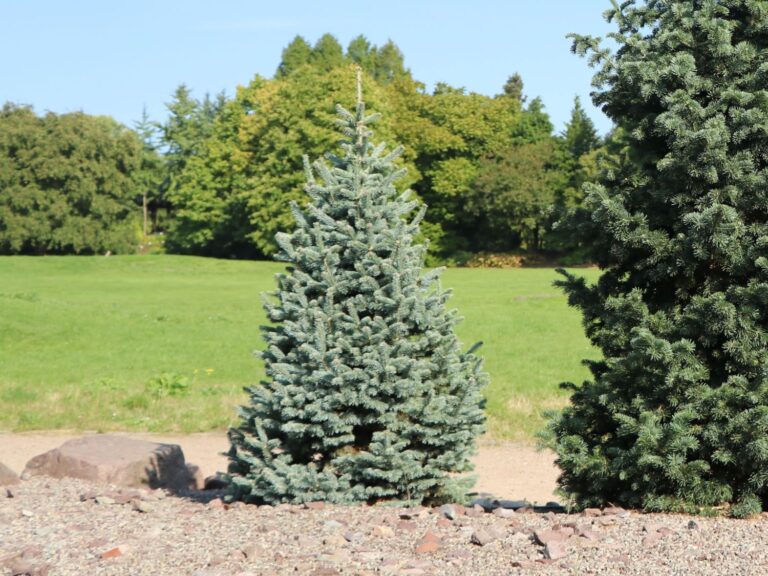
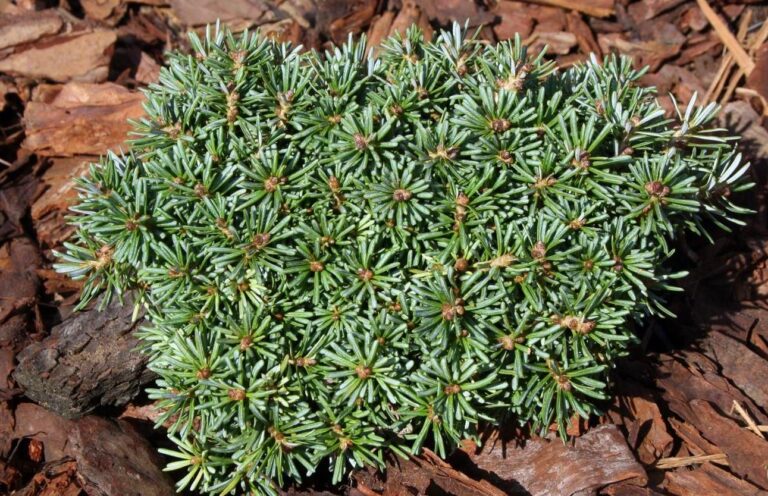
A Blue-Violet Evergreen Carpet
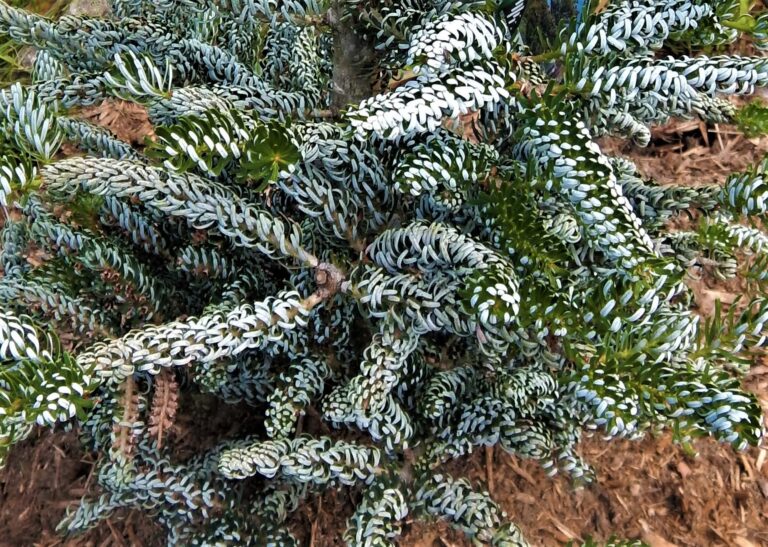
The true magic of this cultivar lies in the dramatic tension between its classic fir foliage and its ground-hugging, horizontal growth habit. Instead of rushing upward via a dominant central leader, its branches sweep outward, claiming horizontal territory while maintaining a remarkably low profile.
The individual needles boast a refined grey-blue hue, yet when sunlight hits the plant obliquely across its sweeping top, the cumulative effect shifts into an elusive blue-violet. This isn’t the heavy, literal purple of a typical dark-leaved shrub; rather, it is a shimmering, atmospheric trick of the light created by the cool, glaucous surface of the needles and their pale, reflective bloom—a brilliant inheritance from its ‘Violacea’ lineage.
To maximize this optical brilliance, position the plant against deliberate backdrops:
- Deep green conifers serve as a dark backdrop that pushes the pale blue tones forward.
- Dark stone, charcoal gravel, or weathered timber grounds the plant and intensifies its cool coloration.
- Burgundy-leaved shrubs introduce a high-contrast, sophisticated color pairing.
- Silver foliage creates a quiet, sophisticated, and entirely monochromatic vignette.
- Yellow-green alpines provide a bright counterpoint that makes the blue look satisfyingly icy and saturated.
Unlike deciduous ground covers that vanish or turn to mush at the first frost, this fir works hard year-round. It anchors the winter garden with permanent structure, its low silhouette often cutting a sharper figure against the stark winter landscape than it does amidst the lush confusion of summer.
Decorative Cones
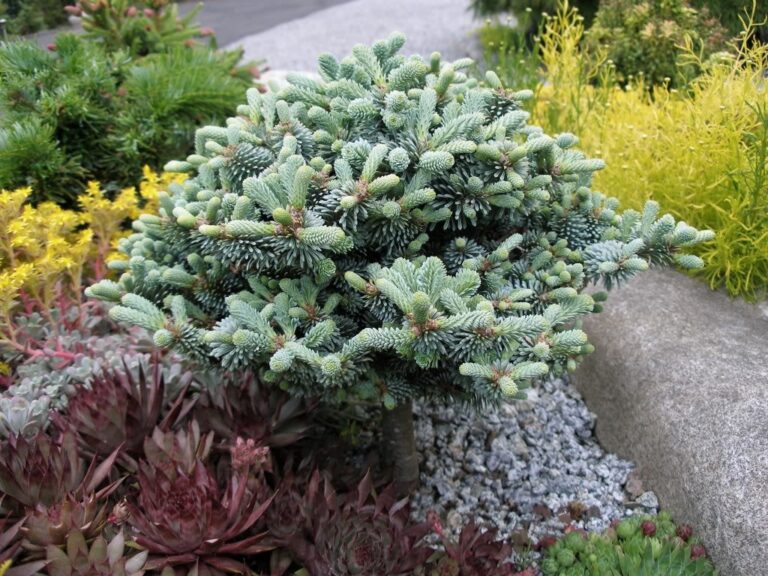
Cones on a prostrate plant become an intimate, eye-level luxury. On a standard white fir, the cones are stranded in the upper atmosphere of the tree’s canopy; here, the large, pale violet adolescents develop right at your feet, inviting close inspection.
This violet wash is a fleeting seasonal highlight. The young, muted lilac cones eventually ripen into a deep, earthy brown. While they last, these soft purple accents pair beautifully with magenta rock garden alpines, cool blue-grey stones, or surrounding wine-red foliage.
True to their fir lineage, these cones stand proudly upright on the branches and eventually disintegrate on the stem, rather than dropping whole like pinecones—a subtle biological detail that enhances the plant’s structural charm.
Mature Form and Scale
Designing with ‘Violacea Prostrate’ requires thinking in terms of square footage rather than vertical clearance. Do not mistake it for a scaled-down, miniature Christmas tree; it is a sprawling, slow-motion wave. Expect a modest height of around 30 cm after a decade, but prepare for a lateral spread of 1 to 1.5 metres, knowing that ancient specimens can eventually colonize several metres of ground.
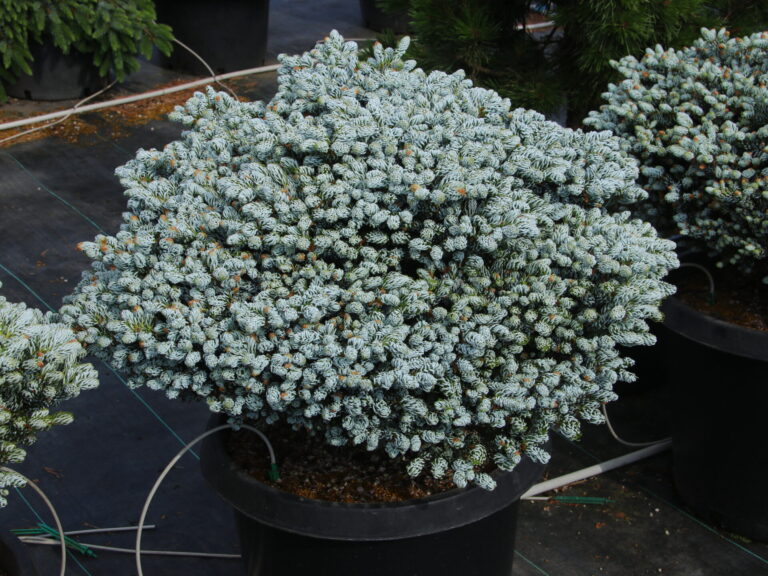
Keep this footprint in mind during installation. A young specimen might look perfectly self-contained in a nursery pot, but it will eventually mature into a broad, sweeping mat.
The resulting silhouette is delightfully informal. Branches overlap, layer themselves, and lift gently at the tips, creating a cascading, multi-tiered skirt rather than a flat, clipped turf.
Occasionally, the plant may attempt to throw up a strong, vertical shoot. If you want to preserve the strictly prostrate habit, simply prune out this competing leader to reset the plant’s horizontal trajectory.
History and Nomenclature
This selection stems directly from the celebrated ‘Violacea’ line of Abies concolor, a historic group of conifers revered for their exceptionally silvery, blue needles. ‘Violacea Prostrate’ represents the prostrate branch of that family tree, capturing the same luminous color in a low-growing form.
In horticultural literature and trade catalogs, you will find this plant under a few different names:
- Abies concolor ‘Violacea Prostrata’
- Abies concolor (Violacea Group) ‘Violacea Prostrate’
- Abies concolor Violacea Group prostrate
While these names target the same underlying variety, material on the market can vary because not every plant originates from a perfectly uniform clone.
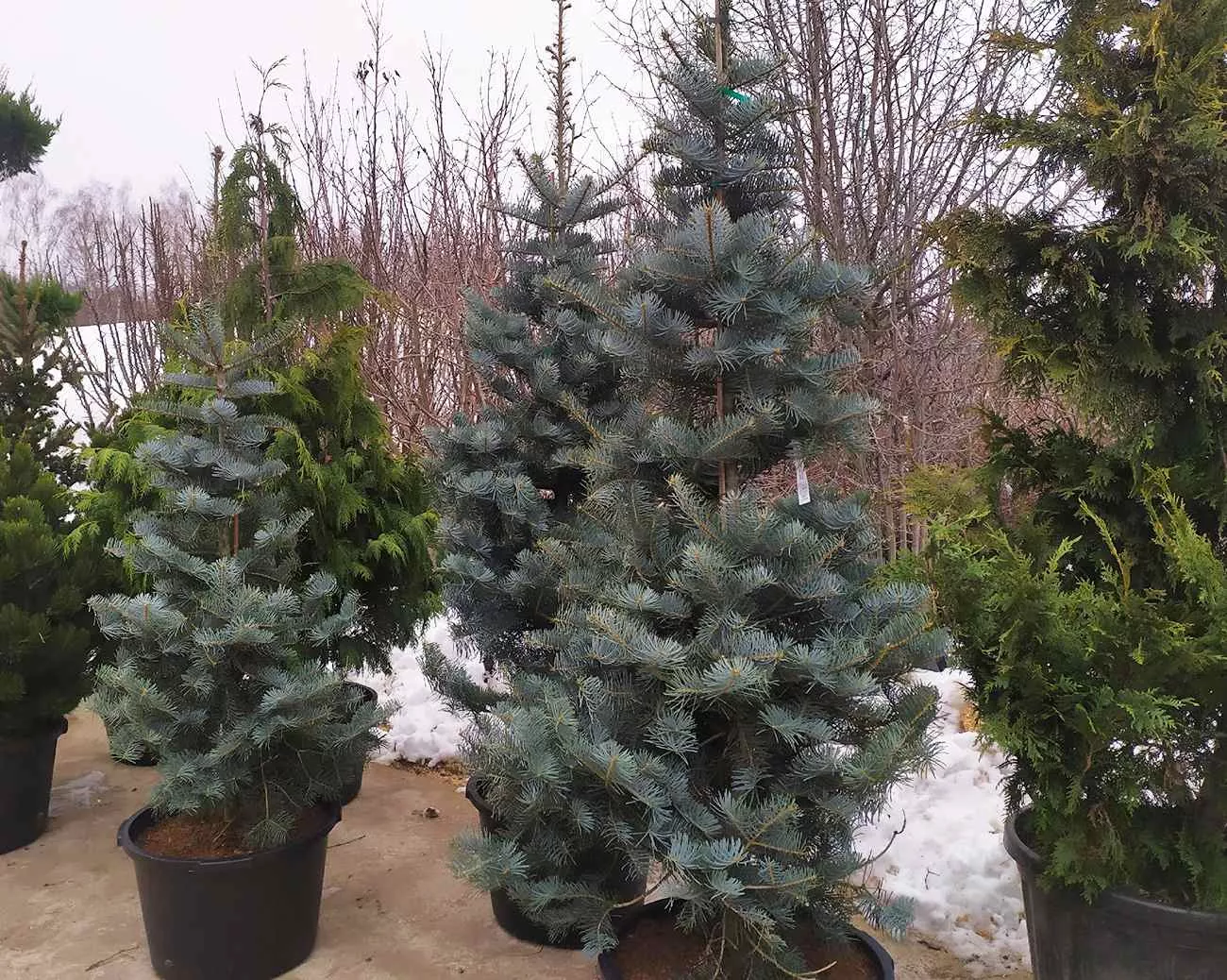
When hunting for a specimen at specialist nurseries, use your eyes rather than relying solely on the plant tag:
- Verify that the central growth is genuinely lateral and close to the soil.
- Look for a pronounced blue-grey cast rather than a generic green.
- Ensure the framework is branching horizontally, without an aggressive upright leader.
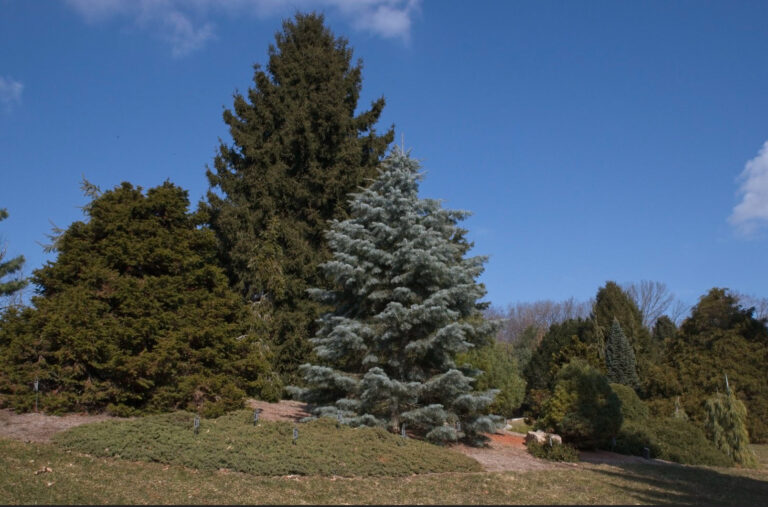
- Confirm you aren’t accidentally buying the standard, towering ‘Violacea’ cultivar.
Best Landscape Uses
Rock Gardens
This cultivar is a premier choice for rockwork. Its low stature preserves the visibility of expensive stone outcrops and delicate alpine neighbors while contributing a substantial, solid block of evergreen color to the scene.
Let its branches skirt around the contours of a large boulder. The juxtaposition of hard, weathered stone hugged by soft, icy-blue needles creates an instantly naturalistic look.
Excellent companions include:
- Mound-forming or cushion alpines
- Low-growing, yellow-flowered perennials
- Purple or intense magenta rock plants
- Fine, wispy grasses for textural contrast
- Small, strictly upright conifers to act as exclamation points
A single specimen usually carries far more design weight than a cluttered group of competing blue cultivars.
Banks and Slopes
On a challenging slope, this prostrate fir shines by softening contours and drawing the eye horizontally, which visually grounds uneven terrain.
Plant it where its form can be appreciated from different vantage points. Looked at from above, it stretches out like a broad pool of cool color; looked at from below, its layered, stepped branches create a beautiful cascading silhouette.
Try pairing it with:
- Dark-foliaged shrubs planted further up the slope
- Warm, amber-toned grasses or decorative autumn seedheads
- Creeping ground covers weaving beneath its outer branches
- Irregularly grouped, rugged boulders
- Slender upright junipers to establish a rhythm on the hillside
Remember to treat this fir as a visual design element rather than a functional tool for severe erosion control or engineered slope stabilization.
Raised Beds and Retaining Walls
Elevating this conifer brings its architectural form closer to eye level, allowing the branches to drape gracefully over stone or timber edges. This cascading effect is far more dramatic than planting it on flat ground, where its low stature can easily be swallowed by taller neighbors.
The color dynamic changes depending on your hardscaping material: pale limestone creates a soft, ethereal look, whereas dark brick or charcoal blocks offer a sharp, modern contrast.
Conifer Collections
In a dedicated conifer garden, ‘Violacea Prostrate’ breaks up the monotony of upright columns and rounded mounds by introducing a strong horizontal line. The most successful pairings rely on contrasting at least two primary traits:
- Habit: Low and spreading set right next to tall and slender.
- Color: Icy blue positioned against chartreuse gold or deep forest green.
- Texture: Broad, soft fir needles contrasted with prickly junipers or scale-like cypress foliage.
- Scale: A broad carpet anchoring a narrow, spire-like tree.
This habit is essential for weaving disparate upright specimens into a cohesive landscape narrative.
Containers
While young, a specimen makes a striking focal point in a large, substantial container. Its sweeping branches will eventually roll right over the rim, looking particularly handsome in matte-finished, stone-colored, or terracotta pots.
However, view container culture as a temporary phase. This plant’s long-term lateral ambitions will eventually outgrow typical patio pots, and its architectural value is realized when given the freedom to spread out in the ground.
Design Combinations
Blue, Silver and White
For a serene, minimalist alpine look, combine ‘Violacea Prostrate’ with silver-leaved perennials, crisp white flowers, and a mulch of pale gravel. This combination catches the light beautifully at dusk, making it perfect for contemporary spaces or moon gardens. Just be sure to weave in a touch of dark green foliage to keep the vignette from looking washed out.
Blue and Burgundy
The warmth of burgundy foliage makes a spectacular foil for the fir’s icy needles, causing the glaucous blue to pop with unexpected intensity. Give the burgundy companion a little breathing room rather than letting it crowd the fir. The ideal balance features one grand sweep of blue fir, a smaller dark-leaved accent plant, and a clean stone or gravel background to tie them together.
Blue and Yellow-Green
Pairing blue with lime or chartreuse creates a vibrant, high-contrast display. This works brilliantly in rock gardens where the fir provides solid, cool permanence against a lively backdrop of golden grasses or bright, compact shrubs. Use the yellow-green tones with a light hand; a small splash provides an elegant highlight, while too much can overwhelm the subtle violet undertones of the fir.
Blue with Purple Flowers
The soft lilac tint of the young cones makes purple-flowering perennials an effortless match. Choosing companion plants with lavender, violet, or deep wine-colored blossoms echoes the tones of the cones without distracting from the fir’s year-round structural presence. For the best layout, layer the flowers by height: low mats creeping near the base, medium mounded perennials flanking the sides, and a few tall, slender spires rising behind.
Practical Limitations
The very traits that make this plant so unique also dictate its specific placement needs. It will never be a perfectly uniform, flat green carpet. Keep in mind that specimens propagated from lateral side-branches may occasionally try to revert to their tree-like nature by pushing up a vertical shoot.
Keep these design realities in mind:
- Its ultimate spread can be several times its total height.
- Young nursery stock can appear deceivingly upright before the true lateral framework kicks in.
- The stunning blue hue requires clear visual space; aggressive, floppy neighbors will quickly smother its color impact.
- Planting it too close to a walkway or garden path will eventually result in the plant encroaching on walking space.
- This is a high-impact focal plant; overusing it throughout the garden dilutes its architectural power.
How to Use it Well
To get the most out of ‘Violacea Prostrate’, site it where its broad footprint can be viewed from a slightly elevated vantage point. Give its outer branches plenty of breathing room, as a low conifer completely loses its character if choked by vigorous perennials.
Treat the plant as a living piece of grey-blue architecture:
- Position it to establish the dominant horizontal plane of your design.
- Introduce a contrasting, upright specimen nearby to create vertical tension.
- Surround it with dark foliage, dark stone, or gravel to make the blue foliage pop.
- Keep flowering companions simple so they don’t distract from the evergreen form.
- Step back and let the branches cascade naturally instead of trying to shear it into a formal shape.
Baseline cultivation: For standard guidance on site preparation, planting, moisture, soil, and routine conifer care, refer to Master Growing Guide: Abies concolor. This profile focuses on the cultivar’s identity, appearance, history, and design uses.
With its low-slung habit, shifting blue-violet hues, and seasonal lilac cones, Abies concolor ‘Violacea Prostrata’ is a highly distinctive addition to the garden palette. It is most successful when you need a broad, permanent evergreen presence with the rich texture of a classic fir, rather than a standard garden shrub or a generic ground cover.