The Perfect Pincushion Conifer: Why Abies balsamea ‘Nana’ Belongs in Your Garden
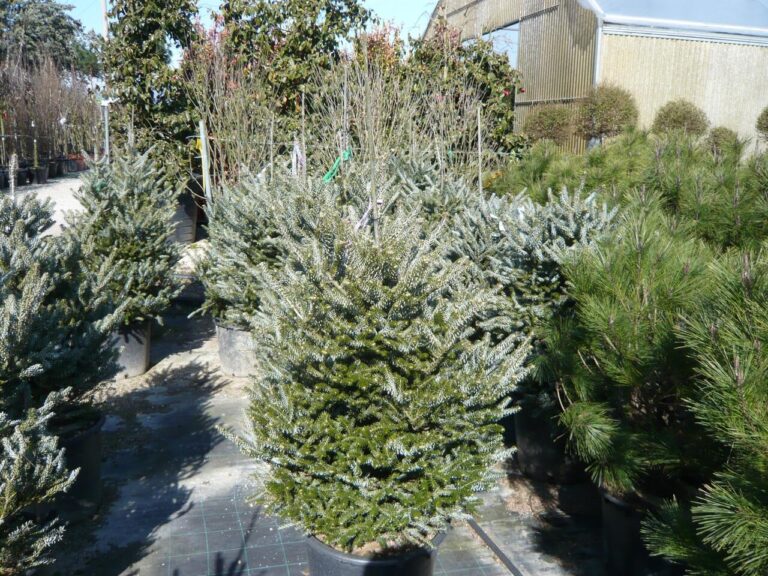
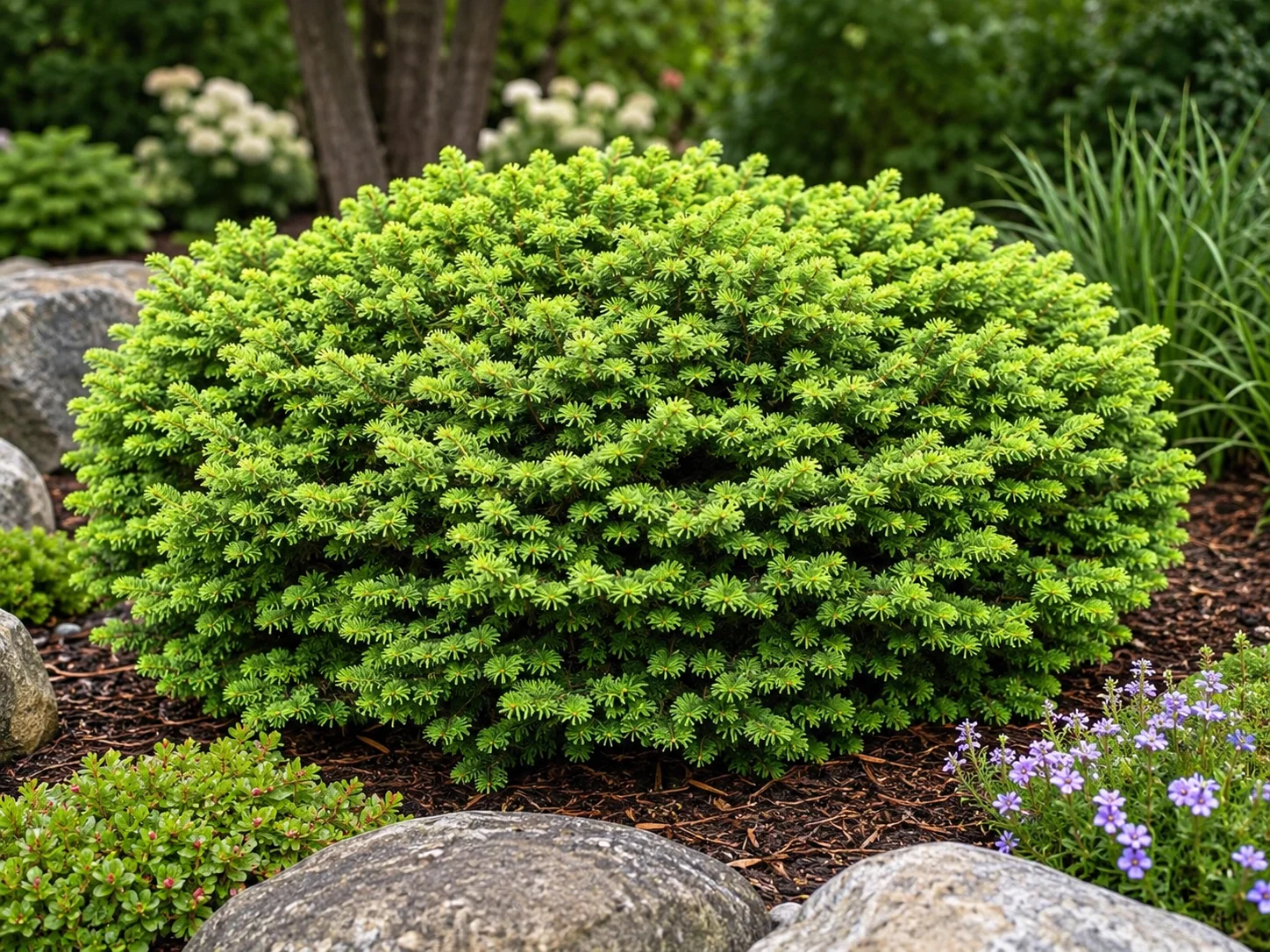
Abies balsamea ‘Nana’ stands as a classic conifer, celebrated for its dense, cushion-like silhouette, soft forest-green needles, and brilliant lime-green spring growth. Maturing into a tight, rounded mound that reaches just 0.5 to 1 metre in height and spreads 1 to 1.5 metres wide, this cultivar offers a completely different garden utility than the massive straight species. It provides a pristine, scaled-down solution for rockeries, troughs, containers, and intimate urban plots.
Botanically classified as a dwarf horticultural selection of the native balsam fir, you will often find it listed within the Hudsonia Group as Abies balsamea (Hudsonia Group) ‘Nana’.
This reliable cultivar boasts deep roots in American gardening history, having been first described by the botanist and gardener David Nelson in 1866. Its stable growth habit and exceptional longevity have kept it a staple of conifer collections and small-space garden designs for well over a century.
Further cementing its premium status, the clone holds the prestigious Royal Horticultural Society (RHS) Award of Garden Merit (AGM)—a direct reflection of its outstanding performance, hardiness, and ornamental value in the landscape.
Form, Foliage & Seasonal Interest
Habit and Size
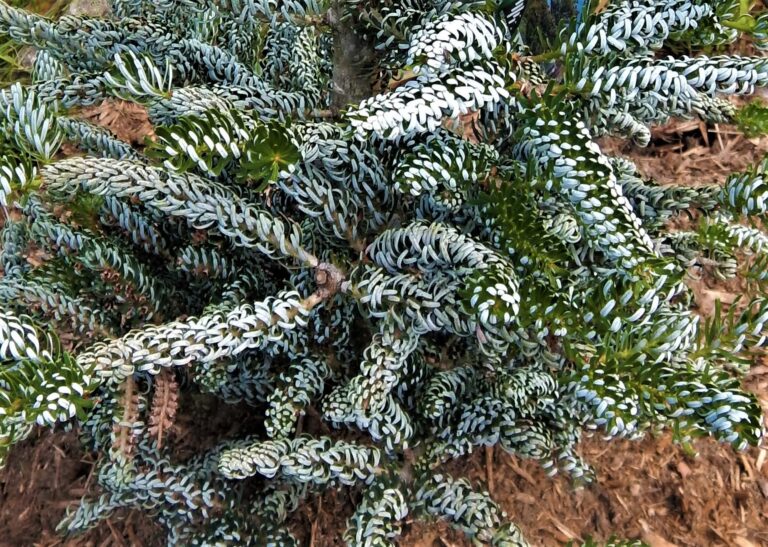
‘Nana’ develops into a broad, densely branched, rounded mound. Its short, layered shoots radiate outward from a central point, generating a distinct pincushion effect that maintains its clean geometry without pruning.
- Mature Height: Typically achieves 0.5–1 metre (roughly 1–3 feet), frequently settling at a tidy 60–75 centimetres in average garden conditions.
- Mature Spread: Spans 1–1.5 metres (3–5 feet), routinely developing a footprint that is as wide as or wider than its total height.
- Growth Rate: Remarkably deliberate, adding just 2–3 inches (5–7.5 cm) per year, taking anywhere from 10 to 20 years to comfortably reach its mature dimensions.
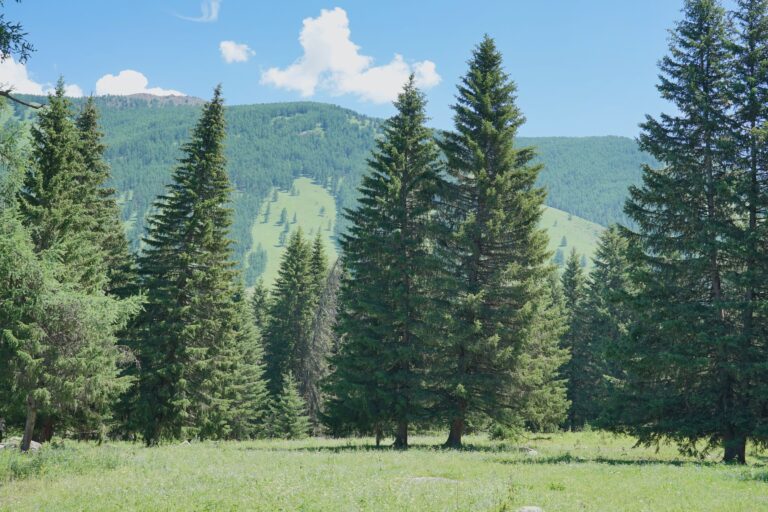
This diminutive, ground-hugging profile delivers high architectural impact to tight garden spaces where a wild balsam fir—which easily towers 15 to 20 metres at maturity—would be entirely unmanageable.
Foliage Colour & Texture
The foliage is undoubtedly ‘Nana’s crowning design feature:
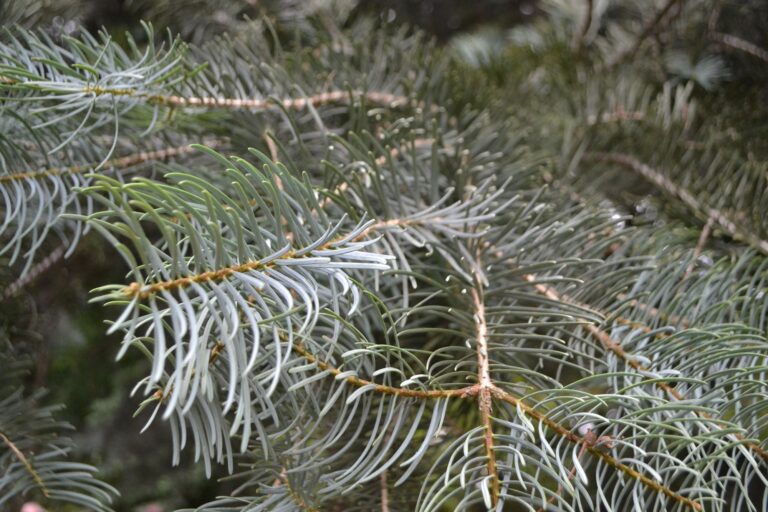
- Needle Characteristics: Short (measuring 4–10 mm) and notably soft to the touch, the needles encircle the shoots in a dense spiral. Each features a rich, deep-green upper surface accented by pale, silvery lines running underneath.
- Spring Flush: Early in the season, the new growth bursts forth in a brilliant pale to bright lime-green. This creates a luminous ring around the tip of every shoot, contrasting sharply against the mature, dark green interior foliage.
- Aromatic Profile: True to its forest heritage, the foliage releases a crisp, balsam fragrance whenever it is brushed against or crushed, bringing a sensory layer to the garden layout.
This interplay between the brooding older needles and the vibrant spring growth gives ‘Nana’ an inherent seasonal highlight that commands attention without relying on flowers or berries.
Reproductive Features
As a true fir, ‘Nana’ occasionally produces small, upright Abies cones along its branches. On a specimen this small, these structures serve more as a delightful botanical curiosity than a dominant landscape feature; the primary appeal remains the plant’s texture and form.
Visual Design Value in the Garden
Rather than functioning simply as a shrunken tree, ‘Nana’ behaves as a distinct living sculpture, using its unique geometry and fine texture to anchor garden compositions.
Core Design Traits
- Architectural Presence: Offers a clean, structural, evergreen mound that anchors a border and reads clearly from across the garden.
- Textural Contrast: The fine, soft needle texture serves as an excellent foil against coarse-leaved perennials, broadleaf shrubs, and ornamental grasses.
- Two-Tone Evolution: The seasonal shift from lime-green tips to a dark emerald body injects a natural rhythm into static winter backdrops.
- Sensory Placement: Aromatic needles make it a delightful addition alongside garden benches, entryways, and narrow walkways.
Ideal Positions & Garden Types
Landscape designers frequently position ‘Nana’ across several classic settings:
- Rock Gardens and Alpine Beds: The low, cushion-like habit mirrors alpine krummholz formations, looking right at home nestled among large boulders and stone outcrops.
- Urban Courtyards and Small Gardens: Provides permanent structure and winter interest without ever threatening to outgrow its welcome or crowd neighboring specimens.
- Containers and Stone Troughs: Thanks to a slow growth rate and naturally tidy silhouette, this cultivar excels in long-term pot culture on patios and terraces.
- Foundation Borders and Beds: Functions beautifully as a low, rounded specimen or repeated in small clusters to tie together disparate elements of a planting scheme.
- Minimalist and Conifer/Heather Palettes: The restrained form fits perfectly within Japanese-inspired designs or traditional heather gardens that value clean geometry and fine textures.
While it performs beautifully in full sun, it handles partial shade with ease and appreciates protection from severe, drying winds, particularly in exposed or cold microclimates.
Cultivar Profile: How ‘Nana’ Differs from the Species
To appreciate the design value of Abies balsamea ‘Nana’, it helps to contrast it against the standard forest species:
- Scale: The wild species develops into a towering, conical forest tree reaching 15–20 metres; ‘Nana’ remains a compact cushion safely under 1 metre.
- Application: The species serves as a woodland backdrop, windbreak, or large-scale screening plant; ‘Nana’ is scaled for intimate rockeries, patio pots, and focal details.
- Visual Weight: Where the species provides a massive vertical accent, ‘Nana’ acts as an intricate foreground anchor and highly detailed textural highlight.
This profound difference in scale turns the cultivar into a versatile architectural shrub rather than a simple miniature tree.
Design Combinations & Planting Ideas
Because ‘Nana’ possesses a quiet elegance, it shines brightest when paired with companions that highlight its distinct shape and fine texture.
Effective Companion Themes
- Ornamental Grasses: Plant fluid, airy species like Stipa tenuissima or Pennisetum alopecuroides nearby; their constant motion contrasts beautifully with the solid, grounding presence of the fir.
- Low Perennials and Heathers: Combine with Achillea millefolium, dwarf heathers, or Verbena bonariensis (placed behind) to introduce varied textures while keeping the planting bed perfectly in scale.
- Contrasting Dwarf Conifers: Mix ‘Nana’ with low-growing conifers featuring silver, golden, or blue foliage to construct a vibrant, multi-coloured evergreen bed rich in form and contrast.
- Hardscapes and Gravel: Set the plant adjacent to gravel paths or large stones in a rockery, allowing the rounded, soft outline of the needles to soften the hard, angular lines of the masonry.
Container & Trough Use
When potting up this dwarf fir, consider two approaches:
- The Minimalist Soloist: Feature it alone in a simple, unadorned concrete or terracotta pot, letting its spherical shape and bright spring tips take center stage.
- The Mixed Composition: Pair it with slow-growing alpine plants, dwarf heathers, and trailing evergreens to create a year-round, low-maintenance arrangement.
Be sure to position these containers near walkways, doorways, or seating zones so visitors can appreciate the classic pine scent whenever they pass by.
For detailed, step-by-step guidance regarding soil preparation, specific drainage needs, watering schedules, hardiness zone parameters, and general evergreen maintenance, please refer to our comprehensive Master Growing Guide for Conifers.
Historical & Horticultural Significance
First documented in the United States back in 1866, ‘Nana’ remains one of the oldest and most dependable named dwarf conifers in the nursery trade. Its century-plus popularity stems from a few undeniable traits:
- Stable Genetics: It exhibits a true dwarf habit, remaining compact over decades without throwing out wild, reverted branches.
- Climate Resilience: It delivers exceptional, consistent performance throughout cool, temperate zones, showing particular stamina in northern gardens where the species is native.
- Industry Reliability: Its long-standing availability makes it the gold standard for dwarf balsam firs in reference guides and plant catalogs worldwide.
Backed by its RHS Award of Garden Merit, ‘Nana’ continues to prove that low-maintenance plants can deliver exceptional, long-term architectural value to the modern landscape.
Visual Summary for Gardeners & Designers
- Growth Habit: Dense, rounded cushion that naturally grows wider than it does tall.
- Dimensions: Approximately 0.5–1 metre tall by 1–1.5 metres wide at full maturity.
- Foliage Traits: Soft, deep-green needles showcasing a striking lime-green spring flush; highly aromatic when touched.
- Best Garden Placements: Alpine rockeries, compact urban plots, patio pots, troughs, low foundation accents, and minimalist Japanese-style landscapes.
- Landscape Utility: Serves as a reliable evergreen anchor, a textural contrast piece, and a subtle provider of early-season color shifts.
To ensure your specimen thrives for decades, consult our Master Growing Guide for Conifers for explicit soil, watering, and hardiness specifications.