Abelia × grandiflora ‘Sherwoodii’ – Complete Growing Guide
If you spend enough time visiting municipal parks, highway medians, or the landscaping around your local bank drive-thru, you eventually develop a deep familiarity with glossy abelia (Abelia × grandiflora). It’s the ultimate default shrub. Landscapers love it because you can practically run it over with a lawnmower, neglect it during a three-month drought, and it still won’t die. But for a lot of home gardeners, that commercial ubiquity has given the plant a bad reputation. It’s often viewed as boring, a bit messy, and prone to throwing out long, wild, unkempt canes that require constant hacking to keep in bounds.
That’s a shame, because the lineage of this plant is actually quite romantic. The original hybrid was thrown together back in 1886 at the Rovelli nursery along the shores of Lake Maggiore in Italy—a cross between two Chinese species, Abelia chinensis and Abelia uniflora. It was bred for beauty, not just to survive next to an asphalt parking lot.
If you want the legendary, bulletproof toughness of that Italian hybrid but actually care about the aesthetics of a residential yard, you need to look for an old heirloom cultivar called ‘Sherwoodii’ (sometimes just sold as ‘Sherwood’ or ‘Nana’).
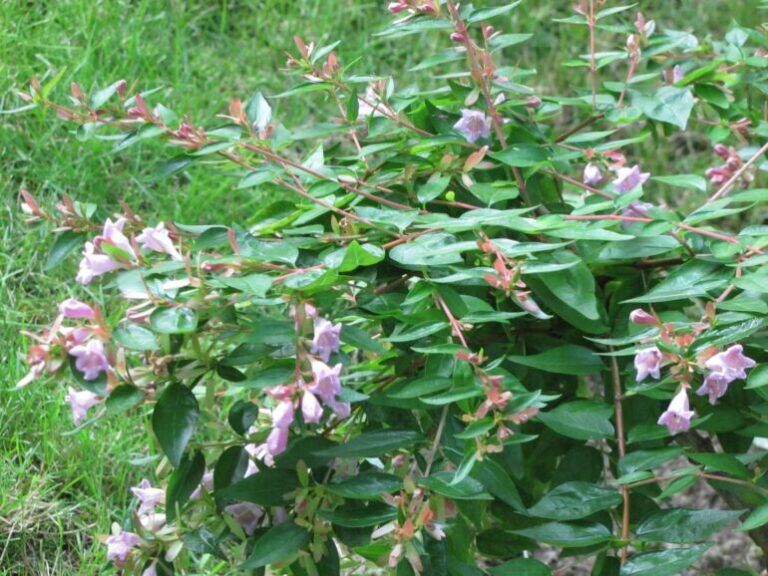
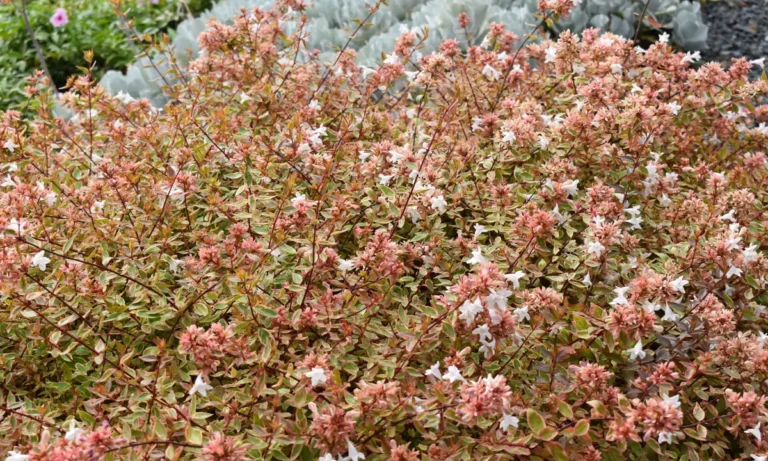
‘Sherwoodii’ is essentially a dwarf mutation that tracks back to a Victorian nurseryman. Instead of the massive, six-foot unruly tangle of the standard species, this one naturally stops growing right around three to perhaps four feet tall, with a slightly wider, mounded spread. This polite habit is exactly why it is such a classic representative of the Abelia genus for modern residential landscaping.
A Ridiculous Bloom Window
The real reason to plant ‘Sherwoodii’ isn’t its polite size, though; it’s the fact that it simply refuses to stop flowering.
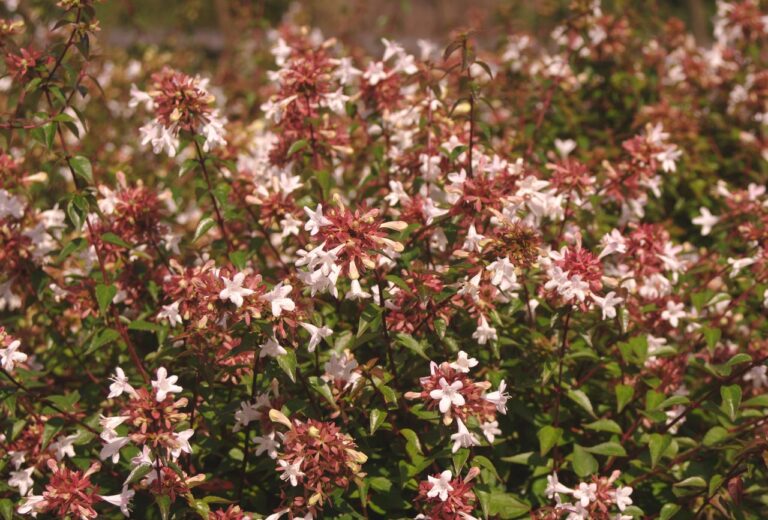
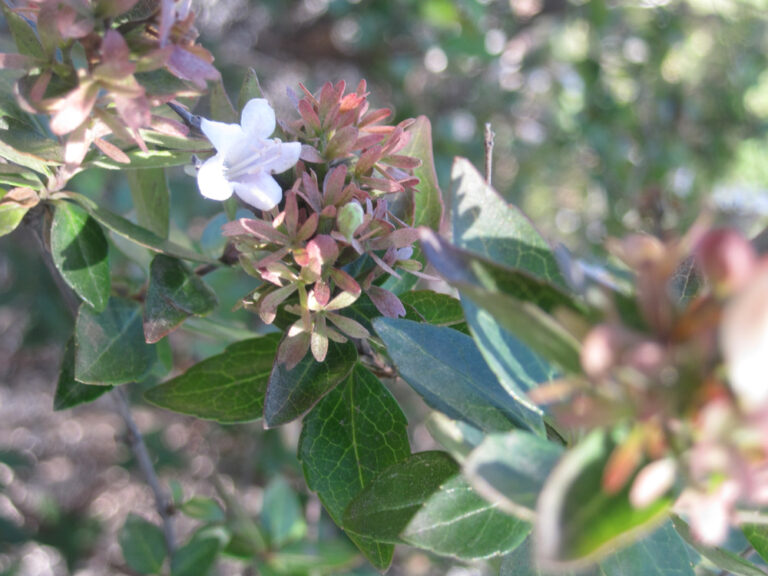
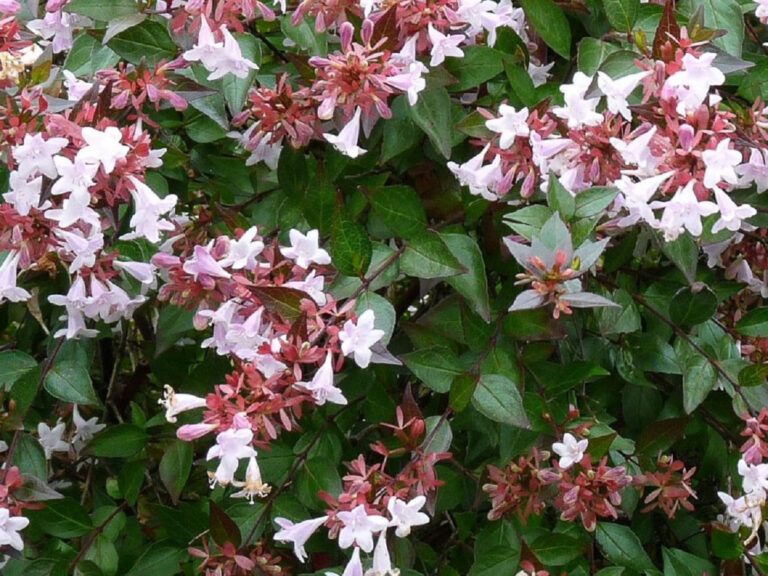
In my garden, the first tiny, trumpet-shaped blossoms start opening up in early June. They’re white, but if you look closely, they have this faint, airbrushed tinge of pale pink and lavender around the edges. They also carry a subtle, clean scent that you only really catch on a humid July evening when the air is completely still.
While my lilacs and azaleas give me a spectacular fortnight of color in spring and then spend the next eleven months acting as basic green background noise, ‘Sherwoodii’ just keeps pushing out flowers. It blooms through June, through the oppressive heat of July, through August, and right up until a hard freeze drops the curtain in October or November.
Because it’s blooming at a time when a lot of other landscape plants are stalling out in the summer heat, it becomes absolute prime real estate for local pollinators. On any given afternoon, my shrubs are vibrating with bumblebees, clearwing sphinx moths, and eastern tiger swallowtails.
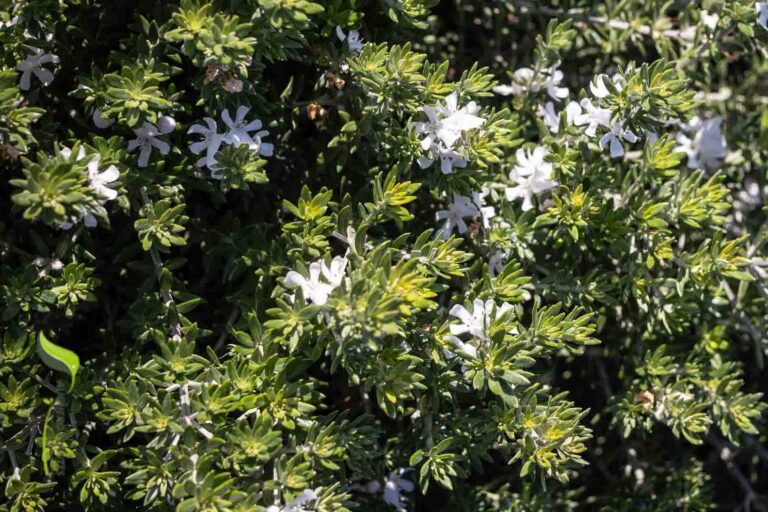
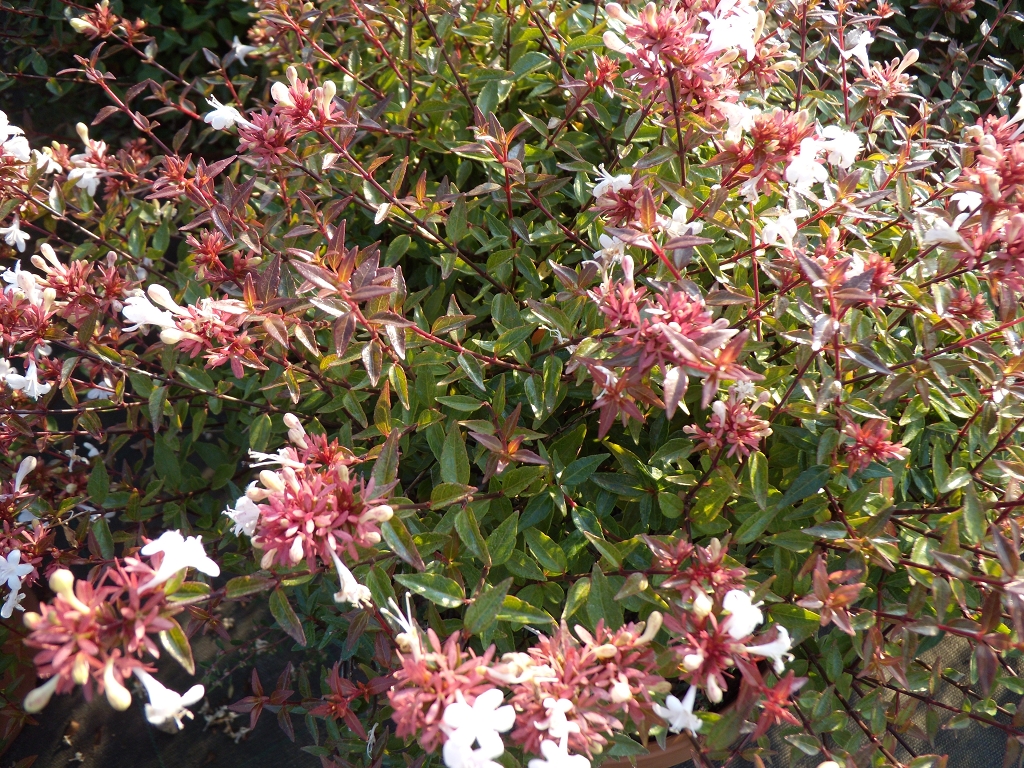
Once the frost finally kills off the last blossoms, the plant pulls off a second act. The leaves on ‘Sherwoodii’ are notably smaller and finer than standard abelias—barely an inch long—which gives the whole shrub a soft, textured look. Where I live, it behaves as a semi-evergreen. The foliage holds on through most of the winter, but as the temperatures plummet, those dark green leaves shift into these deep, metallic tones of bronze, plum, and a sort of burnt crimson. When the rest of the garden looks dead and grey, that splash of winter color is incredibly welcome.
Getting the Dirt Right (and What to Avoid)
If there is a downside to ‘Sherwoodii’, it’s that people assume “tough” means it can grow anywhere. It can’t.
I learned the hard way with my first batch that abelias have one major dealbreaker: wet feet. I planted three of them in a low-lying spot near a downspout extension where the soil stayed gooey for days after a heavy rain. Within six months, they looked miserable—stunted, dropping leaves, and pouting. Two of them succumbed to root rot before I dug the survivor out and moved it to higher ground. They absolutely require decent drainage. If you have heavy, sticky backyard clay, you have to amend the planting area with a generous amount of organic compost or aged pine bark to open up the soil texture, or plant them on a slight slope.
When it comes to sun, don’t bother tucking this into the shade of a mature oak tree. It’ll survive there, sure, but it will grow loose and leggy, and you’ll get about ten percent of the flowers you’re paying for. To get that dense, heavy blanket of summer blooms and the vivid purple winter foliage, give it a spot that gets hit by the sun for at least six hours a day.
Chemically, they like a slightly acidic to neutral dirt—somewhere between 6.0 and 7.0 pH. If your soil is heavily alkaline or chalky (up around 7.5 or higher), the plant won’t be able to draw up iron properly. You’ll know this is happening because the leaves will develop chlorosis—the tissue turns a pale, sickly yellow while the veins stay stark green. If you see that, you’ll need to scratch some elemental sulfur or an acidifying mulch into the soil to bring the pH back down to earth.
The Planting Routine
-
- Dig a hole that’s twice as wide as the nursery pot, but keep the depth exactly the same.
- Drop the rootball in so the top sits perfectly flush with your native soil line—burying the crown of an abelia is a quick way to kill it.
- Fill the dirt back in, firm it down with your hands to knock out any large air pockets, and give it a long, slow soaking.
- Throw down a two-inch layer of shredded bark mulch to keep the weeds down and hold moisture, but pull it back so it isn’t resting directly against the woody stems.
For the first summer, you’ll need to water it manually every week it doesn’t rain. But once those roots find their way deep into the native soil, ‘Sherwoodii’ becomes remarkably self-sufficient. I rarely, if ever, water my established ones anymore, even during those dry, crunchy stretches in late August.
A quick warning for patio pots: If you plant these in large containers for a deck or terrace, the rules change. Pots dry out incredibly fast. You’ll need to check them multiple times a week during a hot summer. Let the top couple of inches of soil dry out so you don’t drown the roots, but don’t let the whole pot turn into dust.
The Realities of Pruning and Winter Care
The biggest mistake I see folks make with abelias is treating them like boxwoods. They go out there with electric hedge trimmers and shear them into rigid, tight green meatballs. Doing that to a ‘Sherwoodii’ ruins the plant. It destroys its natural, elegant, fountain-like arching habit, and it forces a thick layer of outer leaves that blocks light from the interior, leaving the inside of your shrub completely bare and woody.
The biology here is simple: ‘Sherwoodii’ blooms on “new wood”—the fresh green stems that grow in the current spring.
Because of this, leave the pruners in the shed during the autumn and winter. If you trim them late in the year, you’ll stimulate tender new growth that will immediately get zapped by the first hard frost, which weakens the whole plant. Instead, wait until late winter or early spring—usually late March for me, right as the worst of the winter freezes are behind us but before the leaf buds start breaking open.
As for feeding? Don’t overdo it. A light top-dressing of compost or a handful of slow-release balanced fertilizer in early spring is plenty. If you dump tons of high-nitrogen fertilizer on this plant, it will push out tons of weak, floppy green leaves and completely forget to grow any flowers.
The Cold Climate Dilemma
In places like the upper Midwest or New England, a bad winter with sub-zero winds will often kill the entire top half of the shrub right down to the ground or the snowline. The good news is that because it blooms on new spring growth, it behaves like a die-back perennial. Even if it gets frozen to the ground, the roots will usually survive, send up new shoots in May, and you’ll still get flowers by July.
But if you are gardening up there, you need to help it out. Plant it in a protected microclimate—like on the south side of a garage or house wall where it’s shielded from biting north winds. Give it a massive, deep soaking in late November so the roots are fully hydrated before the ground freezes solid, and then dump a thick, four-inch pile of leaves or wood chips right over the base of the plant to insulate the root crown.
If you are growing it in a container in a cold zone, you can’t leave it outside; the freezing air will penetrate the sides of the pot and kill the roots. Wheel the container into an unheated garage or garden shed for the winter, and give it a small splash of water once a month just to keep the root ball from completely desiccating while it’s dormant.
Sharing the Wealth (Propagation)
Once you realize how low-maintenance ‘Sherwoodii’ is, you’ll probably want to put it in three other spots in your yard. Don’t buy more; just propagate them. They root incredibly easily from semi-hardwood cuttings taken in mid-to-late summer—usually July or August when the new spring growth is starting to turn woody and firm up at the base.
Snip off an 8-to-10-inch branch, cut cleanly right below a leaf node, and strip off the bottom half of the leaves. If the top leaves are large, snip them in half with your pruners to stop them from losing too much water. Stick the stem into a small pot filled with a very sharp, well-draining mix—half potting soil and half perlite or coarse sand works perfectly.
Cover the whole pot with a clear plastic bag to create a mini greenhouse, stick it in a shady spot outdoors, and keep the soil damp. Within a month or two, it will drop roots. Keep the young plant in a sheltered spot or a cold frame over its first winter, and you can plant your brand-new shrub out into the garden the following spring.
Managing Pests and Designing the Border
From a maintenance standpoint, ‘Sherwoodii’ is about as close to zero-worry as it gets. I’ve never had to spray mine with anything. You might occasionally get a small colony of aphids on the tender new growth in May, but I just blast them off with a sharp stream of water from the garden hose and let the local ladybugs do the rest of the clean-up.
It’s also surprisingly resilient against wildlife pressure. While a truly starving deer or rabbit will eat almost anything if they are desperate enough in January, they generally ignore my abelias. The tough texture of the leaves and the faint resinous scent mean they usually skip them to go eat my neighbor’s hostas and pansies instead.
When it comes to placing it in your landscape design, its three-foot size makes it incredibly useful. It sits perfectly underneath low-set front windows without ever growing tall enough to block the glass. It also makes a beautiful, soft edge along paths.
Because it has a very fine, glossy texture, it looks best when you contrast it against plants with completely different foliage shapes. I love pairing mine with the soft, blue-green vertical lines of native ornamental grasses like Little Bluestem (Schizachyrium scoparium), or planting it right behind drifts of silver-leaved perennials like Russian Sage (Salvia yangii). It also works beautifully alongside the bold, flat daisy-like heads of Purple Coneflowers (Echinacea purpurea). The fine green mound of the abelia provides a solid visual anchor that makes those perennial colors absolutely pop.