Brighten Your Garden with Abutilon ‘Gold Dust’: The Variegated Flowering Maple Built for Containers
While most flowering maples win their real estate on the patio or windowsill through their blossoms alone, Abutilon pictum ‘Gold Dust’ turns that traditional hierarchy right on its head. This spectacular evergreen shrub is first and foremost a foliage masterpiece, dressed in a radiant, chartreuse-and-gold canopy that commands attention even when not in bloom. When the plant does flower, its delicate, dangling bells act as a perfect complementary feature rather than the main event, creating a sophisticated, multi-layered display that thrives beautifully in containers and sunlit indoor spaces.
Cultivar Profile
Botanical Identity
In the nursery trade, you will find this vibrant cultivar under the botanical name Abutilon pictum ‘Gold Dust’. It belongs to the Malvaceae family, making it a close cousin to garden classics like hibiscus and hollyhocks rather than true maples. While modern taxonomic revisions sometimes list the plant as Callianthe picta, the name Abutilon pictum remains the gold standard among horticulturally minded growers. The species itself hails from the warm, subtropical woodlands of Brazil, Uruguay, and Argentina.
Newcomers are often misled by the common name “flowering maple,” which points purely to the sharply lobed, maple-like silhouette of the leaves rather than any actual kinship with the genus Acer. Its other popular moniker, “Chinese lantern,” perfectly captures the whimsical, hanging posture of its blooms. While the wild species has been fundamental in breeding generations of garden hybrids, ‘Gold Dust’ stands apart as a highly prized selection. Its identity is explicitly defined by the exceptional density, brightness, and patterning of its variegated leaves.
Foliage and Colour Effect
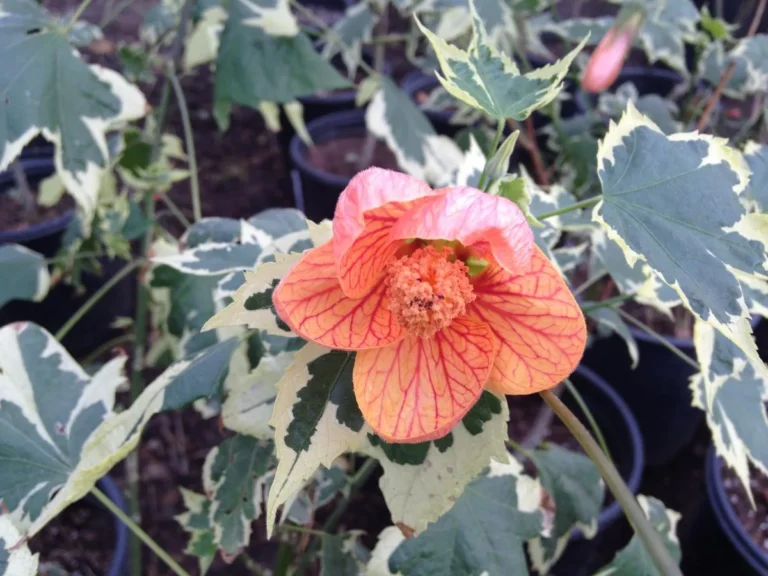
Instead of the moody, dark forest greens typical of the genus, the baseline foliage of ‘Gold Dust’ is a refreshing, light chartreuse-green. This pale backdrop is heavily painted with irregular blotches, freckles, and sweeping splashes of rich yellow-gold. Because nature refuses to use a stencil, the variegation is delightfully unpredictable. One leaf might present a broad, solid block of pure gilded colour, while its neighbor carries nothing more than a fine, asymmetric dusting of gold.
This random patterning yields fantastic rewards for the keen gardener. Fresh spring growth emerges with an intense, illuminated brilliance that breathes immediate life into a collection. Because the variegation is scattered across the entire leaf blade rather than trapped in a uniform outer margin, the plant avoids looking static or artificial. The underlying green areas provide essential visual weight, keeping the canopy from flattening out into a solid, washed-out yellow. This ensures the shrub remains deeply ornamental during rest periods, capturing low-angle sunlight beautifully across a patio, inside a conservatory, or against a bright windowsill.
To maximize this warm palette, think of the plant as a living piece of chartreuse-and-gold sculpture. It pairs elegantly with rich earth tones like bronze, copper, terracotta, and deep burgundy. Alternatively, you can sharpen the visual contrast by staging it alongside cool, structural companions like silver-leaved plants or the blue-green foliage of container-grown eucalyptus.
Flowers
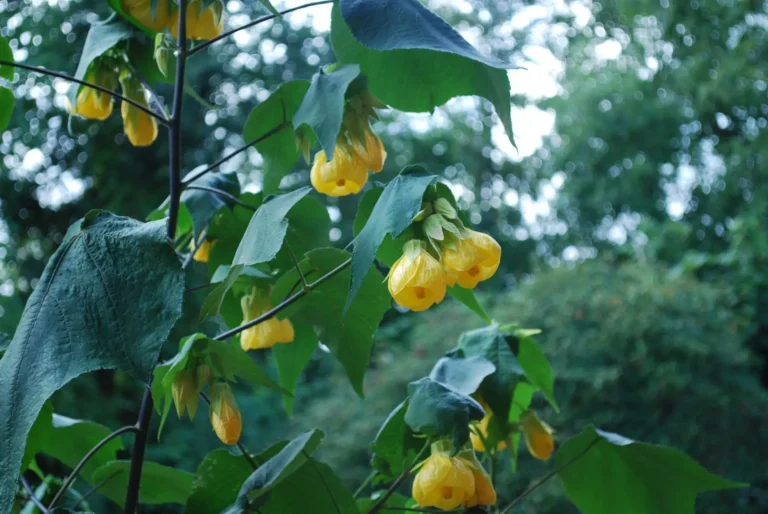
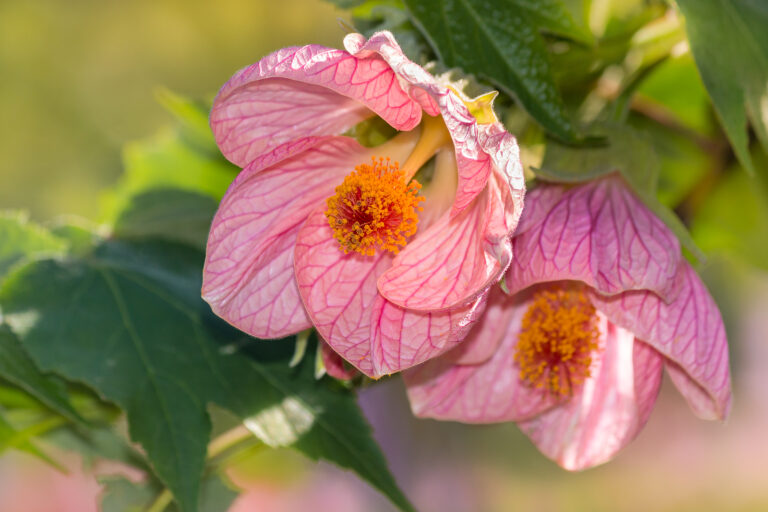
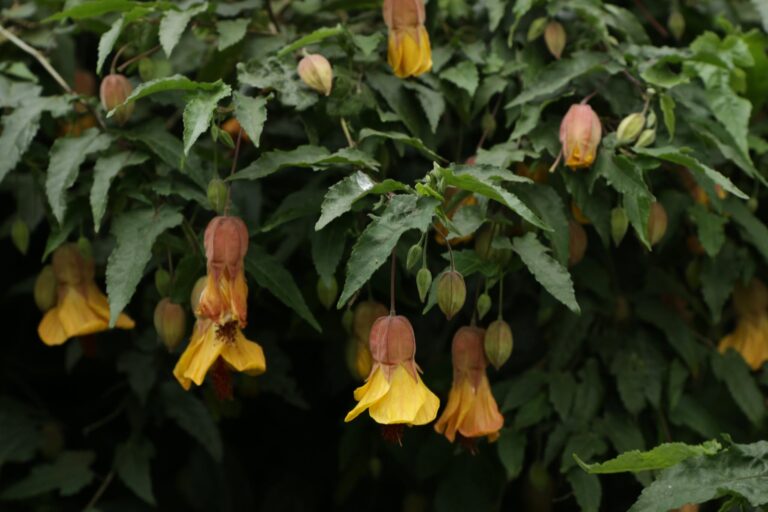
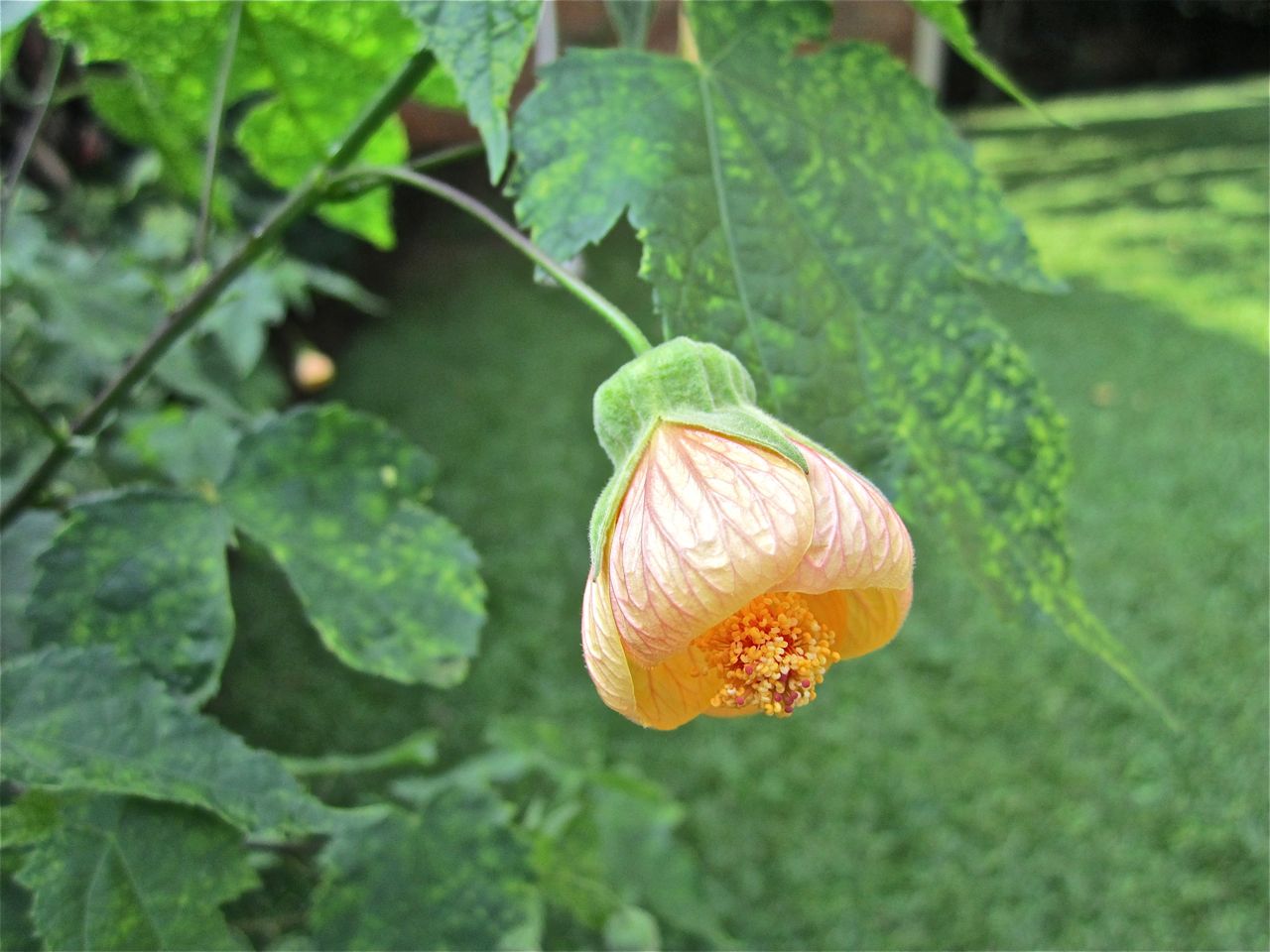
The blossoms of ‘Gold Dust’ are solitary, nodding bells that dangle gracefully from the leaf axils on slender, flexible stalks. Each flower features pale apricot-orange petals adorned with a network of fine, blood-red veins that radiate outward to the petal tips. These delicate stalks act like springs, allowing the lantern-like blooms to swing and dance with the slightest passing breeze beneath the variegated canopy.
In frost-free, subtropical climates, this display can persist nearly year-round. In northern or temperate zones, the flowering window concentrates from spring through autumn. This seasonal shift changes how you utilize the plant; the intricate blossoms become a high-summer focal point outdoors, while the evergreen leaves carry the aesthetic weight when the plant moves indoors for winter protection.
The fine red veining is a crucial design detail. Rather than clashing as a solid block of competing colour, the delicate linework creates a subtle graphic link back to the complex green-and-gold patterns of the leaves. The soft, muted nature of the apricot petals keeps the blooms texturally interesting without overwhelming the canopy.
Habit and Mature Dimensions
Left to its own devices in an ideal, frost-free climate, the wild species can mature into a sprawling, broadleaf evergreen shrub reaching 10 to 15 feet in height. However, the ‘Gold Dust’ cultivar is far more manageable and responds beautifully to life in a pot, where regular pruning keeps it tight, fresh, and compact.
Under container cultivation, it is best to maintain the specimen at a highly approachable 2 to 4 feet tall. Keeping the plant at this scale serves a dual purpose: it keeps the sprawling branches from becoming an unwieldy, messy thicket, and it positions those charming, down-facing lanterns right at eye level where they can be properly appreciated.
Architecturally, the habit is upright yet softly spreading, characterized by pliable branches that arch gently under the weight of the lobed leaves. This is not a stiff, formal shrub. Its primary charm lies in its airy, mobile structure and the way the blossoms hang freely beneath the foliage.
Design Value
A Foliage-First Flowering Plant
While most gardeners choose flowering shrubs based entirely on the colour of the petals, ‘Gold Dust’ subverts expectations by putting its leaves center stage. This heavy golden variegation delivers an immediate visual presence long before the first flower buds swell, and it holds the line beautifully when the autumn chill brings blooming to a halt.
This reliable continuity makes the plant a valuable tool for specific landscape challenges:
- Flanking a prominent home entrance where the plant needs to look immaculate and striking even between active flowering flushes.
- Anchoring a mixed seasonal container where it provides permanent structural foliage alongside fleeting bedding plants.
- Adding permanent, colourful evergreen structure to a conservatory, sunroom, or bright indoor alcove.
- Standing alone as a curated specimen on a sheltered patio or terrace.
- Branding a bright silhouette against dark-painted exterior walls, deep brickwork, or dense, plain-green background shrubs.
Its animated, high-contrast personality is far more dynamic than plain-green forms of Abutilon pictum. Because the intricate leaf details invite closer inspection, this cultivar is best positioned where guests can appreciate the fine patterns from just a short distance away.
Colour Combinations
Designing with ‘Gold Dust’ requires an eye for balance. You can either lean into its natural warmth or introduce a deliberate, cooling counterpoint.
Warm Companions
Incorporate copper-leaved ornamental grasses, deep bronze heucheras, or classic terracotta pottery to amplify the plant’s inherent warmth. Bedding plants in shades of apricot, salmon, or burnt orange complement the blooms, while dark red flowers will cleverly echo the fine veining found inside the abutilon’s lanterns.
Cool Contrasts
To make the gold markings pop with maximum saturation, introduce blue-grey foliage, woolly silver-leaved accent plants, or deep purple-black companions. True blue flowers work exceptionally well here, creating a striking contrast that makes the yellow tones appear instantly brighter.
A word of caution: avoid surrounding this cultivar with an array of other highly variegated or spotted plants. When too many patterns compete for attention, the unique graphic clarity of ‘Gold Dust’ gets lost in the visual noise. Use this plant as your singular, starring variegated feature, and surround it with clean, single-coloured companions.
Container Presentation
If you garden outside of the subtropics, a container is undoubtedly the most effective way to grow this plant. Pot culture transforms the abutilon into a versatile design element—an easily movable specimen, a seasonal patio focal point, or a sophisticated indoor-outdoor architectural feature.
To showcase the plant’s elegant outline, avoid stuffing it into an overcrowded, multi-plant arrangement. Give it a substantial, dedicated home in a pot made of weathered terracotta, charcoal stoneware, aged zinc, or muted green ceramic. These grounding materials support the luminous foliage without fighting it for attention.
If you prefer a tiered arrangement, set ‘Gold Dust’ toward the center or back of a large container and ring the base with low-growing companions. Delicate trailing plants can be used to soften the edges of the pottery, while fine-textured grasses or narrow-leaved accents offer an excellent structural contrast to the abutilon’s broad, hand-shaped leaves.
Indoor Display
The reliable ornamental value of the foliage makes ‘Gold Dust’ an exceptional candidate for indoor decoration, particularly when outdoor blooming slows down. It serves beautifully as a year-round conservatory feature, a bright accent piece for a sunroom, or a prized patio specimen brought indoors to overwinter.
To keep the variegation looking its absolute best, position the plant in your brightest window. While it will tolerate light shade, a lack of intense natural light will cause the gold markings to fade and diminish. Indoor specimens need to be situated right where the foliage can drink in abundant daylight.
Keep a close eye on scale when growing indoors. A young, developing plant sits perfectly on a plant stand or deep window sill, but an older, mature specimen will eventually require a dedicated floor position. Keeping the branches neatly pinched and pruned maintains a pleasing, balanced proportion between the stems, leaves, and hanging bells.
Light and Seasonal Colour
The intensity of this cultivar’s appearance is directly tied to the quality of light it receives, which governs both the vividness of the gold spots and the density of the branches.
Exposing the plant to bright, high-quality light rewards you with:
- Sharper, more brilliant golden variegation.
- A tighter, more robust, and heavily branched growth habit.
- A significantly higher volume of flower buds.
- A crisp, dramatic boundary between the gold and green leaf tissues.
In contrast, dim or inadequate light causes the plant to stretch, producing sparse, leggy growth and muddying the foliage back to a solid, ordinary green. If the light is too weak, you lose the very characteristics that make ‘Gold Dust’ so special. However, be careful with intense, magnified midday sun behind greenhouse glass, which can scorch the tender variegated tissue. The goal is to provide bright, abundant light while protecting the canopy from extreme, dehydrating heat.
For lucky gardeners in frost-free zones, ‘Gold Dust’ delivers an uninterrupted year-round show of mottled leaves and dangling bells. For those in colder regions, treat it as a fair-weather patio luxury that shifts to a protected indoor display as autumn rolls in. The glowing foliage keeps the plant looking highly ornamental during this seasonal transition, while the intricate flowers step forward as the ultimate highlight of the bright summer growing season.
For baseline cultivation—including planting, watering, potting, feeding, overwintering and routine pruning—refer to the Master Abutilon Growing Guide. This cultivar profile intentionally focuses on ‘Gold Dust’s’ distinctive appearance, design use and display value.
Selecting and Using the Cultivar
Bring ‘Gold Dust’ into your collection if you need a structural plant that remains visually exciting during the natural lulls between flowering cycles. It is a dream choice for gardeners who want to capture a lush, tropical aesthetic in a container but prefer sophisticated leaf patterns over plain, solid greens.
Conversely, skip this cultivar if your design brief calls for a quiet, blending background shrub or a single, monochromatic splash of flower colour. The bold, painted markings on these leaves are unashamedly assertive and demand enough clean visual space to be read clearly by the eye.
To let its personality shine, deploy this cultivar in definitive showcase roles:
- As a Patio Focal Point: Potted as a standalone feature in a beautifully curated, oversized vessel.
- As a Conservatory Accent: Positioned right next to a prominent window where the detailed leaf patterns can be admired up close.
- In a Sheltered Courtyard: Staged directly against dark, dramatic walls or warm-toned stone paving.
- For a Seasonal Entrance: Grouped with quiet, understated companion plants so the gold-splashed canopy remains the undisputed first impression.
- As an Indoor-Outdoor Feature: Rotated smoothly between protected indoor living spaces and sun-drenched summer terraces as the weather dictates.
Recognition Guide
You can easily identify a true specimen of ‘Gold Dust’ by looking for this specific combination of traits:
- Distinctly light-green, deeply lobed, maple-like foliage.
- A dense, erratic pattern of bright yellow-gold splashing and painting across the leaf surfaces.
- Delicate, downward-hanging, bell-shaped flowers in a soft shade of pale apricot-orange.
- Intricate, narrow red veins that trace clean lines across the petals.
- A highly decorative presentation that holds its beauty perfectly even when the plant is completely out of bloom.
Be careful not to confuse ‘Gold Dust’ with generic, unnamed variegated abutilons floating around the nursery trade. Yellow-marked flowering maples span a wide variety of species, complex hybrids, and muddled historical names, with patterns that run the gamut from tiny, uniform pinpricks to massive blocks of color. For the true collector, the definitive hallmark of ‘Gold Dust’ is that luminous, heavily painted chartreuse canopy perfectly balanced by soft, red-veined apricot lanterns.