Meet the Brazilian Bell-Flower: How to Grow Abutilon megapotamicum ‘Variegatum’
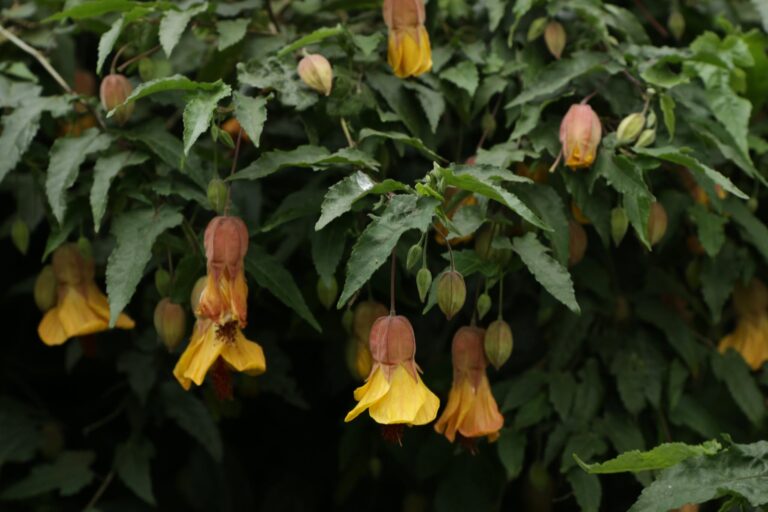
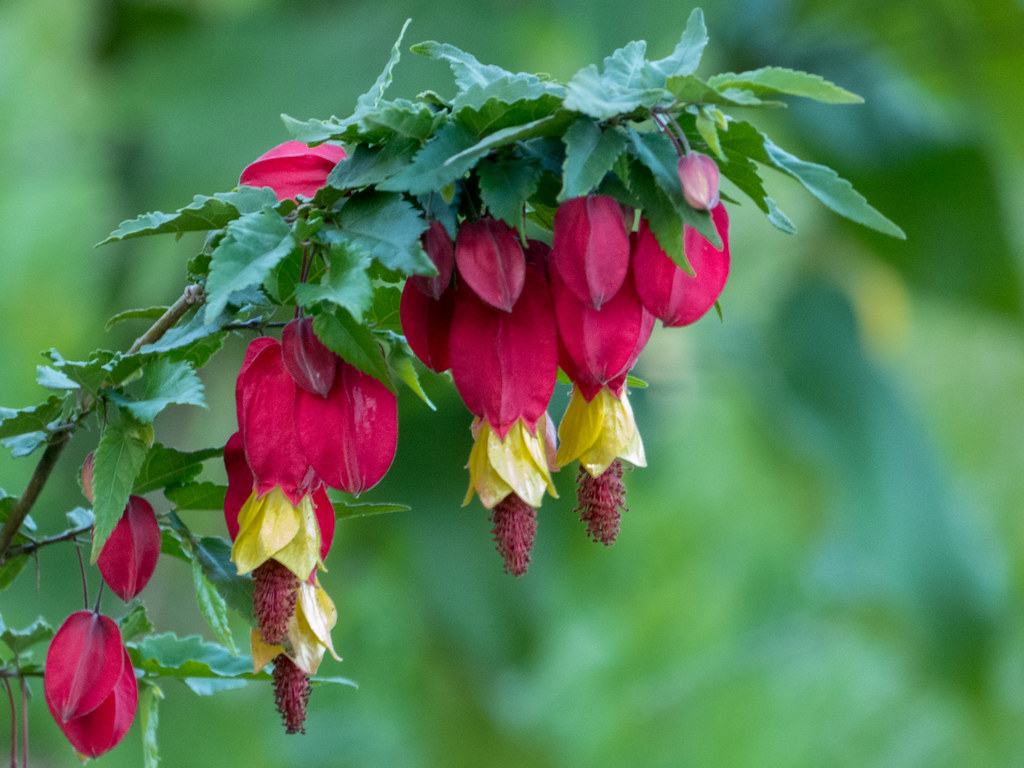
Few shrubs command attention quite like Abutilon megapotamicum ‘Variegatum’. This distinctive, semi-evergreen beauty is widely celebrated for its elegant, trailing habit and a seemingly endless parade of lantern-like blooms. Each pendant flower showcases striking crimson-red calyxes contrasted against bright yellow petals. Combined with luminous gold-and-green variegated foliage, its lax, arching growth makes it an exceptional choice for containers, hanging displays, conservatories, or wall-training in sheltered, sun-drenched positions. It is little surprise that this cultivar holds the Royal Horticultural Society’s Award of Garden Merit (AGM), a testament to its reliability and outstanding garden performance.
Origin and Botanical Roots
Commonly known as the Trailing Abutilon or Brazilian Bell-Flower, the parent species Abutilon megapotamicum (syn. A. vexillarium) traces its lineage back to the riverbanks and thickets of Brazil, Argentina, and Uruguay. First introduced to cultivation for its pendulous, fuchsia-like blossoms, the species has long been a favorite in frost-free climates and under glass.
The variegated form ‘Variegatum’ emerged as a naturally occurring sport or clone, selected specifically for its golden-mottled leaves. Over the decades, it has earned its place as a staple offering among specialist nurseries. The RHS officially recognized its garden worthiness in 2012 by granting it the AGM, confirming that this exotic-looking shrub is surprisingly dependable when given the right conditions.
Growth Habit, Form, and Mature Dimensions
While many members of the Abutilon genus grow as rigid, upright shrubs, ‘Variegatum’ breaks the mold with a naturally lax, arching-to-trailing habit. This structural flexibility opens up creative planting opportunities. You can easily train its slender, flexible shoots against a warm masonry wall, let them cascade elegantly from raised planters, or allow them to drape freely over the edges of large hanging baskets.
- Mature Height: Expect a height of 1.5–2.5 m (5–8 ft) when provided with a trellis or wall support.
- Mature Spread: It typically reaches a width of 1–1.5 m (3–5 ft), though it can spread wider if left to trail unchecked.
- Growth Rate and Longevity: This is a moderately fast grower. It develops its full ornamental architecture over 10–20 years, eventually forming a durable, decorative focal point in protected spots.
Gardeners often utilize its supple branches as a “living curtain,” using them to soften the hard lines of trellises, pergolas, and sunny courtyard borders.
Foliage: A Season-Long Tapestry of Gold and Green
Even when the plant is between bloom cycles, the foliage ensures ‘Variegatum’ never fades into the background. The leaves are ovate to heart-shaped at the base, tapering to slender points with shallow lobes, and growing up to 12 cm (5 in) long.
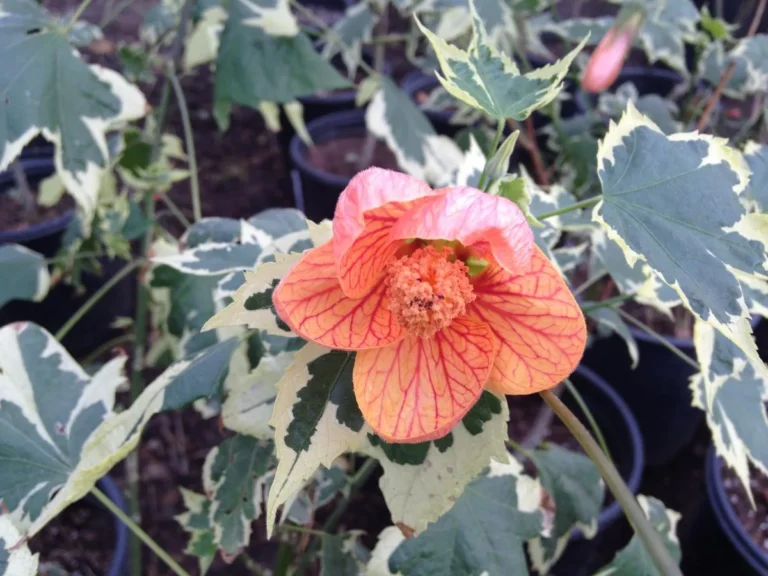
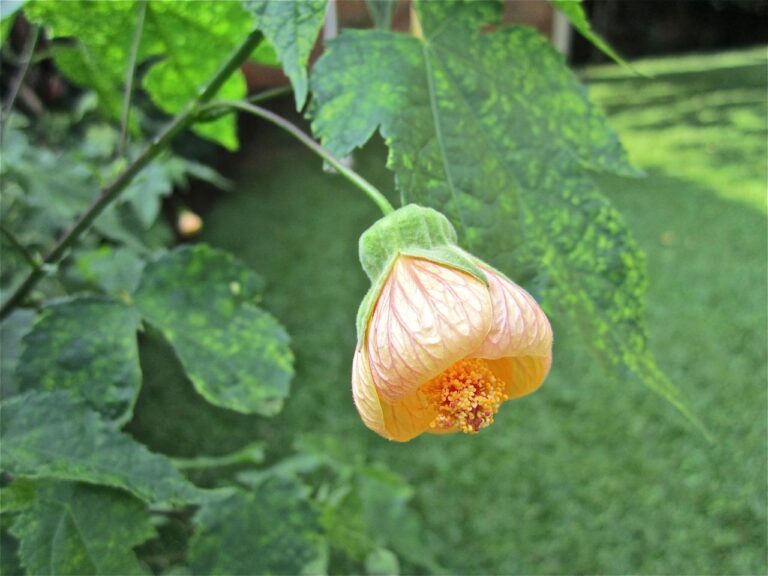
The defining feature is the variegation pattern. The mid-green leaf surface is heavily mottled, splashed, and streaked with golden-yellow. This creates a luminous, speckled effect that catches the light beautifully.
In mild, sheltered microclimates, the shrub behaves as a semi-evergreen. While an exceptionally cold winter may cause it to drop a portion of its leaves, it typically retains some foliage year-round in well-protected positions, keeping your garden green and gold through the darker months.
The Flowers: Anatomy of a Chinese Lantern
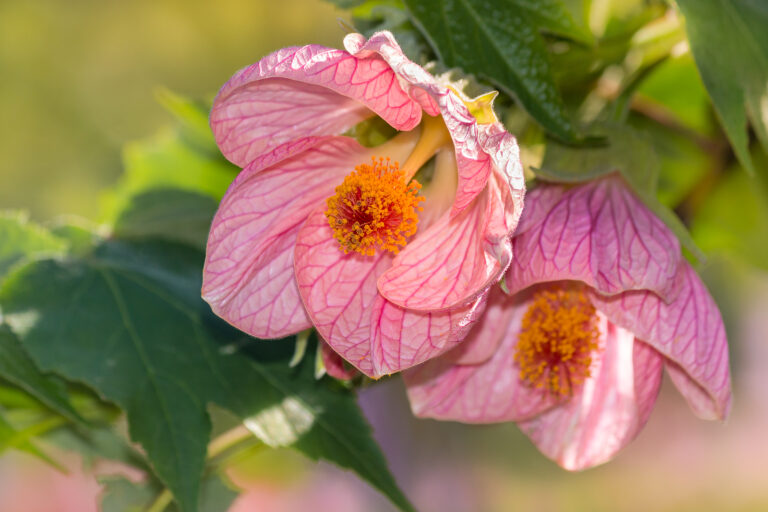
The blossoms are the undeniable signature of this plant, earning it whimsical common names like “Chinese Lanterns”. Looking at their intricate construction, it is easy to see why they captivate onlookers.
Flower Anatomy
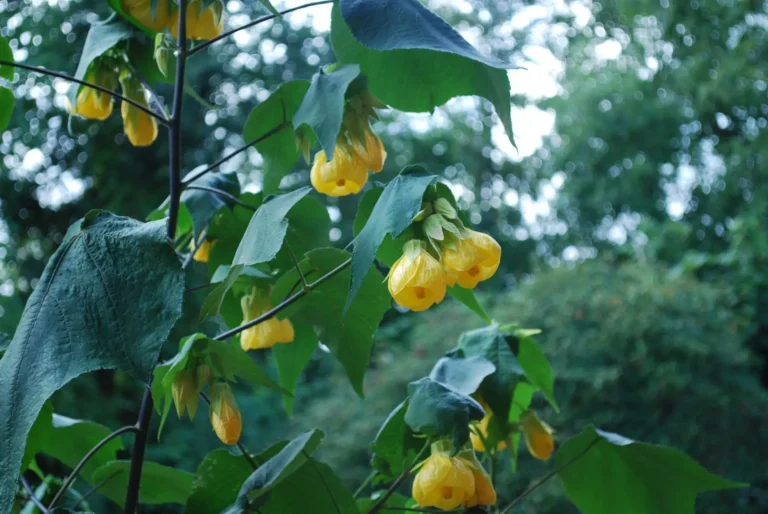
Each pendant, bell-shaped bloom measures about 5 cm (2 in) across. A swollen, crimson-red calyx tightly encloses a corolla of bright yellow petals. Emerging prominently from the center is a dark column of purple anthers. This protruding staminal column adds a dramatic third color accent, enhancing the plant’s structural, fuchsia-like charm.
Bloom Period and Wildlife Value
The flowering season is exceptionally generous. Budding begins in early to mid-summer, and the plant continues to produce flowers prolifically until the first sharp frosts of autumn hit. This extended display makes it one of the longest-blooming shrubs available for mild climates or conservatory culture. Furthermore, these nectar-rich lanterns serve as a valuable food source, attracting butterflies and hummingbirds wherever they are present.
To get the best view of this jewel-like combination of red, yellow, and purple, plant the shrub where the pendulous flowers can be admired from below.
Design Uses and Strategic Planting Positions
Success with ‘Variegatum’ comes down to placement. Because of its trailing form and need for winter warmth, it belongs in spots where its architecture shines and its vulnerabilities are protected.
Ideal Garden Placements
- Conservatories and Greenhouses: Grown as a permanent resident trained up rafters or across a sunny glass wall, it will flower for months on end while staying safe from frost.
- Warm, Sheltered Walls: In mild regions, position it against a south- or east-facing brick wall. The masonry acts as a heat sink, radiating warmth through the night while the building protects the branches from wind damage.
- Containers and Large Hanging Baskets: Planting in large patio pots or elevated urns allows the shoots to arch and weep naturally, making it a fantastic structural choice for small urban courtyards and balconies.
- Border Edging: Set it at the front of a sunny, wall-side border where it can spill forward to soften stone edges or intermingle with other half-hardy perennials.
Companion Planting Ideas
The gold-flecked leaves and primary-colored blooms pair beautifully with deep blue or purple companions like salvias and lavender, creating a high-contrast color palette. To maximize the luminosity of the golden variegation, try backdropping the shrub with silver-leaved partners such as Helichrysum or Senecio. For dynamic container arrangements, weave it together with other long-flowering, tender favorites like Fuchsia, Lantana, or trailing Pelargonium.
Historical Context and Horticultural Value
Gardeners have cultivated the straight species Abutilon megapotamicum since the 19th century. However, ‘Variegatum’ represents a distinct horticultural upgrade, doubling the plant’s visual impact by matching its curious flowers with striking foliar interest.
Its long-standing RHS AGM status underlines its reliability, provided you respect its hardiness thresholds. While you may occasionally spot it in specialist catalogs under older synonyms like Abutilon vexillarium ‘Variegatum’ or Abutilon megapotamicum
‘Variegata’, they all point to this identical, gold-mottled heirloom clone.
For foundational advice on soil preparation, watering schedules, feeding regimes, overwintering techniques, pruning, and common pest management for the genus, please consult our comprehensive Master Growing Guide for Abutilon on this site. This specific profile serves to highlight the unique visual character, design applications, and horticultural identity of the ‘Variegatum’ cultivar itself.
Quick-Reference Visual Summary
| Feature | Garden Profile & Description |
|---|---|
| Habit | Semi-evergreen, half-hardy shrub featuring arching, trailing branches; distinctly more lax than most upright abutilons. |
| Foliage | Ovate to heart-shaped leaves (6–12 cm long); mid-green base generously splashed and speckled with bright golden-yellow. |
| Flowers | Pendant, bell-shaped (5 cm across); features a crimson-red calyx, bright yellow petals, and a protruding column of purple anthers. |
| Flowering Period | From early/mid-summer straight through to the first autumn frost; remarkably long-lasting bloom cycle. |
| Mature Size | Reaches 1.5–2.5 m in height and 1–1.5 m in spread (can spread further if left unsupported to trail). |
| Best Uses | Ideal for conservatories, warm sheltered walls, large patio containers, elevated hanging baskets, and wall-side borders. |
| Hardiness (UK) | Rated RHS H3: hardy in mild, highly sheltered locations; requires active frost protection in colder zones. |
| Awards | Holder of the Royal Horticultural Society’s Award of Garden Merit (AGM). |