Cloaked in Powder Blue: Why Abies concolor ‘Blue Cloak’ Belongs in Your Garden
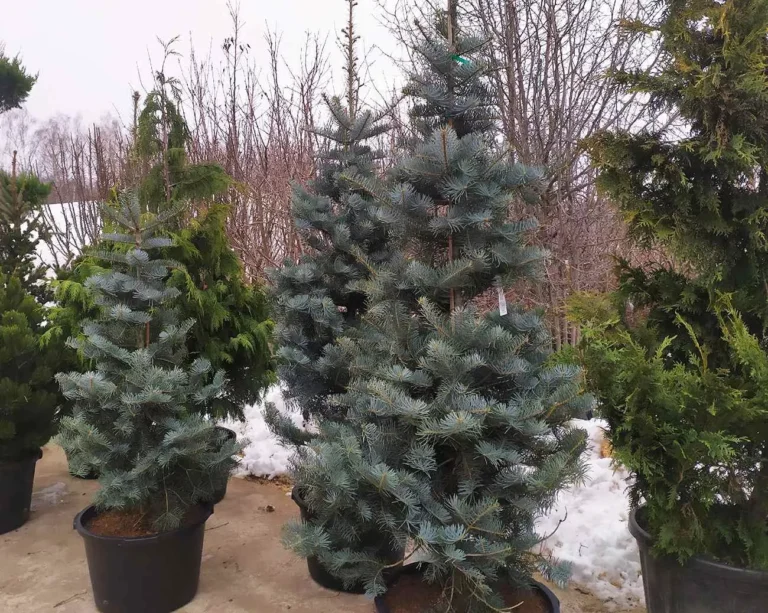
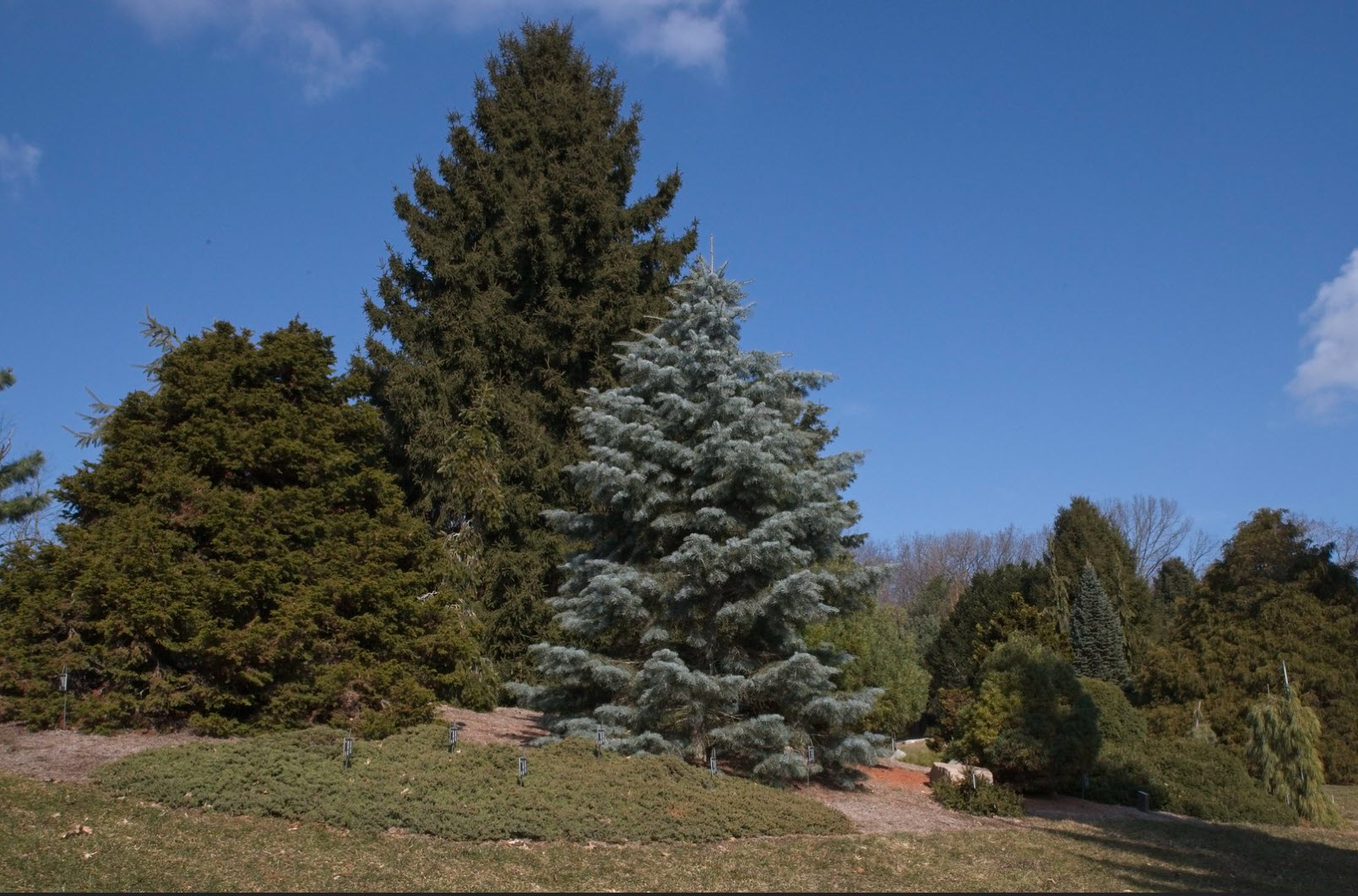
For gardeners seeking the cooling, silvery architecture of a blue conifer without the imposing footprint of a standard spruce, Abies concolor ‘Blue Cloak’ emerges as a flawless solution. This exceptional white fir cultivar is celebrated for its slow-to-moderate growth rate, dense habit, and a remarkably steadfast powder-blue hue that refuses to fade, even in the depths of winter. Over a 10- to 20-year period in typical garden settings, it matures into a refined, columnar-upright specimen, rising roughly 1.5–2.5 m (5–8 ft) high with a slender spread of 1–1.5 m (3–5 ft). A strong central leader gives the tree its vertical definition, while gracefully descending lateral branches drape the frame to create its signature “cloaked” silhouette.
The Story Behind the Silhouette
The history of ‘Blue Cloak’ is woven from a couple of competing, yet equally fascinating, horticultural origin stories. One widely circulated account suggests the tree was selected in the late 1990s as a standout seedling at the University of Michigan, chosen specifically for its distinct weeping tendency and superior needle tint. A parallel history traces its discovery back some 30 years to a Christmas tree plantation in Washington State, where a single specimen stopped growers in their tracks with its intensely stable blue needles and naturally symmetrical form. Whichever account holds the absolute truth, specialist conifer nurseries across North America and Europe quickly recognized its worth, propagating the selection not for commercial timber or holiday harvest, but as a premium, long-lived landscape anchor.
Four Seasons of Unfaltering Colour
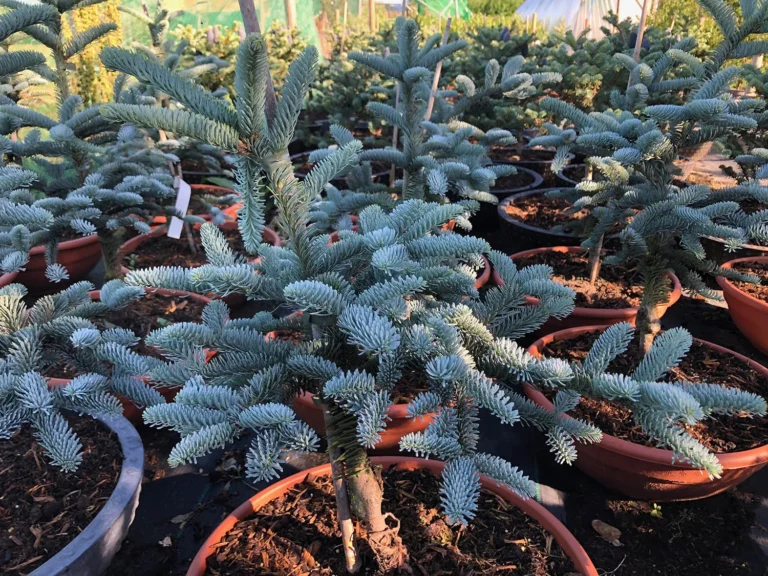
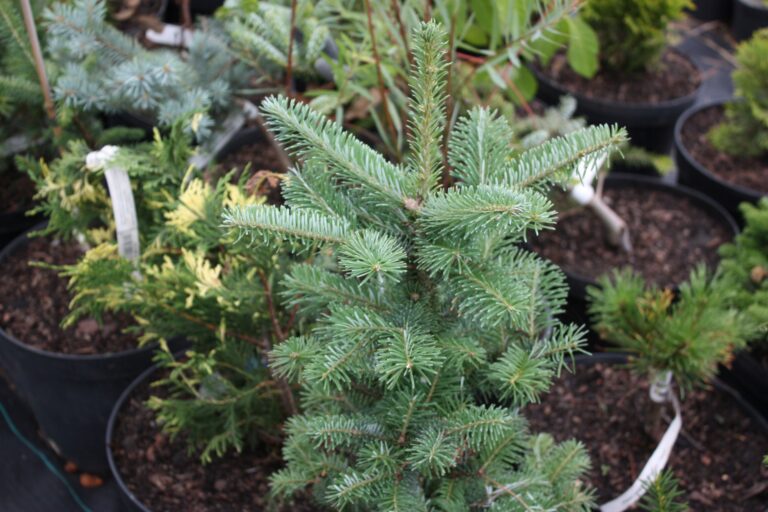
The true crowning glory of ‘Blue Cloak’ is its powder-blue to blue-grey-silver foliage, a visual treat that remains completely steadfast from the first flush of spring through the harshest winter freezes. The needles themselves are medium-length for a white fir—typically measuring 4–6 cm (1½–2½ in). They are flattened, soft to the touch, and coated in a glaucous, waxy bloom on both sides, which generates the uniform, icy blue casting that gives the species its botanical name concolor (“of uniform colour”).
While lesser blue conifers frequently lose their luster, greening out under intense summer heat or dulling in low-light conditions, ‘Blue Cloak’ holds its luminous tone year-round when sited in full sun. You might notice the soft push of new spring growth emerging as a slightly lighter, greenish-blue, but this fresh flush rapidly matures into the tree’s signature powder-blue coat. There is no dramatic or disappointing seasonal shift here; the tree simply delivers a reliable, non-fading pop of cool colour through spring, summer, autumn, and winter alike. For designers who dread the grey-green drift common to older fir and spruce varieties, this stability is a game-changer.
Silhouette, Stature, and Growth Metrics
Horticulturally classified as a semi-dwarf to intermediate selection, ‘Blue Cloak’ strikes a perfect balance between presence and restraint, exhibiting a narrow, pyramidal silhouette softened by its semi-weeping side branches. To plan its placement accurately, consider these established dimensional benchmarks from authoritative conifer sources:
- The 10-Year Mark: Expect a tree that stands approximately 2 m (7 ft) tall and 1.2 m (4 ft) wide, putting on an average of 15–25 cm (6–10 in) of vertical growth each year.
- Ultimate Maturity (20+ Years): In open garden conditions, the tree generally settles into a range of 2.5–4 m (8–13 ft) in height and 1.5–2.5 m (5–8 ft) in width. Long-term performance data from some North American nurseries suggest that over many decades, truly old specimens can eventually reach 4.5–5 m (14–16 ft).
Structurally, the tree maintains a columnar-upright habit dominated by a clear, commanding central leader. The secondary side branches descend with a gentle, downward sweep—a trait particularly evident on younger plants—imparting a draped, fabric-like quality to the foliage. As the specimen gains maturity, this weeping effect often settles into a more layered, structurally complex presentation, though the unmistakable “cloaked” branching pattern remains its definitive visual signature.
Strategic Landscape Placement
Thanks to its disciplined ultimate size, elegant geometry, and reliable coloration, ‘Blue Cloak’ thrives when treated as a specimen or accent plant. It is uniquely suited for small-to-medium residential gardens, courtyards, and clean, architectural plantings where its subtle textures can be enjoyed up close.
Designing with Purpose
- The Focal Specimen: Position it solitary on a manicured lawn, nestled within a minimalist gravel bed, or set against a dark backdrop like a mature yew hedge, brick wall, or woodland boundary to make the glowing blue silhouette pop.
- Verticality in Mixed Borders: The tree’s narrow footprint allows it to slip easily into tight configurations, providing crucial winter structure and height without crowding out neighboring plants.
- The Conifer Anchor: Use it as the cool anchor in a dedicated conifer collection, pairing it alongside gold or emerald varieties, structural ornamental grasses, or silver-foliaged shrubs to amplify color dynamics.
- Courtyards and Coastal Retaining Walls: Recognized by the Royal Horticultural Society (RHS) for its adaptability, it performs admirably in urban courtyards and coastal zones, showing an excellent tolerance for exposed sites provided it receives basic wind shelter and sharp soil drainage.
For foundational planting advice—including comprehensive soil prep, proper planting depth, irrigation schedules, feeding, and structural pruning—please consult the Master Growing Guide for Abies rather than wading through repetitive fir culture notes here.
Elevating the Garden Palette: Smart Pairings
‘Blue Cloak’ fills a distinct vacancy in the landscape: it delivers a true powder-blue fir aesthetic within a highly manageable framework and an elegant, draped habit. This gives it a sharp competitive edge over both the straight species and alternative blue evergreens:
- When measured against the standard Abies concolor species, which quickly outgrows residential lots and frequently trends more green than blue, ‘Blue Cloak’ serves up far more concentrated, dependable blue tones in a fraction of the space.
- Compared to the intensely blue but massive ‘Candicans’, ‘Blue Cloak’ offers that same icy visual punch but handles much more conservatively, making it an excellent candidate for space-conscious designs.
- In contrast to the rigid, prickly needles of blue spruces (Picea pungens)
, ‘Blue Cloak’ brings a softer, touchable texture and a more fluid, graceful silhouette, backed by superior needle retention and a gentler presence in the garden.
Inspiring Plant Combinations
To fully exploit the cool tones and pendulous form of ‘Blue Cloak’, try anchoring it amidst these thoughtful companions:
- Deep Green Conifers: Plant near Taxus, Cephalotaxus, or rich green forms of Juniperus to create a high-contrast backdrop that forces the powder-blue needles to take center stage.
- Golden Evergreens: Pair with golden threadleaf conifers like Chamaecyparis ‘Golden Mop’ or Juniperus ‘Gold Coast’ to establish a classic blue-and-gold motif that keeps the winter landscape looking vibrant.
- Silver and Grey Perennials: Encircle the base with Artemisia, Salvia argentea, or glaucous ornamental grasses to stretch the cool color palette and ground the tree in a dedicated “smoke and silver” theme.
- Dark Architecture: Use heavy evergreens like Ilex (Holly), tightly clipped boxwood, or dark stained fences and stone walls as a theatrical backdrop to deepen the human perception of the tree’s blue cast.
Ultimately, the best place for ‘Blue Cloak’ is anywhere its distinct form and luminous needles can be observed daily. Sited near primary walkways, outdoor seating areas, or framed through a picture window, its seasonal consistency ensures it functions as a deliberate, artistic design choice rather than fading into a generic green background.