The Fierce, Frosty Elegance of Acantholimon venustum
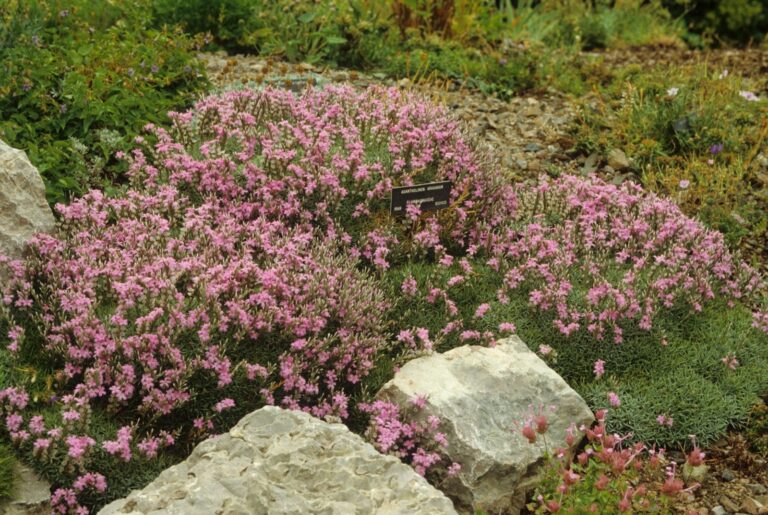
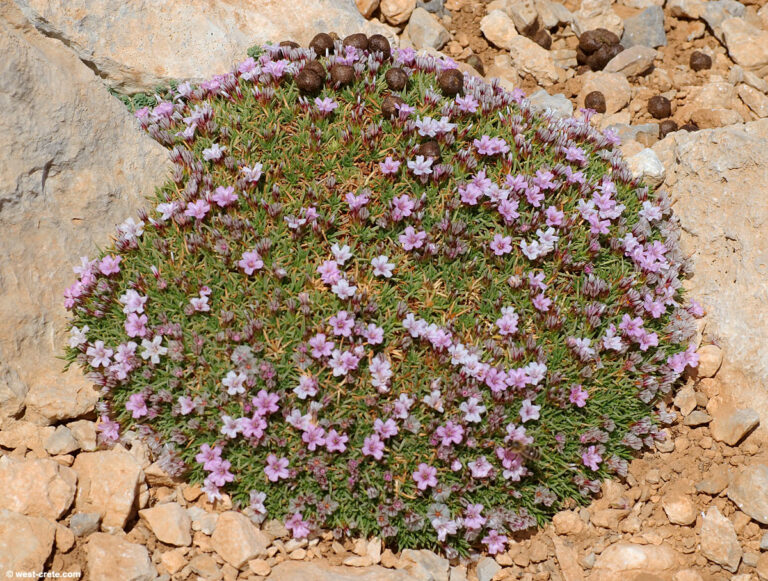
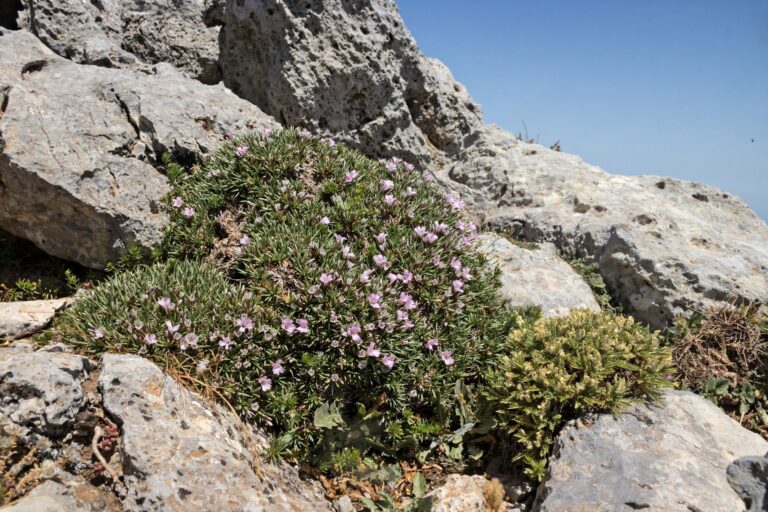
Among the prickly thrifts, Acantholimon venustum stands out as a true living sculpture. While typical cushion-forming alpines present soft, mossy mounds, this species builds an extraordinarily dense, geometric dome out of rigid, needle-like rosettes. Each linear, three-angled leaf terminates in a sharp, pungent tip. The foliage is primarily a cool blue-grey or grey-green, outlined by a distinct, silvery-white margin that makes the entire plant appear to glow from within, even during the dead of winter.
According to the Royal Horticultural Society (RHS), this evergreen perennial tops out at roughly 10 cm in height with a spreading, silvery-grey habit. Other specialized garden records note that well-established specimens can reach 10 to 15 cm tall, slowly widening into a perfectly rounded, tight bun. “Slow” is the operative word here: in the arid, wild limestone crevices of its native habitats, a specimen can take a decade or more to achieve its mature form.
A proud member of the leadwort family (Plumbaginaceae), A. venustum hails from the rugged terrain stretching from Turkey eastward into Iran, with documented wild populations also tucked into western Syria and northern Iraq. Kew’s Plants of the World Online officially recognizes Acantholimon venustum Boiss. as the baseline species, while also validating a distinct botanical variant: A. venustum var. laxiflorum.
Summer Blooms and the Art of the Calyx
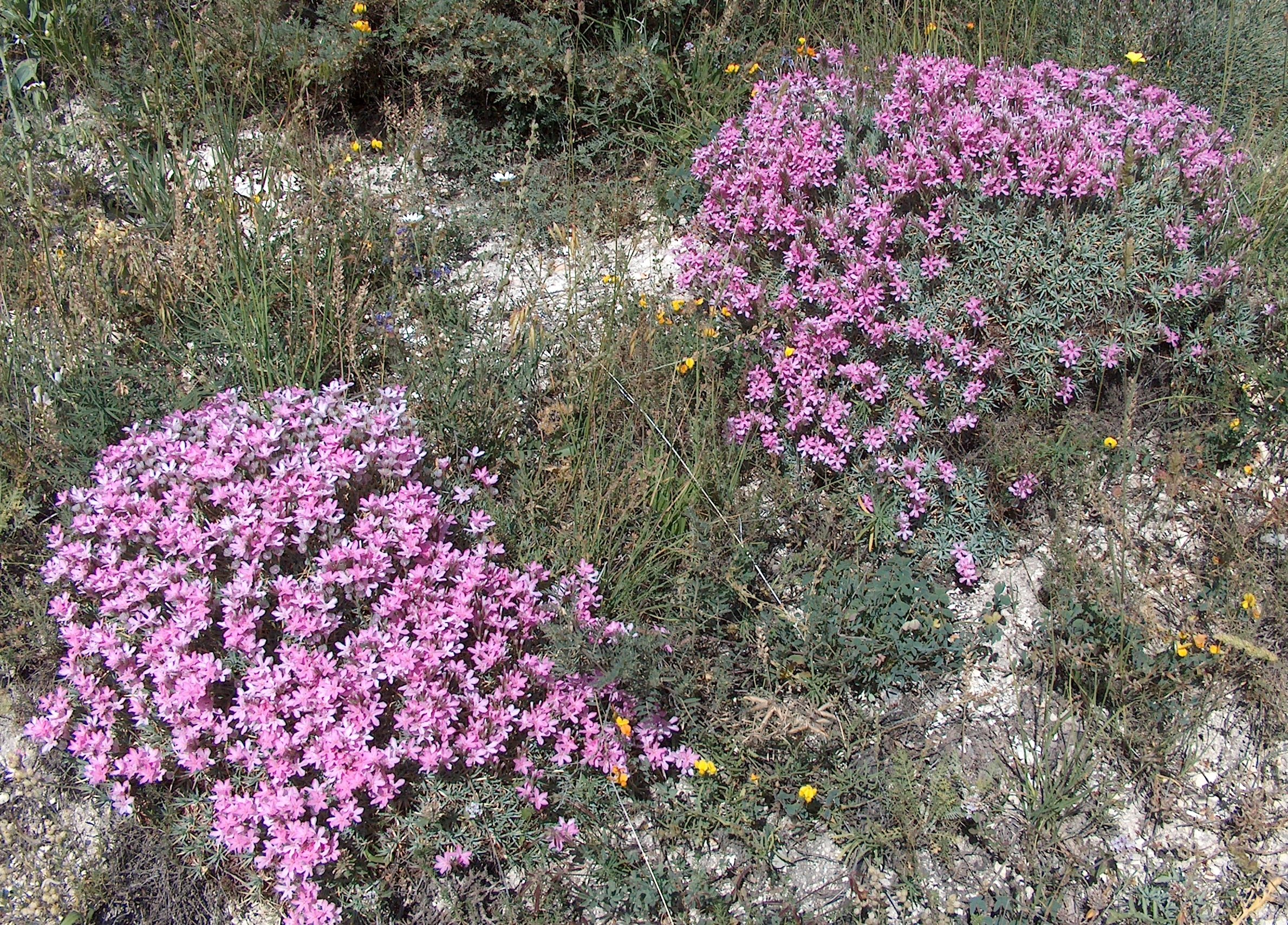
The flowering season of this alpine is an exercise in understated elegance rather than loud, saturated color. In early to midsummer, short, unyielding spikes rise just above the spiny foliage to bear funnel-shaped blossoms. The petals themselves vary from pure white and cream to a delicate, washed pink, while the papery calyx lips introduce shifting tones of clean white, rose, or deep violet. This natural genetic variation explains the slight discrepancies in literature, where general gardening references often label the plant as pink, while specialist alpine seed networks and collectors celebrate its white-flowered, icy-blue form.
The real magic happens after the petals fall. The persistent, papery bracts and calyces remain on the stems for months, catching the low evening sun and creating a brilliant, shimmering effect against dark stone. Horticulturalists often describe these dried seed heads as “incandescing” above the metallic foliage—a spectacular feature that extends the plant’s visual value long after traditional summer blooms have faded.
Why It Deserves a Spot in Your Garden
The vast majority of Acantholimon species in cultivation yield predictable pink-to-purple flowers over standard green mats. A. venustum breaks the mold in three distinct ways:
- Metallic Color Palette: The intense glaucous blue of the rosettes combined with the bright silver margins gives the plant a mineral-like, frosted quality that looks remarkably sharp year-round.
- Chalky Floral Aesthetic: While pink variations exist, the prevalence of white or cream corollas alongside pale, translucent bracts provides a bright, high-contrast display that mimics a dusting of summer frost.
- Outdoor Resilience: The genus is notoriously fussy in regions with damp, humid climates. However, A. venustum—alongside A. glumaceum—is celebrated by alpine growers as one of the few species tough enough to thrive in an open garden setting, provided its roots sit in sharp, flawless drainage.
The specific Latin epithet venustum translates directly to “charming,” “lovely,” or “graceful”. It is a fitting moniker, though the Alpine Garden Society rightly pairs it with the common name “beautiful prickly thrift,” adding a fair warning that those gorgeous, structural rosettes are fiercely spiny to the touch.
Placing the Prickly Thrift for Maximum Impact
This is a plant designed for intimate inspection. Its contribution to the garden is not a massive splash of seasonal color, but rather an enduring study in texture, strict geometry, and light play. Imagine a dense, silver-blue bun bristling with defensive needles, tucked tight against raw stone. To showcase this silhouette through every season, plant it in vertical rock crevices, dry stone walls, lean scree beds, or raised gravel gardens where it can be appreciated from above.
When selecting companion plants, look for drought-tolerant, low-stature species that highlight its unique form. Silver-leaved dianthus, creeping thymes, miniature encrusted saxifrages, and tiny autumn-flowering bulbs make excellent partners. It also pairs beautifully with other dry-land shrubs like Genista or western Eriogonum species, which share its craving for sun and stony, unrefined soils.
Because this species grows slowly and intensely resents having its deep taproot disturbed, getting the initial placement right is paramount. In regions plagued by wet winters, a south- or west-facing vertical rock fissure is ideal. This positioning allows excess rainfall to immediately shed away from the crown, protecting the plant from the stagnant moisture that spells doom for true alpines. For detailed instructions on preparing these mineral-heavy aggregate substrates or building specialized garden beds, you can check out the foundational soil architecture requirements outlined in our comprehensive Acantholimon master guide. This systematic foundation safeguards the crown from rot and replicates the precise environmental conditions required for long-term health.
Navigating the Color Spectrum
When sourcing this plant, treat the promise of “white flowers” as a strong tendency rather than a certainty. Wild populations exhibit a fluid spectrum of bloom colors ranging from cream to soft pink, and the official RHS registry currently describes the summer flowers simply as pink. Because seed-grown strains will naturally throw variations, gardeners aiming for the ultra-pale, icy look should buy mature stock from a dedicated alpine nursery or select seed lots harvested from isolated, white-flowering parent plants.
Growing Guide
For comprehensive details on site preparation, soil mixes, propagation techniques, and long-term care, please consult our primary reference document.
The Final Verdict
Acantholimon venustum earns its premium real estate in the rock garden through pure architectural integrity. It offers an unyielding, silver-rimmed presence through twelve months of the year, illuminates the summer garden with its papery seed heads, and gives growers a rare chance to cultivate a magnificent prickly thrift right out in the open garden rather than hiding it away in an alpine house.