The Collector’s Guide to Rare Copperleaf: Striking Cultivars of Acalypha wilkesiana
Discover the stunning variation of Acalypha wilkesiana. Master the care, design, and history of these rare, colorful copperleaf foliage gems.
The glittering world of tropical foliage plants holds few subjects as chameleonic or rewarding as the copperleaf. While old garden manuals and nursery catalogs frequently split Acalypha godseffiana, A. marginata, and A. mosaica into distinct species, modern botanical science has rightly brought them under one roof. These plants are not separate landscape categories; rather, they are exquisite variations within the grand, wildly diverse Acalypha wilkesiana complex. For the serious collector, their true worth lies in their striking visual mutations: serrated cream borders, metallic bronze sheets, unpredictable mosaic patterns, and eccentric leaf architectures.
The Unifying Botany of the Copperleaf Complex
Institutional authorities, including the National Tropical Botanical Garden, now classify historic names like A. godseffiana and A. marginata as synonyms or tight cultivars under the umbrella of Acalypha wilkesiana. You may also find them listed in advanced texts under Acalypha amentacea subsp. wilkesiana.
In its wild, foundational form, copperleaf is a muscular, fast-growing evergreen shrub native to the sun-drenched islands of Fiji and the surrounding South Pacific. It earned its fame through massive, sharply toothed leaves that seem to experiment constantly with color, blending shades of deep copper, bronze, purple, and crimson with shockwaves of pink, cream, and white. Because the species stabilizes so readily into unique sports, historical nurseries eagerly published new species names for every minor shift in leaf geometry or margin color. Today, we understand these not as distinct wild species, but as celebrated selections defined by their exceptional outfits.
‘Godseffiana’ — The Elegant, Cream-Edged Classic
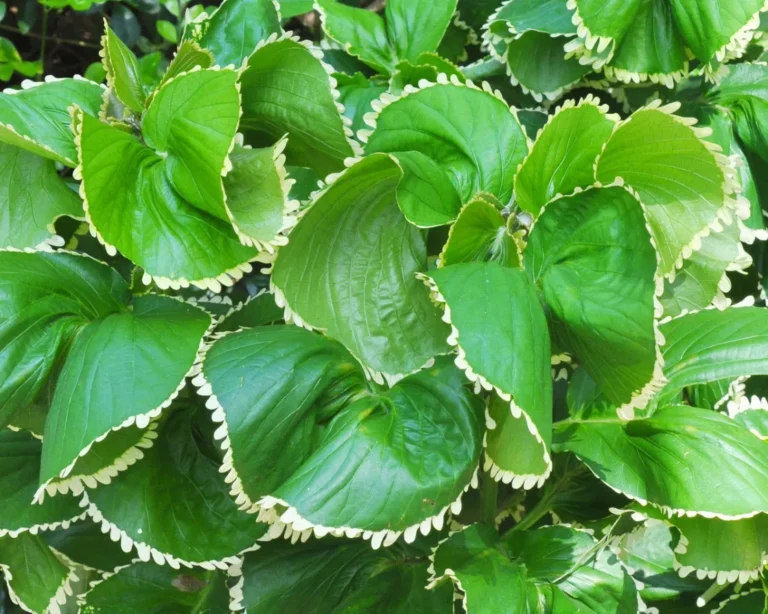
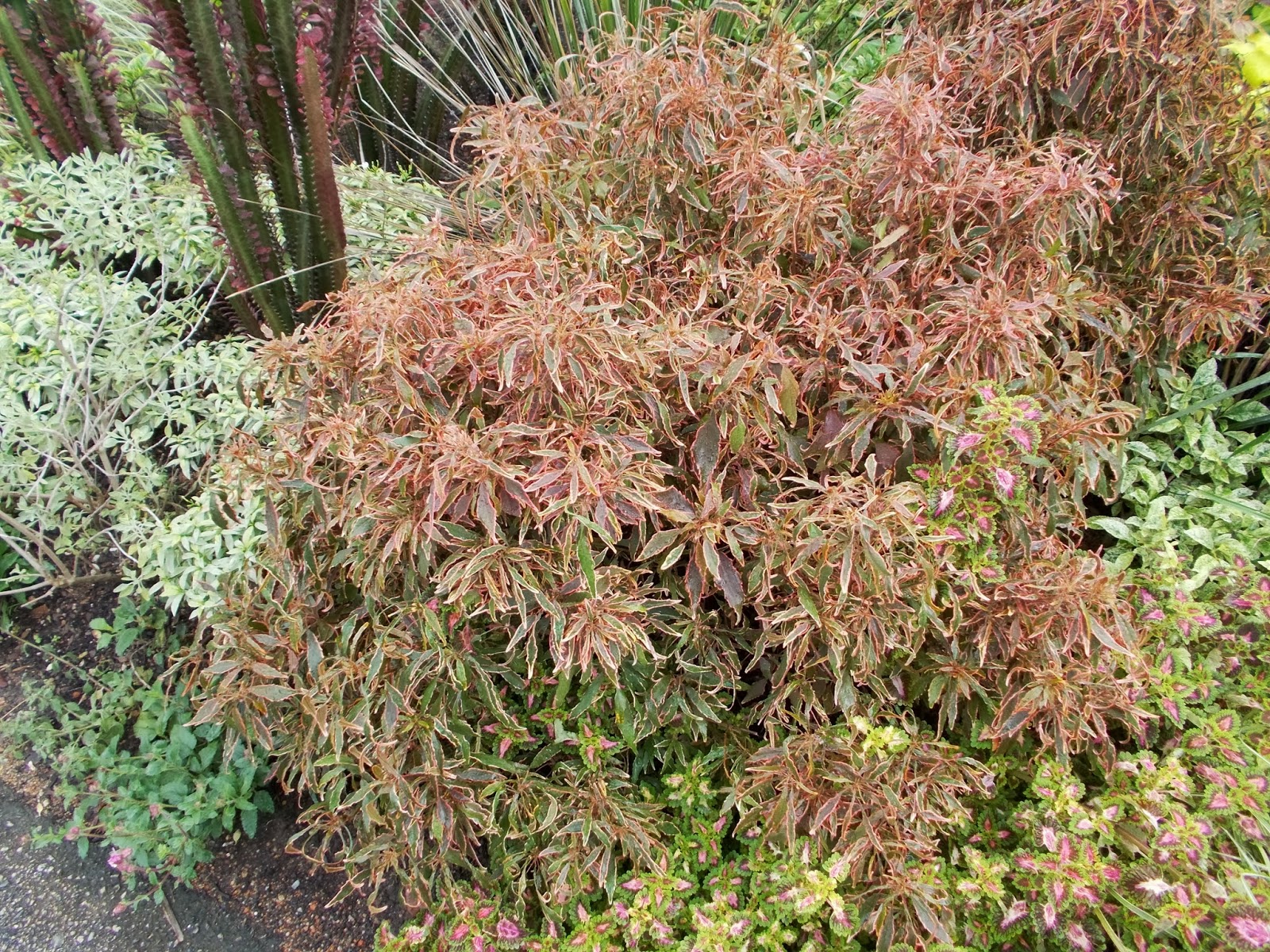
Among the finest selections in this complex is Acalypha wilkesiana ‘Godseffiana’. University of Florida extension data highlights its classic signature: rich green leaf plates framed by crisp, creamy-white margins. Other specialized descriptions focus on its unique physical stance, noting narrow, elongated foliage that arches gracefully downward in a weeping silhouette.
This cultivar offers a quiet, sophisticated beauty that stands out against its loud, red-toned cousins. Its lacy outline and pale edges catch low-angled light beautifully, making it an indispensable asset for bright but sheltered tropical borders, large mixed patio containers, or as a structural indoor foliage specimen. The lance-like, pendant shape of the foliage immediately sets it apart from the heavy, heart-shaped leaves that define mainstream copperleaf shrubs. While older botanical literature treated Acalypha godseffiana as an independent species, standardizing it as a cultivar reflects its true relationship within the wilkesiana family, which you can explore further in our comprehensive master guide to Acalypha.
The Warm Counterpart: Acalypha marginata
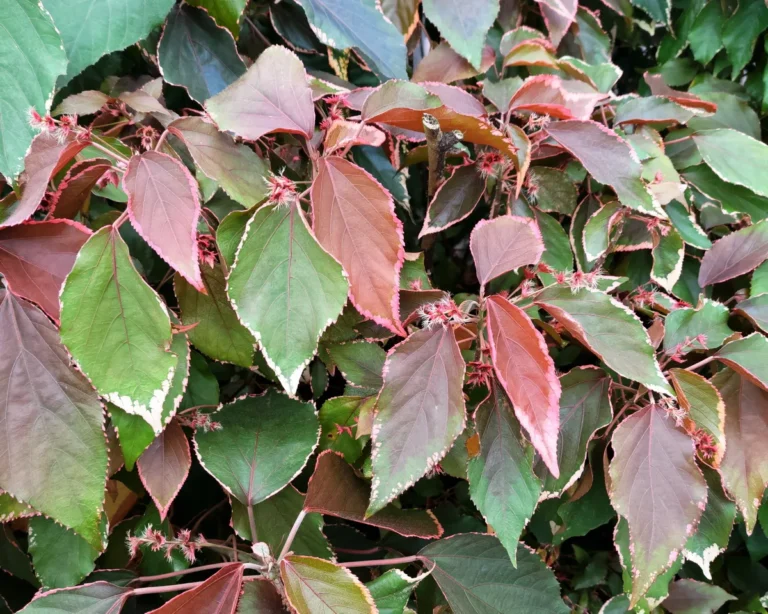
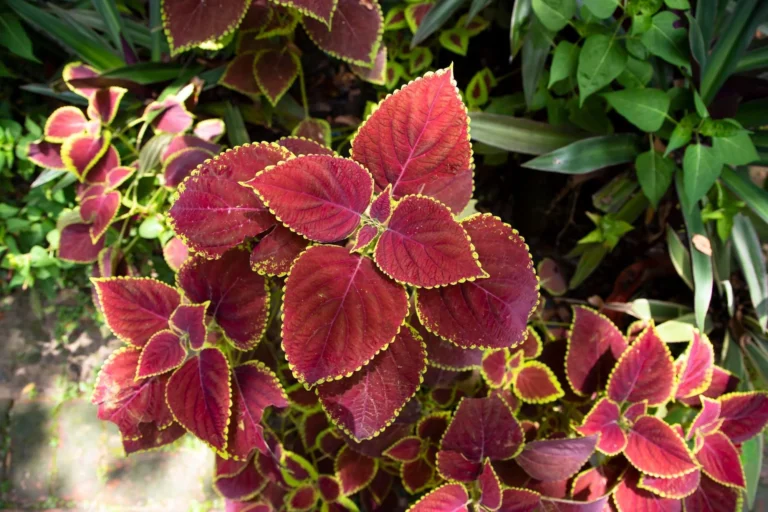
Directly tied to this margin-centric group is the historical name Acalypha marginata. Records from the National Tropical Botanical Garden clarify that Acalypha wilkesiana ‘Marginata’ turns the color dial toward warmer tones, showcasing deep coppery-green leaf blades edged in glowing pink or vivid crimson. Early botanical archives similarly note that these margined variants can oscillate between soft white and intense pink borders.
From a design perspective, ‘Marginata’ functions as the fiery twin to the cool, collected ‘Godseffiana’. Both plants rely on contrasting, piped margins for their dramatic effect, but ‘Marginata’ brings a simmering warmth of copper and crimson to the garden canvas.
‘Mosaica’ and ‘Giant Red Leaf’ — Tapestry in the Garden
If you want sheer, unbroken drama, ‘Mosaica’—often found in commerce under the moniker ‘Giant Red Leaf’—is the ultimate selection. Cultivator notes specify that its enormous leaves emerge in shades of deep burgundy before shifting toward rich, metallic bronze as spring progresses. Meanwhile, agricultural extension records describe Acalypha mosaica as a kaleidoscope of swirling orange-pink mosaic tones.
This is a plant meant to be appreciated up close. Position it where visitors can inspect the intricate, irregular splashes of red, orange, bronze, and emerald green that coat every leaf plate. It serves beautifully as an anchor specimen in frost-free tropical beds, a bold texture break at the front of a border, or a commanding focal point in a premium container display.
‘Java White’ — Frosting for the Tropical Border
‘Java White’ represents the pale, luminescent extreme of the copperleaf spectrum. University of Florida extension data notes that this cultivar typically grows into a well-behaved, 2-to-4-foot rounded shrub, bearing heavily mottled foliage stitched with shades of soft yellow, creamy white, and pale green.
This bright, variegated palette makes ‘Java White’ a brilliant tool for managing color values in a complex planting. In a dedicated collector’s bed, it acts as a visual palate cleanser, breaking up heavy blocks of deep red cultivars like ‘Louisiana Red’ and preventing the landscape from dissolving into a dark, muddy mass of hot colors.
‘Louisiana Red’ — The Powerhouse Backdrop
On the larger end of the spectrum sits ‘Louisiana Red’, a robust cultivar capable of reaching 6 to 8 feet in height with a spread of 4 to 6 feet. Its calling card is a massive display of smooth, highly glossy, hairless foliage that shifts between rich burgundy-red and deep burnished bronze.
Unlike the intricate margins of ‘Godseffiana’ or the mottled patterns of ‘Java White’, ‘Louisiana Red’ relies on massive, unified color impact. It is the perfect choice for a dramatic tropical hedge, a seasonal privacy screen in warm climates, or a dark, moody backdrop designed to throw brighter, finer-textured foliage into sharp relief. Growers regularly prize it for its dense, reliably bushy habit and polished leaf texture.
‘Obovata Cristata’ — The Ultimate Foliage Curiosity
For the true connoisseur of form, ‘Obovata Cristata’ offers an architectural twist. The standard ‘Obovata’ form, as cataloged by the Royal Horticultural Society, features large, nearly circular leaves measuring up to 15 cm across. These emerge a clean mid-green before maturing into a deep bronze, framed by a delicate, rosy-pink line.
Historical documents confirm this rich coloration, but it is the “Cristata” designation that elevates the plant to a true oddity. This term indicates a crested, heavily contorted, or irregular leaf habit. The resulting plant is a tactile masterpiece, prized by collectors who value sculptural, twisted form just as highly as vibrant color.
Cultivar Comparison Directory
Design Dynamics with Acalypha
To unlock the full potential of these plants, treat them as distinct artistic textures rather than interchangeable red shrubs. Try pairing the bright, cream-piped margins of ‘Godseffiana’ against the broad, dark purple leaves of a regal Colocasia, structural cannas, or low mats of burgundy Alternanthera to make those pale borders pop.
For a masterclass in scale and contrast, anchor the back of a planting with the towering, deep burgundy presence of ‘Louisiana Red’. Just forward of it, drop in the mottled, cream-and-green canopy of ‘Java White’ to instantly lift the composition and add depth. In high-traffic areas where guests walk by closely, use ‘Mosaica’ for its mesmerizing, stained-glass leaf patterns, and flank it with the crumpled, architectural curiousness of ‘Obovata Cristata’ to maximize textural contrast.
In cold, temperate zones, these tropical beauties excel as dramatic summer annuals or potted greenhouse specimens. However, in frost-free subtropical and tropical zones, they fulfill their true destiny: transforming into massive, permanent, evergreen woody shrubs.