Prickly Thrift: The Fierce, Sculptural Alpine for Sun-Baked Gravel Gardens
Look closely at Acantholimon ulicinum, and you will immediately notice a sculptural quality that feels more mineral than vegetable. Commonly known to rock garden enthusiasts as prickly thrift or gorse prickly thrift, this miniature, evergreen cushion subshrub belongs to the Plumbaginaceae (leadwort) family. It shares a close botanical lineage with the sea lavenders of the genus Limonium. The genus name itself roots deeply in Greek etymology, marrying akantha (meaning thorn) with Limonium. The specific epithet ulicinum translates to “resembling Ulex“—a direct nod to the plant’s striking resemblance to wild gorse bushes.
Navigating alpine nomenclature can be notoriously tricky, but Kew’s Plants of the World Online firmly recognises Acantholimon ulicinum as the accepted name. If you are hunting for this specimen in older reference books or specialty nursery catalogues, you might encounter a handful of historical synonyms and misapplications catalogued by the Royal Horticultural Society (RHS). Keep an eye out for A. albanicum, A. androsaceum, A. creticum, A. tournefortii, and the frequently misapplied A. echinus.
Sculptural Form and Razor-Sharp Foliage
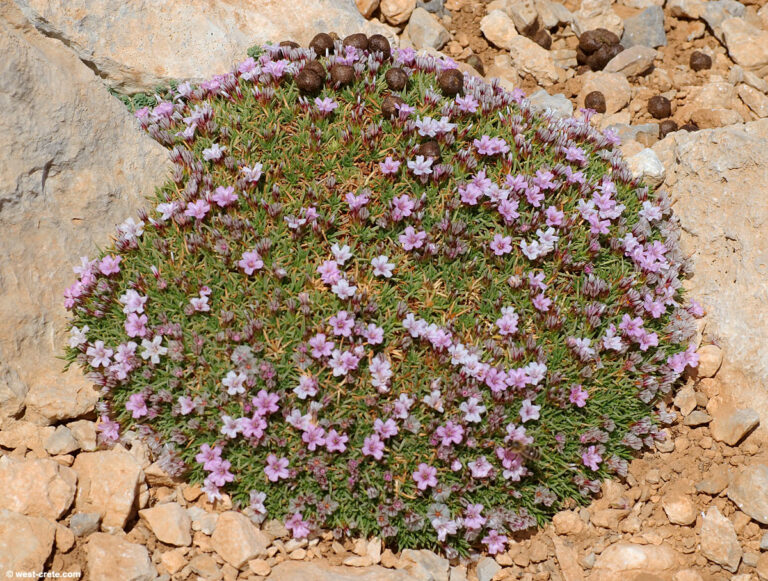
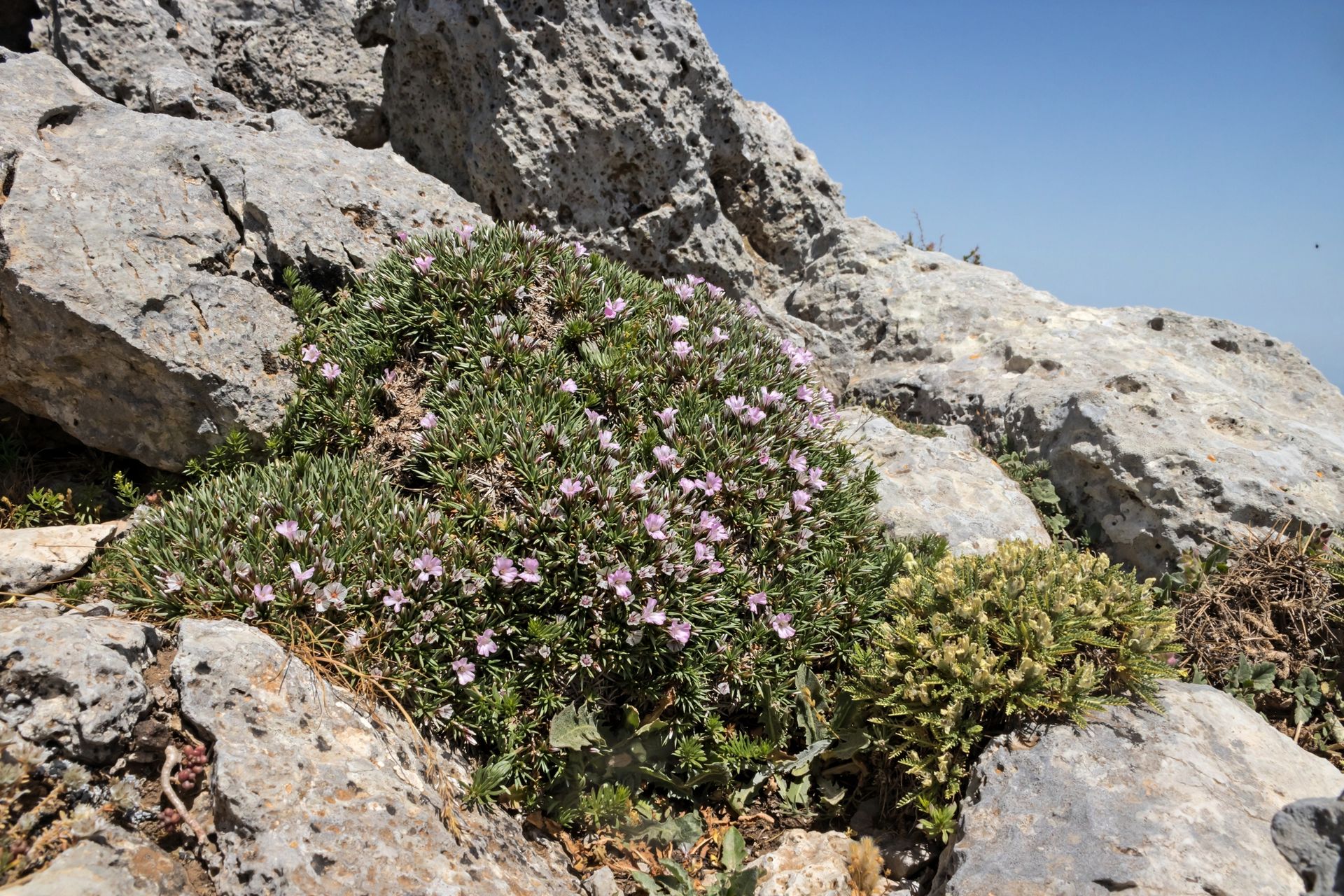
This is a plant built for patience and permanence. The species slowly knits together a tight, dome-like evergreen cushion that tops out at a mere 10 cm (4 inches) in height. Over time, a single specimen can slowly spread anywhere from 10 to 50 cm wide. The RHS notes that reaching full maturity takes a deliberate five to ten years, meaning this alpine should be celebrated for its slow-burn architectural presence rather than rapid ground coverage.
The foliage itself defines the plant’s distinctive, tactile character:
- Needle-Like Dimension: The narrow, linear leaves rarely exceed 2 cm in length.
- Hedgehog Silhouette: The rigid, hard-textured foliage terminates in incredibly sharp, spiny tips that form a dense, defensive mound.
- Chameleon Coloration: The leaves display a rich grey-green hue that shifts to a brilliant silver under intense summer sun, then deepens to a dark, brooding tone during damp, overcast weather.
- Impenetrable Density: The leaves pack together so tightly that they obscure the stems entirely, creating a flawless, rounded cushion instead of an open, loose tuft.
Unlike its soft-leaved alpine neighbors, prickly thrift behaves like a piece of living stone. It brings a coarse, highly architectural texture to a design, though its formidable spines mean you should position it safely away from narrow garden pathways where bare ankles or flowing sleeves might brush past.
Summer Flowers and Year-Round Architecture
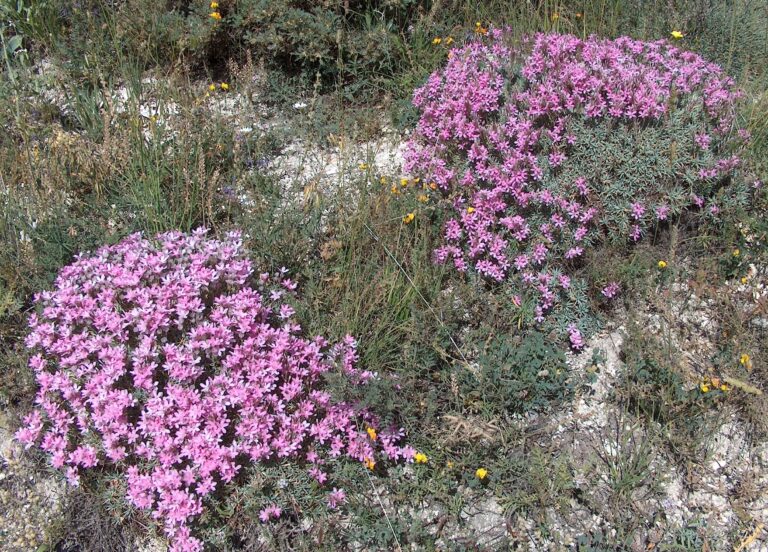
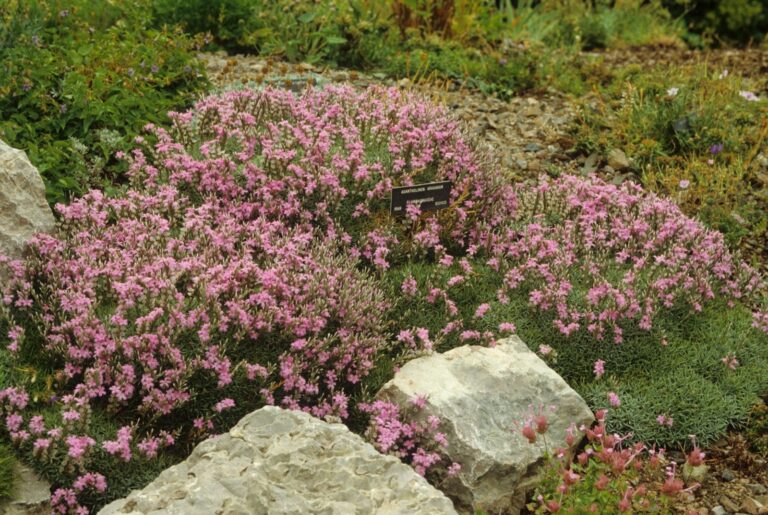
When early summer arrives—typically spanning June and July—the spiny grey dome undergoes a delicate transformation. Short, upright stalks emerge just above the foliage, carrying small clusters of five-petalled pink flowers. The visual effect is delightfully understated: rather than a loud, smothering blanket of colour, you get a subtle, elegant dusting of rose-pink scattered across a silver-grey cushion.
Because this floral performance is brief, the plant’s year-round structural form remains the real headline. The evergreen, hedgehog-like mounds hold their own straight through the dead of winter, offering a beautiful counterpoint when nestled against pale limestone, dark volcanic basalt, or deeply textured, weathered sandstone.
Wild Habitats and Garden Adaptations
To understand how to use this plant, you must look to its rugged origins. Prickly thrift hails from the high, unforgiving, gravelly mountain slopes and limestone screes of southeastern Europe and western Asia, with wild distributions stretching from Greece through the Balkans and deep into Turkey. The Missouri Botanical Garden highlights its affinity for these rocky-gravelly mountain zones, while the RHS specifically traces its native footprint across Turkey and Lebanon.
This high-altitude pedigree explains the plant’s distinct landscape language. It demands to be styled alongside fractured stone, loose scree, and sun-baked crevices, looking entirely out of place in a lush, moisture-retentive perennial border. It possesses exceptional natural drought resistance and thrives exclusively in alkaline or neutral, sharply drained conditions. For a broader perspective on substrate aggregate mixes and cold-weather protection strategies across this entire genus of alpine subshrubs, consult the master directory of resilient Acantholimon cushion plants.
Strategic Landscape Placement
The Authentic Limestone Scree
A meticulous scree bed is the absolute best setting for Acantholimon ulicinum. Nestled into an expanse of angular limestone chips, with a few larger, half-buried boulders nearby to provide a cool root-run, the plant mirrors its wild habitat perfectly. Grouping these low domes in odd numbers with generous gravel spacing between them yields a highly intentional, naturalistic design.
Dry-Stone and Retaining-Wall Crevices
The RHS highly recommends installing this species directly into a vertical crevice on a sunny retaining wall, where it receives full sun exposure and crucial protection from pooling winter wet. Tucked securely into a dry-stone joints, the rounding cushion will slowly spill out over the rock edge, beautifully softening the hard masonry without losing its rugged, montane identity.
Troughs and Alpine Containers
In the micro-climate of an alpine trough, the slow growth rate and diminutive scale of prickly thrift become premier design assets. Use a coarse mineral mulch across the soil surface and position A. ulicinum as a structural anchor plant. It anchors the container arrangement beautifully, especially during the winter months when softer, herbaceous alpine companions die back to the ground.
Gravel Garden Accents
For larger gravel garden layouts, use the plant sparingly as a high-contrast textural punctuation mark. A single, mature specimen commands attention in the immediate foreground, while a few widely spaced individuals can trace a rhythmic, low, silvery line along the edge of a sunny terrace or flagstone path.
Compelling Companion Plants
The most successful alpine compositions rely on striking contrasts in foliage texture, plant height, and floral structure.
Keep a strict rule: never plant prickly thrift where taller, leafy, or aggressive perennials can cast shade or drop decaying autumn litter directly onto its dense cushion. This plant demands unyielding sunlight, superb air circulation, and a clear view of stone.
Maximizing Visual Value in the Garden
The color palette here is beautifully restrained: a mix of cool grey-green leaves, warm stone undertones, and clean, clear pink blossoms. Under intense midday sun, the needle-sharp foliage shifts toward a brilliant blue-grey, generating an ultra-clean silver-and-cream aesthetic when set against limestone.
To maximize this visual payoff, place the plant exactly where its unique silhouette can be appreciated:
- Perched on the absolute front edge of a raised rock bed.
- Tucked into a sheer vertical rock fissure where the round mound breaks up straight masonry lines.
- Placed adjacent to garden paths only if there is ample clearance to prevent its sharp needles from snagging passersby.
- Showcased in an elevated trough where the intricate leaf texture and individual summer blossoms can be admired at eye level.
Sorting Through the Synonyms
While Acantholimon ulicinum stands as a single, distinct species, its historical naming conventions can easily cause confusion when browsing specialty plant sales.
The name Acantholimon echinus is classified by the RHS as a botanical misapplication when used in reference to A. ulicinum. If you run across plants sold under A. echinus, they may well be the exact plant described here, but you should verify their provenance before assuming they are a distinct variety. Meanwhile, titles like A. albanicum, A. androsaceum, A. creticum, and A. tournefortii represent historical reclassifications and regional collections rather than unique garden cultivars. For modern collectors, Acantholimon ulicinum remains the definitive name to look for.
Ultimately, gardeners choose this plant for its uncompromising precision. It skips the ephemeral, fleeting show of traditional cottage flowers in favor of permanent, evergreen geometry, a fierce spiny texture, and an elegant summer bloom. It is a connoisseur’s plant that rewards anyone who appreciates the intimate relationship between mountain flora and raw stone.