The Luminous Appeal of Acacia cognata ‘Limelight’
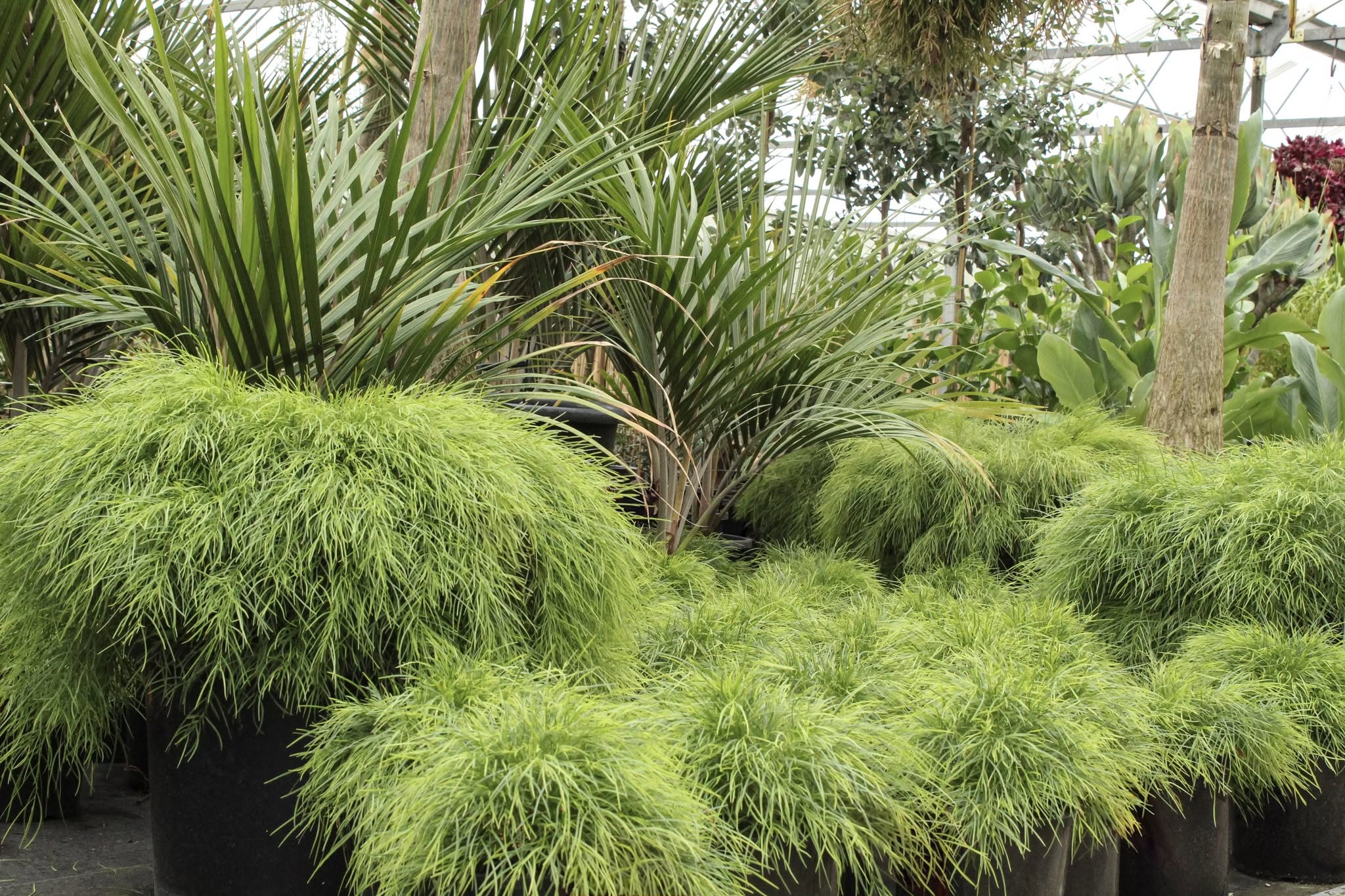
While most Australian wattles are celebrated for their explosive bursts of golden spring blooms, Acacia cognata ‘Limelight’ takes a completely different path to garden stardom. This compact, evergreen shrub is grown almost entirely for its radiant, exceptionally fine-textured foliage. Forming a dense, pillowy hillock of soft, pendulous, lime-green phyllodes, it has fast become one of the most visually striking choices for modern borders, container displays, low retaining walls, and high-impact commercial landscapes.
Cultivar Profile
- Botanical Name: Acacia cognata ‘Limelight’ (frequently traded under ‘Limelight’ PBR)
- Common Names: Dwarf river wattle, bower wattle, wattle ‘Limelight’
- Growth Habit: Compact, rounded, densely mounded, and weeping
- Foliage Characteristics: Slender, narrow phyllodes transitioning from bright lime to a fresh, light green
- Typical Dimensions: Generally reaches 0.5–1 metre high and roughly 1 metre wide; exceptional specimens in ideal conditions can touch 1.2 metres
- Flowering Profile: Minimal and hidden; the plant is selected, grown, and marketed strictly for its foliage
- Landscape Applications: Foliage specimen, path edging, retaining wall cascade, container focal point, mass groundcover, or a grafted standard
What Makes ‘Limelight’ So Distinctive?
Think of ‘Limelight’ as a living, breathing foliage sculpture. Its unique aesthetic relies on modified leaf stalks—called phyllodes—which are characteristic of the broader Acacia cognata family. However, this particular cultivar refines those traits into a significantly finer, softer, and more compressed form than the parent species. The individual phyllodes are remarkably slender and hang downward in cascading layers, giving the entire mound a plush, almost moss-like texture that practically begs to be touched.
Color, however, is where this plant truly commands attention. It radiates a clean, saturated chartreuse that looks particularly vibrant during the spring and early summer flush. Unlike variegated shrubs that rely on multi-colored patterns, ‘Limelight’ achieves its dramatic impact through a single, intense hue paired with an incredibly delicate texture. When caught in the low, angled light of early morning or late evening, the weeping tips capture the sunbeams, making the entire plant look as though it is lit from within.
Because it is an evergreen, this structural beauty remains intact throughout the winter months. Do not look to this variety for the typical, show-stopping flower show of traditional wattles; the species itself is primarily prized for form rather than bloom. While some growers note the occasional appearance of tiny, discreet, pale yellow globular flowers, they are completely secondary and pass largely unnoticed.
Mature Dimensions and Growth Habit
The vast majority of horticultural profiles position ‘Limelight’ at a neat 1 metre tall by 1 metre wide, though some specify a slightly lower range of 0.5–1 metre. On occasion, a well-established plant in a warm, sheltered microclimate—or one grown as a grafted standard—will reach up to 1.2 metres.
Left to its own devices, its natural silhouette develops into a tight, neat dome with arching edges. The outermost shoots weep gracefully outward and downward, a habit that makes the shrub brilliantly effective when positioned to spill over the edge of a raised bed, stone step, or sleek planter rim. In a mixed border, it behaves less like an upright shrub and more like a soft, rounded green bun; when restricted to a pot, it settles into a flawless hemisphere of cascading green.
Elevated Elegance: Grafted Standards
For a completely different architectural look, ‘Limelight’ is frequently available grafted onto a clear, straight standard. This elevation lifts the weeping head off the ground, transforming the low mound into a sophisticated, lollipop-like accent feature. The head itself will still spread about 1 metre wide and cascade downward, but the overall height of the plant will be dictated by the height of the graft stem rather than any upward growth from the foliage. Some specialty nurseries offer these standard forms at heights up to 1.8 metres, offering a striking vertical element for formal designs.
Foliage Dynamics Across the Seasons
Unlike deciduous shrubs, ‘Limelight’ avoids dramatic, fiery autumn transformations. Instead, its seasonal interest is driven by shifting daylight, fresh flushes of growth, and the shifting density of its fine texture.
Spring
The plant reaches its peak luminosity during this window. Fresh growth emerges in an incredibly bright, clean shade of lime, giving the entire shrub a rejuvenated, glowing appearance.
Summer
The dense, fine-textured mound holds its ground through the heat. Intense summer sun can occasionally deepen the chartreuse tones into a slightly richer olive green, but the delicate texture continues to offer an excellent foil against broader-leaved neighbors.
Autumn and Winter
When the rest of the garden begins to fade and perennials retreat underground, ‘Limelight’ provides vital structural continuity. It maintains its rounded shape and green presence all winter long, though in areas prone to sharp frosts, the outer foliage may show a bit of weather wear if left entirely unprotected.
Design Strategies for the Modern Garden
‘Limelight’ is a consummate structural tool. It introduces an incredibly clean, geometric dome shape to a layout, while its cascading habit simultaneously softens nearby masonry, hardscaping, or rigid, upright plant forms.
Premier Landscape Applications
- Container Focal Point: The dense, mounded shape and trailing perimeter look sensational in large, minimalist pots where the foliage can freely cascade past the rim.
- Low Borders and Pathways: Planted in a series, it forms an excellent repeating, cloud-like edge along driveways, garden paths, or terrace borders.
- Retaining Wall Softener: Position it at the top of a stone or concrete wall to let the weeping branches break up stark vertical lines.
- High-Contrast Companion: Place it alongside dark, burgundy, purple, or deep forest-green companions to make the lime hue pop with contemporary contrast.
- Mass Textural Groundcover: When planted en masse, the overlapping domes create a undulating, rhythmic layer that works beautifully in both sprawling public spaces and neat residential yards.
- Grafted Accent Plant: Use the elevated standard forms to frame entrances, punctuate paved courtyards, or add a neat vertical layer to a patio display.
Inspired Planting Partners
To maximize the visual impact of ‘Limelight’, pair it with companions that present completely opposite leaf shapes, colors, or textures.
| Companion Plant Type | Visual Chemistry with ‘Limelight’ |
|---|---|
| Deep Green Broadleaf Shrubs | Amplifies the luminous chartreuse color and highlights the fine, feathery quality of the wattle’s foliage. |
| Purple or Burgundy Foliage | Delivers a high-contrast, moody color pairing that feels distinctly modern. |
| Silver or Grey Foliage | Creates a subtle, sophisticated, Mediterranean-inspired blend, though the intense color contrast is dialed back. |
| Architectural Grasses | Juxtaposes the rigid, dense dome of the shrub with airy, fluid vertical movement. |
| Dark-Stemmed or Dark-Flowered Perennials | Serves as a moody backdrop that coaxes the pale green wattle into looking even brighter. |
| Low-Growing Flowering Perennials | Interjects pops of seasonal color without distracting from the clean, sculptural shape of the shrub. |
Ultimately, these dwarf wattles excel at adding structural punctuation to both formal and casual garden spaces. A single specimen can effortlessly soften a harsh corner, while an organized row creates a defined boundary without the rigid, high-maintenance look of a traditional clipped hedge.
Origins and Botanical Context
The parent species, Acacia cognata (commonly known as the river wattle or bower wattle), is a versatile Australian native whose wild forms range from low, spreading groundcovers to small, weeping trees topping 10 metres in height. The wild species naturally features narrow, sickle-shaped phyllodes and weeping branches, which give it an elegant, airy presence.
‘Limelight’ isolates those appealing wild traits, condensing them into a dwarf, highly compressed ornamental selection. Most dwarf cultivars derived from the species stay well under the 1-metre mark, often spreading wider than they are tall to provide dense ground coverage. This evolutionary background explains why ‘Limelight’ is utilized primarily as a rich textural carpet or a sculptural accent rather than a traditional blooming wattle.
In the wild, the species thrives in the dry sclerophyll forests and open woodlands of New South Wales and Victoria, predominantly making its home on well-drained soils derived from sandstone and granite. This rugged heritage accounts for the plant’s resilient foliage and its insistence on superb drainage in a garden setting, matching the universal metrics outlined in the master guide for genus Acacia.
History and Market Status
Within the Australian nursery industry, ‘Limelight’ is widely considered the gold standard among dwarf Acacia cognata selections. Often promoted as the original and finest dwarf wattle of its type, it holds a legendary status among contemporary landscape designers.
The plant is legally protected under Plant Breeders’ Rights in Australia (frequently labeled as Acacia cognata ‘Limelight’ PBR), a designation that underscores its immense commercial value and popularity. Its runaway success paved the way for other innovative formats, most notably the grafted standard. Today, varieties like ‘Limelight’ and ‘Waterfall’ are routinely trained onto clear stems, elevating them from low-slung mounds into architectural garden features.
Distinguishing ‘Limelight’ from Close Relatives
While ‘Limelight’ belongs to an expanding family of dwarf Acacia cognata introductions, it maintains a highly distinct identity characterized by its electric color, tight dome shape, and pendulous texture.
- ‘Bower Beauty’: A fellow dwarf selection tailored for dense, low ground coverage, though its foliage generally lacks the intense, bright lime saturation of ‘Limelight’.
- ‘Green Mist’: A downsized dwarf variety that creates an exceptionally low, fine-textured, carpet-like mound.
- ‘Mini Cog’: A highly compact dwarf form favored for tight spaces where maximum foliage density is required on a small scale.
- ‘Waterfall’: Features a significantly more pronounced cascading habit, making it the premier choice for dramatic trailing effects over sheer drops or as an extra-pendulous standard.
- ‘Lime Magik’: A much larger shrub or small tree form that sports similar weeping chartreuse foliage but operates on a completely different landscape scale.
For the homeowner or designer hunting for a neat, dependable, and radiant foliage sphere, ‘Limelight’ remains the definitive choice. Turn to ‘Waterfall’ if you need an aggressive cascade, or opt for ‘Lime Magik’ if your space demands a full-sized tree.
Weighing the Pros and Cons
Strengths
- Unrivaled chartreuse foliage color that provides year-round visual brightness.
- An incredibly soft, touchable texture that pairs perfectly with bold or dark companion plants.
- A predictable, compact mature size that fits small urban courtyards, pots, and structured landscapes.
- Excellent versatility, shifting easily from domestic borders to commercial islands or high-end grafted standards.
- Complete freedom from messy flower drops, ensuring a clean and consistent aesthetic through every season.
Limitations
- Lacks the classic, showy golden blooms associated with traditional Australian wattles.
- The fine foliage can look a bit ragged or burnt following severe winter frosts or exposure to biting winds.
- Must be grown from cuttings or vegetative propagation; it cannot be raised true-to-type from seed.
- Mature dimensions can fluctuate slightly depending on your local climate, ranging anywhere from 0.5 metres up to 1.2 metres.
The Final Verdict
Gardeners choose ‘Limelight’ because it beautifully solves a common design dilemma: it offers the airy softness, fine texture, and fluid movement of an ornamental grass or fern, but delivers it with the permanent structure and year-round reliability of a hardy evergreen shrub. It is an invaluable asset for any landscape scheme that prioritizes sophisticated foliage interplay over fleeting seasonal flowers.