The Small-Space Okra Breakthrough: Why ‘Annie Oakley II’ Belongs in Your Garden
For generations, backyard vegetable growers faced a distinct dilemma when it came to okra: standard varieties simply demanded too much room and too much time. Traditional stalks rocketed skyward, eating up precious garden real estate while taking their sweet time to set fruit. Enter ‘Annie Oakley II’. Originally developed by the innovative breeders at Petoseed (now under the Seminis umbrella), this F1 hybrid was engineered to rewrite the rules for fresh-market growers and home gardeners alike. It refined the original ‘Annie Oakley’ line, introducing tight internodes, an accessible canopy, and an accelerated path to the very first harvest.
University field trials across the United States quickly confirmed that this wasn’t just a minor incremental update. ‘Annie Oakley II’ routinely established itself at the top of the charts, proving to be one of the earliest and most prolific spineless cultivars on the market. Moving from direct seed to a harvestable crop in a mere 48 to 55 days, it out-produced traditional, open-pollinated heirloom standards by a striking 10% to 15%. Thanks to this reliable productivity packed into a remarkably well-behaved frame, university extension offices and premium seed houses frequently utilize it as the gold standard for compact okra performance.
Anatomy of a Compact Heavyweight
Growth form and size
The defining characteristic of ‘Annie Oakley II’ is its remarkably tidy, well-branched architecture. Thanks to its short internodes, the plant clusters its fruit close to the main stem, maintaining a manageable dwarf to semi-dwarf height of 3 to 4.5 feet. This compact framework depends naturally on your local climate, soil fertility, and spacing choices, but it remains a far cry from the towering, unmanageable field selections of yesteryear. Because it scales down the vertical footprint, you can confidently tighten your in-row spacing or dedicate a few raised beds and large containers to this high-yielding variety.
Foliage and stem
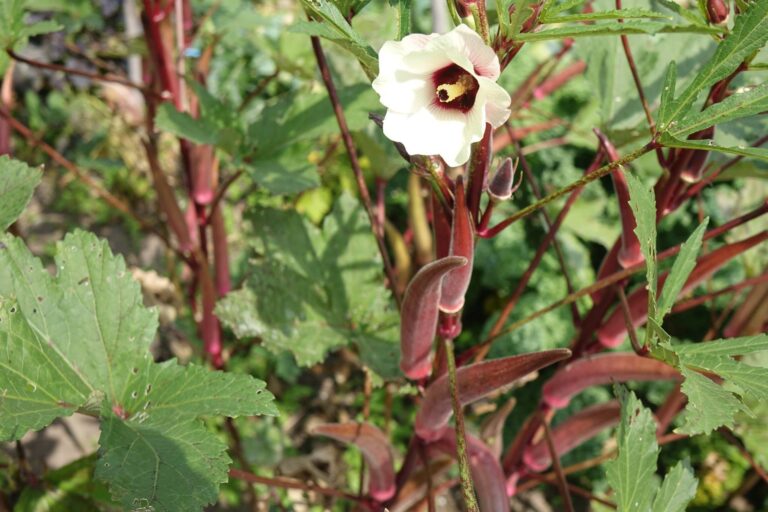
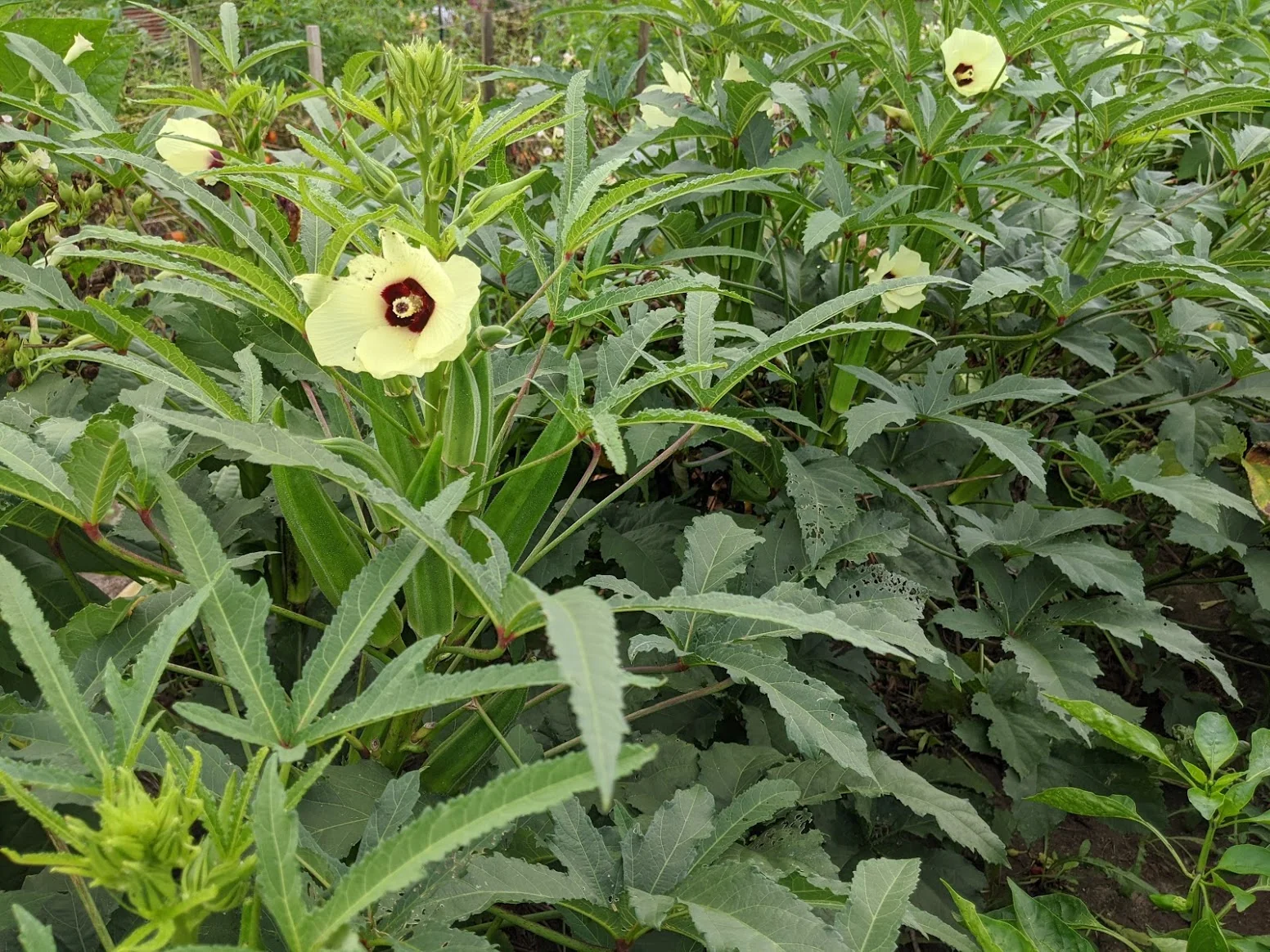
True to its Abelmoschus esculentus heritage, the plant puts forth expansive, deeply lobed leaves in shades of medium to vibrant green, supported by thick, resilient stems that often sport an attractive, reddish blush. While the foliage provides plenty of energy to fuel heavy, continuous production, the canopy remains remarkably open. This structural clarity is a massive benefit at harvest time, keeping the green pods visible so they don’t accidentally grow overlooked and woody beneath a wall of leaves.
Flowers
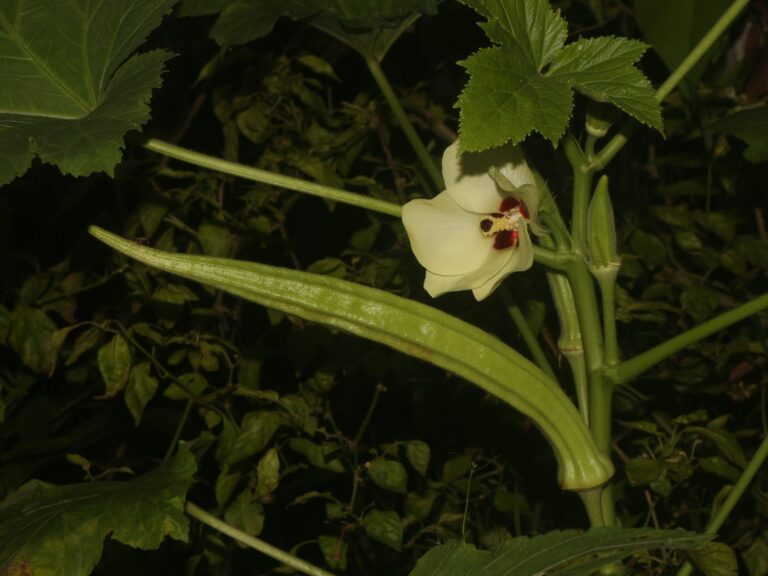
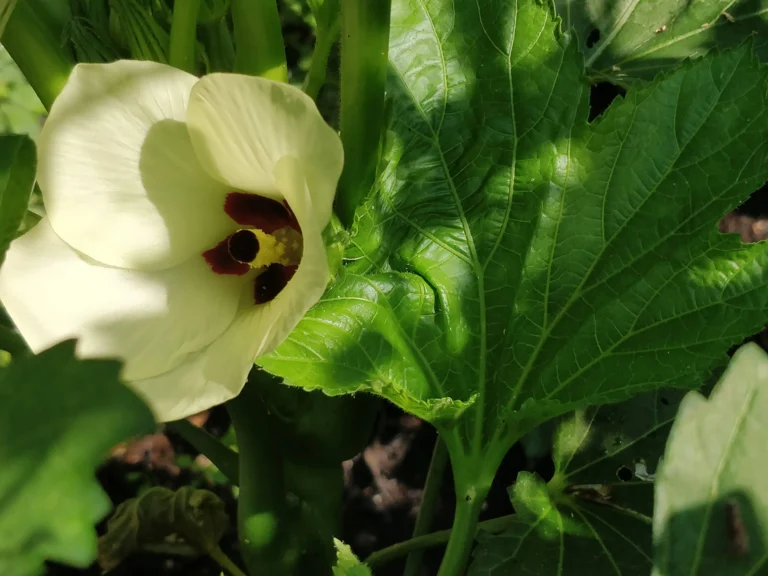
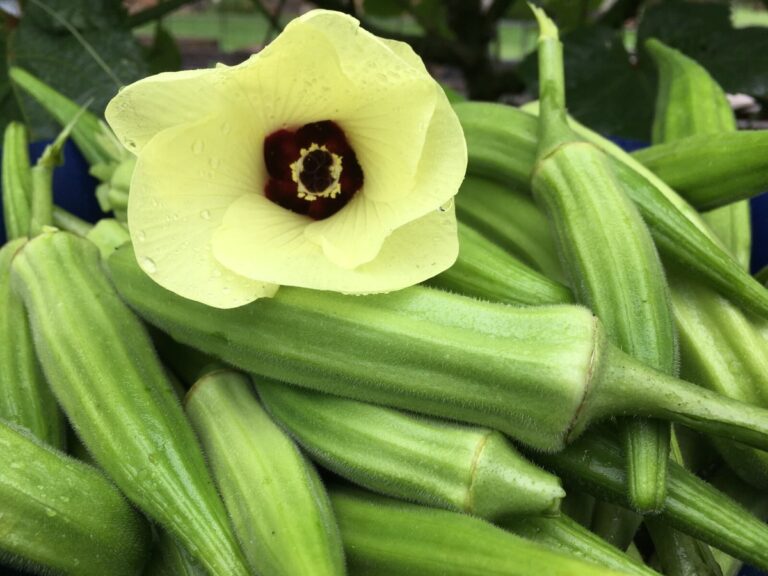
Before the harvest comes the theater of the blooms. ‘Annie Oakley II’ features classic hibiscus-like blossoms—large, satiny, pale yellow petals surrounding a rich, velvety maroon or purple throat. Though each exquisite flower opens in the morning mist only to fade by sunset, their daily arrival brings a striking, ornamental rhythm to the summer food plot.
Pod Dynamics and Harvest Perfection
Pod appearance
The payoff comes in the form of elegant, slender, five-sided (penta-type) pods that maintain a beautiful, uniform emerald hue. Completely spineless and pleasingly smooth to the touch, they feature only subtle ribbing. This lack of prickles transforms the harvest from a chore requiring long sleeves and gloves into a comfortable, effortless routine—a massive selling point for commercial market stands and backyard pickers alike.
Pod size and texture
To catch this hybrid at its culinary peak, snap the pods when they measure between 2 and 4 inches long, right before their internal fibers have a chance to toughen. Interestingly, trial data shows that ‘Annie Oakley II’ keeps its tender, stringless texture up to about 4.5 inches. This gives growers a wider, more forgiving harvest window than older spineless types can offer. When stacked against regional or heirloom varieties, this hybrid consistently shows a significantly lower fiber content at peak market size, guaranteeing a superior texture on the plate.
Yield and production pattern
This variety functions as a non-stop production line, throwing out a relentless stream of pods all season long, provided you harvest frequently. In research trials, it regularly showcases an impressive total yield alongside a high count of marketable pods per pound—clear evidence of its uniform growth habit and reliable quality. Furthermore, because it kicks into production so quickly, you will likely be gathering your first basket of pods a full week before standard options like ‘Clemson Spineless’ even begin to produce.
Designing with Edibles: Landscape Integration
While okra is traditionally relegated to utilitarian farm rows, ‘Annie Oakley II’ breaks the mold by offering genuine aesthetic value to modern, integrated landscapes:
- Architectural Framework: The self-contained, 3-to-4.5-foot silhouette slips seamlessly into raised beds, tight square-foot intensive layouts, or mixed ornamental borders without shading out adjacent plantings.
- Structured Cleanliness: A highly symmetrical, well-branched growth pattern provides a clean, manicured look that keeps the garden looking intentional and highly productive.
- Late-Season Texture: The perpetual interplay of bold tropical flowers and striking, upright pods creates an ever-evolving textural canvas through the heat of mid- to late summer.
For garden designers looking to weave crops into ornamental spaces, this cultivar serves as an excellent vertical anchor. It balances beautifully alongside carpet-forming herbs, bush-type determinating tomatoes, and dwarf sweet or hot peppers, delivering structure without swallowing up the entire bed.
How ‘Annie Oakley II’ Measures Up
To understand where ‘Annie Oakley II’ shines, it helps to see how its specifics stack up against its closest competitors in the seed catalog:
| Feature | ‘Annie Oakley II’ | ‘Clemson Spineless’ (standard) | ‘Annie Oakley’ OP / de-hybridized line | Other compact hybrids (e.g., ‘Jambalaya’, ‘Little Lucy’) |
| Type | F1 hybrid | Open-pollinated heirloom | Open-pollinated selection derived from the hybrid | F1 or OP dwarf types |
| Days to First Harvest | ~48–55 days | ~55–60+ days | ~52–55 days | ~45–55 days, depending on cultivar |
| Plant Height | ~3–4.5 ft, compact | ~4–5+ ft, taller | ~3–4 ft, compact | Often 2.5–4 ft, very compact |
| Pod Surface | Spineless, slightly ribbed, uniform | Spineless, smooth to slightly ridged | Spineless, uniform | Spineless, smooth to slightly ribbed |
| Primary Strength | Early, high yield on compact plants; uniform pods | Proven reliability, broad adaptation | Similar compact productivity, seed-saving possible | Very compact habit; some bred specifically for containers |
Ultimately, this hybrid reigns supreme when you cannot afford to trade away heavy yields or premium pod quality just to get a shorter plant that matures early.
Kitchen Performance and Storage Quality
Once inside the kitchen, ‘Annie Oakley II’ proves its worth across every classic preparation method. Whether your goal is crisp pickling, a golden cornmeal fry, classic stewing, or thickening a rich Southern gumbo, these pods deliver. Horticultural evaluations focusing on processing traits reveal that the fruits boast low stringiness combined with a high dry-matter content. This makes them just as well-suited for home food dehydrators and commercial processing as they are for immediate, fresh-from-the-garden cooking.
The physical traits of the pod offer practical benefits as well. Because they are entirely spineless and uniform, preparing them is a breeze. They wash, trim, and pack neatly into storage containers or market baskets with none of the hassle or grading issues common to irregular, spine-covered heirloom cultivars.
Sourcing Seeds and Nomenclature Details
You can readily source ‘Annie Oakley II’ seeds through various reputable retail and wholesale catalogs specializing in high-performance home garden and commercial market varieties. However, a quick word of caution for the discerning buyer: look closely at the product description. You will likely encounter an open-pollinated variant sold as ‘Annie Oakley OP’. This line was created by meticulously de-hybridizing the original stock. While growers note that this OP version keeps much of the short, high-yielding essence of the original parentage while allowing you to save your own seed, it is fundamentally different from the true F1 hybrid. Always verify if you are purchasing the true F1 hybrid (‘Annie Oakley II’) or the open-pollinated selection (‘Annie Oakley OP’), as their genetic stability and seed-saving properties differ significantly.
To get your crop off to a flawless start, make sure to consult our comprehensive Master Okra Growing Guide for all the universal basics on seed depth, spacing rules, irrigation schedules, nutrient needs, and organic pest protection. [Insert internal link: Master Okra Growing Guide]
The Ultimate Verdict for Modern Gardens
When you look at the big picture, the precise combination of accelerated maturity, space-saving geometry, and prickle-free, premium pods secures a permanent home for ‘Annie Oakley II’ in the modern garden plan:
- Defeating the Calendar: It opens the door to successful okra cultivation in northern, short-season zones where old-school, late-maturing varieties rarely get enough heat units to produce a meaningful harvest.
- Maximizing Intensive Beds: It thrives in close quarters, empowering urban backyard growers to implement high-density spacing in raised beds and square-foot layouts without starving nearby crops of light.
- Streamlining Production: It offers the dependable uniformity, easy handling, and rapid picking cycles that small-scale market growers need to stay profitable.
‘Annie Oakley II’ represents a deliberate step forward in compact breeding. It directly addresses the spatial limits and brief growing seasons that modern gardeners navigate every year, all without sacrificing a single ounce of harvest quality.