Red Burgundy Okra: The Ultimate Edimental for Gorgeous Borders and Fresh Harvesting
Abelmoschus esculentus ‘Red Burgundy’—frequently listed simply as ‘Burgundy’—is the ultimate double agent of the summer garden. Seamlessly bridging the gap between the vegetable patch and the ornamental border, this dual-purpose heirloom delivers tender, mild-flavoured pods while masquerading as a tropical showstopper. With its rich wine-red stems, deeply veined foliage, and saturated burgundy fruits, the plant offers a striking contrast to its own canary-yellow, hibiscus-like blossoms.
Bred at Clemson University by horticulturist Leon Robbins and introduced in 1983, ‘Red Burgundy’ quickly earned its stripes, securing a coveted All-America Selections (AAS) award in 1988 for its exceptional yield, plant uniformity, unique color, and superior culinary quality.
For the backyard grower and cook alike, this cultivar provides a fascinating lesson in food chemistry. The raw pods are a vivid, show-stopping crimson out in the garden. However, once they hit the kitchen, heat degrades the underlying anthocyanin pigments. Depending on your cooking method, those brilliant hues shift toward brick-red, purplish-brown, or a classic deep green. This dramatic visual transformation, coupled with the plant’s commanding architecture, makes ‘Red Burgundy’ a premier choice for “edimental” landscaping—ideal for mixed borders, large containers, and exotic, tropical-style garden designs.
Before diving into the design and culinary nuances of this specific cultivar, note that standard cultivation fundamentals—including sowing schedules, spacing, fertilisation, and routine pest or disease management—can be found in our comprehensive Master Growing Guide for Abelmoschus. Use this profile to tailor your harvest timing, kitchen prep, and landscape placement.
Origin and Breeding History
The story of ‘Red Burgundy’ is rooted in classic, patient plant breeding. As an open-pollinated heirloom, it was developed through conventional selection methods rather than genetic modification. The project took place at Clemson University in South Carolina, spearheaded by horticulturist Leon (LeRon) Robbins. Throughout the 1970s and early 1980s, Robbins spent roughly eight years meticulously selecting plants that exhibited a precise combination of traits: high and dependable yields, a uniform growth habit, excellent pod texture, and an intense, reliable red pigmentation running through the stems, leaf ribs, and fruits.
Following its formal release in 1983, the gardening community quickly recognized that this selection was as beautiful as it was productive. The definitive stamp of approval came in 1988, when ‘Red Burgundy’ won the All-America Selections (AAS) Edible–Vegetable award. Judges praised the variety for outperforming existing okras in yield, uniformity, and overall quality, all while introducing a revolutionary color palette to the vegetable garden. Because it is open-pollinated, backyard gardeners can easily save seeds from year to year, ensuring they grow true to type—a trait that has cemented its status as a beloved, widely available heirloom.
Visual and Ornamental Traits
Foliage, Stems, and Growth Habit
‘Red Burgundy’ develops into a robust, bushy, and upright structure that typically tops out between 1.2 and 1.5 meters (4 to 5 feet) under standard garden conditions. In regions with exceptionally long, hot summers, plants can stretch even taller.
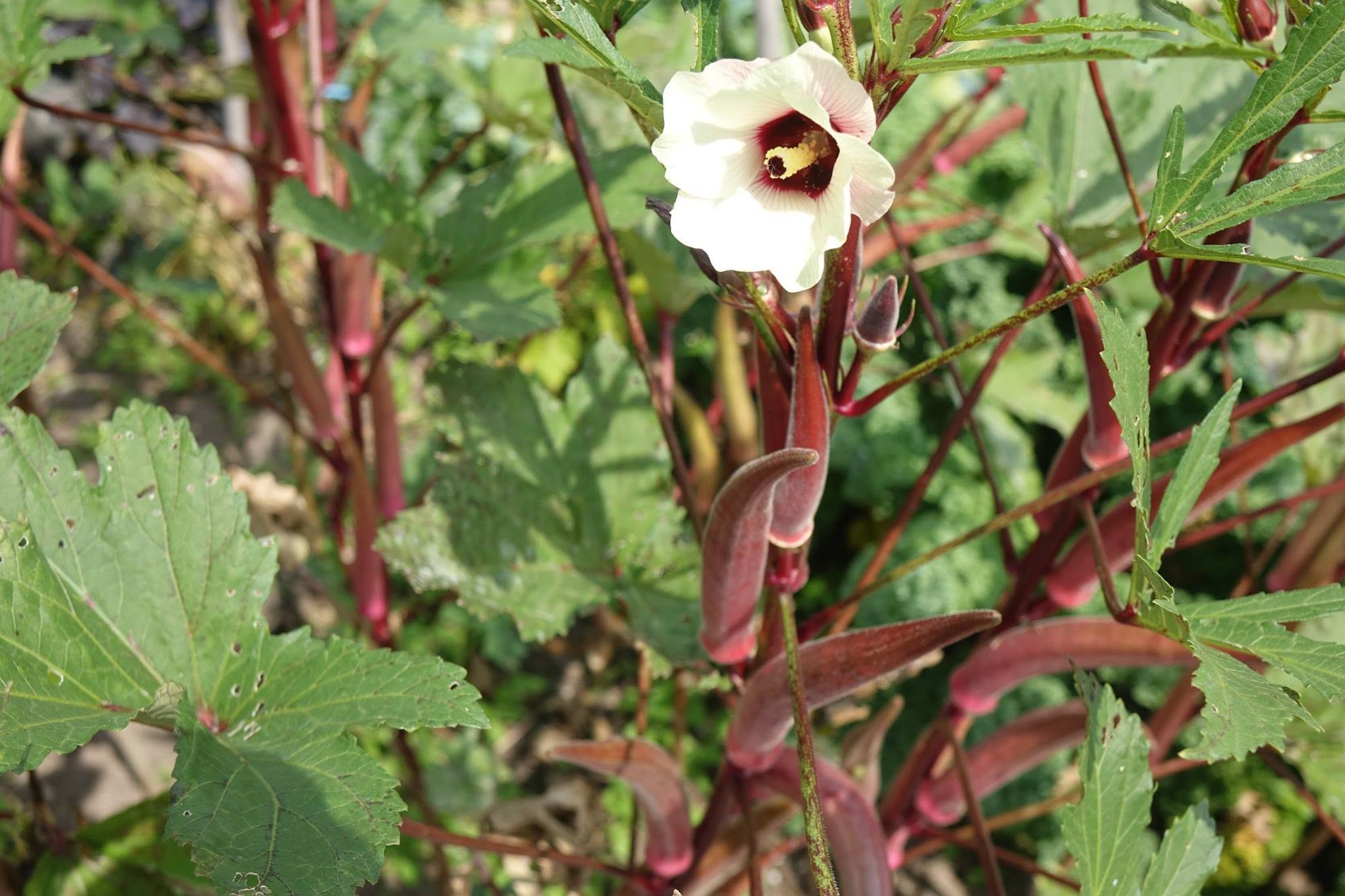
The foliage features the classic, bold, deeply lobed silhouette characteristic of tropical mallows, but with a dramatic twist: the main stems, lateral branches, and intricate leaf ribs are saturated with a rich burgundy tint that makes the green leaf blades pop.
Younger growth and leaf veins frequently display mottled or streaked red-and-green patterns, heightening the plant’s textural appeal. From a distance, the overall silhouette reads as a commanding, architectural feature with a warm, reddish undertone that anchors sunny beds beautifully.
The Blossoms
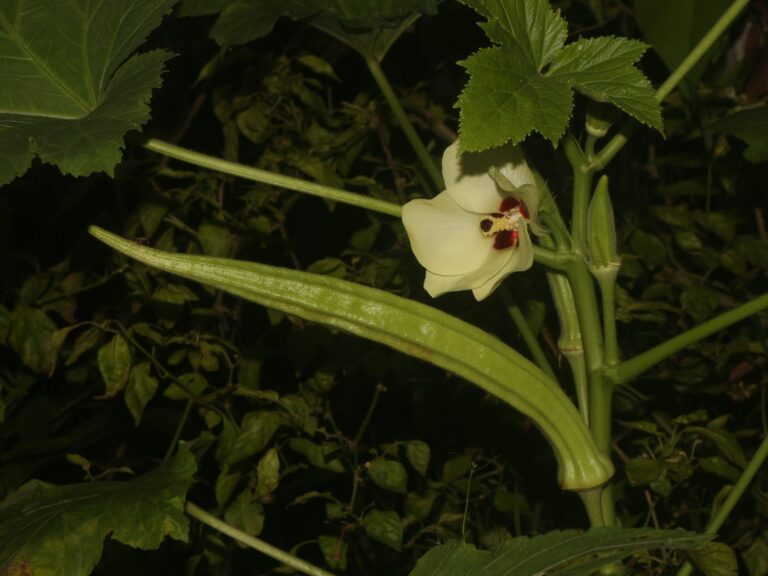
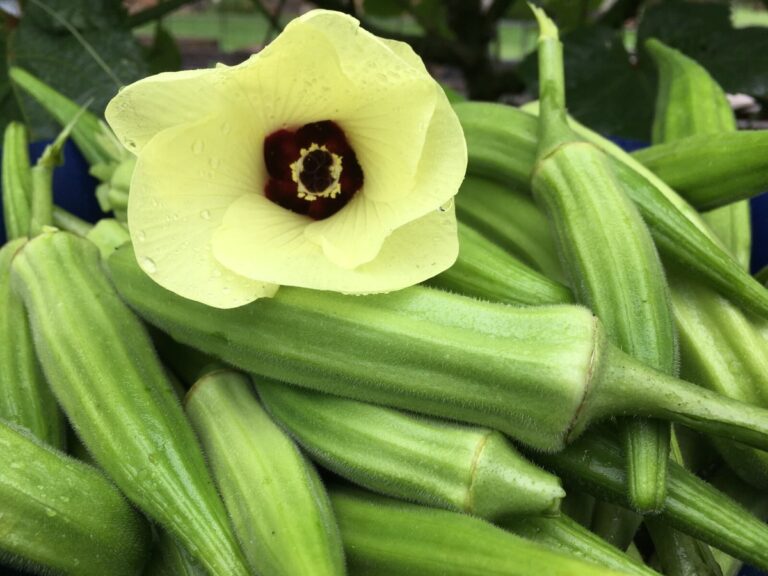
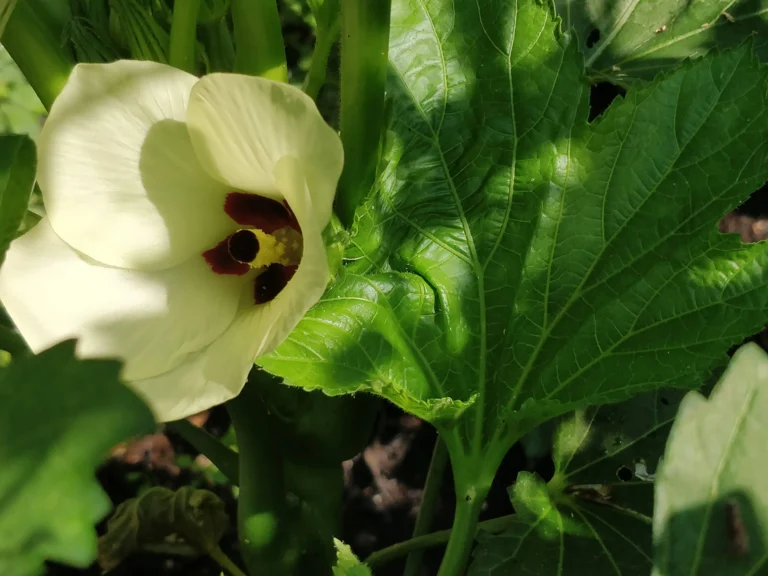
True to its membership in the mallow family, ‘Red Burgundy’ puts on a spectacular floral display. The large, hibiscus-style flowers feature pale cream to canary-yellow petals that frame a deep red or amber throat. Held proudly above the large leaves, these high-contrast blooms create a vibrant, tropical color palette that reaches its peak in late summer, just as pod production goes into overdrive.
Pod Architecture and Landscape Impact
The pods themselves are the crown jewels of this variety. Slender and torpedo-shaped, they can reach lengths of 15 to 20 centimeters (6 to 8 inches) if left to fully mature on the stem, though they should be picked much younger for kitchen use.
When young, the pods exhibit a deep, uniform red-to-burgundy hue, occasionally showing a touch of green at the tips. Because they are held prominently against the foliage, these colorful pods are incredibly easy to spot during harvest, preventing the dreaded “hidden giant” syndrome common with green varieties.
If you miss a few, they can be left to dry directly on the plant for autumn floral arrangements, where their structural form and weathered color add rustic charm.
Pod Color Chemistry: From Garden to Plate
The striking coloration of ‘Red Burgundy’ is driven by water-soluble plant pigments called anthocyanins—specifically delphinidin 3-O-sambubioside and cyanidin 3-O-sambubioside. These compounds accumulate heavily in the external tissues of red and purple okra varieties. However, anthocyanins are notoriously unstable and highly reactive to changes in pH, temperature, light, and oxygen exposure.
When you introduce heat and moisture in the kitchen, a few things happen simultaneously:
- High temperatures accelerate the breakdown of anthocyanins, shifting their chemical equilibrium into colorless forms—a process amplified by long cooking times.
- Boiling or simmering coaxes these water-soluble pigments out of the plant tissue and into the cooking liquid, stripping the pods of their color.
- Fluctuations in pH caused by surrounding ingredients (like acidic tomatoes, vinegar, or citrus juices) alter the structural hue of the remaining pigments.
Consequently, ‘Red Burgundy’ pods inevitably lose their brilliant raw coloration during thermal processing, turning a muted brick-red, a deep purplish-brown, or a standard vegetable green. While some home cooks note that the crimson tone completely vanishes to mimic standard green okra, others find a rich, rustic bronze remains.
This visual shift aligns perfectly with established food science research regarding anthocyanin degradation in vegetables. For the grower-cook, the strategy is simple: lean into the brilliant raw color for fresh preparations, and expect a more subdued, earthy palette once the heat is turned up.
Culinary Profile and Uses
Flavor and Texture Notes
In the kitchen, ‘Red Burgundy’ matches the high standards of top-tier green okras. When harvested at their peak, the pods are exceptionally tender, mild, and clean-tasting with a subtle, natural sweetness. Freshly picked pods are crisp and smooth, softening beautifully upon cooking. Like all members of the genus, they contain mucilage, which acts as a fantastic, natural thickener for stews, soups, and gumbos when the pods are sliced and simmered.
To enjoy the most delicate, fiber-free texture, harvest the pods when they are between 7 and 10 centimeters (3 to 4 inches) long. They can remain reasonably tender up to 15 centimeters (6 inches) under optimal, rapid-growing conditions, but anything larger quickly turns woody and stringy. Leave those oversized specimens on the stalk for seed saving or crafting.
Maximizing Color in the Kitchen
To keep that beautiful burgundy color from fading into the background, tailor your cooking methods to minimize anthocyanin breakdown:
- Raw and Lightly Preserved: Showcase the raw crunch in tossed salads, clear crudité platters, or quick refrigerator pickles where a hot brine is poured over the pods but not boiled down.
- Flash Heat: Rely on brief, high-heat techniques like rapid stir-frying, outdoor grilling, blistered roasting, or classic deep-frying. These methods cook the pod through while preserving a flush of red on the skin.
- Acidic Curing: Utilize vinegar-rich brines and relishes. The high acidity helps stabilize the anthocyanin structures, keeping the pickled pods beautifully colored even after processing.
When slow-cooking long-simmered gumbos, curries, or southern-style stews, accept that the color will integrate into the dish, and value the pods primarily for their rich flavor and thickening qualities. Many chefs recommend mixing ‘Red Burgundy’ with standard green varieties in stir-fries so that even the muted, cooked tones provide an attractive visual contrast on the plate.
Ornamental and Landscape Design Value
‘Red Burgundy’ shines brightest when used as a hard-working “edimental”. Its bold, architectural stance, tropical leaf textures, and saturated red accents allow it to slide effortlessly into ornamental borders, flower beds, and patio displays without breaking the visual aesthetic.
Design Roles in the Garden
- Back-of-Border Framework: Thanks to its reliable 1.2 to 1.5-meter height, a row or grouping of this okra creates an excellent mid-to-back-border anchor, providing a dark, structural wall that frames lower-growing perennials.
- The Exotic or Tropical Bed: Interplant it alongside bold cannas, dark-foliage dahlias, sweeping ornamental grasses, or massive castor beans to reinforce a lush, hot-climate vibe.
- Patio Focal Points: A single specimen grown in a large, premium container makes a fantastic conversation piece on a sunny deck or patio, displaying flowers and colorful fruit simultaneously.
- The Reimagined Potager: Blend it into mixed edible borders alongside bright annuals like zinnias, French marigolds, and structural salvias to soften the boundary between the kitchen garden and the display beds.
Companion Planting and Color Theories
The deep burgundy accents of this cultivar offer fantastic opportunities for intentional color pairing:
- Warm Monochromes: Pair with golden rudbeckia, jewel-toned coreopsis, and orange marigolds to amplify the okra’s yellow petals and draw out the warm, reddish undertones of the stems.
- Complementary Contrasts: Plant against deep purple or electric blue flowers—such as Salvia, Agastache, or Verbena bonariensis—to make the red-purple pods visually pop.
- Cool Silvers: Offset the heavy, dark tones of the burgundy stems by surrounding the base with silver or grey foliage plants like Artemisia or lamb’s ears (Stachys byzantina), creating a sophisticated, high-contrast look.
Strategic Harvesting for Quality and Color
To get the absolute most out of your crops, implement a strict harvesting routine:
- Cut the pods cleanly from the branch when they measure 7 to 10 centimeters (3 to 4 inches) long. This ensures maximum tenderness and the highest concentration of raw color.
- Commit to checking the patch every 2 to 3 days during the height of the summer heatwave. Okra pods develop incredibly fast in warm weather and can transform from a perfect pod to a woody, inedible spear almost overnight.
- For dried everlasting arrangements, leave a handful of handsome pods on a designated plant at the end of the season. Allow them to fully mature, turn woody, and begin drying naturally on the stem before cutting.
Integrating ‘Red Burgundy’ Into Your Spatial Layout
When sketching out your garden layout, treat ‘Red Burgundy’ as a structural design element that happens to be edible. Position it where its dramatic height, broad tropical leaves, and colorful pods can be fully appreciated:
- Plant in repeating, rhythmic blocks along a lengthy walkway or border to establish a sense of continuity, echoing other vertical components like tall ornamental grasses or flowering spires.
- Drop a single, robust specimen into a large container, undersown with cascading, fine-textured foliage plants for a stylized look.
- Weave it directly into an edible flower border, using its soft yellow blooms and wine-red stems as a bridge to tie neighboring cool and warm flower colors together.
Remember, for all fundamental growing mechanics—including soil preferences, seed starting, transplant timing, irrigation needs, and companion feeding routines—always defer to the Master Growing Guide for Abelmoschus. Use this cultivar-specific blueprint to master its unique aesthetic placement, harvest window, and culinary presentation.