Rare and Weeping Acacia: A Collector’s Guide to Exceptional Wattles
The lesser-known Acacia forms gathered here are united less by strict botany than by their dramatic visual impact in the landscape. These weeping silhouettes, prostrate carpets, unusual foliage tones, and exceptionally generous flowering seasons set them apart from mainstream choices. Treat them as specialist, high-impact design elements—perfect for an engineered slope, a raised stone wall, a dramatic container showcase, or a dedicated collector’s border—rather than anonymous filler shrubs for a sunny corner.
Breaking the Wattle Mould
Most gardeners associate wattles with upright trees or sprawling, unkempt shrubs topped with brief explosions of golden, powder-puff blooms. The exceptional selections detailed below completely invert those expectations.
Consider Acacia dealbata ‘Pendula’, which transforms the classic mimosa into a cascading specimen tree. Or look to ‘Kambah Karpet’, which compresses that same vigor into a dense, ground-hugging mat. Meanwhile, the refined Acacia cognata cultivars trade fleeting floral spectacles for year-round, finely textured, fluid foliage.
Their value to your garden plan is intensely architectural. A weeping wattle softens the hard angles of a structural wall or frames a distant vista. A prostrate form knits together an unstable bank, spills elegantly over a patio container, or offers a soft, evergreen foil beneath taller Australian natives.
Acacia dealbata ‘Pendula’
Weeping silver mimosa
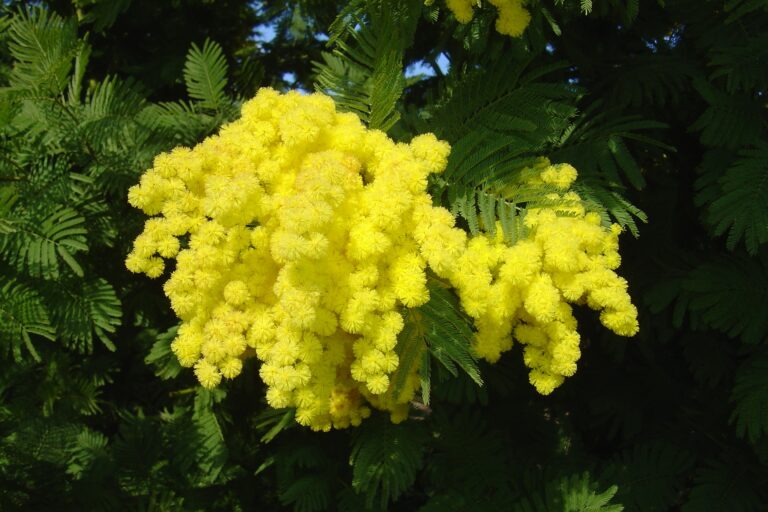
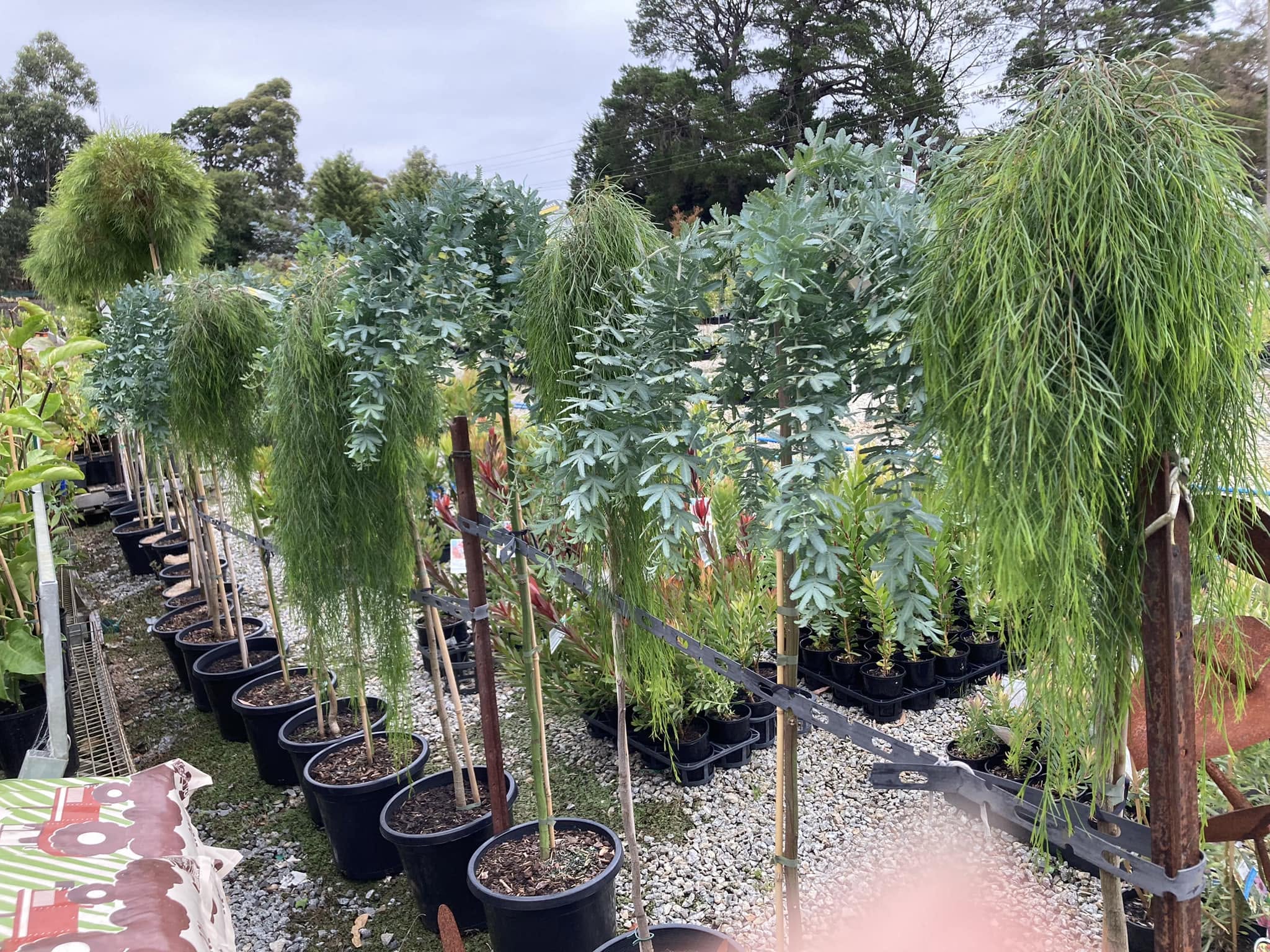
Acacia dealbata ‘Pendula’ stands out as the most landscape-ready of the rare dealbata variations. It delivers everything you love about the standard silver wattle, but elevates it with gracefully descending branches that form a mushroom-like or fountain-style silhouette. The plant retains the classic, finely divided, silvery-green bipinnate foliage and yields profuse, intensely fragrant, globular yellow blossoms throughout late winter and early spring.
Horticultural literature generally places its mature size at roughly 2–3 metres tall with a comparable or slightly wider spread. This compact footprint makes it significantly easier to manage in a suburban garden than the towering straight species. Grafted specimens or plants trained as standards prove exceptionally striking when positioned where their cascading branches can be silhouetted against a dark evergreen backdrop, a clean rendered wall, or the crisp lines of a formal walkway.
Landscape Application: Position this choice form as a standalone small specimen tree rather than burying it in background screening. Its pale, feathery fronds and luminous yellow blooms pair beautifully with dark-leaved Crucifixion cultivars, deep green Lomandra tussocks, purple-foliaged Berberis, or the structural, blue-grey leaves of Mediterranean herbs. In mild, sheltered zones, it delivers that coveted “mimosa” look without consuming the space of a full-sized tree.
Acacia dealbata ‘Kambah Karpet’
The prostrate silver wattle
‘Kambah Karpet’ boasts an exceptionally clear pedigree among rare Acacia selections. Discovered in 1982 by R. B. Hadlow of the Australian National Botanic Gardens, it was propagated from a single, naturally occurring prostrate sport growing amidst typical upright Acacia dealbata in the Canberra suburb of Kambah.
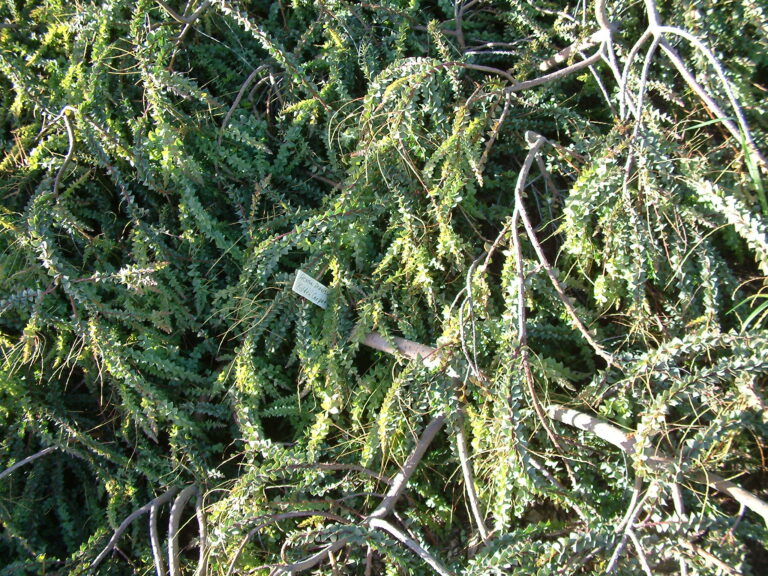
Instead of pushing skyward, this cultivar develops a dense, ground-hugging mound just 20 centimetres high while spreading up to 3 metres wide. Its mature foliage settles into a cool grey-green, while the fresh spring growth emerges a bright yellow-green. Beyond this flattened habit, its floral and foliage characteristics mirror typical A. dealbata. The Australian Cultivar Registration Authority officially recognizes it as a distinct prostrate selection, and it is fully catalogued within the Flora of Australia.
Landscape Application: This plant is custom-made for the front of a dry, sun-baked slope or the lip of a retaining wall where its sweeping horizontal spread can be fully appreciated rather than crowded out. Its low, silvery mass provides a spectacular textural contrast beneath upright grass trees (Xanthorrhoea), structural kangaroo paws, or slender, open-canopied eucalypts. It delivers a soft, expansive carpet without the stiff formality of traditional groundcovers.
Acacia retinodes ‘Lisette’
A repeat-flowering mimosa, not a dealbata form
Though occasionally grouped alongside “mimosa cultivars” by distributors, ‘Lisette’ is a selection of the water wattle, Acacia retinodes, rather than Acacia dealbata. This botanical distinction alters the look completely: it sports long, narrow, willow-like phyllodes instead of the feathery, double-divided leaves of the silver wattle. More importantly, it is prized for its extended blooming cycle.
European and Irish specialty nurseries highlight ‘Lisette’ as a highly floriferous selection. It generates its fragrant yellow flower clusters intermittently throughout the year rather than compressing its entire display into a single winter burst. It matures into a supple, airy evergreen shrub or small tree—typically topping out around 4 metres—and earns high marks for its ability to thrive in alkaline soils and withstand prolonged drought once established.
Landscape Application: Turn to ‘Lisette’ when your design requires a relaxed, long-season floral presence rather than a dramatic but brief winter explosion. Its open, graceful outline works beautifully in coastal gardens, oversized structural pots, or mixed shrub borders alongside rosemary, cistus, lavender, and other sun-baked Mediterranean elements.
Rare Acacia baileyana Forms
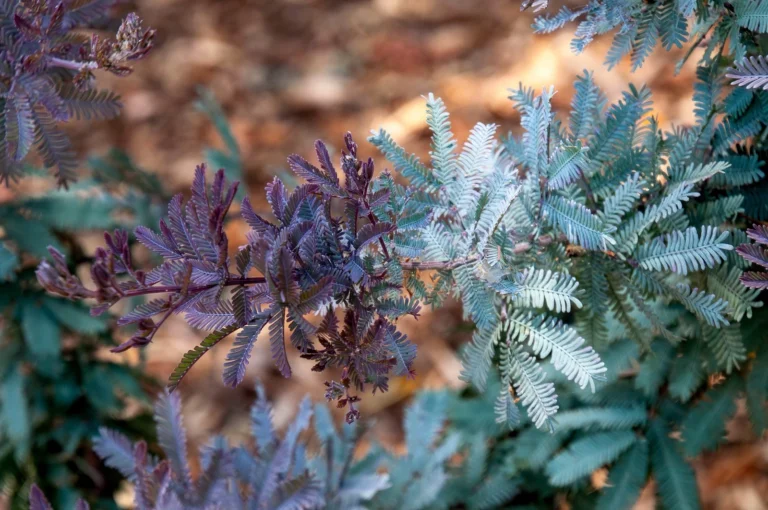
Acacia baileyana, the Cootamundra wattle, is a staple of ornamental horticulture, yet several distinctive foliage and habit mutations circulate under fluid, inconsistent trade names. The Australian Native Plants Society identifies multiple cultivated variations, including the purple-flushed ‘Purpurea’ and various low-slung, spreading forms. Labels like ‘Aurea’, ‘Rubra’/‘Rubrum’, and ‘Prostrata’ appear frequently across retail catalogs but lack uniform genetic definition.
‘Goldilocks’
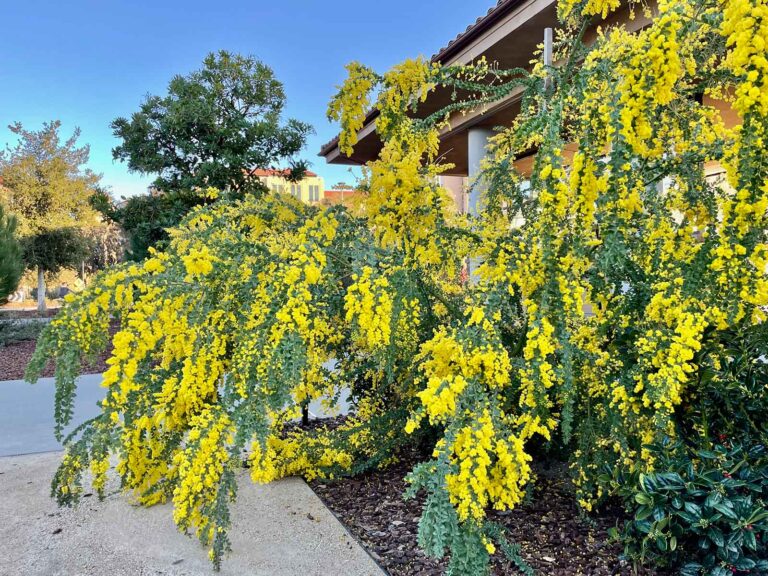
‘Goldilocks’ is a top-grafted, weeping Cootamundra wattle developed as a compact accent plant that reaches roughly 1.5 metres in height. It displays the species’ hallmark feathery, steel-grey foliage and smothers itself in masses of primrose-yellow blossoms through winter and spring.
Its defining value is its architectural silhouette. While standard A. baileyana develops into a rounded small tree, ‘Goldilocks’ cascades strictly downward. This makes it an ideal candidate for capping a structural retaining wall, grounding a raised bed, or serving as a living focal point in a formal courtyard layout.
‘Aurea’
‘Aurea’ is a golden-hued variant occasionally catalogued as Acacia baileyana var. aurea. The Royal Horticultural Society currently categorizes this name as unresolved, which serves as a practical caveat: plants purchased under this moniker can vary significantly in color intensity and may not come from a uniform clone.
Its primary draw is pure color contrast. The distinct yellow wash on the fresh growth can brilliantly illuminate a muted grey-green native planting. Be sure to position it where bright, direct sunlight can catch the shifting leaves; under dull skies, its unique coloration fades into obscurity.
‘Rubra’ / ‘Rubrum’
The terms ‘Rubra’ or ‘Rubrum’ designate selections displaying rich, reddish new growth. Much like ‘Aurea’, these names are used loosely across the nursery trade. Buyers should approach them as descriptive marketing names rather than standardized, stable cultivars.
Treat this form as a shifting color accent. The wine-red flush of emerging shoots against the older, steel-blue fronds creates a painterly, warm effect that breaks up monochromatic green spaces. Think of it as a collector’s curiosity rather than a substitute for the more stable and proven purple-leafed ‘Purpurea’.
‘Prostrata’
This prostrate selection represents the most practical and hardworking of the A. baileyana variants for everyday landscaping. It knits together into a dense, sprawling carpet of silver-grey, feathery foliage, typically measuring about 1 metre high by 3 metres wide. In spring, it disappears beneath a blanket of bright yellow ball-flowers.
It excels when tasked with covering expansive territory: think steep embankments, large rock outcroppings, or the top edge of a stone retaining wall where its heavy horizontal branches can drape downward. It is exceptionally tough and vigorous, though its eventual 3-metre footprint requires adequate breathing room.
Dwarf and Weeping Acacia cognata Cultivars
The Acacia cognata complex represents the commercial heart of the foliage-driven wattle market. Rather than being grown for their flowers, these cultivars are selected for their hair-like, pendulous, often chartreuse foliage and compact, neatly mounded or cascading forms. The Australian Plants Society recognizes an expanding roster of compact selections, with ‘Limelight’, ‘Bower Beauty’, ‘River Cascade’, and ‘Waterfall’ leading the field.
While these unique aesthetic variants require highly targeted positioning in your design layout, you should consult our comprehensive Master Genus Page for Acacia Cultivation to review the universal protocols for proper soil preparation, drainage criteria, and seasonal feeding schedules that keep their delicate foliage vibrant.
‘Limelight’: The Flagship
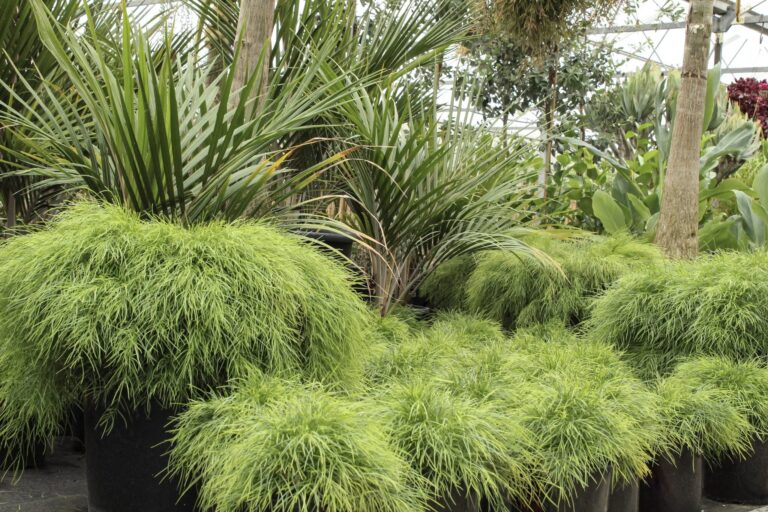
‘Limelight’ remains the gold standard of the group. This exceptionally compact, dense, weeping bower wattle forms a tight dome of electric, lime-green foliage that generally tops out around 50 centimetres high. It is highly favored for path edging, massed geometric groundcovers, and minimalist patio containers where its vivid color registers as a plush, luminous cushion.
Its design brilliance lies in high-contrast juxtapositions. Group it against charcoal pavers, rusted weathering steel, dark green companion planting, or deep purple shrubs, and its chartreuse foliage instantly organizes the entire space. When container-grown, its flawless dome structure makes it a premier foliage accent.
‘Bower Beauty’
‘Bower Beauty’ matches the neat, weeping presentation of ‘Limelight’ but distinguishes itself with rich bronze and orange tones on the emerging growth. It features slightly broader foliage strands than its counterpart and is widely recognized for its superior frost resilience.
Deploy this cultivar where you want subtle, shifting warm tones rather than a static block of bright green. The copper-tinted tips bring a sense of movement to the front of a native border or a premium courtyard container, particularly when paired with cool grey foliage or dark-stemmed companion plants.
‘River Cascade’
‘River Cascade’ steps up the scale, offering a larger, more assertively pendulous profile than ‘Limelight’. The Australian Native Plants Society notes its deep green, weeping foliage and highly dense interior structure, with a mature height ranging between 75 centimetres and 1.5 metres. It is particularly well-suited for low, informal hedging.
This cultivar excels at structural tasks. Use it to create a soft, undulating low hedge, a rounded mass to anchor a garden bed transition, or a tactile green presence right at the edge of garden steps and pathways. It looks less like a manicured cushion and more like a fluid, architectural shrub.
‘Waterfall’
‘Waterfall’ is the most dramatically pendulous selection of the entire cognata family. It produces long, bright green, trailing tresses that can plunge 2 to 2.5 metres downward, making it a spectacular tool for vertical landscaping.
Unlike ‘Limelight’ or ‘Bower Beauty’, this form refuses to stay in a neat mound. Its true value is pure verticality. Plant it where it can spill unchecked over a raw concrete retaining wall, a steep drop-off, or a tall, minimalist planter, creating a living green curtain.
Acacia pravissima ‘Kuranga Cascade’
Cascading Ovens wattle
‘Kuranga Cascade’ is a stellar prostrate mutation of the Ovens wattle, Acacia pravissima. It yields a powerful, spreading groundcover defined by the species’ unmistakable, geometric, triangular grey-green phyllodes, which disappear beneath a sea of bright yellow ball-flowers in late winter and early spring.
Data from Kuranga Native Nursery puts its typical dimensions at 20–30 centimetres high with a 1.5–2.5 metre spread, though well-established specimens in ideal conditions can easily extend across 3 metres. Its sharp, architectural foliage provides a much bolder texture than the fine, needle-like presence of the A. cognata selections.
Landscape Application: This is the absolute premier choice when a steep slope requires both bulletproof evergreen coverage and a show-stopping seasonal flower display. The unique triangular phyllodes lend a sculptural, graphic quality that enhances large-scale rockeries, dry embankments, and the crowns of masonry retaining walls. It is jaw-dropping when allowed to trail over natural stone or clean concrete edges.
The Designer’s Match Matrix
- For a compact, weeping mimosa specimen tree: A. dealbata ‘Pendula’.
- For a shimmering silver groundcover to hold a bank: A. dealbata ‘Kambah Karpet’.
- For continuous, year-round blooming and an airy, casual shape: A. retinodes ‘Lisette’.
- For a strictly weeping, architectural Cootamundra wattle accent: A. baileyana ‘Goldilocks’.
- For adventurous color contrast experiments: A. baileyana ‘Aurea’ or ‘Rubra’/‘Rubrum’.
- For a reliable, cold-hardy, spreading silver carpet: A. baileyana ‘Prostrata’.
- For a vibrant cushion of chartreuse in a premium pot or border foreground: A. cognata ‘Limelight’ or ‘Bower Beauty’.
- For a tactile low hedge or structural foliage mass: A. cognata *‘River Cascade’.
- For a dramatic, long-tailed green curtain over hardscapes: A. cognata ‘Waterfall’.
- For a bold, geometric, heavily flowering native groundcover: A. pravissima ‘Kuranga Cascade’.
Ultimately, these elite selections reward a deliberate designer rather than a casual planter. While their spring blossoms share a familiar golden warmth, their growth habits are wildly diverse. Introducing a weeping crown, a silver carpet, a copper-tipped mound, or a cascading green curtain has the power to completely redefine the architectural narrative of your garden.