The Winter Mimosa Masterclass: Why Acacia dealbata ‘Gaulois Astier’ Rules the Cold Season
Acacia dealbata ‘Gaulois Astier’ is a true aristocrat among winter-flowering woody plants. This coveted French mimosa cultivar is highly prized for its deeply divided, lustrous, dark green foliage and heavily scented, golden-yellow flower clusters. Unlike its wild relatives, it boasts a well-behaved, non-suckering root system. For gardens in mild regions or for spacious containers on protected terraces, this evergreen treasure injects a luminous, sun-drenched Mediterranean quality into the landscape at the exact moment the garden is starved for colour.
At a Glance
A Cultivar With a Commercial Pedigree
‘Gaulois Astier’ is far more than a mere botanical curiosity. It is a highly respected commercial selection historically cultivated by the elite mimosistes—the specialist mimosa growers—along the sun-baked French Riviera for the premium cut-flower trade. Representing a refined selection or “declination” of the older French classic ‘Gaulois’, this plant has long been a staple of seasonal French nursery exhibitions during its spectacular February and March blooming window.
The enduring commercial success of this variety stems from an exceptional harmony of desirable traits. It pairs incredibly abundant, perfume-rich blossoms with an upright, structural framework ideal for clean harvesting. Furthermore, it exhibits robust vigor without the structural headaches of the wild species; when properly grafted, it remains entirely free from the aggressive, invasive suckering that plagues standard seed-raised mimosas. Consequently, it transitions beautifully from a high-value florist’s crop to a dramatic, dependable architectural feature in the home garden.
Foliage: The Defining Difference
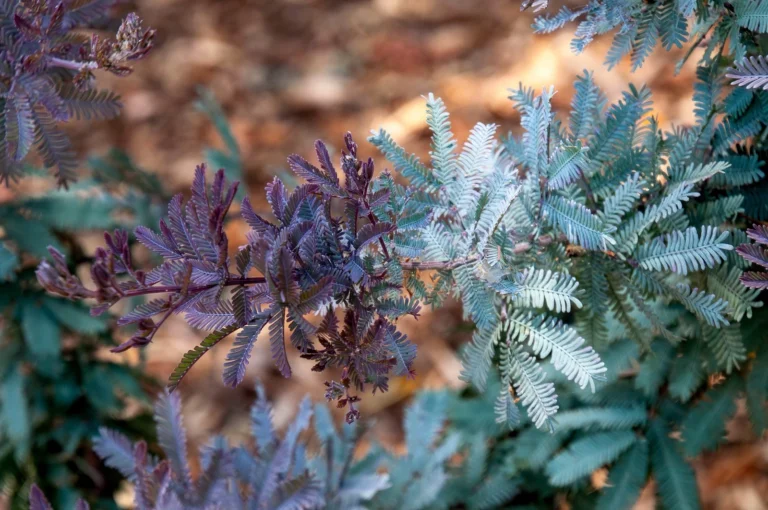
To appreciate the true genius of ‘Gaulois Astier’, one must look closely at the leaf surface. While the parental cultivar ‘Gaulois’ displays deep green, matte foliage, ‘Gaulois Astier’ elevates the display with darker, intensely polished leaves that sport a distinct, lacquered sheen.
This evergreen canopy is finely dissected into thousands of tiny leaflets. The resulting feathery texture acts as a delicate living scrim, dappling and filtering ambient light rather than blocking it out completely. While some specialist mimosa nurseries highlight the deep, varnished green of the mature leaves, others describe the overall effect as silvery-grey and fern-like. This visual tension simply reminds us that changing light, leaf age, and local growing conditions will beautifully shift how the foliage reads in the garden throughout the seasons.
From a design perspective, this exquisite, fine texture offers supreme contrast potential. The delicate, fringed leaflets provide an ideal foil for broad-leaved evergreens, bold architectural plants, and coarse-textured shrubs. Simultaneously, that deep, polished leaf surface provides a rich, dark backdrop that makes the brilliant winter flowers appear exponentially more luminous.
Flowers and Seasonal Presence
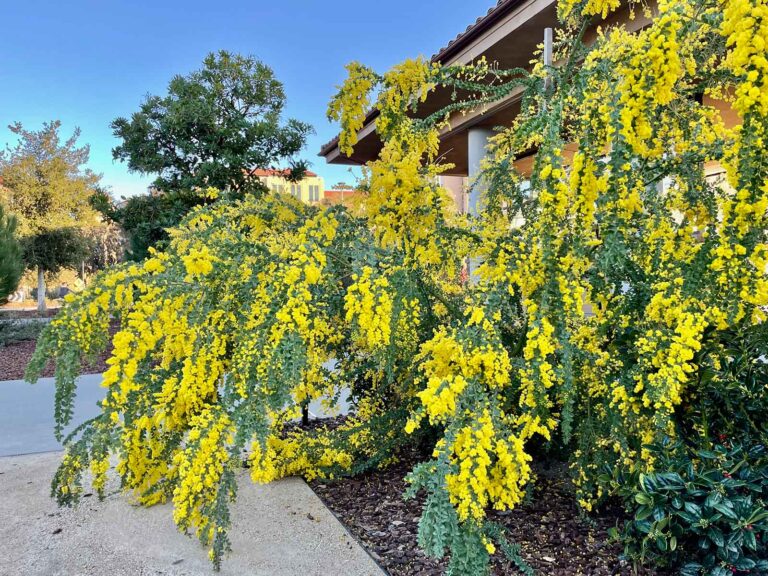
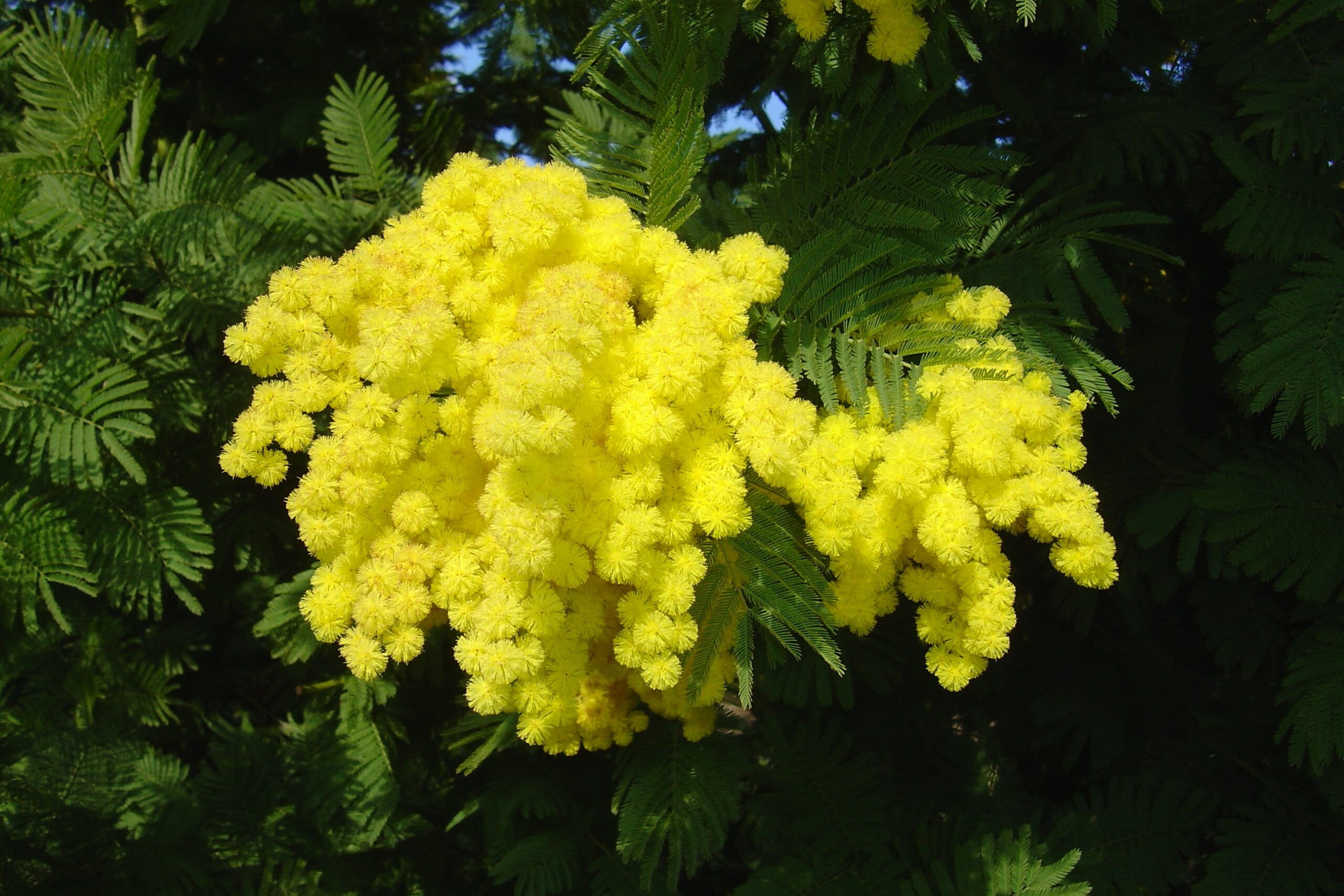
As winter begins its slow retreat into early spring, ‘Gaulois Astier’ erupts into a breathtaking display of small, spherical, silky golden-yellow flower heads, tightly packed into showy terminal and axillary clusters. The blossoms possess a deeply intoxicating fragrance and a plush, velvety texture—the exact qualities that earned Acacia dealbata cultivars their legendary status in international flower markets.
There is nothing subtle about this midwinter performance. Set against the highly polished, dark canopy, the exploding yellow clusters look very much like captured sunlight. This dramatic show makes the cultivar an invaluable anchor for the winter landscape, creating an unforgettable sensory experience when positioned near frequently used garden paths, entrance courts, intimate courtyards, or sheltered seating areas.
Mature Form and Scale
Given 10 to 20 years to reach maturity, ‘Gaulois Astier’ typically develops into a handsome specimen standing 4–8 metres tall with a spread of 2.5–4 metres. Master French growers describe it as an upright, rapid grower that can easily stretch to 8 metres or more under optimal conditions, gradually relaxing into a broader, more rounded crown as the decades pass.
This versatile scale allows the plant to fulfill several distinct roles within a thoughtful landscape design:
- Small Garden Tree: A single, well-placed specimen delivers year-round evergreen structure, high-impact winter blooms, and a canopy of soft, filtered shade.
- Large Shrub or Informal Screen: Its dense yet airy foliage effectively softens harsh property boundaries and establishes a light, kinetic backdrop for other plantings.
- Wall-Side or Courtyard Subject: When tucked into a sunny, protected microclimate, it provides urban and courtyard gardens with a striking vertical accent just when the rest of the garden is asleep.
- Large-Container Specimen: This variety is highly recommended for patio pot culture, offering an elegant solution for gardeners who need to move marginal plants out of harm’s way when freezing weather threatens.
Landscape and Design Uses
‘Gaulois Astier’ performs at its peak when given a clear seasonal assignment: to provide rich perfume, brilliant gold color, and delicate evergreen texture during the quietest, grayest months of the year. Because of its upright habit and ultimate scale, it reads far more convincingly as a standalone small tree or substantial shrub than it does squeezed into a conventional, low-profile mixed perennial border.
To maximize its visual impact, consider partnering it with:
- Dark Evergreens: Structurally solid companions like Pittosporum, Elaeagnus, or large-leaved Camellia selections offer an unyielding, deep background that coaxes the yellow blooms into sharp relief.
- Silver and Grey Foliage: Textures from rosemary, Santolina, Cistus, or hardy olives beautifully echo the mimosa’s native Mediterranean associations.
- Winter-Flowering Shrubs: Witch hazels, wintersweet, or ultra-early camellias can be used to extend the cold-season interest without competing directly for the same vibrant yellow color palette.
- Architectural Grasses: The fine, dancing leaflets of the mimosa offer a spectacular textural contrast against the rigid, vertical lines of Miscanthus or other substantial ornamental grasses.
Because this plant will eventually command significant physical presence, it should always be sited where its maturing crown has room to expand naturally, rather than being forced into a claustrophobic, narrow bed. It is a natural fit for sophisticated city plots, sheltered courtyards, relaxed cottage gardens, expansive flower borders, and prominent patio containers.
How It Differs From the Species
The wild species Acacia dealbata is well known for its frosty, blue-green foliage and its incredibly aggressive ability to regenerate from the base. Horticultural experts frequently caution that the straight species suckers profusely from its roots, a problematic habit that can make it unacceptably invasive in warm, hospitable climates.
In contrast, ‘Gaulois Astier’ is almost exclusively propagated by grafting onto specialized rootstocks, resulting in plants that are dependably non-suckering. This represents an enormous practical advantage for home gardeners who crave the classic winter beauty of a French mimosa but refuse to battle an invasive, creeping root system.
Hardiness and Site Character
In general cultivation, ‘Gaulois Astier’ is rated as a plant for coastal or exceptionally mild maritime gardens, typically thriving where winter minimums hover safely between -5 and -1°C. It demands a warm, south- or west-facing aspect that is well-protected from searing wind, as cold exposure can quickly ruin the delicate flower buds.
Experienced French growers often report that well-established, perfectly drained specimens can withstand brief drops down to -8 or -10°C without catastrophic failure. However, these figures should be taken as helpful historical context rather than an absolute ironclad guarantee; actual winter survival depends heavily on localized wind exposure, soil drainage efficiency, plant maturity, and the integrity of the graft union itself.
For those gardening in Rochdale or across the less forgiving inland expanses of northern England, prudence dictates treating ‘Gaulois Astier’ as a candidate for a highly coddled, sun-drenched microclimate—or, better yet, as a prized subject for a large, moveable container. It is absolutely not a plant destined to survive unprotected on an exposed, windswept upland site or tucked into a stagnant frost pocket.
Container Value
The innate adaptability of ‘Gaulois Astier’ to container culture is arguably one of its most liberating traits. It is tailor-made for life in a substantial patio pot. For gardeners navigating colder, frost-prone microclimates, this container flexibility allows the plant to be easily shifted into a bright, frost-free conservatory, greenhouse, or outbuilding when severe winter weather arrives.
Maintained in a large pot, ‘Gaulois Astier’ becomes a dynamic, moveable feast for the senses. It can spend the warm summer months basking on a sun-drenched terrace or courtyard, and then be wheeled against a warm, protective house wall or brought entirely under glass when prolonged, deep freezes are predicted. Its naturally upright architecture also allows you to establish a dramatic, temporary Mediterranean focal point without permanently dedicating precious garden real estate to a cold-sensitive tree.
What Makes It Worth Growing
‘Gaulois Astier’ easily commands a premium position among cultivated mimosas because it successfully unifies a suite of virtues rarely found in a single plant. It delivers richer, far glossier foliage than standard ‘Gaulois’, an overwhelming abundance of fragrant winter blossoms, a well-behaved, non-suckering grafted root system, and a natural willingness to thrive within the confines of a patio container.
Ultimately, this cultivar belongs in the hands of gardeners who want an elegant, fine-textured evergreen capable of staging a spectacular, defiant performance in the dark of winter—and who can provide the sunny, protected sanctuary this Riviera classic needs to truly thrive.
For baseline cultivation—position, soil, watering, feeding, pruning, and winter protection—see the Master Growing Guide for Acacia .