Meet ‘Golden Carpet’: The Prostrate Wattle That Reclaims Your Garden’s Ground Plane
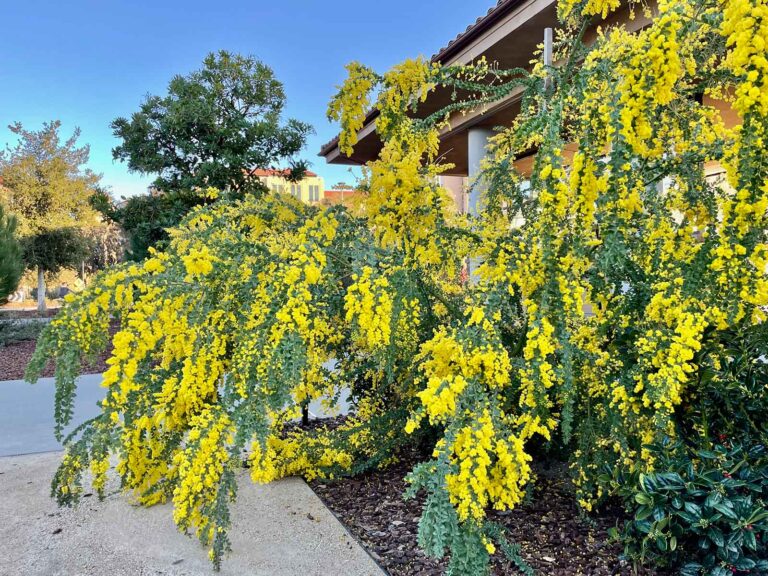
If you know the classic Ovens wattle (Acacia pravissima), you likely picture a tall, elegant, arching shrub or small tree that commands attention at eye level. But nature occasionally throws a curveball. Enter ‘Golden Carpet’—a rare, prostrate mutation that takes all the fine-textured beauty of the parent species and pins it flat to the earth.
Instead of reaching for the sky, this remarkable cultivar behaves like a living architectural carpet. It hugs the ground at a mere 0.4 to 0.5 metres tall, yet possesses the muscle to sprawl across a staggering 4.5 to 6 metres. For gardeners dealing with awkward slopes, bare banks, or stark retaining walls, this evergreen powerhouse offers a dramatic horizontal design solution that explodes into a sea of gold just when the rest of the winter garden is asleep.
At a Glance
| Trait | ‘Golden Carpet’ |
|---|---|
| Botanical name | Acacia pravissima ‘Golden Carpet’ |
| Family | Fabaceae (pea/legume family) |
| Common name | Ovens wattle |
| Habit | Prostrate, dense, spreading and arching |
| Typical height | About 0.4–0.5 m |
| Typical spread | About 4.5–6 m |
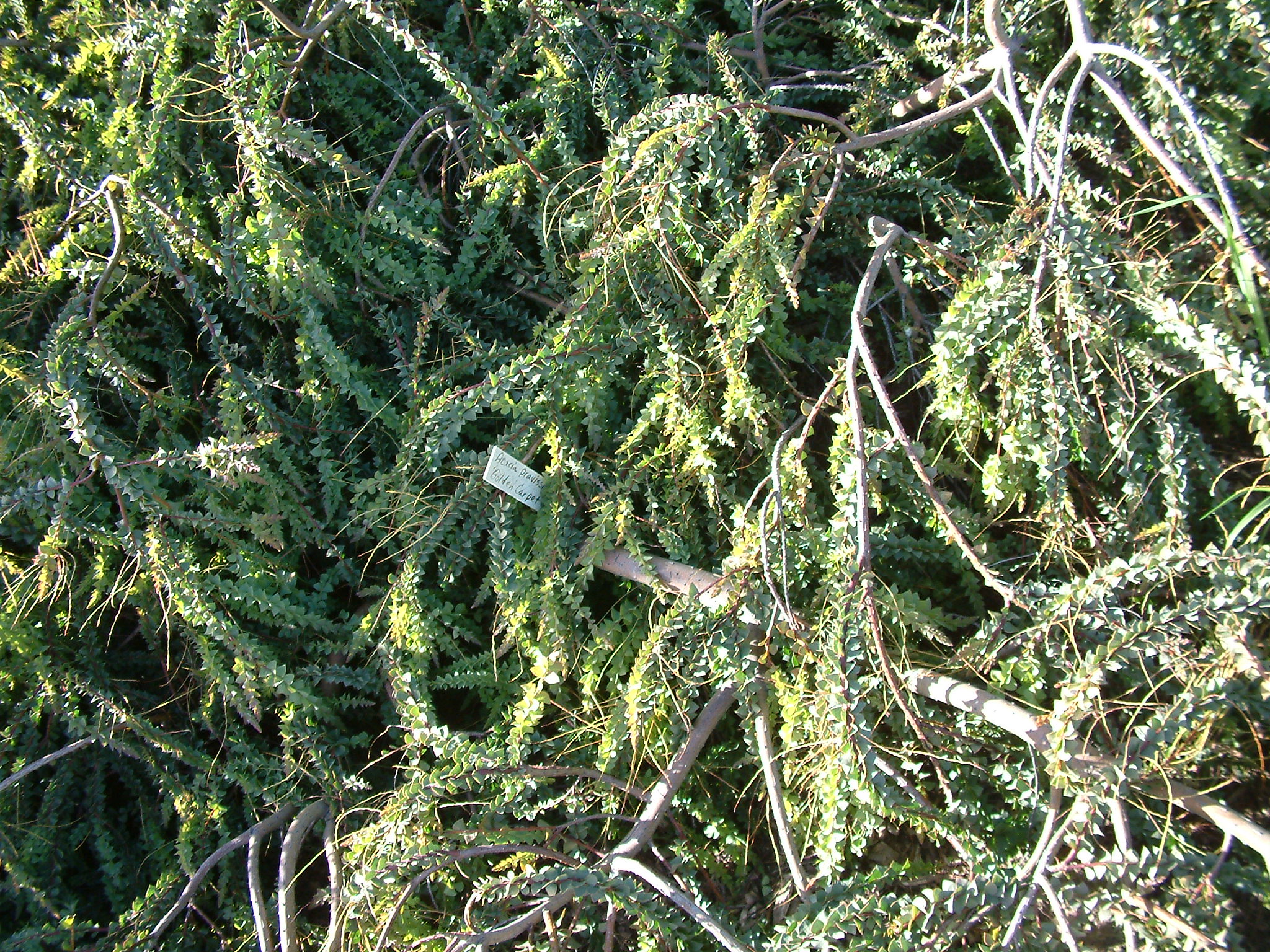
| Foliage | Small, triangular, green to grey-green phyllodes |
| Flowers | Profuse golden, globular heads in late winter and spring |
| Best garden roles | Groundcover, wall spill-over, bank stabilisation, large containers, low foreground planting |
| Evergreen? | Yes |
Shifting the Horizon: Why This Cultivar Stands Out
To appreciate the genius of ‘Golden Carpet’, you have to look to its origins. The wild species, Acacia pravissima, hails from the rugged, high-country terrains of south-eastern Australia—stretching from the areas near Tumut in New South Wales, through the Australian Capital Territory, and tumbling down into Victoria. Out in the bush, it naturally matures into a substantial 3 to 8-metre structure defined by slender, gracefully weeping branches. Gardeners love it for its sharp, wedge-shaped foliage and reliable winter brilliance.
‘Golden Carpet’ inherits that same signature texture and luminous floral display but completely rewrites the spatial rules. By compressing its vertical growth into a dense, layered mat of woven branchlets, it transforms a towering forest native into a broad, horizontal design element. Standing only about 400 millimetres high but pushing out up to 6 metres wide, it breaks the mold of traditional wattles, giving landscape designers a structural ground plane capable of delivering immense seasonal drama.
A Chance Discovery in 1969
This plant wasn’t engineered in a high-tech modern breeding program. Instead, it is a testament to the sharp eyes of keen plantsmen. Around 1969, this prostrate anomaly was discovered as a chance seedling nestled inside a routine batch of standard Acacia pravissima crop. Recognising its immense garden potential, growers preserved the line, and the Australian Cultivar Registration Authority officially logged the plant for registration on 7 September 1977.
The original registration documents detail the precise anatomy that makes this selection so distinct. It records a ground-hugging habit capping out at 400 millimetres high and extending 6 metres across. The tiny, triangular phyllodes measure a neat 10 millimetres long by 8 millimetres wide, each terminating in a characteristically sharp lower point. When the blooming cycle hits, it covers itself in spherical, bright yellow flower heads that measure roughly 4 millimetres in diameter. Today, it remains formally recognised in botanical literature as the definitive prostrate cultivar for the species.
Foliage: A Fine, Blue-Green Mosaic
While the flowers grab the headlines, the foliage does the heavy lifting for the remaining nine months of the year. Like many Australian acacias, ‘Golden Carpet’ swaps traditional leaves for phyllodes—modified, flattened leaf stalks that function with maximum efficiency in challenging climates. These small, wedge-shaped structures crowd tightly along every branchlet, shifting in tone from a crisp green to a cool, smoky grey-green depending on the light.
Up close, the visual texture is captivating. Unlike the soft, sweeping needles of prostrate conifers, this wattle creates a sharp, geometric mosaic. Under full sun, the interlaced branches form a tight, woven tapestry that serves as a brilliant foil for contrasting garden textures. The inherited wedge-like silhouette—mirroring the wild species’ asymmetrical, 7 to 12-millimetre obdeltate form—creates a structured surface that beautifully offsets broad-leaved perennials, ornamental grasses, and deep green evergreen companion shrubs.
Flowers: Winter Light on a Horizontal Plane
The true magic happens when the temperature drops. According to records from the Botanic Gardens of South Australia, ‘Golden Carpet’ kicks into gear during the depths of winter, extending its show straight through into spring. The parent species is famous for its prolific, arching racemes of golden, spherical heads, and this low-slung selection matches that intensity bud for bud.
Because ‘Golden Carpet’ keeps its head down, that brilliant yellow display is laid out like a massive, glowing blanket across the floor of your garden rather than lost up in a tall canopy. Positioned along a garden walkway or perched at the crest of a steep drop, it unfurls a broad ribbon of pure gold at a time when most traditional landscape plants are completely dormant. Beyond its sheer beauty, this off-season bloom serves as an invaluable ecological lifeline, drawing in native birds and hungry insects when alternative food sources are scarce.
Strategic Placement and Smart Landscape Design
Make no mistake: this is a plant engineered for scale, grand gestures, and dramatic level changes. Given its sprawling mature footprint, ‘Golden Carpet’ should never be crammed into a tight border or used as a delicate path-edging perennial. It demands room to stretch, flow, and spill.
- Retaining Walls and Terraces: Position it right at the masonry brink. Watch its heavy, layered branches cascade straight over the edge, softening the cold lines of stone, poured concrete, or industrial gabions.
- Slopes and Embankments: It excels at erosion control. The dense, spreading habit anchors shifting soil on steep banks, highway batters, public verges, and challenging hillside terrains.
- The Dry-Style Border: Use it to establish a wide, low-maintenance foreground tier. It sits beautifully beneath upright Australian natives, drought-tolerant Mediterranean shrubs, or tall, architectural grasses.
- Large Display Containers: The original registration notes highlight its exceptional performance in heavy pottery. Planted in large statement pots, it creates an impressive mound of architectural foliage that breaches the rim and sweeps down the sides.
- Coastal-Adjacent Settings: Capable of handling moderate coastal exposure, this cultivar is a prime candidate for secondary maritime zones just behind the primary, salt-blasted beachfront.
For the highest visual impact, play with contrast. Pair its fine, angular, grey-green foliage against bold, structural partners like large-leaved Echium, Cistus, Westringia, or striking Grevillea selections. To make that winter gold truly pop, back it with deep plum, glaucous blue, or rich, dark green backdrops.
Managing Scale: The Importance of Spacing
When integrating this plant into your plans, respect its potential breadth. Leading Australian horticultural authorities consistently clock its mature size at 0.4 to 0.5 metres high with a 4.5 to 5-metre spread, while the original registration benchmarks show it can easily top out at 6 metres under ideal conditions.
Because a single specimen can easily claim several square metres of real estate, treat it as a standalone feature groundcover or space mass-plantings with a generous, forward-thinking hand. It is the ultimate asset for areas where you need to preserve open sightlines without sacrificing structural interest. However, if you try to tuck it into a restricted garden bed, it will eventually overrun its neighbors and demand the space it rightfully deserves.
Tough, Functional, and Full of Character
At its core, ‘Golden Carpet’ embodies the ultimate rugged, sun-drenched, dry-garden aesthetic. It is evergreen, intricately textured, and unflinching in the heat. The Botanic Gardens of South Australia recommends it heavily for everything from residential groundplanes to demanding public works—including nature strips, open embankments, roadside verges, and high-visibility traffic roundabouts.
Its performance profile is stellar: it takes punishing droughts in stride, tolerates alkaline lime soils, shrugs off moderate frost, and adapts to a wide spectrum of soil textures. Pair this bulletproof reliability with its role as an invaluable evergreen habitat plant for local wildlife, and it is easy to see why this cultivar has transitioned seamlessly from private collectors’ gardens to robust civic landscapes.
Baseline Cultivation
To get the most out of your plant—including critical tips on initial planting techniques, establishment watering schedules, soil preferences, light pruning, and regional climate adaptations—make sure to consult our comprehensive Master Growing Guide for Acacia. Combining those universal generic principles with the specific spatial requirements of ‘Golden Carpet’ will ensure your cascading wattle thrives for years to come.