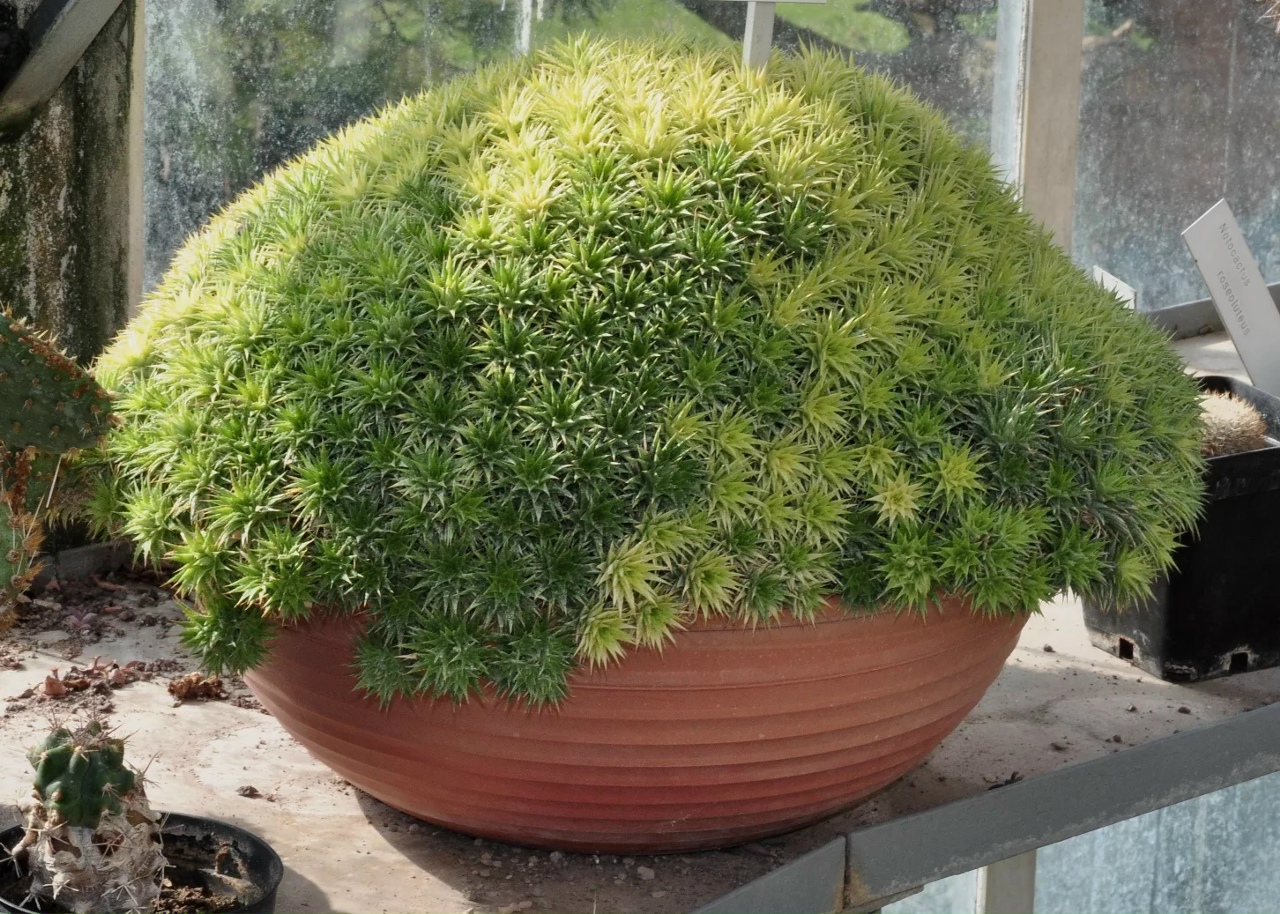
The Living Green Cobblestone: How to Grow and Design with Deuterocohnia brevifolia
Step away from traditional ideas of the bromeliad family, and you will find the fascinating Deuterocohnia brevifolia (Griseb.) M.A. Spencer & L.B. Smith. Belonging to the Bromeliaceae family and nested within the terrestrial Pitcairnioideae subfamily, this plant has undergone some taxonomic shuffling.
For decades, collectors knew it as Abromeitiella brevifolia. You will still frequently run into the name Abromeitiella chlorantha—or Abromeitiella brevifolia subsp. chlorantha—when browsing specialty nurseries. These names point to a smaller, more intricately toothed expression of the plant. Horticulturalists generally agree that this variant belongs under the main species umbrella rather than standing alone.
This shift from Abromeitiella to Deuterocohnia represents a broader modern effort by botanists to streamline the genus. By grouping these unique cushion-forming species together with their close relatives, taxonomists have given us a clearer picture of how these fascinating succulents evolved.
Native Range and Habitat
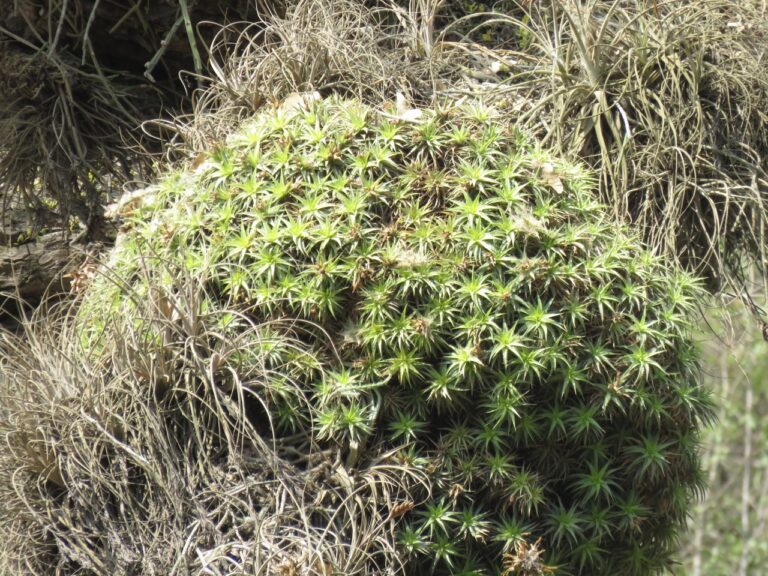
To understand the unique shape of this plant, you have to look to its homeland high in the arid Andean ridges of Argentina and Bolivia. Out in the wild, it clings directly to exposed rocky slopes and wedges itself into tight mountain crevices.
Survival in these harsh, sun-baked highland environments requires a completely different strategy than the tall, water-collecting vases of tropical jungle bromeliads. Instead, this species hugs the earth, multiplying into thousands of tightly packed offsets that form a dense, continuous carpet. It thrives in bright, wide-open sunlight and handles long droughts by drawing vital moisture from passing mountain fogs.
What the Plant Looks Like
Dense Cushions of Rosettes
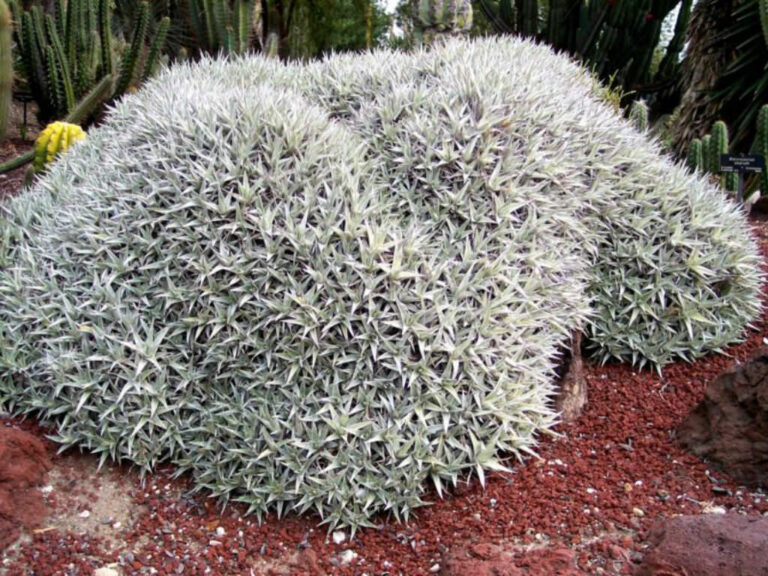
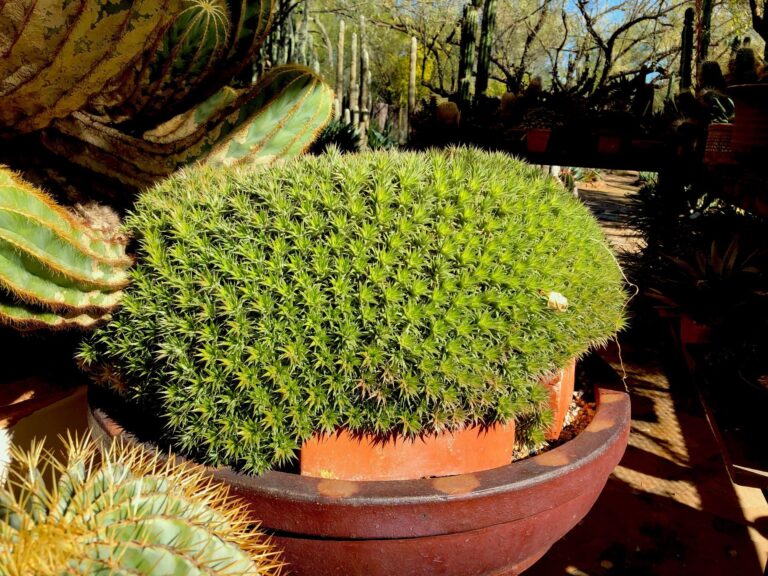
The true magic of D. brevifolia lies in its incredible, colony-building architecture. Individual rosettes are tiny, rigid, and completely crowded together. Over time, they swell into a perfectly rounded, dome-shaped cushion. Give a mature specimen a few years in a container, and it will completely spill over the rim, looking exactly like a living, green basketball sliced in half.
When planning its place in your garden, think about width rather than height. A happy colony can eventually spread out to an impressive 60–90 cm across, though you will mostly see smaller, tightly contained specimens in typical collections. It makes its visual statement through sheer density and surface texture, expanding outward as a beautiful, living ground-hugger.
Leaf Texture
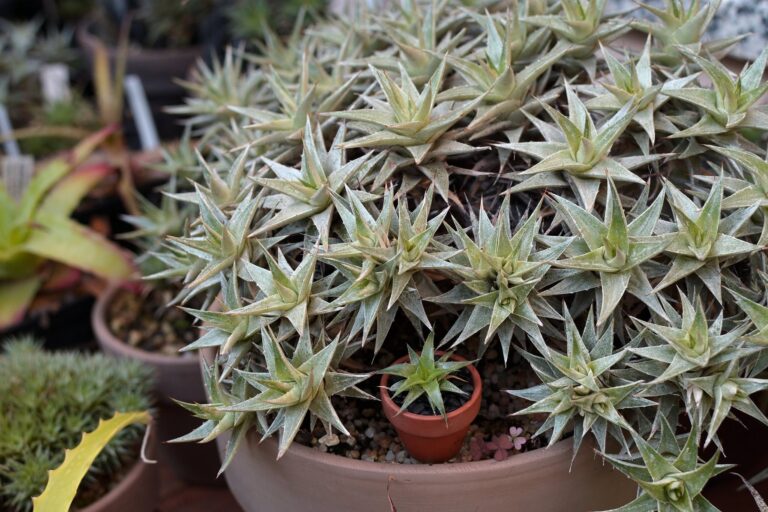
Each individual leaf is short, triangular, incredibly fleshy, and tipped with a sharp point. Their coloration is a beautifully muted gray-green, giving the entire mound a mineral quality that looks striking against rough stone, gravel, weathered wood, or dark terracotta.
Up close, the foliage feels tough and protective, with thousands of tiny, repeating points creating a finely spined shield. From a distance, this fierce texture softens beautifully, tricking the eye into seeing a soft, mossy mound. Because it lacks the central water-holding cup of its tropical cousins, it stores moisture directly inside its succulent leaves. This rugged, minimalist look makes it a perfect companion for desert cacti and other extreme xeric plants.
Flowers
When spring or summer arrives, the cushion produces small, tubular, emerald-green flowers. They emerge subtly against the leaves, offering a delicate botanical detail for the observant gardener rather than a loud, showy display. Flowering times can shift depending on your local climate, greenhouse temperatures, and the overall age of the colony.
Unlike many popular bromeliads that die after a single bloom cycle, a flowering rosette in a Deuterocohnia colony does not mean the end of the road. The plant simply keeps pushing out new offsets, ensuring the cushion grows denser year after year.
Deuterocohnia brevifolia f. chlorantha
Appearance and Status
If you happen to find a specimen labeled Abromeitiella chlorantha or Abromeitiella brevifolia subsp. chlorantha, you have found a wonderful, micro-scale variation of the species. Horticulturally, it shares the exact same growth habits and climate preferences as the standard species, but offers a few distinct visual treats for the observant eye.
- Rosette scale: The individual rosettes are noticeably smaller, often hovering around 3 cm across compared to the typical 2.5–4 cm of the standard species.
- Leaf margin: The edges of the triangular leaves are lined with tiny, visible teeth, ending in a sharp little terminal spine.
- Surface texture: Because the rosettes are so small and tightly packed, the overall cushion has a much finer, more intricate, and slightly bristly texture.
Garden Significance
For collectors who love the fine details of alpine or succulent plants, the chlorantha form is a must-have. Viewed up close, its micro-rosettes create a beautiful, woven tapestry effect.
You do not need to alter your care routine or treat it as a different species, but you can use its tiny scale to your advantage. It shines brightest when tucked into small stone troughs, custom hypertufa containers, or intimate rock garden crevices where visitors can appreciate it up close. Try planting it right alongside larger-leaved succulents to create a stunning contrast in scale.
Design Uses
Rock Gardens and Scree-Style Planting
- brevifolia is a spectacular choice for dry rock gardens, especially when nestled directly into stone cracks, gravel ledges, or shallow soil pockets. Its low profile keeps your stonework center stage while adding a rich, persistent layer of gray-green texture.
To make a real impact, plant it in deliberate masses rather than as a solitary plug. A single young rosette can easily get lost visually, but a mature, spreading cushion creates an unforgettable focal point.
Consider pairing it with these excellent companions:
- Compact, broad-leaved agaves
- Small aloes to add strong vertical lines
- Low-growing echeverias and graptopetalums
- Striking blue or silver cacti
- Restrained, mat-forming sedums
- Pale gravel or crushed stone toppings that make the gray-green foliage pop
Try to avoid surrounding it entirely with other tiny, spiny plants, which can make a landscape look messy and chaotic. Instead, create balance by pairing its dense texture with smooth river stones, broad succulent leaves, or upright columns.
Container Displays
If you grow this bromeliad in containers, its spreading habit becomes a beautiful asset. As the colony expands, it breaks the harsh lines of the pottery, spilling out over the sides in a dense, rolling mound.
To showcase this growth habit, choose:
- Wide, shallow succulent bowls
- Unglazed terracotta or weathered stone troughs
- Rustic hypertufa containers
- Dark-colored pots that contrast with the pale, gray-green rosettes
- Minimalist vessels that let the plant’s natural geometry take center stage
Make sure to give it a wide planter. Deep, narrow pots cramp its style and hide its best feature: its ability to spread out into a wide, unbroken cushion.
Courtyards and Dry Modern Gardens
In mild, frost-free regions—or protected microclimates—this plant serves as a living sculpture in minimalist landscapes. Its clean geometry pairs beautifully with gravel courtyards, sharp concrete lines, geometric paving slabs, weathered corten steel, and dark volcanic rock.
It brings a wealth of design value to modern spaces, offering a reliable evergreen presence, a controlled silhouette, and a beautiful sense of structural maturity. Its quiet, desaturated color palette supports bold architectural materials without competing for attention. Position it in small, deliberate groups along the front borders of your beds, keeping it safely away from aggressive, fast-growing plants that might cast too much shade.
Conservatory and Greenhouse Collections
If you live in a cold climate, D. brevifolia makes a stellar addition to a bright greenhouse or indoor conservatory collection. Because it looks like a desert succulent but technically belongs to the bromeliad family, it is fantastic for educational displays based on plant adaptation.
It looks right at home displayed alongside:
- Terrestrial bromeliads like Dyckia and its spiny relatives
- Dwarf aloes and intricate haworthias
- Climbing or rock-dwelling cacti
- Other specialized highland desert flora
The real joy of displaying it indoors is watching people realize what it actually is. Most people expect bromeliads to have wide, glossy, tropical leaves that hold water. Discovering that this dense, rock-hard green cushion belongs to the exact same family is always a delightful surprise.
| Feature | Typical D. brevifolia | f. chlorantha |
|---|---|---|
| Overall habit | Dense, spreading cushion of many rosettes | Same cushion-forming habit |
| Rosette scale | Small, commonly about 2.5–4 cm across | Smaller, often around 3 cm across |
| Leaf margin | Triangular leaves; margins may appear relatively smooth or subtly toothed | More visibly minutely toothed |
| Terminal point | Sharp leaf tip | Small terminal spine |
| Design role | Broad textural mound and container spiller | Finer-textured collector form |
| Cultivation | Same as the species | Same as the species |
| Taxonomic treatment | Accepted species | Usually absorbed into the species concept or retained as a historical form |
Note: All measurements are approximate. The ultimate size of a colony depends on its age, your local climate, available root space, and general growing conditions.
Rare Forms and Collector’s Guide
Former Abromeitiella Names
When hunting through specialty nurseries or private collections, you will regularly run into older Abromeitiella labels. These names are incredibly valuable pieces of horticultural history, reflecting classic nursery traditions and vintage botanical literature.
Keep an eye out for these common synonyms:
- Abromeitiella brevifolia: The primary historical name for the standard species.
- Abromeitiella chlorantha: The traditional name for the micro-toothed form.
- Abromeitiella brevifolia subsp. chlorantha: An intermediate name used by past taxonomists.
- Abromeitiella pulvinata: Another intriguing historical name tied directly to this group.
If a plant comes with one of these vintage tags, keep it! It provides wonderful provenance for your collection, even if the plant itself behaves exactly like modern Deuterocohnia brevifolia.
Unnamed Andean Forms
True collectors often seek out unnamed or locality-specific plants imported directly from the high-altitude regions of Argentina and Bolivia. These specimens are incredibly important for study, conservation, and tracking distinct wild genes, especially if they come with official field collection numbers.
However, be careful with vague labels like “Andean form” if they lack verified location data. Subtle variations in rosette size, leaf color depth, or tooth sharpness are often just a reaction to the plant’s age or unique greenhouse conditions rather than a truly unique variety.
To keep your collection records truly professional, try to track:
- The original collector or specialty nursery
- The country and exact wild locality, if available
- The official field collection number
- The date it entered your collection
- Its specific flowering habits and mature mound size
- Whether it perfectly matches a published species or stands as a unique nursery selection
Baseline Cultivation Reference
While this profile focuses on design and identity, always let the plant’s wild mountain origins guide your daily care. This is a slow-growing, sun-loving, incredibly sharp-draining terrestrial plant that absolutely loathes standing water around its crown.
For comprehensive, step-by-step instructions on managing light exposure, seasonal watering schedules, winter cold protection, custom soil mixes, propagation tactics, and routine pest checks, please turn to the Deuterocohnia Master Growing Guide. The core requirements listed there apply equally to the standard species and the refined chlorantha form.
Why Grow It?
Deuterocohnia brevifolia is a specialized plant tailored for gardeners who appreciate structural precision. It will not provide massive, colorful flowers or rapid ground coverage, but it excels at slowly building a gorgeous, architectural cushion that blends desert austerity with fascinating bromeliad history.
Bring it into your collection if you want a reliable, evergreen architectural feature, a rich mineral texture for gravel beds, or a slow-burning container specimen that scales up beautifully with age. Think of the chlorantha variant not as a completely different plant, but as a wonderful texture refinement—bringing smaller rosettes and an intricate, bristly finish to your collection.