Abelia × grandiflora ‘Compacta’ – Complete Growing Guide
Every spring, homeowners march into garden centers and make the exact same mistake. They buy a flat of boxwoods or a couple of cute little evergreen shrubs, plant them right under their front windows, and spend the next ten years pruning them into rigid, boring green meatballs.
If you want a house that looks exactly like every other house on the block, stick with the boxwoods. But if you want a plant that actually works for its living, look for Compact Glossy Abelia (Abelia × grandiflora ‘Compacta’).
It is easily one of the most underrated landscaping plants out there. It gives you the graceful, fountain-like shape of the massive old-school varieties your grandmother probably grew, but it tops out at a perfectly manageable 3 to 5 feet tall and wide. If you have a smaller suburban lot, a patio that needs dressing up, or foundation plantings that need a well-behaved upgrade, this little workhorse deserves a spot on the radar.
The Backstory: Where Did It Come From?
The species name, grandiflora, literally translates to “large-flowered”. Now, to be perfectly honest, that’s a bit of an exaggeration. The individual blooms are actually pretty modest—only about half an inch to three-quarters of an inch long. But what they lack in size, they more than make up for in sheer, unstoppable volume.
What Makes It a Standout?
Months of Blooms (Without the Deadheading)
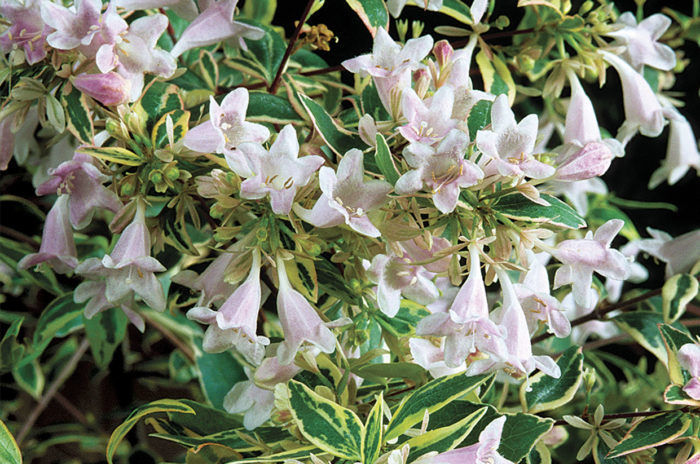
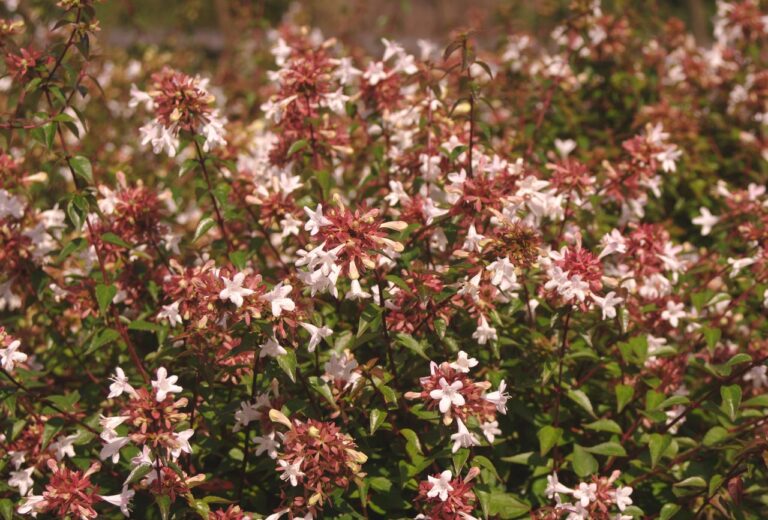
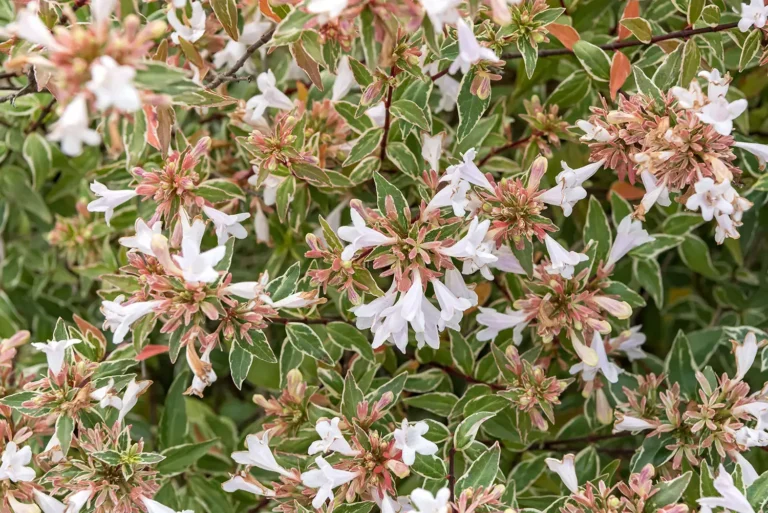
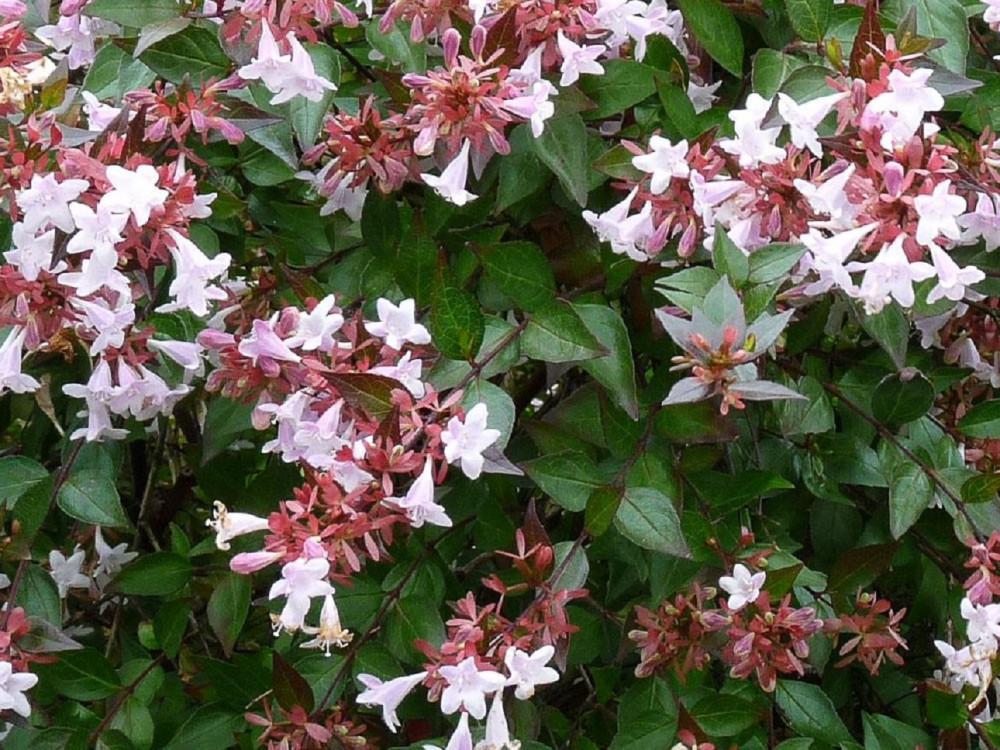
Most flowering shrubs give you two weeks of color in May and then spend the rest of the year acting like a green blob. Abelia starts pushing out clusters of little pinkish-white, trumpet-shaped flowers around June and keeps going all the way until the first hard frost. They have a soft, honey-sweet scent that brings in hummingbirds and butterflies by the dozen.
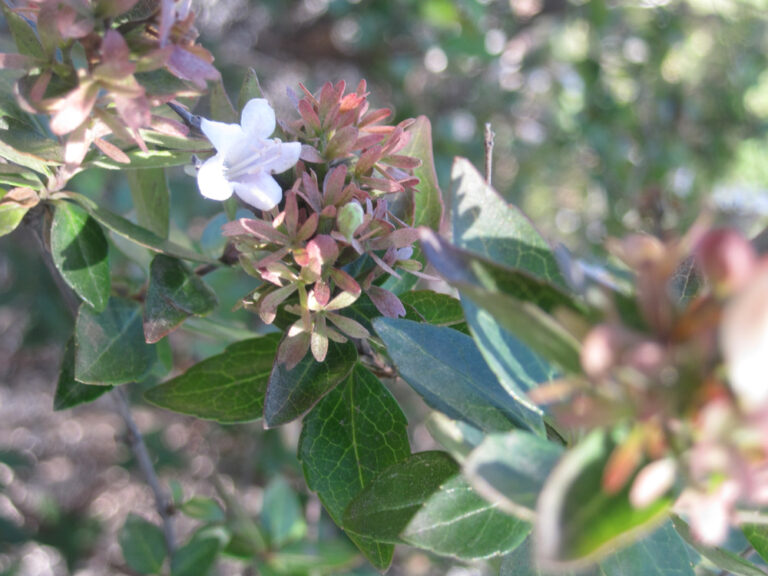
The best part? You don’t have to spend your weekends deadheading them. When the petals finally drop, the rosy-colored base of the flower (the calyx) stays firmly attached to the stem. From a distance, it looks like the plant is still in full bloom well into October.
Multi-Season Foliage
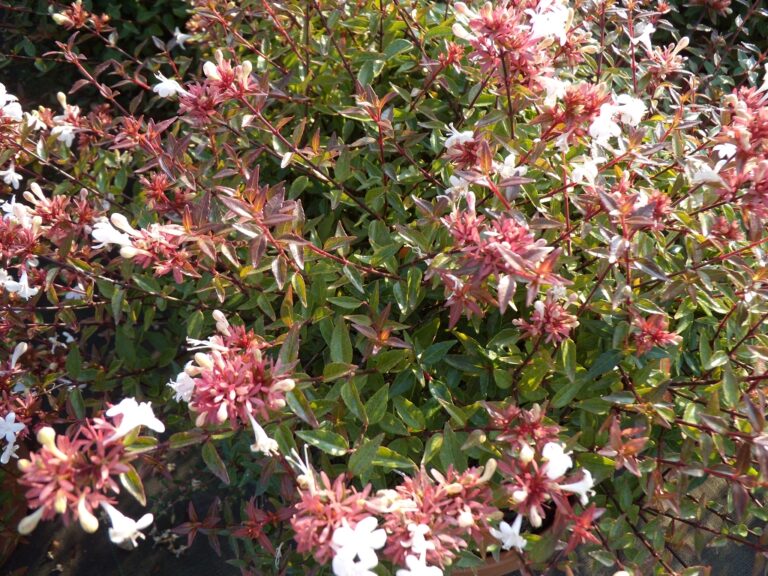
The leaves are small, egg-shaped, and have a beautiful, glossy dark-green sheen. In milder climates, it holds onto this foliage all through the winter. But the real magic happens when the autumn chill hits: those glossy green leaves shift into gorgeous, rich tones of bronze, copper, and purplish-red, giving you a spectacular late-season show before winter sets in.
The Zone Lowdown: Where Will It Grow?
-
- The South, Southwest, and West Coast (Zones 7–9): Here, it’s a reliable, semi-evergreen rockstar. It stays green and structured all winter, which is fantastic for keeping the landscaping from looking barren in January.
- The Midwest and Northeast (Zones 5–6): Out here, treat it more like a die-back shrub or a woody perennial. A nasty, sub-zero winter will likely freeze the top growth right down to the ground. Don’t panic! Come spring, it almost always pushes up vigorous new shoots from the roots, and because it blooms on new growth, it will still flower beautifully that same summer.
If you are pushing the limits in Zone 5, tuck this plant against a south- or west-facing brick wall. The building will block biting frozen winds and radiate heat back to the plant during the coldest months.
The Recipe for Success: Planting & Care
Sunlight and Soil
Water and Fertilizer
Mulching
A 2-to-3-inch layer of organic mulch (like shredded bark or compost) around the base in the spring or fall keeps the weeds down and locks in soil moisture. Just make sure to pull the mulch back a couple of inches so it isn’t directly touching the woody stems, which can invite rot.
Going Pot-to-Pot: Growing in Containers
Choose a large, sturdy pot—at least 12 to 16 inches in diameter—with excellent drainage holes at the bottom. Fill it with a high-quality, loam-based potting mix rather than cheap, heavy topsoil.
Keep in mind that containers dry out way faster than the ground. Check the pot regularly during the dog days of summer and water whenever the top inch of soil feels dry to the touch.
In cold northern zones, the roots in a pot are much more exposed to freezing air than they would be in the ground. Wrap the pot in burlap or horticultural fleece, or move it to a sheltered, unheated garage or porch for the winter.
The Golden Rule of Pruning
The absolute best time to trim it is late winter or early spring (typically February to April, depending on your zone), right as the plant is waking up.
-
- The Annual Clean-up: Take some sharp pruners and snip the previous year’s growth back by about a third to a half. This forces the plant to branch out, creating a denser, tighter shape and way more flowering tips. At the same time, snip away any dead, damaged, or crossing branches.
- Watch for “Reverts”: Every now and then, a dwarf cultivar forgets its size and throws out a wild, fast-growing, giant branch that looks like its 10-foot parents. If you see one of these rogue shoots, cut it completely out at the very base of the plant to preserve the compact shape.
- The Emergency Reset: If an abelia gets totally neglected and looks like a straggly, leggy mess after a few years, it handles “rejuvenation pruning” beautifully. You can chop the whole thing down to within a foot or two of the ground in March. It will bounce right back, looking brand new and blooming by July.
Troubleshooting: Pests and Diseases
The Good News on Pests
For the most part, bugs leave it alone. Occasionally, a few aphids might crowd around the tender new spring growth or flower buds. Honestly, it’s rarely enough to do real damage. Blast them off with a sharp stream of water from the garden hose, or spray them with an organic insecticidal soap if they become a nuisance.
Diseases to Watch For
Under normal garden conditions, it doesn’t get sick. The only real threat of note is honey fungus (Armillaria). If a garden has a history of this aggressive, root-rotting fungus, be careful, as abelias can be susceptible. It causes sudden wilting and dieback, and unfortunately, there is no cure—the plant has to be dug up and destroyed.
To prevent 99% of all plant diseases, just stick to the basics: don’t plant it in waterlogged soil, give it plenty of sunshine, and make sure it has decent air circulation around the branches.
Making More Plants: Propagation 101
Taking Cuttings
This is the most popular and reliable route. There are two windows of opportunity:
-
- Softwood Cuttings (Late Spring/Early Summer): Snip a 2-to-4-inch cutting from the tip of a fresh, green, flexible shoot, making the cut right below a leaf node. Strip off the lower leaves, leaving just a few at the top. To speed things up, dip the cut end into some rooting hormone powder. Pop it into a pot filled with a well-draining mix (like half perlite and half peat-free compost), keep it humid and warm, and it should strike roots in about 4 to 6 weeks.
- Semi-Hardwood Cuttings (Late Summer): If you miss the spring window, use the exact same process in August or September using shoots that have started to mature and woody-up at the base. They root beautifully in a humid environment away from direct sunlight.
The Easy Way: Simple Layering
To avoid messing with pots and humidity, let nature do the work right on the ground in late spring.
Find a low, flexible branch that easily reaches the dirt. Where the branch touches the ground, lightly scrape or wound the bark on the underside of the stem. Bury that wounded section about 3 to 4 inches deep in the soil, pinning it down with a landscape staple, a tent peg, or a heavy stone, while leaving the leafy tip exposed.
Keep that spot moist. Over the summer, roots will naturally form at the buried wound. By autumn or the following spring, simply snip the branch away from the parent plant and transplant the new, perfectly rooted shrub.
Designing with ‘Compacta’
Smart Ways to Use It
-
- The Non-Boring Foundation Shrub: Swap out those stiff, generic, high-maintenance boxwoods beneath front windows for a row of these. You’ll get changing seasonal colors and months of summer flowers instead of just a static green wall.
- The Soft Border or Low Hedge: Plant them about 2 to 3 feet apart along a walkway, driveway, or property line. They’ll knit together into a gorgeous, informal low screen that never feels oppressive or blocks the view.
- Mass Plantings: On a gentle slope or in a large garden bed that needs filling, grouping five or seven of these together creates a massive, rolling wave of color that looks incredible and helps stabilize the soil.
- The Pollinator Magnet: Position it near an outdoor seating area or patio to sit back and watch the parade of butterflies and hummingbirds it attracts.
Choosing Companion Plants
Texture is everything in garden design. Try pairing the fine, glossy leaves and arching habit of ‘Compacta’ with the upright, feathery blades of ornamental grasses (like Purple Fountain Grass or Switchgrass).
It also looks fantastic tucked behind sun-loving perennials that bloom around the same time. Try planting it alongside Purple Coneflowers (Echinacea), Blue Salvias, Black-Eyed Susans (Rudbeckia), or English Lavender (for a tough, drought-tolerant, ultra-fragrant pairing).
Knowing the Siblings: Other Cultivars to Look For
The Other Compact Options
-
- ‘Sherwoodii’: A fantastic dwarf form that stays around 4 feet tall but features slightly smaller leaves and a finer, more delicate texture.
- ‘Little Richard’: A true pint-sized pick that tops out around 3 feet tall and wide, forming an incredibly dense, tight ball with bright white flowers.
- ‘Rose Creek’: Known for its striking pinkish-purple winter stems and dark green foliage that takes on deep purple tints in the cold.
- ‘Confetti’: A variegated show-off with white-edged green leaves that blush pink in the winter. It’s stunning but grows a bit slower and can be slightly less winter-hardy than ‘Compacta’.
The Colorful and Full-Sized Crowd
-
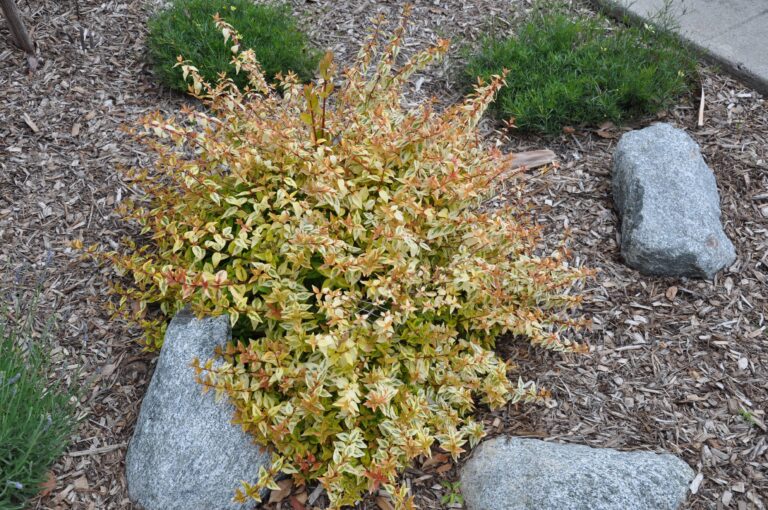
- ‘Kaleidoscope’: One of the most popular shrubs on the market, featuring brilliant yellow-and-green variegated leaves that turn fiery orange and red in the fall. It hits a similar 3-to-5-foot size.
- ‘Edward Goucher’: A classic hybrid that gets a bit larger (around 5 feet) and shows off much deeper, lavender-pink flowers, though it isn’t quite as cold-hardy as the standard glossy abelia.