Abelia × grandiflora ‘Sunrise’ – Complete Growing Guide
Every gardener eventually runs into that spot in the yard. You know the one—where the afternoon sun cuts out early, leaving a tricky patch of soil that is too dark for sun-loving favorites but just bright enough to bake traditional shade plants. For years, if you wanted a variegated shrub to brighten up those awkward transitions, you were stuck playing Goldilocks. Options like ‘Francis Mason’ bleaches to a blinding yellow in the blazing sun and reverts to a boring, solid green in the shade.
Then came a breakthrough out of Raleigh, North Carolina. In 1992, the keen-eyed team at Taylor’s Nursery noticed a spontaneous mutation—a “branch sport”—growing on a standard glossy abelia. This single branch displayed incredibly stable, golden-edged leaves and striking reddish stems. After generations of rigorous testing to ensure the mutation was stable, it was patented in 1996 (U.S. Plant Patent 9,698) as Abelia × grandiflora ‘Sunrise’.
If you are looking for a bulletproof, low-maintenance workhorse that delivers four seasons of color without throwing a tantrum, this multi-talented beauty deserves a permanent spot in your landscape.
Botany and Roots: Where ‘Sunrise’ Comes From
To understand why ‘Sunrise’ is so resilient, it helps to look at its family tree. The parent plant, Abelia × grandiflora (Glossy Abelia), is a time-tested hybrid cross between Abelia chinensis and Abelia uniflora, both native to Asia. The genus itself was named to honor Dr. Clarke Abel, an early 19th-century naturalist and physician, while grandiflora simply translates to “large-flowered.”
The botanical family is Caprifoliaceae, making it a cousin to the honeysuckle. While the classic species can grow into a wild, fountain-like shrub reaching 8 to 10 feet tall, ‘Sunrise’ is a completely different animal. Because it originated as a natural dwarf mutation, it offers all the rugged toughness of its heritage but keeps its feet firmly on the ground.
Size, Habit, and Growth Rate
-
- Mature Dimensions: It naturally tops out at a manageable 3 to 5 feet tall with a slightly wider spread of 4 to 6 feet.
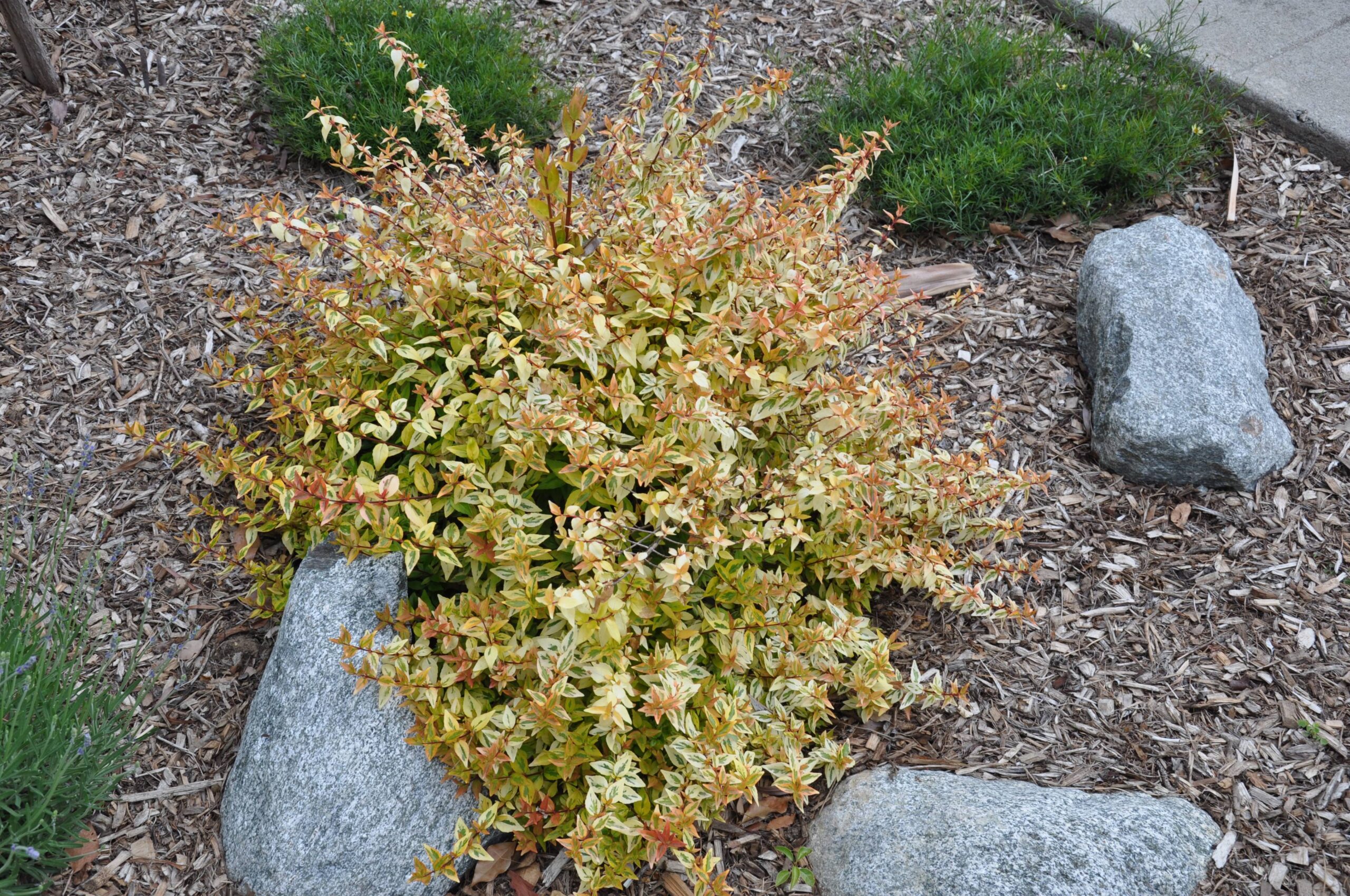
- Growth Habit: Instead of throwing out the long, unruly, leggy canes typical of the parent species, ‘Sunrise’ grows as a dense, tidy, mounded shrub with compact, cane-like branching.
- Growth Rate: It features a moderate to rapid growth rate when young, allowing it to fill out quickly in the landscape, but its dwarf genetics naturally put on the brakes before it becomes overgrown.
This compact form makes it an exceptional choice for tighter modern suburban lots, foreground foundation plantings, and low structural borders where a giant shrub would simply swallow up the space.
The Main Attraction: A Masterclass in Foliage
-
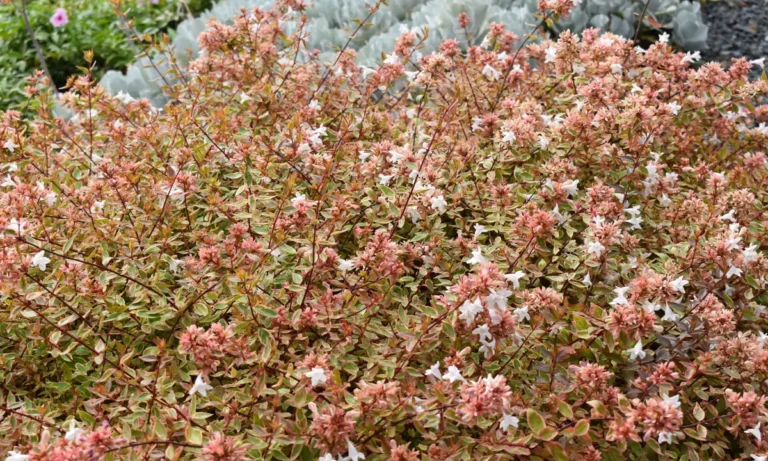
- The Pattern: Each leaf features a rich, deep green center bordered by a thick, glowing margin of golden-to-creamy yellow.
- The Secret: Botanically, this stable pattern is due to a periclinal chimera—a genetic arrangement where the tissue layers replicate perfectly generation after generation.
The Seasonal Transformation
-
- Spring: Fresh new growth emerges with a warm, buttery-gold tone. In high-light conditions, the immature foliage takes on unique, coppery-orange undertones against wine-red stems.
- Summer: The variegation locks in, offering a crisp, high-contrast matrix of green and gold that catches the light beautifully.
- Autumn & Winter: As autumn chills arrive, the leaves undergo a dramatic shift, turning rich shades of amber, apricot, and deep coral-red.
Why it Beats the Competition
-
- vs. ‘Francis Mason’: ‘Francis Mason’ is notoriously light-fickle. It bleaches out in full sun and turns entirely green in the shade. ‘Sunrise’ holds its distinct gold margins perfectly in both extremes.
- vs. ‘Conti’ (Kaleidoscope): While ‘Conti’ is a fantastic low-growing groundcover option, it easily loses its white variegation if it gets caught in heavy shade. ‘Sunrise’ stays taller, maintains its mounded structure, and retains its golden edges even under a significant tree canopy.
Flowers and Fruit: The Creative Trade-Off
-
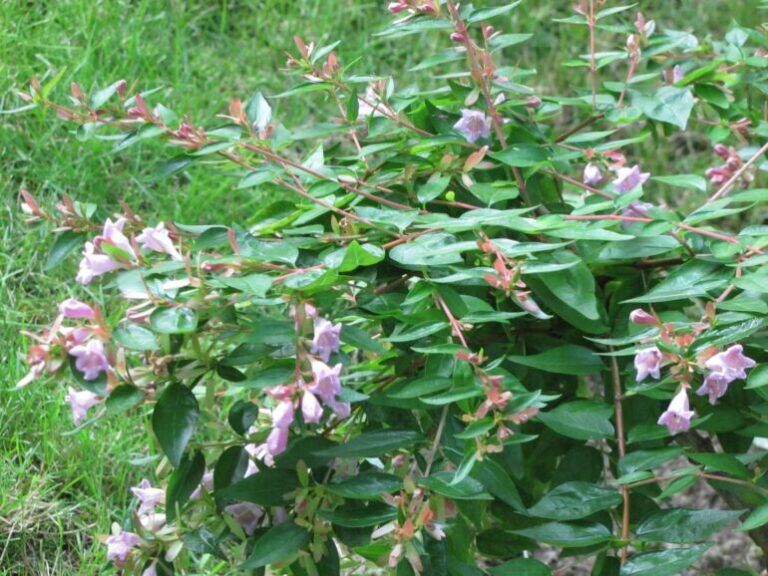
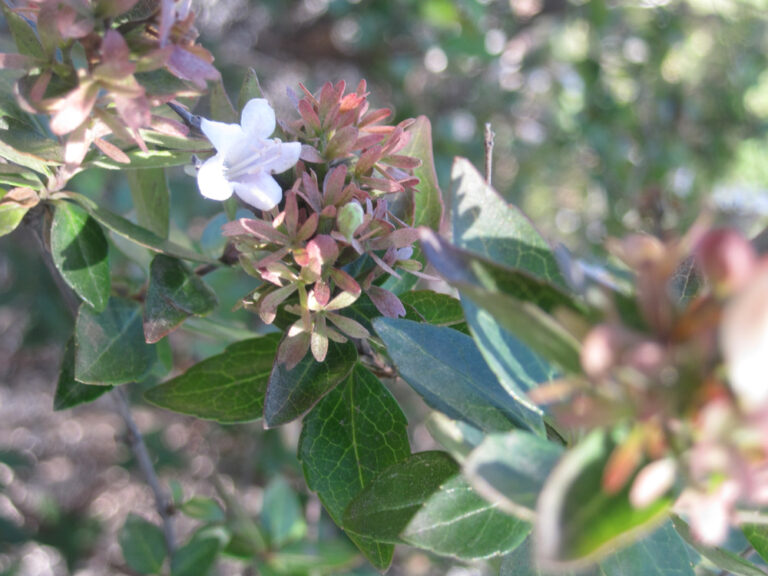
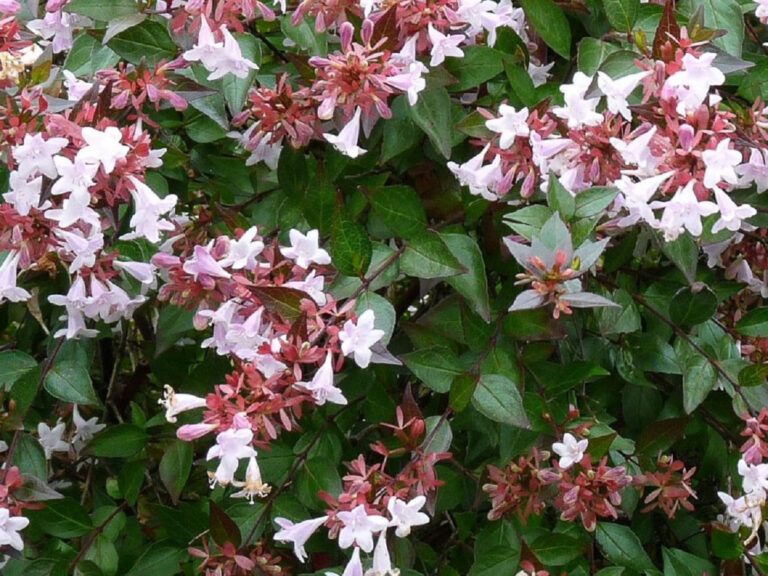
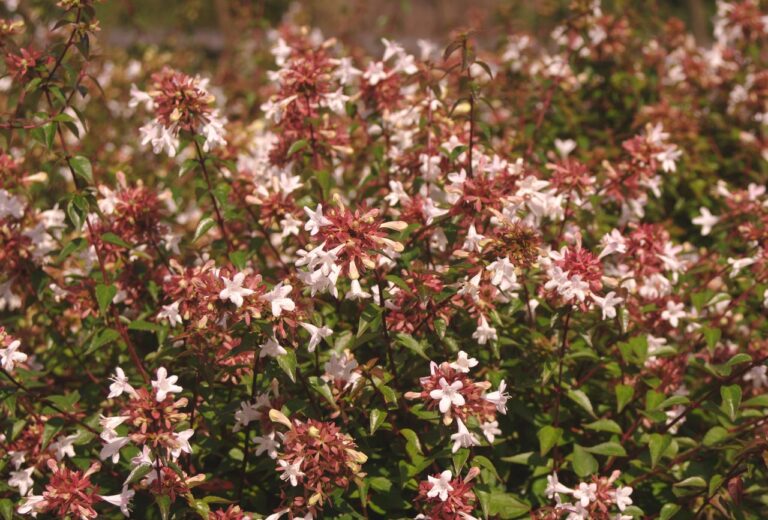
- The Blooms: The flowers are small, lightly fragrant, and bell-shaped (about 2 cm long). They appear in quiet clusters at the branch tips and leaf axils.
- The Color: Unlike other cultivars that show a distinct pink flush, ‘Sunrise’ blooms are almost entirely white to a very faint, pale pink.
- The Timeline: Flowers appear from mid-summer straight into autumn. Because they bloom exclusively on new wood (the stems grown in the current season), your pruning schedule dictates how many flowers you get.
- The Fruit: The flowers rarely produce fruit. When they do, they form tiny, sterile achenes. You never have to worry about this plant aggressively seeding down or becoming invasive.
The Winter Bonus: The true value of the bloom cycle comes after the petals drop. The persistent calyces (the tiny, star-shaped sepals that support the flower base) turn a beautiful reddish-pink and stick around all through winter, giving the bare stems a unique, textured haze.
Hardiness, Climate, and Light Boundaries
How It Behaves in Your Zone
-
- In the North (Zones 6–7): ‘Sunrise’ behaves as a semi-evergreen or deciduous shrub. During particularly brutal winters, the top growth may die back right to the snow line. Don’t panic—as long as the root zone is protected, it will vigorously push up fresh new growth from the base in spring.
- In the South (Zones 8–10): Here, it is a fully evergreen workhorse. It holds onto its glossy leaves all year long, shrugging off intense summer heat, high humidity, and damp coastal air.
The Light Spectrum
While it performs best and produces its tightest habit in full sun (6+ hours of direct light), the patent highlights its incredible tolerance for up to 85% shade. In deep shade, its branches will stretch out a bit looser and flowering will drop off, but that signature golden margin will remain bright and distinct.
Site Selection and Soil Mechanics
-
- Soil Drainage: This is its non-negotiable requirement. ‘Sunrise’ is highly adaptable to sandy, loamy, or even heavy clay soils, but it absolutely will not tolerate waterlogged, soggy feet.
- Soil pH: It prefers an acidic to neutral soil profile, but it is forgiving enough to handle slightly alkaline conditions without yellowing (chlorosis).
- Microclimates: In colder zones, plant it in a sheltered location—such as against a south- or west-facing wall or protected by a windbreak—to guard against harsh winter winds and late spring frosts. It has excellent urban tolerance, handling air pollution and moderate coastal salt spray with ease.
Getting It in the Ground: Planting and Establishment
Timing your planting correctly gives your new shrub the best possible start. Aim for spring or early autumn when soil temperatures are warm but air temperatures are moderate. Avoid planting in the dead of summer or when the ground is frozen.
Step-by-Step Planting Guide
-
- Clear the Canvas: Clear away all weeds and turf in a circle at least 2 to 3 feet wide around the planting spot to eliminate root competition.
- Dig Smart: Dig your planting hole twice as wide as the container’s root ball, but exactly the same depth.
- Amend Heavy Soils: If you are dealing with sticky, compacted clay, mix some organic compost into your native backfill soil to improve aeration and drainage.
- Plant It Proud: Set the shrub in the hole so the top of the root ball sits flush with—or slightly above—the surrounding soil level. Sinking it too deep invites stem rot.
- Backfill and Settle: Fill the hole with your soil, firming it gently with your hands to collapse large air pockets. Water the area deeply to settle the earth.
- Mulch Correctly: Spread a 2- to 3-inch layer of organic mulch (like shredded bark or leaf mold) over the root zone to hold in moisture. Crucial step: Keep the mulch a couple of inches away from the actual wooden stems to prevent moisture buildup and fungal issues.
Real-World Maintenance and Care
Watering Rules
Feeding
Pruning for Peak Form
-
- When to Prune: Late winter or very early spring, right as the plant is waking up but before it starts growing.
- The Technique: Cut out any dead, broken, or crossing branches at the base. If the mound is getting a bit loose, lightly trim back the outer tips to encourage dense branching.
- The Rejuvenation Option: If an old plant becomes messy or leggy after several years, it can tolerate a hard rejuvenation pruning. Cut the entire shrub back to within 12 to 18 inches of the ground in early spring. It will rapidly rebuild its mounded form, though you will sacrifice most of that summer’s sparse blooms.
Pests, Diseases, and Troubleshooting
-
- Aphids & Spider Mites: If aphids attack tender spring growth or spider mites show up during dusty, mid-summer droughts, knock them back with a sharp blast of water from the garden hose or an application of insecticidal soap.
- Powdery Mildew: If planted in stagnant, humid shade with poor air movement, a white powdery coating can develop on the leaves. Space your plants correctly to allow good airflow and avoid overhead watering.
- Root Rot: If the leaves turn yellow, wilt, and the plant declines despite plenty of water, check the soil. Waterlogged, poorly drained soil causes root rot. The best fix is prevention via proper site selection.
- Leaf Scorch: In exceptionally hot, arid climates, the golden leaf margins can experience minor browning during intense droughts. A little afternoon shade and deep watering will mitigate this quickly.
Creative Landscape Design and Companion Pairing
   COMPANION PLANTING VISUAL LAYOUT

   [ Dark Green Backdrop ] -> (e.g., Boxwood or Holly)
         |
   [ 'Sunrise' Abelia ]   -> (Golden-edged leaves / Crimson stems)
         |
   [ Purple Perennials ]  -> (e.g., 'May Night' Salvia or Catmint)
Top Landscape Uses
-
- Foundation Anchors: It provides a soft, colorful alternative to boring green foundation blocks around porches and patios.
- Low Structural Hedges: Excellent for defining paths or property lines with an informal, colorful border.
- The Container “Thriller”: Plant it in a large, well-draining pot (at least 16–20 inches in diameter) as a permanent, year-round architectural feature on terraces or balconies.
- Massing and Slopes: Planted en masse, its dense root system offers fantastic erosion control on banks while creating a high-impact tapestry of color.
The Perfect Companions
-
- The Color Contrast: Set it against purple- or blue-flowering perennials. The gold-on-purple contrast with plants like Lavender, Salvia ‘May Night’, Echinacea, or Catmint (Nepeta) is a stunning combination.
- The Texture Contrast: Contrast its small, glossy, structural leaves against the fine, airy, sweeping blades of ornamental grasses, such as Pink Muhly Grass, Miscanthus, or Blue Fescue.
- The Foliage Canvas: Plant it in front of solid, dark-green evergreen backdrops like Boxwoods, Inkberry Hollies, or Soft Touch Hollies to give the golden margins a deep, dramatic background to pop against.
Wildlife and Ecological Value
Though its flowering is reduced, ‘Sunrise’ still plays an active role in supporting your local backyard ecosystem. Its nectar-rich, tubular flowers are perfectly shaped for bumblebees, butterflies, and hummingbirds, keeping them fed from mid-summer into early fall when other spring flowers have faded.