Cascading Fire: How to Design with Acalypha pendula ‘Firetail’
Spill glowing scarlet texture over your containers with Acalypha pendula ‘Firetail’, the ultimate low-profile, heat-loving tropical trailer.
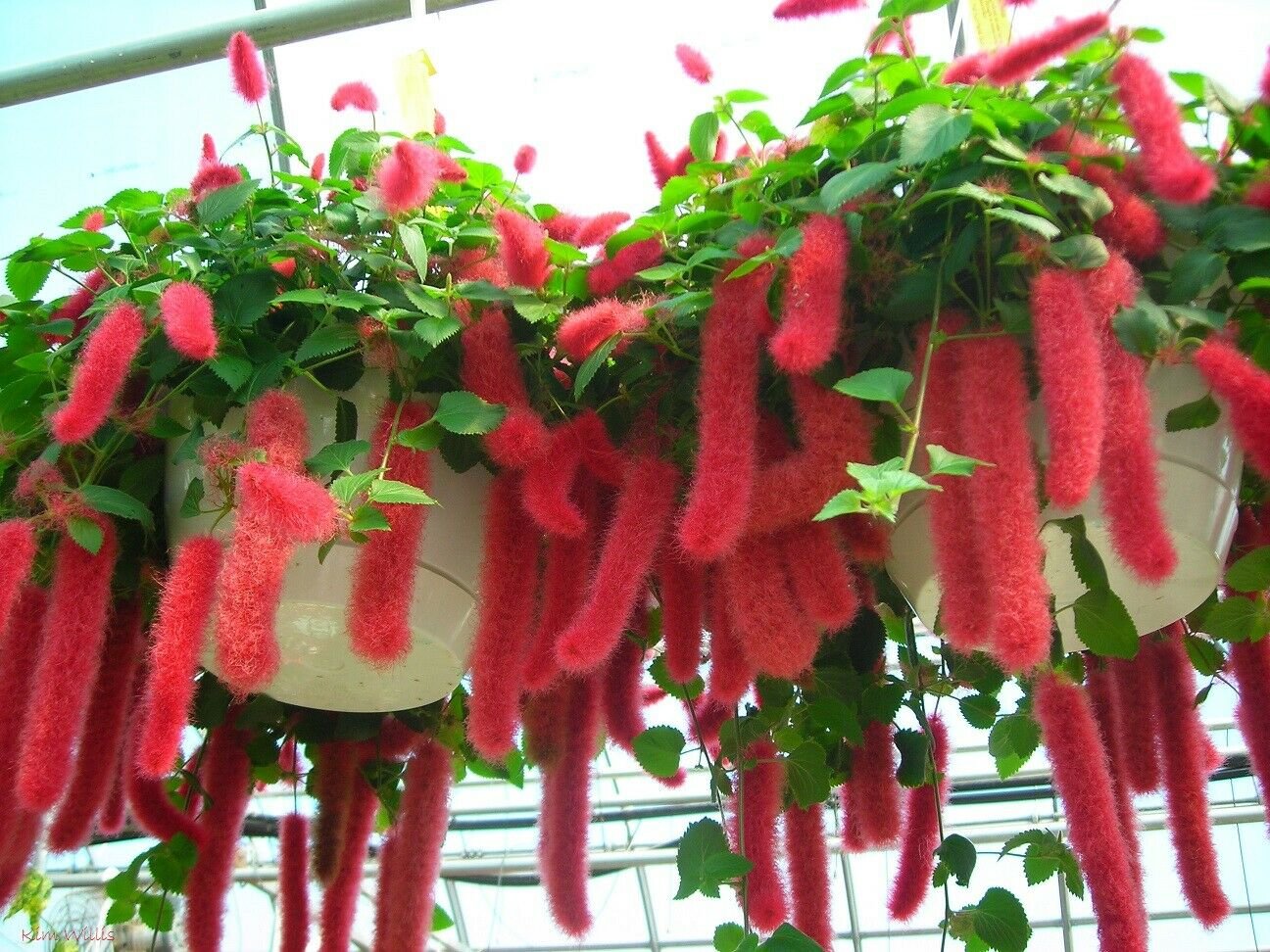
The chenille-plant family is famous for its eccentric, fuzzy visual drama, but Acalypha pendula ‘Firetail’ brings that exotic flair down to earth. Rather than stretching upward, this compact, trailing tropical perennial forms a low, spreading carpet. Its bright red, plush flower spikes cascade over container rims and window-box edges like a playful tumble of scarlet bottlebrushes.
Reaching a modest 3 to 5 inches in height but spreading an impressive 15 to 18 inches wide, Firetail is built for the front line of your displays, acting as a vibrant living fringe rather than a back-row filler.
For baseline cultivation details—including light, watering, soil, feeding, pruning, and pest management—please refer to the Master Growing Guide for Acalypha. This profile explores Firetail’s unique trailing form, its continuous flowering habits, and the best ways to use it in your garden design.
Plant at a Glance
A Distinct Trailing Form
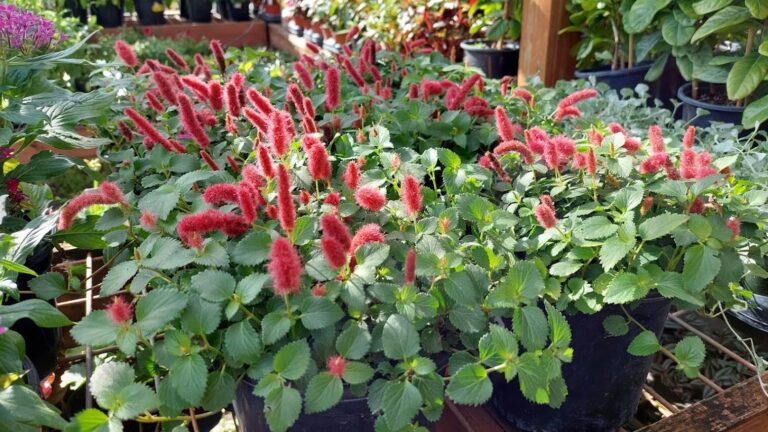
While traditional chenille plants stand upright, Acalypha pendula hugs the soil line and container rim. Its stems push outward horizontally, weaving a dense green mat from which the brilliant red inflorescences emerge and eventually droop. This prostrate growth habit makes it uniquely qualified for hanging baskets, tight planters, and seasonal bedding where vertical space is at a premium.
The aesthetic impact is straightforward but incredibly striking: a lush carpet of deep green foliage punctuated by a lively scatter of soft, saturated-red “tails”. Because it stays low while stretching wide, it remains one of the most effective flowering trailers available for intense summer color.
The Firetail Flowers
The common names tell you everything you need to know about the blooms. Each narrow, cylindrical flower spike is a dense cluster of tiny blossoms wrapped in vivid red bracts. The result looks exactly like a miniature cattail, a fuzzy caterpillar, or a snippet of rich chenille yarn.
These spikes emerge small and steadily elongate, creating a beautiful multi-layered look as new and mature blooms mingle. When weather conditions are warm and bright, Firetail bypasses the quick “one-and-done” blooming window of traditional annuals. Instead, it delivers recurring flushes of color that push all the way from late spring into autumn.
Texture is just as valuable as color here. The plush, highly tactile nature of the blooms begs to be viewed at eye level. Hang them in baskets, place them on patio tables, or let them spill along the edges of raised planters where visitors can closely appreciate their fuzzy geometry.
Foliage and Overall Texture
The leaves are ovate, bright green, and finished with neatly toothed margins and lightly hairy undersides. Measuring roughly 3 to 5 cm long and 2 to 4 cm wide, they possess a soft, relaxed texture that perfectly matches the plant’s cascading style.
Never underestimate the role of this green backdrop. Because the fiery catkins are slender rather than bulky, they require the visual mass of the dense foliage to truly pop. From a design perspective, Firetail doesn’t function as a solid block of red foliage; it is a lush green groundcover animated by brilliant scarlet accents.
Mature Size and Spatial Presence
Firetail offers an incredibly helpful proportion for container arrangements. By remaining short while maximizing its spread, it wraps a low collar of greenery around the rim of a pot, allowing the flowers to trail outward and downward without choking out your centerpiece plants.
- Height: At 3 to 5 inches, it sits safely underneath upright annuals and tall tropical accents.
- Spread: A single plant spans 15 to 18 inches, providing plenty of coverage to soften hard container edges.
- Growth Direction: Stems actively search outward and downward rather than fighting for vertical light.
- Best Viewing Distance: Close-range locations reveal the intricate texture and rich color of the catkins to full advantage.
In a standard 12 to 14-inch hanging basket, a single specimen easily commands the perimeter. For larger window boxes or expansive mixed patio planters, use it as a cascading frame around a tall, dramatic focal plant.
Design Uses
Hanging Baskets
This is where Firetail truly shines. The horizontal stems cascade smoothly over the edge, suspending the red spikes in mid-air where they can catch the light against the green leaves. Because the crown stays flat and low, the basket never looks top-heavy, ensuring the colorful tails remain fully visible from below.
Window Boxes
Think of Firetail as a living, fringed border for your window displays. Tucked right against the front lip, it softens the hard architecture of the box. Its low stature means you can easily pair it with tall, upright companions like salvias, angelonia, cannas, or bold tropical foliage plants without blocking the view.
Container Edges and Mixed Planters
Deploy Firetail whenever a mixed container needs a soft, flowering skirt. It pairs beautifully with plants that feature clean vertical lines or oversized leaves, as the sharp contrast highlights both the trailing habit and the unusual, caterpillar-like flowers.
Groundcover-Style Displays
In frost-free zones or during the peak of summer, Firetail can double as a temporary, low-growing border or a colorful pocket planting in the garden bed. However, its premier value is still found in containers, where the elevated vantage point lets those unique trailing stems and red spikes show off to their absolute best.
Planting Combinations
Firetail delivers its most striking impact when its fuzzy scarlet spikes clash with clean foliage shapes, cool tones, or neutral backdrops.
- Silver or Grey Foliage: Softens the composition and makes the scarlet spikes look remarkably luminous. Partners: Dusty miller, helichrysum, silver falls dichondra.
- Deep Green Foliage: Creates a crisp, high-contrast background that frames the blooms. Partners: Coleus, sweet potato vine, hosta-like tropical foliage.
- Purple or Blue Flowers: Establishes a bold, sophisticated complementary contrast. Partners: Blue salvia, lobelia, scaevola.
- White Flowers: Refreshes and sharpens the overall display. Partners: White bacopa, white verbena, white calibrachoa.
- Bold Tropical Leaves: Highlights the plant’s exotic, touchable personality. Partners: Canna, elephant ear, croton, cordyline.
Be careful not to crowd Firetail beneath overly dense, casting companions. The key to its success is keeping the low-slung crown exposed to bright light while leaving plenty of room for those red spikes to cascade freely.
Seasonal Display Character
This plant is an absolute champion of high summer heat and humidity. It hits its stride just as cool-season trailers begin to wither and look tired under the midsummer sun.
Its blooming rhythm is episodic rather than static. Expect dense, fluffy waves of red spikes to emerge periodically throughout the warm months, providing your patio containers with a continuous series of fresh color renewals rather than a single, brief spring show.
Botanical and Common-Name Context
Native to the warm climates of Cuba, Haiti, and the Dominican Republic, Acalypha pendula is a dioecious species, meaning it carries male and female flowers on entirely separate plants. Gardeners use the names “firetail chenille plant,” “dwarf chenille,” and “strawberry firetails” interchangeably to describe this trailing identity.
In the nursery trade, “Firetail” is best understood as the definitive, compact trailing form of the species rather than a collection of different cultivated varieties. When you see it listed, it consistently refers to this specific 3–5 inch by 15–18 inch heavy-blooming trailer.
Why Gardeners Choose It
Firetail earns its keep through its distinct proportions, unusual texture, and graceful movement. While it might not be the largest trailer on the nursery bench, very few options can match its combination of a true prostrate habit and plush, caterpillar-like scarlet blooms.
Turn to Firetail when your garden calls for a tactile conversation piece, a low-slung red accent that won’t bully its neighbors, or a heat-worshipping trailer that keeps your containers looking vibrant all summer long.