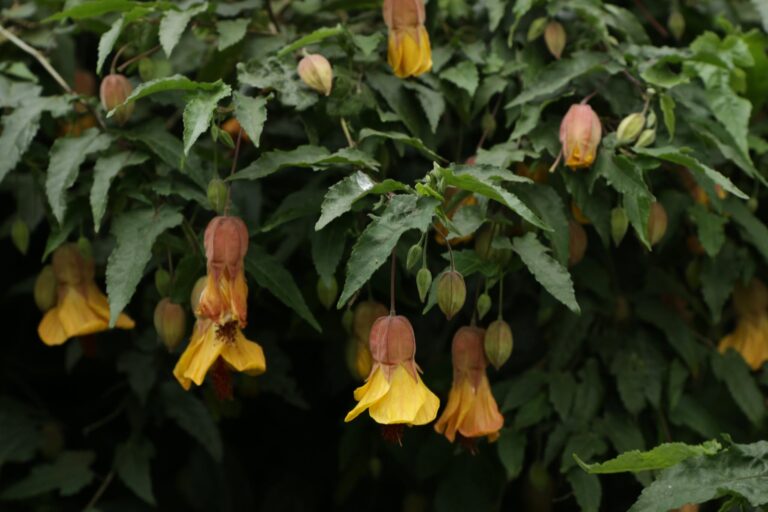
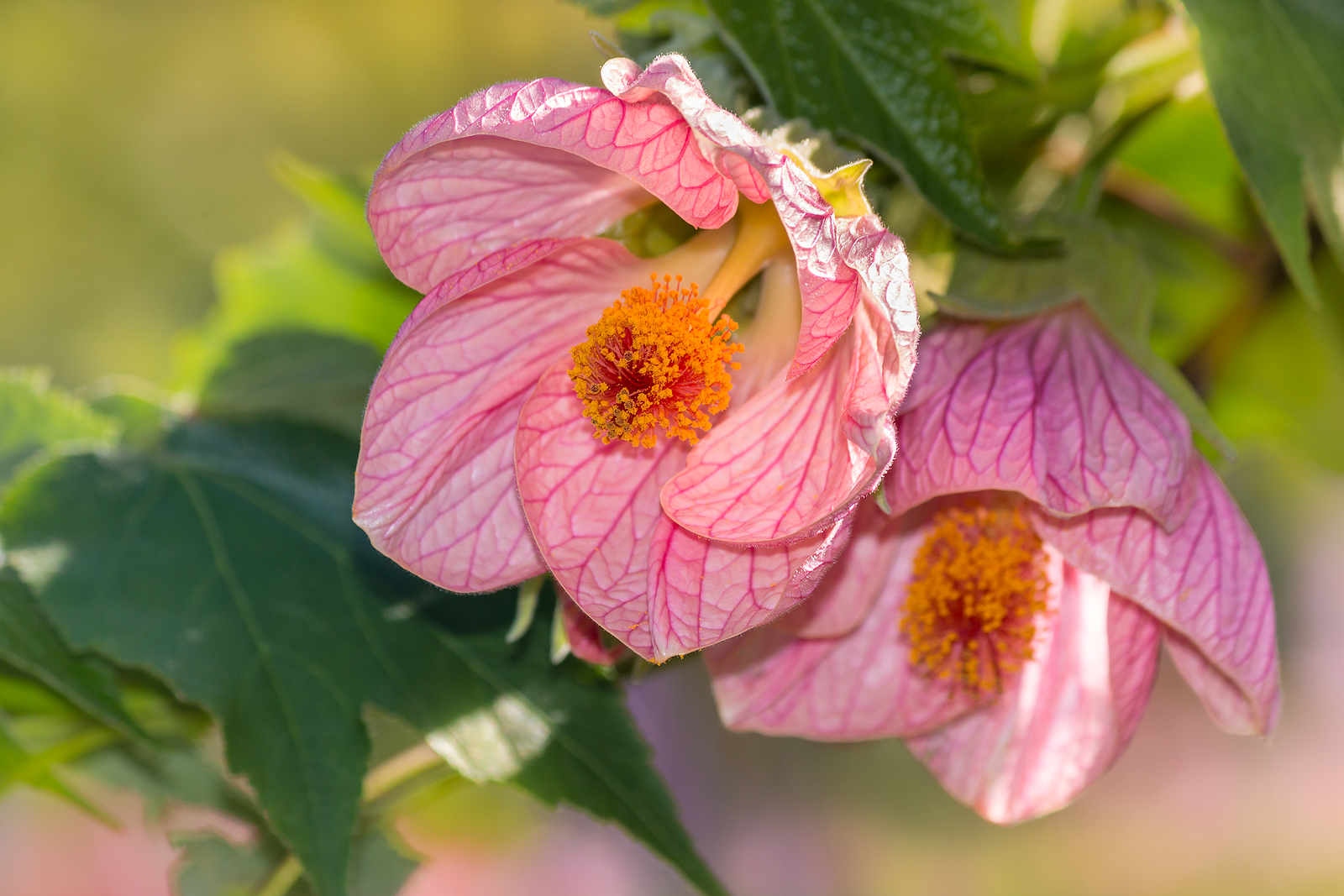
How to Grow Abutilon: The Ultimate Guide to Flowering Maples
What is Abutilon?
Belonging to the diverse mallow family (Malvaceae), the genus Abutilon comprises an enchanting mix of annuals, tender subshrubs, and woody shrubs. Despite the striking resemblance of their softly lobed foliage to true maples, these plants are entirely unrelated to the Acer family. Instead, they trace their roots to the sun-drenched tropical and subtropical zones of the Americas, Africa, Asia, and Australia, where they naturally adapt to everything from open, seasonally dry plains to sheltered forest margins.
Walk into any modern nursery, and the plants you encounter under this name are almost exclusively cultivated hybrids. Breeders select these varieties for their explosive flower colors, tidy compact habits, striking variegated foliage, and reliable garden stamina. It is worth noting a recent shift in botanical taxonomy: certain varieties—especially those derived from Abutilon megapotamicum—have been reclassified into the genus Callianthe by modern botanists. However, the horticultural trade largely ignores this technicality, so you will still find them sold under the beloved name Abutilon.
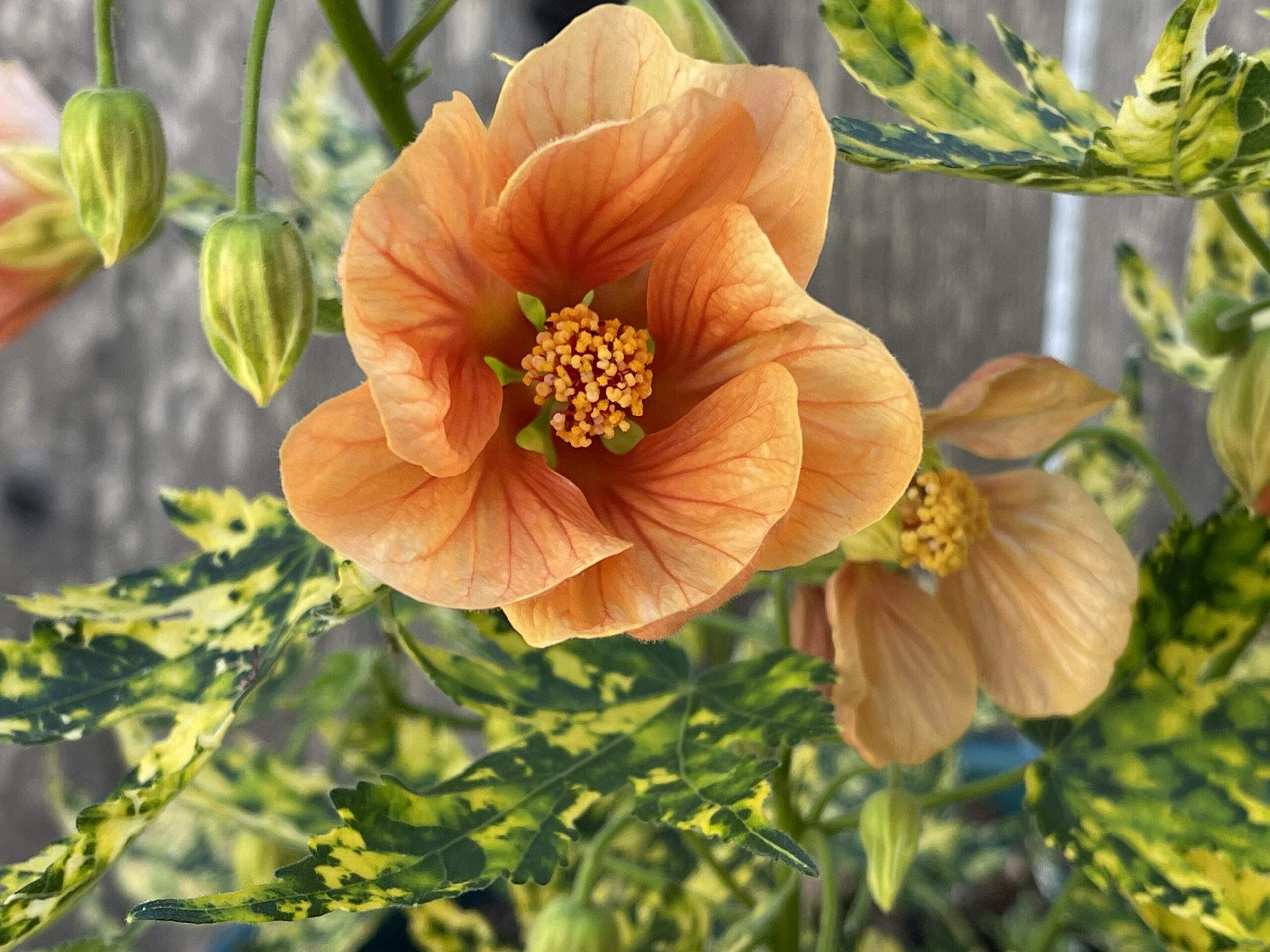
Why grow flowering maple?
These dynamic shrubs earn their keep in the garden for several compelling reasons:
- Exquisite Pendant Blooms: The hanging flowers mimic delicate bells, glowing Chinese lanterns, or wide, welcoming cups.
- A Marathon Bloom Season: They erupt in late spring or early summer and refuse to quit until the autumn frosts arrive.
- High-Impact Foliage: Beyond the flowers, the leaves offer incredible visual texture, ranging from deep solid greens to patterns mottled with gold and cream.
- Versatile Design Habits: They transition effortlessly between freestanding shrubs, formal trained standards, informal climbers, container specimens, and indoor houseplants.
- Effortless Propagation: A few softwood cuttings taken in summer will easily yield an entirely new generation of plants.
- Patio and Conservatory Performance: They absolutely thrive in the microclimates of sheltered patios, glasshouses, and warm, south-facing walls.
Their Achilles’ heel, however, is a distinct sensitivity to frost. While a handful of varieties show surprising resilience in mild climates, the vast majority are best treated as seasonal patio stars or moved under glass before winter bites.
Best Abutilon varieties for gardens
Rather than cataloging every obscure collector clone, this curated list highlights the foundational cultivars and distinct groups that offer true visual diversity and reliable availability for contemporary gardens.
Abutilon ‘Kentish Belle’
If you need a vigorous, arching shrub to soften a bare wall, fence, or trellis, Abutilon ‘Kentish Belle’ is an absolute triumph. Originally bred at Hever Castle in Kent during the 1950s, this hybrid features a loose, graceful habit that responds beautifully to training. The real magic lies in the color contrast: deep red calyxes clasp bright yellow-orange, bell-shaped petals. Because the calyx stays vibrant even when the petals are closed, the two-tone show never stops.
Expect it to reach roughly 2.5 meters in both height and spread when left to its own devices, though thoughtful pruning easily keeps it tighter. It boasts an excellent reputation for cold tolerance compared to standard hybrids, earning the prestigious RHS Award of Garden Merit. Give it a sheltered spot and use it as a wall-trained accent or a statement container plant.
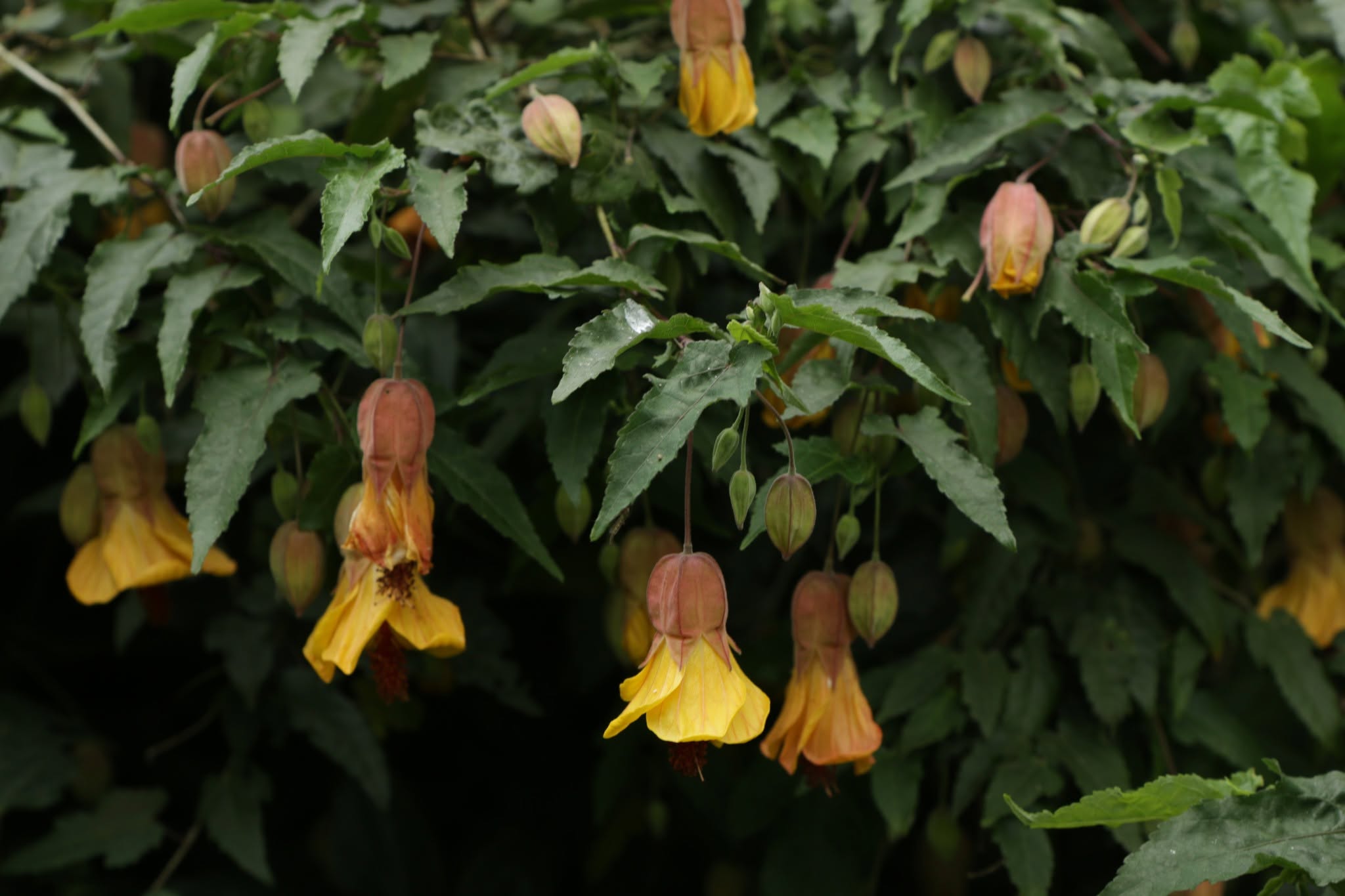
Abutilon ‘Canary Bird’
For a pure, sun-kissed yellow display, ‘Canary Bird’ remains the gold standard. Unlike its sprawling cousins, this cultivar develops a reliable, rounded, and upright framework packed with rich green leaves.
Pruning keeps it neat, typically holding the plant at a manageable 1 meter tall by 70 centimeters wide. The clear, luminous yellow bells pair magnificently with dark foliage plants in mixed borders, pop out in patio containers, and brighten up conservatory corners throughout its long flowering cycle.
Abutilon ‘Souvenir de Bonn’
This spectacular cultivar proves that foliage can easily rival flowers. The expansive leaves feature a dramatic, deep cream border wrapped around a rich green center. Against this bold backdrop hang warm salmon-orange bells intricate with dark red veins.
Because the variegation provides constant architectural interest between flowering flushes, it demands a prominent spot—such as a bright conservatory or a high-traffic patio container. Just ensure it receives plenty of bright light, or the vivid leaf patterns will start to fade.
Abutilon pictum ‘Gold Dust’
For a softer, warmer aesthetic, Abutilon pictum ‘Gold Dust’ shifts the focus to a heavily mottled gold-and-green leaf pattern. The pendant blooms emerge in a delicate, pale apricot-orange, etched with fine red veining.
It is an exceptional choice for areas where year-round foliage texture takes priority over raw, saturated flower power. Position it in a handsome pot near an entryway, across a bright patio, or under glass where frost cannot touch the delicate leaves.
Abutilon megapotamicum ‘Variegatum’
This highly distinctive, arching variety is a natural-born climber and trailing plant. Its slender, flexible stems are clad in splashy gold-and-green leaves, from which dangle striking red calyxes cradling bright yellow petals.
The long, weeping branches are tailor-made for weaving through a trellis, cascading out of premium hanging baskets, or draping over the lip of a raised planter. In warm, sheltered courtyards or up against a cozy south-facing wall, it can stretch to several meters long, though it takes well to restrictive pruning. While modern botanists often label this Callianthe, you will still find it listed everywhere as an Abutilon.
Abutilon ‘Cannington Carol’
Bred at the historic Cannington College in Somerset, this compact gem is perfect for tight spaces. The dark green foliage is intensely marbled with cream and yellow, to the point where individual leaves can emerge almost entirely ivory.
With a mature size topping out around 80 centimeters tall and 50 centimeters wide, it fits beautifully into compact courtyards, small borders, and tabletop containers. Give it bright light to lock in that brilliant variegation, but shelter it from scorching, baking heat which can burn the pale leaf edges.
Abutilon × hybridum ‘Bella Red’
Breaking the mold of the tall, lanky flowering maple, ‘Bella Red’ represents the pinnacle of dwarf breeding. In a single season, this compact powerhouse reaches a mere 30 to 45 centimeters in height, yet it smothers itself in oversized, flat-faced reddish-orange blooms.
Its diminutive size makes it a dream ingredient for window boxes, small patio pots, and seasonal bedding designs. It wastes no time throwing buds early in the season, though it requires regular feeding to fuel such intense flower production on a small frame.
Abutilon ‘Bella’ series
The broader ‘Bella’ series offers a spectacular toolkit for gardeners who want the iconic look of flowering maples without the hassle of managing a massive shrub. These dwarf plants are bred specifically for rapid, early flowering and large, open blooms that face outward rather than strictly downward. Colors span a rich palette of apricot, orange, pink, and deep crimson, with plants stabilizing around 38 centimeters tall.
They are incredibly practical for mixed summer containers and border edges, provided you dig them up or protect them before winter arrives.
Flower-colour cultivars
A massive branch of the Abutilon family tree consists of varieties that share identical growth habits but diverge purely on flower hue and veining details. This extensive color wheel includes standout selections like ‘Ashford Red’, ‘Golden Ashford Red’, ‘Boule de Neige’, ‘White King’, ‘Pink Lady’, ‘Roseus’, ‘Kirsten’s Pink’, ‘Orange Glow’, ‘Orange Hot Lava’, ‘Apricot Belle’, ‘Linda Vista Peach’, ‘Satin Pink Belle’, ‘Red Queen’, ‘Red Goblin’, ‘Red Bells’, ‘Nabob’, and the wildly popular ‘Red Tiger’.
Culturally, these plants speak the same language: they all demand brilliant light, fertile and perfectly drained soil, consistent summer moisture, and winter protection. Shop this group based strictly on your personal color scheme, desired plant scale, and local availability rather than stressing over unique care requirements.
Variegated and rare collector forms
For the true enthusiast, there is a distinct collector’s circle that includes historical clones and rare variations such as ‘Savitzii’, Abutilon pictum ‘Thompsonii’, Abutilon × milleri ‘Variegatum’, ‘Cannington David’, ‘Cannington Peter’, ‘Cannington Sally’, ‘Cannington Sonia’, ‘Patrick Synge’, ‘John Thompson’, ‘Heather Bennington’, and ‘Hinton Seedling’.
These plants are cherished primarily for their unique historical lineage, subtle flower quirks, or rare leaf variegations. While they are fantastic additions to a specialist collection, they have a limited retail footprint and their core cultivation needs overlap entirely with mainstream variegated varieties. Similarly, commercial mixes like the ‘Lucky Lantern’ or ‘Bellvue’ series are best purchased and evaluated at the series level, as individual color variants do not require separate growing strategies.
Growing conditions
Hardiness and climate
To grow abutilons successfully, you must work around their frost sensitivity. The vast majority of standard flowering maple hybrids are fully perennial only in USDA Zones 9 through 11. In cooler, temperate zones, they can only survive outdoors if granted impeccable soil drainage and a highly protected microclimate.
In mild UK regions—particularly coastal fringes and sheltered, urban brick courtyards—certain tough selections like ‘Kentish Belle’ and Abutilon × milleri forms can remain outdoors year-round. Even so, winter protection is highly recommended if your garden is prone to sweeping winds.
If you garden in a cold winter climate, adopt these strategies:
- Embrace Containers: Grow your abutilons in pots that can be effortlessly moved.
- Winter Indoors: Treat them to a cool greenhouse, a bright conservatory, or a sunny windowsill before the first frost hits.
- Utilize Thermal Masses: Plant against a south- or west-facing brick wall to soak up radiant heat.
- Protect the Crown: Apply a deep layer of mulch over the root zone, but keep it clear of the stem to avoid trapping cold winter moisture.
- Propagate Insurance: Take a handful of softwood cuttings in late summer so you always have backup plants.
Light
Abutilons crave bright, abundant light, but they appreciate a shield against the absolute harshest midday sun. While full morning sun triggers spectacular budding, dappled light or afternoon shade is highly beneficial in scorching, hot-summer climates to prevent the leaves from wilting.
For variegated varieties, light is non-negotiable. If left in dim shadows, they lose their brilliant gold and cream markings, reverting to plain green leaves on weak, stretched stems.
Soil
These heavy feeders want a soil that mimics a classic forest floor: rich in organic matter, fertile, and retaining steady moisture while allowing excess water to drain away instantly. They are perfectly happy in slightly acidic to neutral pH ranges, but proper soil structure and drainage matter far more than a specific pH number.
Steer clear of:
- Soggy, waterlogged patches of lawn.
- Baking, shallow, dried-out soils.
- Exposed corners whipped by freezing winds.
- Heavy clay that transforms into a cold, wet sponge in winter.
- Highly alkaline soils, which block iron uptake and trigger chronic yellowing (chlorosis).
For potted specimens, skip cheap soils and opt for a high-quality, peat-free, loam-based compost (such as a John Innes No. 2 mix) lightened with a generous handful of perlite or horticultural grit.
Planting abutilon
When to plant
Patience pays off. Wait until spring has fully sprung and all danger of frost has evaporated before planting abutilons into the ground. In warm, Mediterranean-style climates, autumn planting works beautifully, giving the root system a head start before the spring rush.
Potted specimens can be bumped up into slightly larger containers at any point during the active spring and summer growing window, provided you handle the root ball gently and water deeply afterward.
Site selection
Take time to scout the perfect location. Look for a spot that is shielded from buffeting winds, bright without being exposed to brutal reflected heat (like an unpainted concrete patio), and well clear of low-lying frost pockets.
If you are growing a trailing or arching variety, ensure the site features a sturdy wall, fence, or trellis for training. Finally, make sure it is easily accessible; you will need to reach it frequently for watering, pruning, and winter relocation.
Spacing
Give them room to breathe. Dwarf ‘Bella’ plants can be spaced tightly at 30 to 45 centimeters apart, but large, wall-trained varieties will eventually claim a footprint of 1.5 to 2.5 meters wide.
Always space your plants based on their projected mature size, not the size of the starter pot. Cramming abutilons together restricts air circulation, creating an open invitation for pests and making routine watering and pruning a nightmare.
Containers versus ground
In cold climates, containers win hands down. Potted cultivation gives you the freedom to wheel your plants into safety the moment winter threatens. Choose a pot with excellent drainage holes, and step the size up gradually over time—dropping a tiny plant into a massive, soil-heavy pot is a quick recipe for waterlogging and root rot.
If you are blessed with a mild climate, planting directly in the ground allows abutilons to grow faster and achieve their full, breathtaking scale. Dig in plenty of well-rotted garden compost to enrich poor soils, but avoid digging a deep “bowl” in heavy clay, which simply acts as a subterranean bucket for stagnant water.
Care through the seasons
Watering
Think consistent, even moisture. Newly planted abutilons need deep, regular watering to help their roots explore the surrounding soil. Once established in the ground, they can withstand brief dry spells, but their flower production will grind to a halt and leaves will quickly crisp if the soil routinely dries out.
Potted plants dry out much faster and demand regular monitoring:
- Poke your finger into the soil; water deeply as soon as the top inch feels dry.
- Drench the pot until water streams freely from the base drainage holes.
- Never let the pot sit permanently in a saucer filled with standing water.
- Dial back watering significantly during the winter months, especially in cool rooms.
- Stagnant, soggy soil during the winter dormancy period is the number one killer of indoor and greenhouse abutilons.
Feeding
Because they bloom continuously for months, abutilons require plenty of fuel. Apply a balanced liquid fertilizer every two to four weeks throughout the spring and summer. Once you spot flower buds forming on container plants, switch to a high-potassium feed (like a tomato fertilizer) to maximize bloom production.
Never feed a plant that is sitting in low-light conditions. An overabundance of nitrogen combined with weak light results in weak, spindly, overly leafy growth that attracts every sap-sucking pest in the neighborhood.
Mulching
Treat in-ground plants to a 5 to 8-centimeter blanket of organic mulch, such as garden compost, leaf mold, or shredded bark. Pull the mulch back a few centimeters from the base of the wood to prevent collar rot.
This organic layer works wonders: it locks in soil moisture, keeps root temperatures stable during scorching summer days, and naturally improves your soil structure as it breaks down.
Pruning
Abutilons produce flowers almost exclusively on fresh, current-season growth, meaning thoughtful pruning is the secret to a heavily budded, bushy plant. Throughout the spring and summer, use your fingers to pinch out the growing tips of young shoots; this forces the plant to branch out rather than growing into a single, leggy stem.
For mature garden shrubs, follow this early spring routine as new growth breaks:
- Cut out any dead, winter-damaged, or rubbing branches down to healthy wood.
- Shorten long, wayward shoots back to a strong pair of outward-facing buds.
- Clear out crowded, congested growth from the center of the shrub to maximize air and light penetration.
- If a plant needs downsizing, stage the renovation gradually rather than stripping every branch simultaneously.
In mild zones, you can cut vigorous varieties back hard to a low framework in early spring. However, never prune tender varieties late in the autumn, as fresh cuts leave the plant highly vulnerable to winter freeze damage. Wall-trained specimens should be pruned selectively, leaving the main architectural framework intact while shortening the side shoots that carried the flowers.
Winter care
Timing is everything: rescue your container plants before the first autumn frost arrives. A cool, bright, unheated greenhouse or porch is an ideal winter home, far superior to a hot, dry, centrally heated living room. A bright conservatory can also work beautifully, provided you manage humidity and watering carefully.
Give every plant a thorough pest inspection before bringing it indoors, hand-cleaning any hitchhikers. Indoors, position them well away from drying heating vents, drafty doors, and hot radiators.
Propagation
Softwood cuttings
To replicate a named cultivar exactly, softwood cuttings are your best option. Because seeds produce random genetic variations, cuttings ensure you get an exact clone of the parent plant.
Follow this simple system:
- Snip 7 to 10-centimeter cuttings from the tips of healthy, vigorous, non-flowering shoots.
- Make the cut cleanly just below a leaf node (joint).
- Strip off the lower leaves, leaving only the top set.
- Insert the stems into a gritty, free-draining propagation mix (such as half compost, half perlite).
Place the pot in bright, indirect light and keep the mix consistently damp but never soggy. A humid propagation dome or gentle bottom heat will accelerate rooting significantly, but guard against stagnant air, which quickly invites fungal rot. Once the cuttings resist a gentle tug—indicating roots have taken hold—pot them up individually and pinch the tips to start the branching process.
Seed
Raising abutilons from seed is a fun experiment for true species or for gardeners hoping to discover a unique new hybrid. Just remember that the resulting plants will likely look different from the parent, and they can take a full year or more to produce their first blooms.
Sow the seeds into cell trays filled with a clean, fine-textured seed starting mix. Cover them lightly, keep the tray warm and damp in a bright window, and prick the seedlings out into individual pots once they develop several true leaves.
Layering
For arching or trailing varieties with flexible branches near the ground, layering is an effortless, low-risk propagation method. Simply pin a section of a flexible stem down into a pot of moist compost placed next to the main plant.
Keep the soil damp, and the buried stem section will naturally develop its own root system while still being nourished by the parent plant. Once a robust root ball forms, sever the stem from the mother plant and pot up your new independent abutilon.
Pests and diseases
Outdoors in a well-ventilated, sun-drenched garden, abutilons are remarkably resilient. However, the moment they are brought under glass or indoors into dry heat, they can attract standard greenhouse pests.
Aphids
These small, sap-sucking insects mass in green or black clusters along tender new shoots and flower buds, leaving behind distorted growth and sticky honeydew. Knock them loose with a sharp blast of water from the garden hose, squash small colonies by hand, or let beneficial insects like ladybird larvae clean them up for you.
Whitefly
The bane of the greenhouse, whiteflies look like tiny white moths that erupt in clouds when the foliage is disturbed, while their immobile nymphs drain the leaves from underneath. Fight back by improving cross-ventilation, hanging yellow sticky traps, removing severely infested lower leaves, or introducing biological controls like Encarsia formosa wasps.
Spider mites
Hot, bone-dry air is an open invitation for two-spotted spider mites. Keep an eye out for fine webbing on the undersides of leaves, coupled with a dull, yellow-stippled appearance.
Raise the ambient humidity around the plant, mist the foliage periodically, and give the plant a thorough rinse. Severe cases may require a dedicated organic miticide or a release of predatory mites.
Mealybugs and scale
Mealybugs resemble small, white tufts of cotton tucked into leaf joints, while scale insects look like immobile, waxy brown bumps along the woody stems. For minor outbreaks, dip a cotton bud into rubbing alcohol and dab them directly. Always test this on a single leaf first to ensure the plant doesn’t react poorly to the alcohol.
Thrips
These tiny, slender pests rasp the plant tissue, leaving behind silvery, bleached streaks on leaves and flowers alongside characteristic tiny black dots of excrement. Snip off damaged flowers immediately, isolate the plant, and use an integrated approach rather than relying on repeated chemical sprays, which thrips quickly build resistance against.
Root rot
Almost always triggered by a waterlogged pot, poor pot drainage, or overzealous watering during the winter rest period, root rot is fatal if ignored. Foliage will turn yellow and drop, and the plant will wilt dramatically even though the soil is soaking wet.
Tip the plant out of its pot, prune away any mushy, foul-smelling black roots, repot into fresh, sharply draining gritty compost, and fix your watering habits. If the root system is entirely gone, take a few clean stem cuttings from the top of the plant to start over.
Design and garden uses
Thanks to their highly malleable growth habit, abutilons are structural chameleons in garden design.
Try incorporating them into these classic roles:
- A vibrant wall-trained shrub scaling a warm, sunny brick wall.
- An informal screen trained across a structural trellis or pergola.
- A standalone patio focal point in a beautiful ceramic planter.
- A weeping specimen cascading out of a large hanging basket.
- A dramatic accent plant inside a bright sunroom or conservatory.
- A formal standard trained into a mini-tree form with a clear stem.
- A colorful summer filler plugged into mixed perennial borders.
- A bright pop of foliage to illuminate a sheltered courtyard garden.
Vigorous, arching varieties like ‘Kentish Belle’ or A. megapotamicum ‘Variegatum’ are born to be trained upward. Meanwhile, compact selections like the ‘Bella’ series look fantastic grouped along patio edges, and gold-splashed varieties can be used to bring light into partially shaded garden corners.
Wildlife value
The open, accessible architecture of abutilon blossoms is a fantastic nectar bar for bees, butterflies, and other vital pollinators. Because these flowers are constantly visited by wildlife, skip systemic chemical insecticides entirely while the plants are in bloom.
Companion planting
Pair your abutilons with companions that appreciate identical conditions—namely sheltered microclimates, rich soil, and consistent moisture.
Great companions include:
- Fuchsias: They mirror the elegant, dangling bloom form and thrive in the same partial shade.
- Salvias: Their upright, spiky flowers offer an excellent architectural contrast to soft abutilon bells.
- Heucheras: Use their bold, colorful leaf mounds to hide the bare lower stems of taller abutilons in containers.
- Ferns and Hostas: Perfect for weaving around the base of abutilons planted in dappled, woodland border settings.
- Agapanthus or Ornamental Grasses: Ideal for creating a lush, Mediterranean feel around sunny patio pots.
- Lavender or Rosemary: Use these only if you have sharply improved the drainage and can keep their root zones distinct from the thirstier abutilon.
Always keep overly aggressive companion plants clear of the abutilon’s base to ensure good air circulation and prevent the main shrub from being choked out.
Common problems and troubleshooting
Why is my abutilon not flowering?
If your plant is producing nothing but green leaves, it is likely suffering from low light, an overdose of nitrogen-rich fertilizer, severe drought stress, or a tightly root-bound pot. Move the pot to a brighter location, switch to a high-potassium food, and ensure the soil stays evenly damp.
If the shrub is old, wood-bound, and congested, a hard spring prune will stimulate the fresh, young shoots needed for blooming.
Why is the plant becoming leggy?
Lanky, sparse stems are a cry for more light. This often happens when plants are kept in warm indoor rooms over winter without enough sunlight.
To fix it, cut the long, leggy stems back by half in early spring to force branching, relocate the plant to a brighter spot, and remember to pinch out the fresh tips during the growing season.
Why are the leaves yellow?
Do not automatically reach for the fertilizer. Yellowing leaves can stem from overwatering, poor pot drainage, lack of light, or a genuine nutrient deficiency.
Always check the health of the roots and the moisture level of the soil first; feeding a plant whose roots are drowning in stagnant water will only accelerate its demise. If the soil is fine and light is good, a balanced liquid feed should green up the new growth.
Why are leaves dropping?
Abutilons hate sudden environmental shocks. A dramatic drop of healthy green leaves usually points to a sudden drying out of the soil, an unexpected blast of frost, a harsh cold draft, or the shock of being moved directly from a humid greenhouse to a dry living room.
Focus on keeping conditions stable, protect the roots from freezing, and avoid swinging between bone-dry soil and heavy drenching.
Why has variegation faded?
If a gold-mottled or cream-edged variety starts producing solid green leaves, the plant is telling you it needs more sunlight to maintain its complex patterns. Move it into a brighter spot, but stage the transition gradually so the leaves don’t sunburn under intense midday heat.
If a specific branch has completely reverted to solid green, cut it out entirely; otherwise, the more vigorous green growth will eventually take over the variegated sections.
Why did the plant die over winter?
The usual culprits are sub-zero temperatures, freezing wet soil, or a combination of low winter light and overwatering.
Remember: overwinter container varieties in a frost-free, bright space, cut your watering back significantly, and make absolutely certain the pot is never sitting in standing water.
Is abutilon a perennial?
Yes, in frost-free climates, it grows as a long-lived perennial woody shrub or subshrub. In cold northern regions, gardeners either treat it as an annual patio feature or bring it indoors to overwinter.
Can abutilon grow in full sun?
Absolutely, provided you can keep the soil consistently moist and you live in an area without brutal, scorching summer heat. If you garden in a hot southern climate, morning sun followed by light afternoon shade is much safer.
How hardy is flowering maple?
Hardiness comes down to the specific variety. Most common hybrids are only happy outdoors year-round in USDA Zones 9 through 11. While a few tough cultivars can handle light winter chills in highly sheltered microclimates, container growing remains the safest option for most temperate gardeners.
When should I prune abutilon?
Save your major structural and cleanup pruning for early spring, just as the plant wakes up and pushes new growth. Throughout the active summer growing frame, regularly pinch back the soft tip shoots to maintain a bushy, compact form.
Can abutilon be grown indoors?
Yes, they make fantastic houseplants if you can give them bright light, excellent air circulation, and a relatively cool room. Keep a close eye out for indoor pests like aphids, whiteflies, and spider mites, and drop your watering levels significantly during the winter months.
How often should I water abutilon?
Water as soon as the top inch of soil feels dry to the touch. Drench the pot thoroughly until water flows out the bottom drainage holes, then let the pot drain fully. Expect to water frequently during the peak of summer, and very little during winter dormancy.
Can I grow abutilon from a cutting?
Yes, and it is highly recommended. Sniping softwood cuttings from healthy shoot tips in summer is the most reliable way to clone your favorite named cultivars, ensuring the new plants match the parent perfectly.
Does abutilon climb?
Strictly speaking, no; they lack tendrils, aerial roots, or twining stems to climb on their own. However, their long, supple, arching branches can easily be tied and trained up against a trellis, wall, or pergola to create the illusion of a beautiful flowering climber.